States Wildlife

Nevada Mammals: Species List With Pictures

Last checked November 3, 2026 against official sources.

On this page
  1. Which mammals can hurt you
  2. All 88 mammals
  3. Lookalikes
  4. When they are active
  5. If you are bitten or stung
  6. What official sources say
  7. About this list
  8. Sources

This page lists 88 mammals: 8 from Nevada Legislature's NAC 503.020-.035, combined with the 2022 SGCN List and the NDOW Species Information database and 80 named in other official sources. 1 is nonnative.

Which mammals can hurt you

Official sources single out these mammals in Nevada, in their own words:

  • Mountain Lion
    Photo: ArgentinaTurismo · CC BY 4.0 · Wikimedia Commons

    Mountain Lion

    "Like any wildlife, mountain lions can be dangerous.". “Encounters with mountain lions are rare and the risk of an attack is extremely small.” NDOW

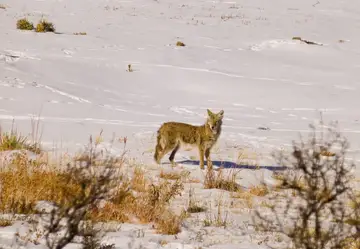
  • Coyote
    Photo: Gaurav Vaidya from Chapel Hill, USA · CC BY 2.0 · Wikimedia Commons

    Coyote

    NDOW. “If an incident with a human does occur, please call 911 or our dispatch 775-688-1331 immediately.” NDOW

  • Bats

    Rabies. “Bats can carry rabies (just like other mammals) and they are considered a vector species for rabies.” NDOW

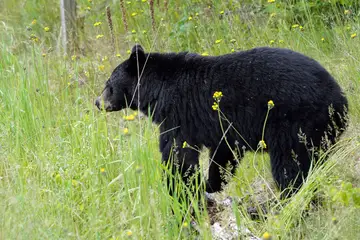
  • Black Bear
    Photo: U.S. Fish and Wildlife Service - Midwest Region · Public domain · Wikimedia Commons

    Black Bear

    NDOW. “They may sometimes get to the point where they are a public safety risk and have to be killed to avoid a dangerous encounter.” NDOW

All 88 mammals

From A to Z. Do not handle them.

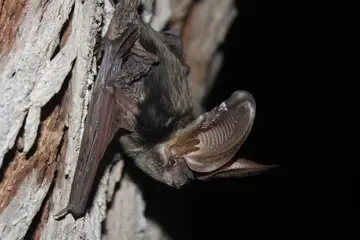
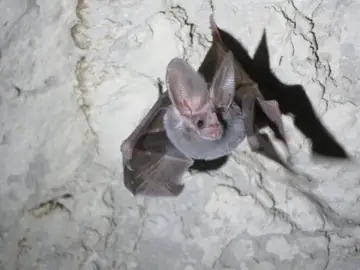
Allen’s Big-eared Bat
Photo: Juan Cruzado Cortés · CC BY-SA 4.0 · Wikimedia Commons · resized

Allen’s Big-eared Bat

Idionycteris phyllotis

Where in Nevada
Southern Nevada (NDOW page map) NDOW
Conservation
NV state status: Priority Species, State Protected; federal column on NDOW page: Least Concern
What the sources say

Habitat: Allen’s Big-eared Bats are found in southern Nevada in ponderosa pine, pinyon-juniper, pine-oak woodland, and riparian areas above 3,000 feet. However, they can sometimes be found across many different elevations and as high as 10,000 feet! The availability of water is a significant factor in habitat selection. (NDOW)

No confirmed photo of Allen's chipmunk

Allen's chipmunk

Neotamias senex

Conservation
Species of Greatest Conservation Need (2022 SWAP)
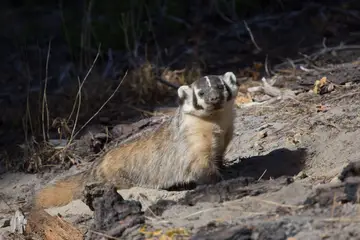
American Badger
Photo: avocat · CC BY 4.0 · iNaturalist

American Badger

Taxidea taxus

Where in Nevada
Statewide (NDOW page map: eastern, southern, western regions) NDOW
Conservation
NV state status: Unprotected; federal column on NDOW page: Least Concern
What the sources say

Habitat: American Badgers range from southern Canada to central Mexico. They can be found throughout Nevada. (NDOW)

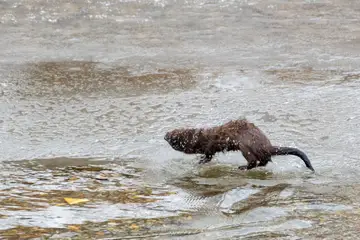
American Mink
Photo: Richard Littauer · CC BY 4.0 · iNaturalist

American Mink

Neovison vison

Where in Nevada
Eastern western Nevada (NDOW page map) NDOW
Conservation
NV state status: State Protected; federal column on NDOW page: Least Concern
What the sources say

Habitat: Mink are predatory animals that live in aquatic environments such as lakeshores, marshes, and stream banks. (NDOW)

No confirmed photo of Ash Meadows Montane Vole

Ash Meadows Montane Vole

Microtus montanus nevadensis

Conservation
protected (NAC 503.030)
No confirmed photo of Big-Free-tailed Bat

Big-Free-tailed Bat

Nyctinomops macrotis

Conservation
Species of Greatest Conservation Need (2022 SWAP)
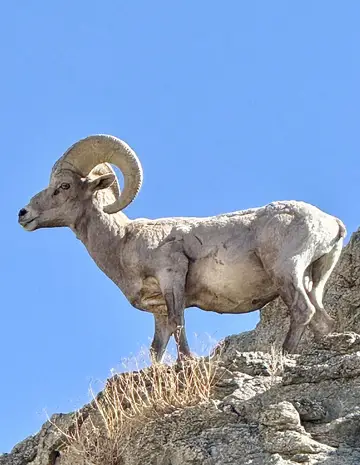
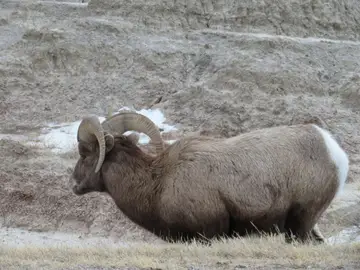
Bighorn Sheep
Photo: Irene · CC0 1.0 · iNaturalist

Bighorn Sheep

Ovis canadensis

Conservation
Species of Greatest Conservation Need (2022 SWAP)
Black Bear
Photo: U.S. Fish and Wildlife Service - Midwest Region · Public domain · Wikimedia Commons

Black Bear

Ursus americanus

Danger to people
“They may sometimes get to the point where they are a public safety risk and have to be killed to avoid a dangerous encounter.” NDOW
Size
Smokies: males average about 6 ft long, 3 ft at the shoulder and 250 lb in summer; females usually just over 100 lb. Missouri: 46 to 78 inches long, 86 to 600 lb.
How to recognize it
  • Straight facial profile, rounded erect ears, very short tail
  • Short curved claws for climbing
Where in Nevada
Western Nevada (NDOW page map) NDOW
Conservation
NV state status: State Protected; federal column on NDOW page: Least Concern
What the sources say

Habitat: Black Bears are found in the mountainous areas and foothills of the Sierra Nevada and Lake Tahoe areas. Rivers and streams provide a source of food, while forested areas offer cover. (NDOW)

Full Black Bear guide

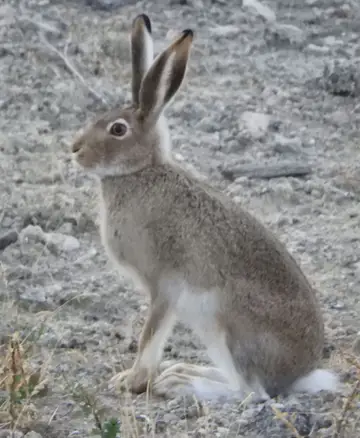
No confirmed photo of Black-tailed Jackrabbit

Black-tailed Jackrabbit

Lepus californicus

Where in Nevada
Statewide (NDOW page map: eastern, southern, western regions) NDOW
Conservation
NV state status: Unprotected; federal column on NDOW page: Least Concern
What the sources say

Habitat: Black-tailed Jackrabbits live in desert scrubland, farmlands, dunes, and open prairies; especially favoring arid regions and agricultural areas with short grasses and crops. (NDOW)

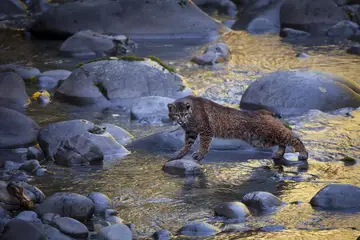
Bobcat
Photo: National Marine Sanctuaries · Public domain · Wikimedia Commons

Bobcat

Lynx rufus

Size
Total length 18 to 50 inches, tail 3 to 8 inches, weight 8 to 49 pounds (Missouri). About twice the size of a house cat.
How to recognize it
  • Short 'bobbed' tail, 4 to 8 inches, with a black tip and white underneath (Arizona). New Mexico instead describes black bars on top, white underneath and a white tip.
  • Pointed ears with tufts at the tips, often with cheek tufts
  • Backs of the ears are black with a light central spot
Where in Nevada
Statewide (NDOW page map: eastern, southern, western regions) NDOW
Conservation
NV state status: State Protected; federal column on NDOW page: Least Concern
What the sources say

Habitat: Bobcats thrive in a wide variety of habitat types. Within Nevada, Bobcats typically choose rocky areas with high prey abundance and plenty of coverage. Depending on suitable habitat availability, Nevada residents may spot a Bobcat in their neighborhood! (NDOW)

Full Bobcat guide

California Bighorn Sheep
Photo: Irene · CC0 1.0 · iNaturalist

California Bighorn Sheep

Ovis canadensis californiana

Where in Nevada
Western Nevada (NDOW page map) NDOW
Conservation
NV state status: Priority Species; federal column on NDOW page: Least Concern
What the sources say

Habitat: The California Bighorn Sheep is found in the slopes of the Sierra Nevada and prefers rugged, open areas with vegetation and grasses. They often move across their range as the seasons change. (NDOW)

California Leaf-nosed Bat
Photo: kclarksdnhmorg · CC BY 4.0 · iNaturalist

California Leaf-nosed Bat

Macrotus californicus

Conservation
Species of Greatest Conservation Need (2022 SWAP)
No confirmed photo of Canyon Bat

Canyon Bat

Parastrellus hesperus

Conservation
Species of Greatest Conservation Need (2022 SWAP)
No confirmed photo of Cave Myotis

Cave Myotis

Myotis velifer

Where in Nevada
Southern Nevada (NDOW page map) NDOW
Conservation
NV state status: Priority Species, State Protected; federal column on NDOW page: Least Concern
What the sources say

Habitat: The Cave Myotis is found primarily at lower elevations in arid habitats that are dominated by creosote bush, palo verde, brittlebush, cactus, and desert riparian shrubs. (NDOW)

No confirmed photo of Cottontail (Nuttall)

Cottontail (Nuttall)

Sylvilagus nuttallii

Conservation
game mammal (NAC 503.020)
Coyote
Photo: Gaurav Vaidya from Chapel Hill, USA · CC BY 2.0 · Wikimedia Commons

Coyote

Canis latrans

Danger to people
“If an incident with a human does occur, please call 911 or our dispatch 775-688-1331 immediately.” NDOW
Size
About 3.5 to 4 feet long including the tail and roughly 2 feet tall at the shoulder; weight varies by region: Arizona 20 to 30 lb, Florida average about 28 lb, Georgia 25 to 45 lb
How to recognize it
  • Large pointed ears, long narrow nose, bushy black-tipped tail
  • Like a slender medium-sized dog, much smaller than a wolf
  • Paw track about 2 inches long (Florida)
Where in Nevada
Statewide (NDOW page map: eastern, southern, western regions) NDOW
Conservation
NV state status: Unprotected; federal column on NDOW page: Least Concern
74 records by month.
What the sources say

Habitat: Coyotes are found in about any type of habitat where they can find food and a place to hide. They seem to show some preference for brush covered rolling hills and flats. Coyotes have perhaps the most varied habitat of any animal in Nevada and they thrive in both wild areas and urban settings. (NDOW)

Full Coyote guide

No confirmed photo of Dark Kangaroo Mouse

Dark Kangaroo Mouse

Microdipodops megacephalus

Where in Nevada
Statewide (NDOW page map: eastern, southern, western regions) NDOW
Conservation
NV state status: State Protected; federal column on NDOW page: Least Concern
What the sources say

Habitat: Dark Kangaroo Mice inhabit dry desert areas with lots of loose sand and gravel; especially the Great Basin in Nevada and sand dunes between 4000 and 6800 feet. They create underground systems throughout the sand dunes that protects them from extreme temperatures and predators. (NDOW)

Desert Bighorn Sheep
Photo: Irene · CC0 1.0 · iNaturalist

Desert Bighorn Sheep

Ovis canadensis nelsoni

Where in Nevada
Statewide (NDOW page map: eastern, southern, western regions) NDOW
Conservation
NV state status: Priority Species; federal column on NDOW page: Least Concern
What the sources say

Habitat: This species of Bighorn Sheep prefers the rough and rocky habitat of mountains in Southern Nevada. Steep rocks offer protection against predators, who are unable to navigate and climb up after the bighorn sheep. Although residents of deserts, they do require freestanding water to help them get through the hot summers. (NDOW)

No confirmed photo of Desert Cottontail

Desert Cottontail

Sylvilagus audubonii

Where in Nevada
Statewide (NDOW page map: eastern, southern, western regions) NDOW
Conservation
NV state status: State Protected; federal column on NDOW page: Least Concern
What the sources say

Habitat: Desert Cottontails live in a wide range of habitats including open upland, sagebrush, grasslands, shrublands, riparian areas, and pinyon-juniper forests. They rarely stray far from their birthplace area. (NDOW)

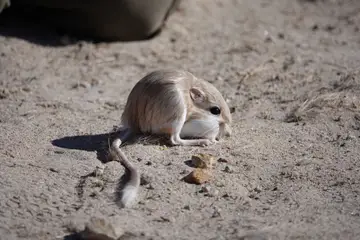
Desert Kangaroo Rat
Photo: Kyle Nessen · CC0 1.0 · iNaturalist

Desert Kangaroo Rat

Dipodomys deserti

Where in Nevada
Eastern western Nevada (NDOW page map) NDOW
Conservation
NV state status: Priority Species; federal column on NDOW page: Least Concern
What the sources say

Habitat: The Desert Kangaroo Rat lives in the desert flatlands, creosote scattered flats, and sandy soils in desert washes. They burrow into the loose soil to escape the harsh heat and dangerous desert environment. (NDOW)

No confirmed photo of desert pocket mouse

desert pocket mouse

Chaetodipus penicillatus

Conservation
Species of Greatest Conservation Need (2022 SWAP)
No confirmed photo of Desert Shrew

Desert Shrew

Notiosorex crawfordi

Where in Nevada
Southern Nevada (NDOW page map) NDOW
Conservation
NV state status: Unprotected; federal column on NDOW page: Least Concern
What the sources say

Venom: “Some species of shrews are actually venomous, the Desert Shrew is not, however.” (NDOW)

Habitat: Desert Shrews are found across the southwestern United States from California to Texas. In Nevada, they live in a wide range of habitats, including deserts, shrublands, and grasslands in the southern part of the state. These tiny mammals are secretive and rarely seen, spending most of their time hidden under vegetation, rocks, or loose soil. (NDOW)

No confirmed photo of Eastgate Pocket Gopher

Eastgate Pocket Gopher

Thomomys bottae lucrificus

Conservation
Species of Greatest Conservation Need (2022 SWAP)
No confirmed photo of Fish Springs Pocket Gopher

Fish Springs Pocket Gopher

Thomomys bottae abstrusus

Conservation
Species of Greatest Conservation Need (2022 SWAP)
No confirmed photo of Fringed Myotis

Fringed Myotis

Myotis thysanodes

Conservation
Species of Greatest Conservation Need (2022 SWAP)
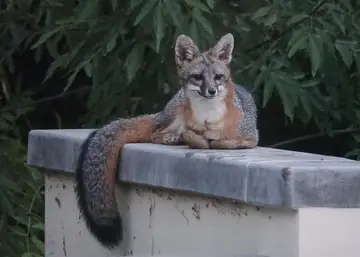
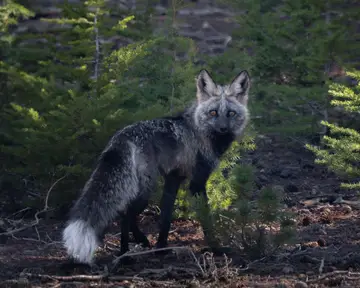
Gray Fox
Photo: Mike's Birds from Riverside, CA, US · CC BY-SA 2.0 · Wikimedia Commons · resized

Gray Fox

Urocyon cinereoargenteus

Where in Nevada
Statewide (NDOW page map: eastern, southern, western regions) NDOW
Conservation
NV state status: State Protected; federal column on NDOW page: Least Concern
What the sources say

Habitat: Gray Foxes can be found in open habitat such as woodland brush and mixed forests. Dense vegetative areas serve as resting places and cover from predators. They escape predators by finding cover rather than outrunning them. They will even climb trees! (NDOW)

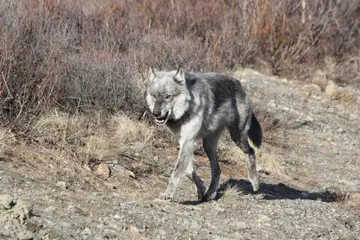
Gray Wolf
Photo: Robbie Hannawacker · CC0 1.0 · iNaturalist

Gray Wolf

Canis lupus

Size
Adults about 40 to 175 pounds depending on sex and region; on average about five to six feet long (Isle Royale), up to 6 feet including the tail (Washington), and 26 to 34 inches at the shoulder. Twice the size of a coyote.
How to recognize it
  • Longer legs, larger feet, wider head and snout, shorter ears, narrow body and straight tail compared with most coyotes and dogs.
  • Tracks about 5 inches long by 4 inches wide, with claws showing.
  • Long, drawn-out howls, audible up to five miles.
Conservation
NV state status: State Protected; federal column on NDOW page: Least Concern
What the sources say

Habitat: Nevada currently does not have an established gray wolf population but sporadic sightings have occurred. Gray Wolves can habituate almost any habitat including tundra, woodlands, forests, grasslands, and high deserts; their habitat depends on prey availability and human disturbance. (NDOW)

Full Gray Wolf guide

No confirmed photo of Greater Bonneted Bat

Greater Bonneted Bat

Eumops perotis

Conservation
Species of Greatest Conservation Need (2022 SWAP)
No confirmed photo of Hidden Forest Uinta Chipmunk

Hidden Forest Uinta Chipmunk

Neotamias umbrinus nevadensis

Conservation
protected (NAC 503.030)
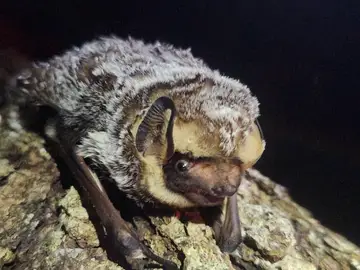
Hoary Bat
Photo: otiegoat · CC BY 4.0 · iNaturalist

Hoary Bat

Lasiurus cinereus

Conservation
Species of Greatest Conservation Need (2022 SWAP)
No confirmed photo of Humboldt yellow-pine chipmunk

Humboldt yellow-pine chipmunk

Neotamias amoenus celeris

Conservation
Species of Greatest Conservation Need (2022 SWAP)
No confirmed photo of Humboldt's Flying Squirrel

Humboldt's Flying Squirrel

Glaucomys oregonensis

Conservation
Species of Greatest Conservation Need (2022 SWAP)
No confirmed photo of Inyo shrew

Inyo shrew

Sorex tenellus

Conservation
Species of Greatest Conservation Need (2022 SWAP)
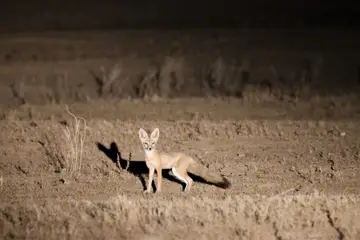
Kit Fox
Photo: Russ Namitz · CC0 1.0 · iNaturalist

Kit Fox

Vulpes macrotis

Where in Nevada
Statewide (NDOW page map: eastern, southern, western regions) NDOW
Conservation
NV state status: State Protected; federal column on NDOW page: Least Concern
What the sources say

Habitat: Kit Foxes can be found in the southwestern United states and into central Mexico. In Nevada, they live in the Mojave Desert where there are flat, arid lands with abundant bushes and desert scrub. (NDOW)

No confirmed photo of Little Brown Bat

Little Brown Bat

Myotis lucifugus

Where in Nevada
Statewide (NDOW page map: eastern, southern, western regions) NDOW
Conservation
NV state status: Priority Species, State Protected; federal column on NDOW page: Not Evaluated
What the sources say

Habitat: Little Brown Bats love to roost in buildings, caves, trees, rocks, and wood piles. They will also migrate hundreds of miles to move from their summer habitats to their winter or hibernacula roost sites. (NDOW)

No confirmed photo of Long-eared Myotis

Long-eared Myotis

Myotis volans

Conservation
Species of Greatest Conservation Need (2022 SWAP)
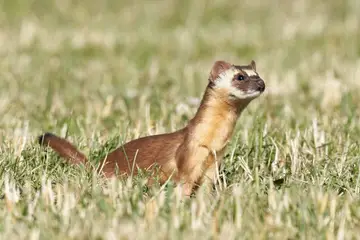
Long-tailed Weasel
Photo: benjchristensen · CC BY 4.0 · iNaturalist

Long-tailed Weasel

Mustela frenata

Conservation
unprotected (NAC 503.035)
No confirmed photo of Merriam's shrew

Merriam's shrew

Sorex merriami

Conservation
Species of Greatest Conservation Need (2022 SWAP)
No confirmed photo of Mexican Free-tailed Bat

Mexican Free-tailed Bat

Tadarida brasiliensis

Where in Nevada
Statewide (NDOW page map: eastern, southern, western regions) NDOW
Conservation
NV state status: Priority Species, State Protected; federal column on NDOW page: Least Concern
What the sources say

Habitat: Mexican Free-tailed Bats will find roost sites near water and mostly in caves, but will also find refuge in mines, bridges, and even tunnels and abandoned buildings. The largest known summer colony in Nevada consists of approximately 100,000 bats that have established their summer home under a bridge that crosses the Truckee River in Reno. (NDOW)

No confirmed photo of montane shrew

montane shrew

Sorex monticolus

Conservation
Species of Greatest Conservation Need (2022 SWAP)
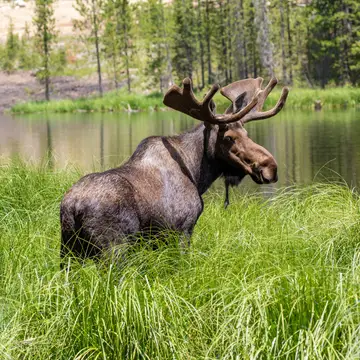
Moose (Shiras Moose)
Photo: Dan Vickers · CC BY 4.0 · iNaturalist

Moose (Shiras Moose)

Alces alces

Size
Alaska: adults 800 lb (small cow) to 1,600 lb (large bull), up to almost 6 feet tall. Elsewhere, NY DEC: bulls 600-1,200 lb, cows 500-800 lb.
How to recognize it
  • "Bell": flap of skin and hair hanging from the throat (both sexes)
  • Antlers on males only; flat and palmate (hand-shaped), up to five feet wide
  • Antlers only on males (ADF&G)
Where in Nevada
Eastern Nevada (NDOW page map) NDOW
Conservation
NV state status: State Protected; federal column on NDOW page: Least Concern
What the sources say

Habitat: Moose prefer areas with streams and lush vegetation. They can sometimes be spotted in northeastern Nevada from Idaho. These areas consist of sagebrush and other shrubs, providing food and shelter in the summer. (NDOW)

Full Moose (Shiras Moose) guide

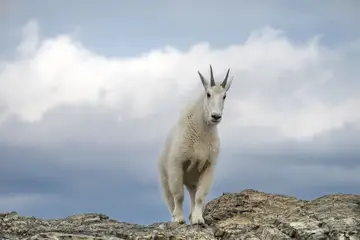
Mountain Goat
Photo: GlacierNPS · Public domain · Wikimedia Commons

Mountain Goat

Oreamnos americanus

Nonnative

Where in Nevada
Eastern Nevada (NDOW page map) NDOW
Conservation
NV state status: State Protected; federal column on NDOW page: Least Concern
What the sources say

Habitat: Mountain Goats were first introduced into the Ruby Mountains in the mid-1960’s with the release of 12 goats from Washington state. In Nevada, they can be found only in the Ruby Mountains and East Humboldt range. Mountain Goats prefer steep rocky cliffs, projecting pinnacles, ledges, and talus slides. (NDOW)

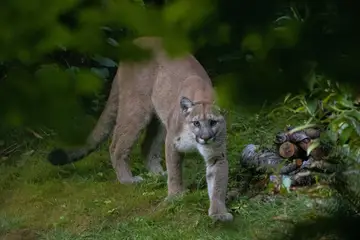
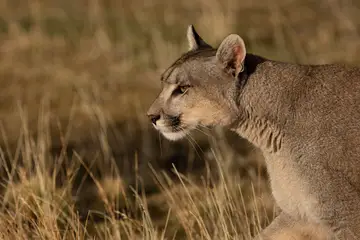
Mountain Lion
Photo: ArgentinaTurismo · CC BY 4.0 · Wikimedia Commons

Mountain Lion

Puma concolor

Danger to people
“Encounters with mountain lions are rare and the risk of an attack is extremely small.” NDOW
Size
Total length 5 to 8.5 feet including a 21 to 37.5 inch tail; males 79 to 265 lb, females 64 to 141 lb (Missouri Department of Conservation).
How to recognize it
  • Very large, slender cat with a small head, small rounded ears without tufts and a long, heavy tail.
  • The tail may be one-third of the total length; much larger than a bobcat or lynx.
  • Tracks: 2.75 to 3.75 inches wide, three lobes at the bottom of the heel pad, claw marks usually absent.
Where in Nevada
Statewide (NDOW page map: eastern, southern, western regions) NDOW
Conservation
NV state status: State Protected; federal column on NDOW page: Least Concern
What the sources say

Habitat: Mountain Lions are adapted to a wide variety of habitats and environmental conditions found throughout Nevada. They prefer dense cover or rocky, rugged terrain, and also occur in low desert areas. In Nevada, Mountain Lion habitat is commonly associated with pinyon pine, juniper, and mountain mahogany. (NDOW)

Full Mountain Lion guide

No confirmed photo of Mountain Pocket Gopher

Mountain Pocket Gopher

Thomomys monticola

Conservation
Species of Greatest Conservation Need (2022 SWAP)
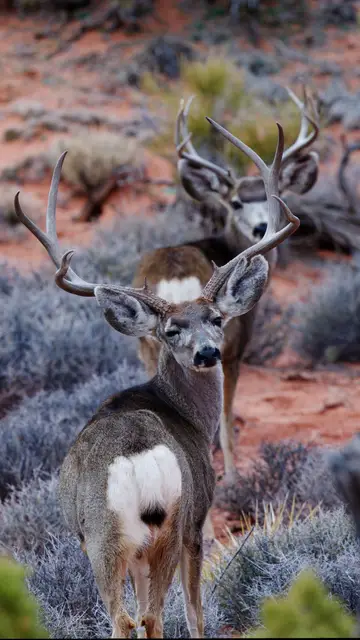
Mule Deer
Photo: Daughter Dad · CC BY 4.0 · iNaturalist

Mule Deer

Odocoileus hemionus

Where in Nevada
Statewide (NDOW page map: eastern, southern, western regions) NDOW
Conservation
NV state status: Priority Species; federal column on NDOW page: Least Concern
What the sources say

Habitat: Mule Deer move between different habitat types but seem to prefer arid, open areas and rocky hillsides. (NDOW)

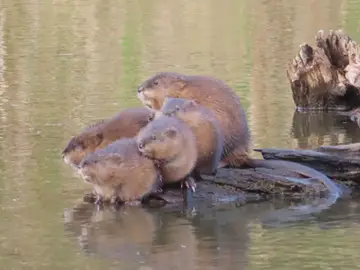
Muskrat
Photo: Ken Clark · CC BY 4.0 · iNaturalist

Muskrat

Ondatra zibethicus

Where in Nevada
Statewide (NDOW page map: eastern, southern, western regions) NDOW
Conservation
NV state status: State Protected; federal column on NDOW page: Least Concern
What the sources say

Habitat: The Muskrat is an aquatic rodent who is commonly found throughout Nevada’s waterways. They habituate wetland areas with ample vegetation where they can construct their conical-shaped houses and bank dens out of plant matter. (NDOW)

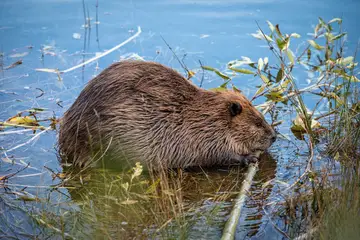
North American Beaver
Photo: GrandTetonNPS · Public domain · Wikimedia Commons

North American Beaver

Castor canadensis

Where in Nevada
Statewide (NDOW page map: eastern, southern, western regions) NDOW
Conservation
NV state status: State Protected; federal column on NDOW page: Not Evaluated
What the sources say

Habitat: The North American Beaver prefers habitat with adequate water and rich vegetation to forage for food and fell trees. They can be found in the streams and tributaries of the Snake River, the Humboldt River basin, and along the Colorado River. (NDOW)

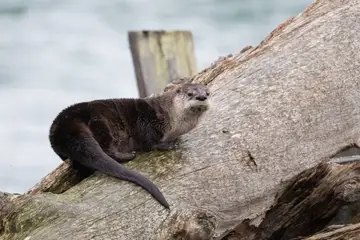
North American River Otter
Photo: Adam Jackson · CC0 1.0 · iNaturalist

North American River Otter

Lontra canadensis

Where in Nevada
Eastern western Nevada (NDOW page map) NDOW
Conservation
NV state status: State Protected; federal column on NDOW page: Least Concern
What the sources say

Habitat: The North American River Otter lives in slow moving water with abundant riparian plants and fish. They have been found to use the dens of other animals rather than creating their own. (NDOW)

No confirmed photo of Northern Flying Squirrel

Northern Flying Squirrel

Glaucomys sabrinus

Where in Nevada
Western Nevada (NDOW page map) NDOW
Conservation
NV state status: State Protected; federal column on NDOW page: Endangered
What the sources say

Habitat: The Northern Flying Squirrel ranges from the treeline in Alaska and Canada southward in the west to northern California and Colorado, in the middle of the continent to central Michigan and Wisconsin, and in the east to northern North Carolina and Tennessee. Island populations exist in areas of high elevation in other parts of the United States, including the southern Appalachian Mountains, the Black Hills, and our very own Sierra Nevada. (NDOW)

No confirmed photo of Northern Grasshopper Mouse

Northern Grasshopper Mouse

Onychomys leucogaster

Where in Nevada
Statewide (NDOW page map: eastern, southern, western regions) NDOW
Conservation
NV state status: Unprotected; federal column on NDOW page: Least Concern
What the sources say

Habitat: The Northern Grasshopper Mouse can be found from southwestern Canada throughout the western United States into northwestern Mexico. Thrives in Nevada’s deserts. (NDOW)

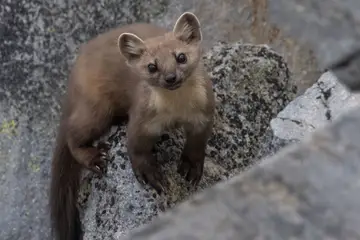
Pacific Marten
Photo: Sam Eberhard · CC BY 4.0 · iNaturalist

Pacific Marten

Martes caurina

Conservation
Species of Greatest Conservation Need (2022 SWAP)
No confirmed photo of Pahranagat Valley Montane Vole

Pahranagat Valley Montane Vole

Microtus montanus fucosus

Conservation
Species of Greatest Conservation Need (2022 SWAP)
No confirmed photo of Pale Kangaroo Mouse

Pale Kangaroo Mouse

Microdipodops pallidus

Conservation
Species of Greatest Conservation Need (2022 SWAP)
No confirmed photo of Pallid Bat

Pallid Bat

Antrozous pallidus

Conservation
Species of Greatest Conservation Need (2022 SWAP)
No confirmed photo of Palmer's Chipmunk

Palmer's Chipmunk

Neotamias palmeri

Conservation
Species of Greatest Conservation Need (2022 SWAP)
No confirmed photo of Panamint Kangaroo Rat

Panamint Kangaroo Rat

Dipodomys panamintinus

Conservation
Species of Greatest Conservation Need (2022 SWAP)
No confirmed photo of Peccary

Peccary

Pecari angulatus

Conservation
game mammal (NAC 503.020)
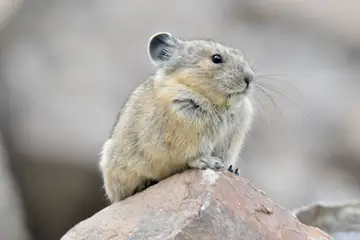
Pika
Photo: Parker James Lloyd · CC BY 4.0 · iNaturalist

Pika

Ochotona princeps

Where in Nevada
Eastern western Nevada (NDOW page map) NDOW
Conservation
NV state status: Priority Species, State Protected; federal column on NDOW page: Least Concern
What the sources say

Habitat: Pikas live primarily in rocky slopes near alpine meadows and rolling hills, but are also sometimes found along streams in rocky areas and in lava fields that are near a great food source. (NDOW)

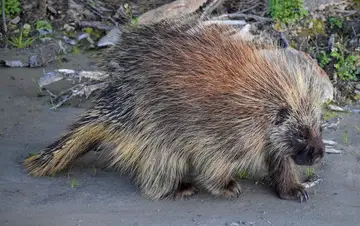
Porcupine
Photo: The Cosmonaut · CC BY-SA 2.5 ca · Wikimedia Commons · resized

Porcupine

Erethizon dorsatum

Size
Adults about 30 inches including a 6- to 10-inch tail, 9 to 15 pounds, older adults up to 20 pounds (Pennsylvania). Massachusetts: 25-31 inches, averaging 12 pounds in early spring to 20 in fall. Minnesota: 24 to 40 inches, 18 to 35 pounds.
How to recognize it
  • Coat of quills; up to 30,000
  • Only North American mammal with coat hairs modified as quills
  • Short legs, long claws, high-arching back
Where in Nevada
Statewide (NDOW page map: eastern, southern, western regions) NDOW
Conservation
NV state status: Unprotected; federal column on NDOW page: Least Concern
What the sources say

Habitat: Although they are not very common, North American Porcupines can be found throughout Nevada. In this state, they prefer high-altitude forests, especially areas near water. (NDOW)

Full Porcupine guide

No confirmed photo of Preble's Shrew

Preble's Shrew

Sorex preblei

Conservation
Species of Greatest Conservation Need (2022 SWAP)
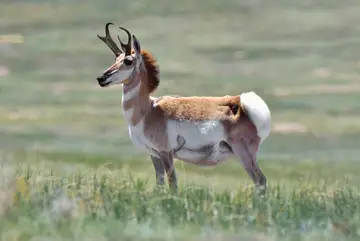
Pronghorn Antelope
Photo: Dean Hester · CC BY 4.0 · iNaturalist

Pronghorn Antelope

Antilocapra americana

Where in Nevada
Statewide (NDOW page map: eastern, southern, western regions) NDOW
Conservation
NV state status: State Protected; federal column on NDOW page: Not Evaluated
What the sources say

Habitat: Pronghorn prefer gentle rolling to flat, wide-open topography. These habitats allow the Antelope to spot predators from far distances and quickly escape. They are primarily found in the mountain ranges of northern and central Nevada. (NDOW)

No confirmed photo of Pygmy Rabbit

Pygmy Rabbit

Brachylagus idahoensis

Where in Nevada
Eastern western Nevada (NDOW page map) NDOW
Conservation
NV state status: Priority Species, State Protected; federal column on NDOW page: Least Concern
What the sources say

Habitat: Pygmy Rabbits depend highly on sagebrush and sagebrush-steppe habitat for food and shelter. They are usually found in areas with tall, dense sagebrush and will make burrows in relatively deep and loose soil near water. (NDOW)

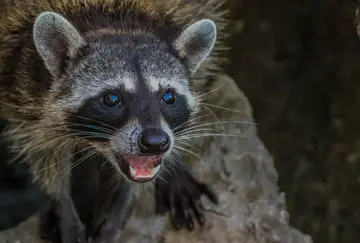
Raccoon
Photo: Marco Antonino Ramos Rodríguez · CC BY-SA 4.0 · Wikimedia Commons · resized

Raccoon

Procyon lotor

Where in Nevada
Statewide (NDOW page map: eastern, southern, western regions) NDOW
Conservation
NV state status: Unprotected; federal column on NDOW page: Least Concern
What the sources say

Habitat: The adaptability of the Raccoon gives them plenty of options when it comes to suitable habitat. However, they prefer forested areas near water sources that offer plenty of food and lots of holes in which they can make a den. They are no stranger to cities, however, and can easily find a place to live. (NDOW)

Red Fox
Photo: David Willingham · CC BY 4.0 · iNaturalist

Red Fox

Vulpes vulpes

Where in Nevada
Statewide (NDOW page map: eastern, southern, western regions) NDOW
Conservation
NV state status: State Protected; federal column on NDOW page: Least Concern
What the sources say

Habitat: Red Foxes have increased their range in Nevada, particularly inhabiting areas in the western region of the state. They live in open woodlands and mountain meadows near treeline. (NDOW)

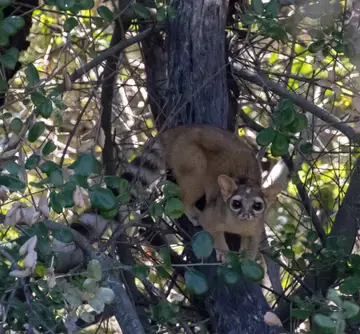
Ringtail
Photo: Dan Fitzgerald (Fitz) · CC0 1.0 · iNaturalist

Ringtail

Bassariscus astutus

Where in Nevada
Statewide (NDOW page map: eastern, southern, western regions) NDOW
Conservation
NV state status: Unprotected; federal column on NDOW page: Least Concern
What the sources say

Habitat: Ringtail are common in the southwestern portions of the United States and Mexico. In Nevada, they are found mostly in the southern parts of the state with small portions stretching up into the east and west. (NDOW)

Rocky Mountain Bighorn Sheep
Photo: Eric Schmidt · CC BY 4.0 · iNaturalist

Rocky Mountain Bighorn Sheep

Ovis canadensis canadensis

Where in Nevada
Eastern Nevada (NDOW page map) NDOW
Conservation
NV state status: Priority Species; federal column on NDOW page: Least Concern
What the sources say

Habitat: Rocky Mountain Bighorn Sheep inhabit grassy mountain slopes, alpine meadows, and foothills near rugged, rocky cliffs and bluffs. (NDOW)

No confirmed photo of Rocky Mountain Elk

Rocky Mountain Elk

Cervus canadensis

Where in Nevada
Eastern western Nevada (NDOW page map) NDOW
Conservation
NV state status: State Protected; federal column on NDOW page: Least Concern
What the sources say

Habitat: Elk habitat varies from prairies, forested areas, sagebrush flats, deciduous forests, even swampy valleys and mountain meadows. (NDOW)

No confirmed photo of San Antonio Pocket Gopher

San Antonio Pocket Gopher

Thomomys bottae curtatus

Conservation
Species of Greatest Conservation Need (2022 SWAP)
No confirmed photo of Short-tailed Weasel

Short-tailed Weasel

Mustela erminea

Conservation
unprotected (NAC 503.035)
No confirmed photo of Sierra Nevada Mountain Beaver

Sierra Nevada Mountain Beaver

Aplodontia rufa californica

Conservation
Species of Greatest Conservation Need (2022 SWAP)
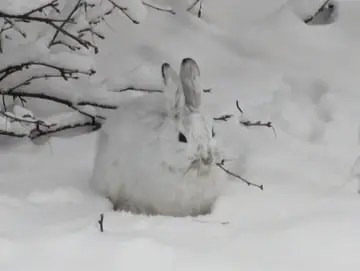
Sierra Nevada Snowshoe Hare
Photo: Matt Muir · CC BY 4.0 · iNaturalist

Sierra Nevada Snowshoe Hare

Lepus americanus tahoensis

Conservation
Species of Greatest Conservation Need (2022 SWAP)
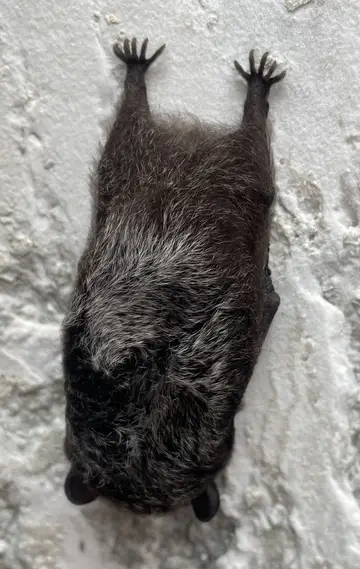
Silver-haired Bat
Photo: Sam Kieschnick · CC BY 4.0 · iNaturalist

Silver-haired Bat

Lasionycteris noctivagans

Conservation
Species of Greatest Conservation Need (2022 SWAP)
No confirmed photo of Spotted Bat

Spotted Bat

Euderma maculatum

Where in Nevada
Statewide (NDOW page map: eastern, southern, western regions) NDOW
Conservation
NV state status: Priority Species, State Protected, Threatened; federal column on NDOW page: Least Concern
What the sources say

Habitat: The Spotted Bat prefers to live near water sources such as springs, creeks and rivers. Spotted Bats roost in vertical cliffs and ledges until they can come out in the night and hunt. These bats are distributed throughout the state, but in very patchy occurrences. (NDOW)

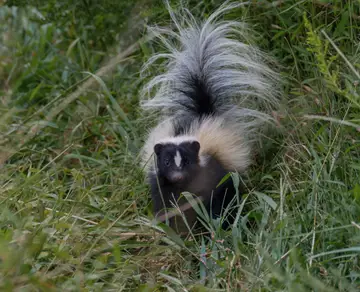
Striped Skunk
Photo: Mirko Schoenitz · CC0 1.0 · iNaturalist

Striped Skunk

Mephitis mephitis

Where in Nevada
Eastern western Nevada (NDOW page map) NDOW
Conservation
NV state status: Unprotected; federal column on NDOW page: Least Concern
What the sources say

Habitat: A Striped Skunk will make a home in abandoned burrows, hollowed trees or logs, or under brush that offers cover. They prefer areas that are near water sources, but have been seen in the drier desert areas of southern Nevada. (NDOW)

No confirmed photo of Townsend's Big-eared Bat

Townsend's Big-eared Bat

Corynorhinus townsendii

Conservation
Species of Greatest Conservation Need (2022 SWAP)
No confirmed photo of Trowbridge's Shrew

Trowbridge's Shrew

Sorex trowbridgii

Conservation
Species of Greatest Conservation Need (2022 SWAP)
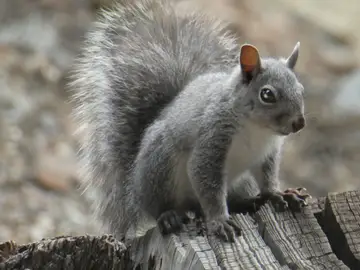
Western Gray Squirrel
Photo: Eric Johnson · CC BY 4.0 · iNaturalist

Western Gray Squirrel

Sciurus griseus

Conservation
protected (NAC 503.030)
No confirmed photo of Western Jumping Mouse

Western Jumping Mouse

Zapus princeps

Conservation
Species of Greatest Conservation Need (2022 SWAP)
No confirmed photo of Western Long-eared Bat

Western Long-eared Bat

Myotis evotis

Where in Nevada
Statewide (NDOW page map: eastern, southern, western regions) NDOW
Conservation
NV state status: Priority Species; federal column on NDOW page: Least Concern
What the sources say

Habitat: The Western Long-eared Bat’s range stretches from southwestern Canada to the western United States and into Baja California. The species is found across the state of Nevada, typically in coniferous-forested habitats and elevations from 7,000 – 8,500 feet. (NDOW)

No confirmed photo of Western Red Bat

Western Red Bat

Lasiurus blossevillii

Conservation
Species of Greatest Conservation Need (2022 SWAP)
No confirmed photo of Western Small-footed Myotis

Western Small-footed Myotis

Myotis ciliolabrum

Conservation
Species of Greatest Conservation Need (2022 SWAP)
No confirmed photo of Western Spotted Skunk

Western Spotted Skunk

Spilogale gracilis

Where in Nevada
Statewide (NDOW page map: eastern, southern, western regions) NDOW
Conservation
NV state status: Unprotected; federal column on NDOW page: Least Concern
What the sources say

Habitat: These little mammals can be found throughout Nevada. They are often seen near towns and neighborhoods, but out in Nevada’s wide-open spaces, they prefer rocky cliffs and riparian areas. (NDOW)

No confirmed photo of Western water shrew

Western water shrew

Sorex palustris

Conservation
Species of Greatest Conservation Need (2022 SWAP)
No confirmed photo of White-tailed Antelope Squirrel

White-tailed Antelope Squirrel

Ammospermophilus leucurus

Where in Nevada
Statewide (NDOW page map: eastern, southern, western regions) NDOW
Conservation
NV state status: Unprotected; federal column on NDOW page: Least Concern
What the sources say

Habitat: Their range extends north to south from southwestern Oregon to New Mexico, and east to west from western Colorado to Baja California, Mexico. A true desert species that prefers rocky, dry areas with rocks and cactus. (NDOW)

White-tailed Jackrabbit
Photo: pachips · CC BY 4.0 · iNaturalist

White-tailed Jackrabbit

Lepus townsendii

Where in Nevada
Eastern western Nevada (NDOW page map) NDOW
Conservation
NV state status: State Protected; federal column on NDOW page: Least Concern
What the sources say

Habitat: White-tailed Jackrabbits prefer open grasslands, pastures, and fields and can also be found living in forested areas and high alpine tundra. (NDOW)

No confirmed photo of Wolverine

Wolverine

Gulo gulo

Conservation
protected (NAC 503.030)
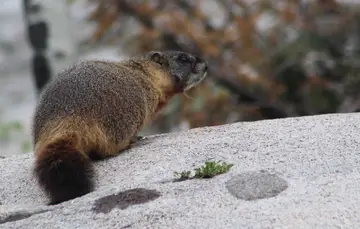
Yellow-bellied Marmot
Photo: Hunter Hickok · CC BY 4.0 · iNaturalist

Yellow-bellied Marmot

Marmota flaviventris

Where in Nevada
Statewide (NDOW page map: eastern, southern, western regions) NDOW
Conservation
NV state status: Unprotected; federal column on NDOW page: Least Concern
What the sources say

Habitat: Yellow-bellied Marmots are distributed widely in the western United States and Canada. They range as far north as southcentral British Columbia and Alberta in Canada and as far south as the Sierra Nevada. (NDOW)

No confirmed photo of Yuma Myotis

Yuma Myotis

Myotis yumanensis

Conservation
Species of Greatest Conservation Need (2022 SWAP)

Mammals people confuse

Bobcat or Mountain lion (cougar)?

Bobcat
Photo: National Marine Sanctuaries · Public domain · Wikimedia Commons

Bobcat Not stated

Mountain lion (cougar)
Photo: Jeff Bartlett · CC BY 4.0 · iNaturalist

Mountain lion (cougar) Not stated

Cougars are one color (yellow-brown to light cinnamon) with a long tail. The bobcat's tail is short and its coat is spotted. TWRA says cougars are many times larger and longer, with a very long tail.

Coyote or Gray wolf?

Coyote
Photo: Gaurav Vaidya from Chapel Hill, USA · CC BY 2.0 · Wikimedia Commons

Coyote Not stated

Gray wolf
Photo: Robbie Hannawacker · CC0 1.0 · iNaturalist

Gray wolf Not stated

NY DEC: gray wolves are much larger (females typically 50-100 lb, males 70-145 lb, 5-6 ft nose to tail, 27-33 in at the shoulder); eastern coyotes rarely exceed 50 lb and generally stand under 2 ft at the shoulder. Wolves have small rounded ears and a short blocky snout; coyotes have larger, more pointed ears (can look rounded in winter coat) and a long, narrow, pointed snout. Coyote tracks are typically 3 x 2 in, wolf tracks about 5 x 4 in. NY DEC says most wolf reports in New York were coyotes, dogs or wolf-dog hybrids.

Photos show typical adults; individuals vary. Never get close to compare.

When mammals are active in Nevada

Records of mammals in Nevada peak in April to August. They show when people record mammals, not how many there are (about month bars).

1,465 records of mammals in Nevada by month (GBIF, CC0 and CC BY records).

If you are bitten or stung

Call 911 or Poison Help at 1-800-222-1222 right away. Poison Help connects you to your local poison center, any time of day.

Official advice from NDOW:

  • Do not handle bats, dead or alive, where it can be avoided. NDOW

What official sources say

Are there bears in Nevada?

Yes. Black bears only, in the mountains and foothills of the Sierra Nevada and Lake Tahoe areas. NDOW

“Black Bears are the only species of bear that live in Nevada.”

Are there grizzly bears in Nevada?

No. NDOW says black bears are the only bear species living in Nevada. NDOW

“Black Bears are the only species of bear that live in Nevada.”

Are there mountain lions in Nevada?

Yes. They live in rocky terrain throughout Nevada; NDOW says the risk of attack is extremely small. NDOW

“Mountain lions occupy areas with rocky terrain throughout Nevada, especially where mule deer live.”

Are there moose in Nevada?

Yes. NDOW calls the Shiras moose the newest resident to inhabit Nevada. NDOW
“…the newest resident to inhabit Nevada”

About this list

The species list comes from NAC 503.020-.035 (game, fur-bearing, protected, unprotected mammals), combined with the 2022 SGCN List and the NDOW Species Information database (Nevada Legislature (regulations of the Board of Wildlife Commissioners), NAC Rev. 10/22/2025; SWAP 2022). 80 more entries come from other official sources named on each card.
Venom labels come only from official sources and link to them; "Not stated" never means harmless. How labels work.

"Nonnative" and "Invasive" follow the wording of the source list. See invasive species in Nevada.

Sources

  1. Species Information. Nevada Department of Wildlife (NDOW). undated page; checked November 3, 2026.
  2. Nevada Administrative Code Chapter 503: Hunting, Fishing and Trapping; Miscellaneous Protective Measures. Nevada Legislature (regulations of the Board of Wildlife Commissioners). file header "Rev. 10/22/2025"; checked November 3, 2026.
  3. 2022 Nevada State Wildlife Action Plan, Appendix E: Species Accounts (includes "2022 SGCN List"). Nevada Department of Wildlife (NDOW). 2022; checked November 3, 2026.
  4. Allen’s Big-eared Bat - Species Information. Nevada Department of Wildlife (NDOW). undated page; checked November 3, 2026.
  5. American Badger - Species Information. Nevada Department of Wildlife (NDOW). undated page; checked November 3, 2026.
  6. American Mink - Species Information. Nevada Department of Wildlife (NDOW). undated page; checked November 3, 2026.
  7. Black Bear - Species Information. Nevada Department of Wildlife (NDOW). undated page; checked November 3, 2026.
    Quoted passages (1)
    “Black Bears are the only species of bear that live in Nevada.”
  8. Living with Bears. Nevada Department of Wildlife (NDOW). undated page; checked November 3, 2026.
    Quoted passages (1)
    “They may sometimes get to the point where they are a public safety risk and have to be killed to avoid a dangerous encounter.”
  9. Black-tailed Jackrabbit - Species Information. Nevada Department of Wildlife (NDOW). undated page; checked November 3, 2026.
  10. Bobcat - Species Information. Nevada Department of Wildlife (NDOW). undated page; checked November 3, 2026.
  11. California Bighorn Sheep - Species Information. Nevada Department of Wildlife (NDOW). undated page; checked November 3, 2026.
  12. Cave Myotis - Species Information. Nevada Department of Wildlife (NDOW). undated page; checked November 3, 2026.
  13. Coyote - Species Information. Nevada Department of Wildlife (NDOW). undated page; checked November 3, 2026.
  14. Living with Coyotes. Nevada Department of Wildlife (NDOW). undated page; checked November 3, 2026.
    Quoted passages (1)
    “If an incident with a human does occur, please call 911 or our dispatch 775-688-1331 immediately.”
  15. Dark Kangaroo Mouse - Species Information. Nevada Department of Wildlife (NDOW). undated page; checked November 3, 2026.
  16. Desert Bighorn Sheep - Species Information. Nevada Department of Wildlife (NDOW). undated page; checked November 3, 2026.
  17. Desert Cottontail - Species Information. Nevada Department of Wildlife (NDOW). undated page; checked November 3, 2026.
  18. Desert Kangaroo Rat - Species Information. Nevada Department of Wildlife (NDOW). undated page; checked November 3, 2026.
  19. Desert Shrew - Species Information. Nevada Department of Wildlife (NDOW). undated page; checked November 3, 2026.
    Quoted passages (1)
    “Some species of shrews are actually venomous, the Desert Shrew is not, however.”
  20. Gray Fox - Species Information. Nevada Department of Wildlife (NDOW). undated page; checked November 3, 2026.
  21. Gray Wolf - Species Information. Nevada Department of Wildlife (NDOW). undated page; checked November 3, 2026.
  22. Kit Fox - Species Information. Nevada Department of Wildlife (NDOW). undated page; checked November 3, 2026.
  23. Little Brown Bat - Species Information. Nevada Department of Wildlife (NDOW). undated page; checked November 3, 2026.
  24. Mexican Free-tailed Bat - Species Information. Nevada Department of Wildlife (NDOW). undated page; checked November 3, 2026.
  25. Moose (Shiras Moose) - Species Information. Nevada Department of Wildlife (NDOW). undated page; checked November 3, 2026.
    Quoted passages (1)
    “…the newest resident to inhabit Nevada”
  26. Mountain Goat - Species Information. Nevada Department of Wildlife (NDOW). undated page; checked November 3, 2026.
  27. Mountain Lion - Species Information. Nevada Department of Wildlife (NDOW). undated page; checked November 3, 2026.
  28. Living with Mountain Lions. Nevada Department of Wildlife (NDOW). undated page; checked November 3, 2026.
    Quoted passages (2)
    “Encounters with mountain lions are rare and the risk of an attack is extremely small.”
    “Mountain lions occupy areas with rocky terrain throughout Nevada, especially where mule deer live.”
  29. Mule Deer - Species Information. Nevada Department of Wildlife (NDOW). undated page; checked November 3, 2026.
  30. Muskrat - Species Information. Nevada Department of Wildlife (NDOW). undated page; checked November 3, 2026.
  31. North American Beaver - Species Information. Nevada Department of Wildlife (NDOW). undated page; checked November 3, 2026.
  32. North American River Otter - Species Information. Nevada Department of Wildlife (NDOW). undated page; checked November 3, 2026.
  33. Northern Flying Squirrel - Species Information. Nevada Department of Wildlife (NDOW). undated page; checked November 3, 2026.
  34. Northern Grasshopper Mouse - Species Information. Nevada Department of Wildlife (NDOW). undated page; checked November 3, 2026.
  35. Pika - Species Information. Nevada Department of Wildlife (NDOW). undated page; checked November 3, 2026.
  36. Porcupine - Species Information. Nevada Department of Wildlife (NDOW). undated page; checked November 3, 2026.
  37. Pronghorn Antelope - Species Information. Nevada Department of Wildlife (NDOW). undated page; checked November 3, 2026.
  38. Pygmy Rabbit - Species Information. Nevada Department of Wildlife (NDOW). undated page; checked November 3, 2026.
  39. Raccoon - Species Information. Nevada Department of Wildlife (NDOW). undated page; checked November 3, 2026.
  40. Red Fox - Species Information. Nevada Department of Wildlife (NDOW). undated page; checked November 3, 2026.
  41. Ringtail - Species Information. Nevada Department of Wildlife (NDOW). undated page; checked November 3, 2026.
  42. Rocky Mountain Bighorn Sheep - Species Information. Nevada Department of Wildlife (NDOW). undated page; checked November 3, 2026.
  43. Rocky Mountain Elk - Species Information. Nevada Department of Wildlife (NDOW). undated page; checked November 3, 2026.
  44. Spotted Bat - Species Information. Nevada Department of Wildlife (NDOW). undated page; checked November 3, 2026.
  45. Striped Skunk - Species Information. Nevada Department of Wildlife (NDOW). undated page; checked November 3, 2026.
  46. Western Long-eared Bat - Species Information. Nevada Department of Wildlife (NDOW). undated page; checked November 3, 2026.
  47. Western Spotted Skunk - Species Information. Nevada Department of Wildlife (NDOW). undated page; checked November 3, 2026.
  48. White-tailed Antelope Squirrel - Species Information. Nevada Department of Wildlife (NDOW). undated page; checked November 3, 2026.
  49. White-tailed Jackrabbit - Species Information. Nevada Department of Wildlife (NDOW). undated page; checked November 3, 2026.
  50. Yellow-bellied Marmot - Species Information. Nevada Department of Wildlife (NDOW). undated page; checked November 3, 2026.
  51. Living with Bats. Nevada Department of Wildlife (NDOW). undated page; checked November 3, 2026.
    Quoted passages (2)
    “Bats can carry rabies (just like other mammals) and they are considered a vector species for rabies.”
    “…you should limit handling any bats dead or alive”
  52. GBIF.org occurrence records, human observations licensed CC0 1.0 or CC BY 4.0 only, accessed November 3, 2026. The datasets behind these counts are listed on our Sources page.