States Wildlife

Nevada Lizards: Identification Guide With Pictures

Last checked November 3, 2026 against official sources.

On this page
  1. Which lizards can hurt you
  2. All 25 lizards
  3. Lookalikes
  4. When they are active
  5. If you are bitten or stung
  6. How to report
  7. Common questions
  8. About this list
  9. Sources

This page lists 25 lizards: 6 from Nevada Department of Wildlife (NDOW) / Nevada Board of Wildlife Commissioners's Commission Regulation 19-02, combined with NAC 503.080, the 2022 SGCN List and the NDOW Species Information database and 19 named in other official sources. 1 is venomous by official accounts. 1 is nonnative.

Which lizards can hurt you

Official sources single out these lizards in Nevada, in their own words:

All 25 lizards

Venomous species first, then A to Z. Do not handle them.

Gila Monster
Photo: Matt Berger · CC BY 4.0 · iNaturalist

Gila Monster

Heloderma suspectum

Venomous per NDOW

Danger to people
“A Gila monster bite is painful to humans but rarely deadly.” NDOW
Size
NPS: up to 22 inches (560 mm) long and over a pound (450 g), the largest lizard in the United States. AZGFD: up to 14 inches from snout to vent. NDOW lists 18-24 inches and 2-4 lb.
How to recognize it
  • Hard, rounded, beadlike scales; dark forked tongue; short fat tail
  • Short, stout legs with long, sharp-clawed toes; big head and round tail
Where in Nevada
The Gila Monster is known only to occur in the Mojave portion of southern Nevada Nevada Department of Wildlife (NDOW) with University of Nevada, Reno Extension
Conservation
NV state status: Priority Species, State Protected; federal column on NDOW page: Near Threatened
What the sources say

Venom: “Gila Monsters are the only venomous lizard native to Nevada.” (NDOW)

Habitat: The Gila Monster is usually found in rocky desert scrub habitats and semi-desert grassland. They use features such as rock crevices, boulders, burrows, and packrat middens. (NDOW)

Full Gila Monster guide

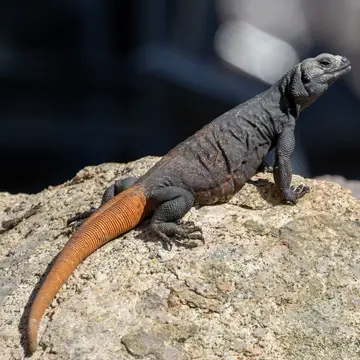
Chuckwalla
Photo: Dan Vickers · CC BY 4.0 · iNaturalist

Chuckwalla

Sauromalus ater

Not stated

Venom
No official source we use states whether this animal is venomous. That does not mean it is harmless: do not handle it.
Size
Adults 11 to 16.5 inches (28 to 42 cm) long (AZGFD); up to 9 inches snout to vent. NPS gives up to 20 inches. AZGFD calls it the largest native iguanid in the US.
How to recognize it
  • Flat, wide body with loose skin folds on neck and sides; flattened broad head; tail blunt at the tip and broad at the base
  • Small, granular body scales (Gila monster has large bead-like scales)
  • Larger and stockier than other US iguanid lizards, without head spines or enlarged scales along the back
Where in Nevada
Southern Nevada (NDOW page map) NDOW
Conservation
NV state status: Priority Species, Unprotected; federal column on NDOW page: Least Concern
51 records by month.
What the sources say

Habitat: Chuckwallas are found in southern Nevada in the Mojave Desert. They prefer rocky areas with lots of crevices such as outcrops and rocky hillsides. They do not require a lot of vegetation in their preferred areas. (NDOW)

Full Chuckwalla guide

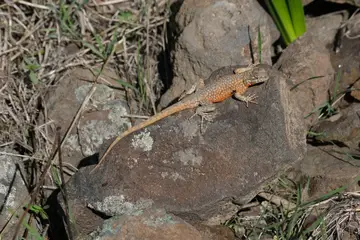
Colorado River Tree Lizard
Photo: Jason Leduc · CC0 1.0 · iNaturalist

Colorado River Tree Lizard

Urosaurus ornatus symmetricus

Not stated

Venom
No official source we use states whether this animal is venomous. That does not mean it is harmless: do not handle it.
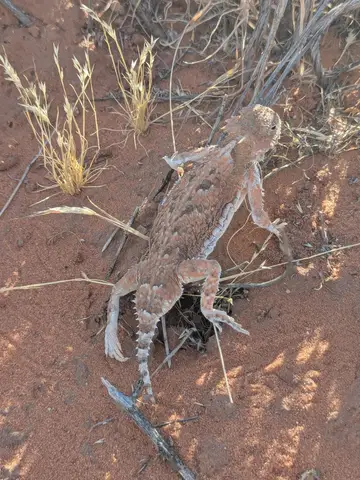
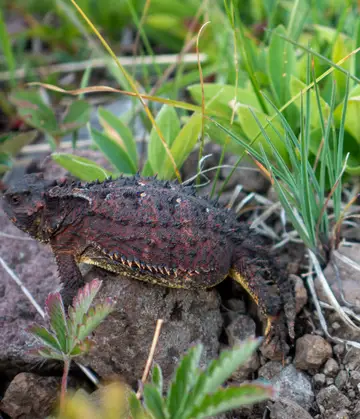
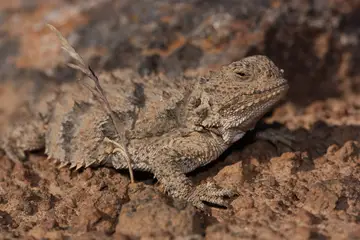
Desert Horned Lizard
Photo: colorful-corvid · CC BY 4.0 · iNaturalist

Desert Horned Lizard

Phrynosoma platyrhinos

Not stated

Venom
No official source we use states whether this animal is venomous. That does not mean it is harmless: do not handle it.
Where in Nevada
Statewide (NDOW page map: eastern, southern, western regions) NDOW
Conservation
NV state status: Priority Species, Unprotected; federal column on NDOW page: Least Concern
What the sources say

Habitat: The Desert Horned Lizard can be found throughout Nevada, and in many different types of habitats. They like sandy flats, alluvial fans, washes, sand dunes, and among rocky areas. (NDOW)

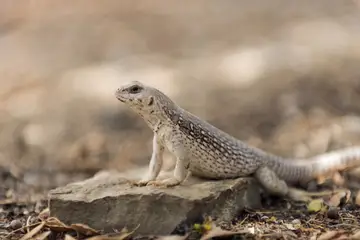
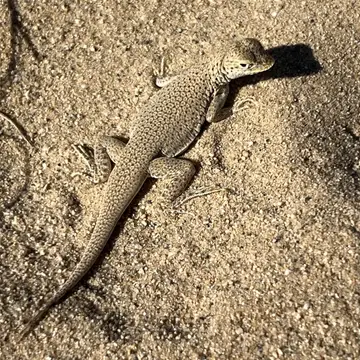
Desert Iguana
Photo: Joshua Tree National Park · Public domain · Wikimedia Commons

Desert Iguana

Dipsosaurus dorsalis

Not stated

Venom
No official source we use states whether this animal is venomous. That does not mean it is harmless: do not handle it.
Size
Up to 5.75 inches (146 mm) snout to vent; NDOW says the tail is usually longer than the body. Total length not stated.
How to recognize it
  • A single row of enlarged, pointed scales down the middle of the back
  • Small, blunt head; tail taller than wide; short, stocky limbs
  • Adults have two large rust patches on the belly during breeding season
Where in Nevada
Southern Nevada (NDOW page map) NDOW
Conservation
NV state status: Priority Species, Unprotected; federal column on NDOW page: Least Concern
What the sources say

Habitat: Desert Iguanas live in the Mojave Desert in southern Nevada. They prefer brushy areas, especially with creosote bushes. Dry, rocky, brushy areas with plenty of areas to conceal themselves are preferred. They are not usually found in areas that do not have creosote bushes. (NDOW)

Full Desert Iguana guide

Desert Night Lizard
Photo: Pinnacles National Park · CC BY 4.0 · iNaturalist

Desert Night Lizard

Xantusia vigilis

Not stated

Venom
No official source we use states whether this animal is venomous. That does not mean it is harmless: do not handle it.
Where in Nevada
Southern Nevada (NDOW page map) NDOW
Conservation
NV state status: Priority Species, Unprotected; federal column on NDOW page: Least Concern
What the sources say

Habitat: The Desert Night Lizard is found primarily in desert habitats but may also range up into adjacent chaparral and lower pine woodland. It lives in and under decaying Joshua trees and other species of yucca, beargrass, prickly pear, and pine logs. (NDOW)

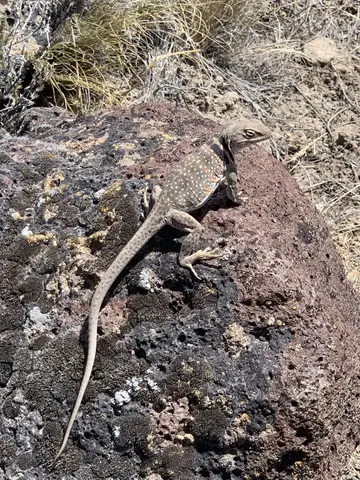
Great Basin Collared Lizard
Photo: Joshua Zupan · CC0 1.0 · iNaturalist

Great Basin Collared Lizard

Crotaphytus bicinctores

Not stated

Venom
No official source we use states whether this animal is venomous. That does not mean it is harmless: do not handle it.
Where in Nevada
Southern western Nevada (NDOW page map) NDOW
Conservation
NV state status: Priority Species, Unprotected; federal column on NDOW page: Least Concern
What the sources say

Habitat: The Great Basin Collared Lizard is found mainly in desert, sparsely vegetated, rocky areas on hillsides, rocky plains, and in canyons. It perches atop rocks and hides under rocks or in rodent burrows when startled. (NDOW)

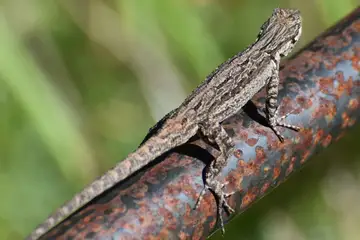
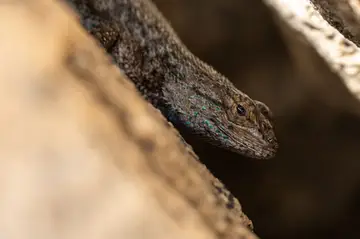
Great Basin Fence Lizard
Photo: Joshua Tree National Park · Public domain · Wikimedia Commons

Great Basin Fence Lizard

Sceloporus occidentalis longipes

Not stated

Venom
No official source we use states whether this animal is venomous. That does not mean it is harmless: do not handle it.
Where in Nevada
Statewide (NDOW page map: eastern, southern, western regions) NDOW
Conservation
NV state status: Unprotected; federal column on NDOW page: Least Concern
What the sources say

Habitat: The Great Basin Fence Lizard is found throughout the state in a variety of habitats such as the pinyon-juniper woodlands, desert scrub, and dry rocky areas. (NDOW)

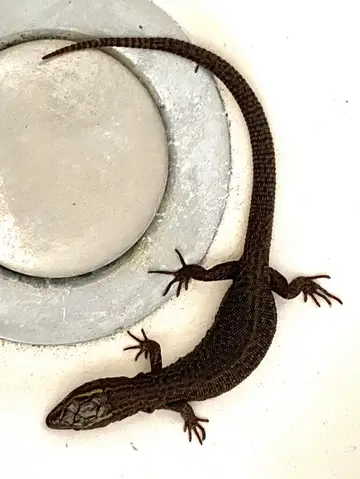
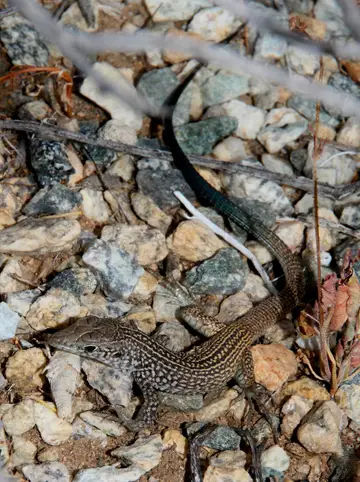
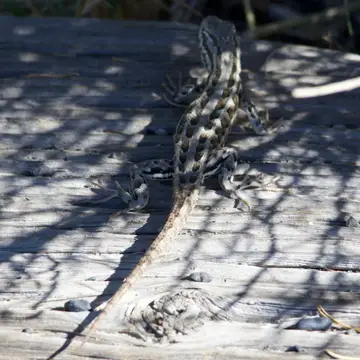
Great Basin Whiptail
Photo: Lon Brehmer · CC BY 4.0 · iNaturalist

Great Basin Whiptail

Aspidoscelis tigris tigris

Not stated

Venom
No official source we use states whether this animal is venomous. That does not mean it is harmless: do not handle it.
Greater Short-horned Lizard
Photo: Bob Walker · CC BY 4.0 · iNaturalist

Greater Short-horned Lizard

Phrynosoma hernandesi

Not stated

Venom
No official source we use states whether this animal is venomous. That does not mean it is harmless: do not handle it.
Where in Nevada
Eastern Nevada (NDOW page map) NDOW
Conservation
NV state status: Priority Species, Unprotected; federal column on NDOW page: Least Concern
What the sources say

Habitat: The Greater Short-horned Lizard’s range extends from semiarid plains to high mountains. They occupy a wide variety of habitats including sagebrush, open pinyon-juniper, pine-spruce, and spruce-fir forests. They prefer areas with looser soils as well. In Nevada, they are found in the Northwestern part of the state. (NDOW)

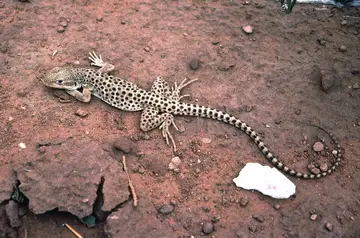
Long-nosed Leopard Lizard
Photo: ALAN SCHMIERER · CC0 · Wikimedia Commons

Long-nosed Leopard Lizard

Gambelia wislizenii

Not stated

Venom
No official source we use states whether this animal is venomous. That does not mean it is harmless: do not handle it.
Where in Nevada
Statewide (NDOW page map: eastern, southern, western regions) NDOW
Conservation
NV state status: Priority Species, Unprotected; federal column on NDOW page: Least Concern
What the sources say

Habitat: The Long-nosed Leopard Lizard is found throughout Nevada. They prefer areas that are sandy and rocky with low shrubs. They do not like densely vegetated areas because they can’t run to escape potential predators. They use mammal burrows to lay their eggs. (NDOW)

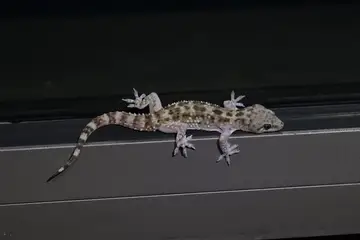
Mediterranean House Gecko
Photo: Stephanie Tran · CC BY 4.0 · iNaturalist

Mediterranean House Gecko

Hemidactylus turcicus

Not stated Invasive

Venom
No official source we use states whether this animal is venomous. That does not mean it is harmless: do not handle it.
Size
Adults about 4 to 5 inches long in total (Missouri gives 3.9 to 5.0 inches); up to 2.4 inches from snout to vent.
How to recognize it
  • Warty skin, large bulging eyes with vertical pupils, and wide toe pads for climbing.
  • Large eyes without eyelids, covered by a clear scale.
  • Unlike any native lizard in Georgia and South Carolina, geckos have sticky toe pads, vertical pupils and lidless eyes.
Where in Nevada
Southern Nevada (NDOW page map) NDOW
Conservation
NV state status: Unprotected; federal column on NDOW page: Least Concern
What the sources say

Habitat: Native to the Mediterranean region, this species has been introduced by humans, both intentionally and accidentally, and now thrives in warm regions across the globe. In Nevada, Mediterranean House Geckos are well established in the southern part of the state, especially in urban and suburban areas where water, shelter, and insects are easy to find. (NDOW)

Full Mediterranean House Gecko guide

Mojave Fringe-toed Lizard
Photo: Mark Pollock · CC BY 4.0 · iNaturalist

Mojave Fringe-toed Lizard

Uma scoparia

Not stated

Venom
No official source we use states whether this animal is venomous. That does not mean it is harmless: do not handle it.
Where in Nevada
Southern Nevada (NDOW page map) NDOW
Conservation
NV state status: Priority Species, State Protected; federal column on NDOW page: Near Threatened
What the sources say

Habitat: The Mojave Fringe-toed Lizard has a limited range in Nevada. They are uniquely adapted for living in sandy desert environments and are only found in places with sandy shifting substrate. (NDOW)

Nevada Side-blotched Lizard
Photo: Walter A Siegmund · CC BY-SA 4.0 · iNaturalist · resized

Nevada Side-blotched Lizard

Uta stansburiana nevadensis

Not stated

Venom
No official source we use states whether this animal is venomous. That does not mean it is harmless: do not handle it.
Northern Sagebrush Lizard
Photo: Ben · CC0 1.0 · iNaturalist

Northern Sagebrush Lizard

Sceloporus graciosus gracilis

Not stated

Venom
No official source we use states whether this animal is venomous. That does not mean it is harmless: do not handle it.
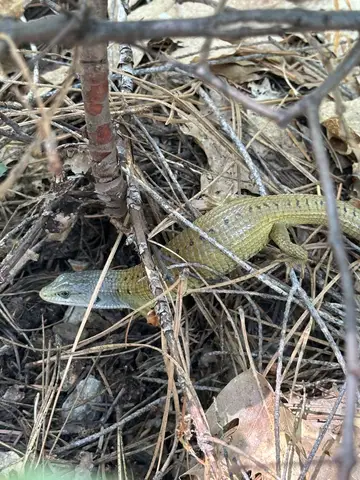
No confirmed photo of Panamint Alligator Lizard

Panamint Alligator Lizard

Elgaria panamintina

Not stated

Venom
No official source we use states whether this animal is venomous. That does not mean it is harmless: do not handle it.
Conservation
Species of Greatest Conservation Need (2022 SWAP)
Pygmy Short-horned Lizard
Photo: Walter Siegmund (talk) · CC BY-SA 3.0 · Wikimedia Commons · resized

Pygmy Short-horned Lizard

Phrynosoma douglasii

Not stated

Venom
No official source we use states whether this animal is venomous. That does not mean it is harmless: do not handle it.
Where in Nevada
Eastern western Nevada (NDOW page map) NDOW
Conservation
NV state status: Priority Species, Unprotected; federal column on NDOW page: Least Concern
What the sources say

Habitat: The Pygmy Short-Horned Lizard only lives in the extreme northern portions of the state. This species can be found in a variety of habitats such as sandy fats, alluvial fans, along washes, at the edges of dunes, and sometimes found among rocks. (NDOW)

Shasta Alligator Lizard
Photo: Matt Berger · CC BY 4.0 · iNaturalist

Shasta Alligator Lizard

Elgaria coerulea shastensis

Not stated

Venom
No official source we use states whether this animal is venomous. That does not mean it is harmless: do not handle it.
Where in Nevada
Western Nevada (NDOW page map) NDOW
Conservation
NV state status: Priority Species, State Protected; federal column on NDOW page: Least Concern
What the sources say

Habitat: The Shasta Alligator Lizard is generally found in cooler, damper places in a variety of forested habitats. They can also be found in grassy grown-over areas at the edge of woodlands, in clear-cuts, near streams, and rock outcrops. They find cover under rocks, logs, and dense vegetation. The Shasta Alligator Lizard is only found in the extreme Northwest part of Nevada. (NDOW)

Sierra Alligator Lizard
Photo: USFWS - Pacific Region · Public domain · Wikimedia Commons

Sierra Alligator Lizard

Elgaria coerulea palmeri

Not stated

Venom
No official source we use states whether this animal is venomous. That does not mean it is harmless: do not handle it.
Where in Nevada
Western Nevada (NDOW page map) NDOW
Conservation
NV state status: Priority Species, State Protected; federal column on NDOW page: Least Concern
What the sources say

Habitat: The Sierra Alligator Lizard is generally found in cooler, damper places in a variety of forested habitats, and is found in higher altitudes than other subspecies. The Sierra Alligator Lizard is only found in the Sierra Nevada and adjacent areas in western Nevada. (NDOW)

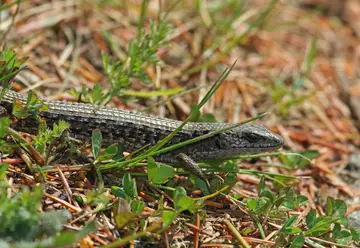
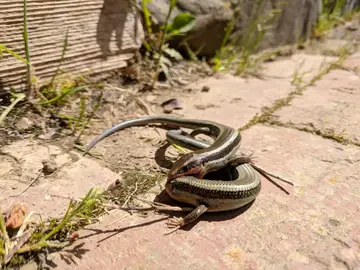
Skilton Skink / Great Basin Skink
Photo: Andy Kleinhesselink · CC0 1.0 · iNaturalist

Skilton Skink / Great Basin Skink

Plestiodon skiltonianus

Not stated

Venom
No official source we use states whether this animal is venomous. That does not mean it is harmless: do not handle it.
Conservation
Species of Greatest Conservation Need (2022 SWAP)
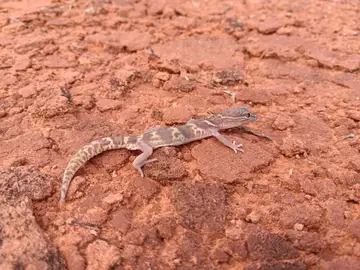
Western Banded Gecko
Photo: Dylan C Thomas · CC0 1.0 · iNaturalist

Western Banded Gecko

Coleonyx variegatus

Not stated

Venom
No official source we use states whether this animal is venomous. That does not mean it is harmless: do not handle it.
Where in Nevada
Southern Nevada (NDOW page map) NDOW
Conservation
NV state status: Priority Species, Unprotected; federal column on NDOW page: Least Concern
What the sources say

Habitat: These geckos prefer habitats with creosotes bushes and sagebrush. They can also be found in sandy barren and rocky areas. (NDOW)

No confirmed photo of Western Brush Lizard

Western Brush Lizard

Urosaurus graciosus

Not stated

Venom
No official source we use states whether this animal is venomous. That does not mean it is harmless: do not handle it.
Where in Nevada
Southern Nevada (NDOW page map) NDOW
Conservation
NV state status: Priority Species, Unprotected; federal column on NDOW page: Least Concern
What the sources say

Habitat: The Western Brush Lizard can be found in desert washes & drainages and flat areas with loose sand & gravel. It is often found on the branches of shrubs and trees. In Nevada, it is only found in the southern part of the state. (NDOW)

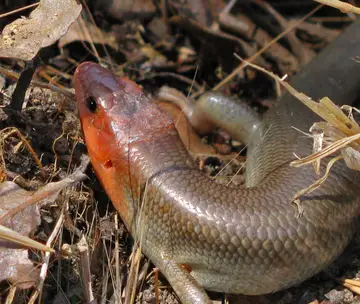
Western Red-tailed Skink
Photo: Megan Ralph · CC0 · Wikimedia Commons

Western Red-tailed Skink

Plestiodon gilberti rubricaudatus

Not stated

Venom
No official source we use states whether this animal is venomous. That does not mean it is harmless: do not handle it.
Where in Nevada
Southern Nevada (NDOW page map) NDOW
Conservation
NV state status: Priority Species, Unprotected; federal column on NDOW page: Least Concern
What the sources say

Habitat: These skinks can be found in a wide variety of habitats including grasslands, desert shrub, and pinyon-juniper stands. They prefer to be near water and avoid areas with dense vegetation. They are found in southwestern and southern Nevada. (NDOW)

No confirmed photo of Yellow-backed Spiny Lizard

Yellow-backed Spiny Lizard

Sceloporus uniformis

Not stated

Venom
No official source we use states whether this animal is venomous. That does not mean it is harmless: do not handle it.
Zebra-tailed Lizard
Photo: Nicole · CC BY 4.0 · iNaturalist

Zebra-tailed Lizard

Callisaurus draconoides

Not stated

Venom
No official source we use states whether this animal is venomous. That does not mean it is harmless: do not handle it.
Where in Nevada
Southern western Nevada (NDOW page map) NDOW
What the sources say

Habitat: The Zebra-tailed lizard is a resident of the southwestern United States and Baja California. It is distributed from northwestern Nevada down into the Mojave Desert and can be found in elevations up to 5,000 feet. (NDOW)

Lizards people confuse

Gila monster or Western banded gecko?

Gila monster
Photo: Matt Berger · CC BY 4.0 · iNaturalist

Gila monster Venomous

Western banded gecko
Photo: Dylan C Thomas · CC0 1.0 · iNaturalist

Western banded gecko Not stated

NPS says Gila monster hatchlings are sometimes confused with the banded gecko, a small, thin-skinned lizard. Hatchlings are much larger than an adult banded gecko.

Chuckwalla (common chuckwalla) or Gila monster?

Chuckwalla (common chuckwalla)
Photo: Dan Vickers · CC BY 4.0 · iNaturalist

Chuckwalla (common chuckwalla) Not stated

Gila monster
Photo: Matt Berger · CC BY 4.0 · iNaturalist

Gila monster Venomous

AZGFD: the chuckwalla has small granular body scales; the Gila monster has large bead-like scales. NPS: the Gila monster has bright orange to salmon-pink bands over black skin and a swollen tail.

Chuckwalla (common chuckwalla) or Desert iguana?

Chuckwalla (common chuckwalla)
Photo: Dan Vickers · CC BY 4.0 · iNaturalist

Chuckwalla (common chuckwalla) Not stated

Desert iguana
Photo: Joshua Tree National Park · Public domain · Wikimedia Commons

Desert iguana Not stated

Arizona Game and Fish: the desert iguana has a small, blunt head, a long tail and short, stocky limbs, with a single row of enlarged, pointed scales down the middle of the back.

Mediterranean house gecko or Western banded gecko?

Mediterranean house gecko
Photo: Stephanie Tran · CC BY 4.0 · iNaturalist

Mediterranean house gecko Not stated

Western banded gecko
Photo: Dylan C Thomas · CC0 1.0 · iNaturalist

Western banded gecko Not stated

In Arizona, the small pale tubercles (bumps) on the upper surfaces set the Mediterranean house gecko apart from the similar-looking western banded gecko.

Photos show typical adults; individuals vary. Never get close to compare.

When lizards are active in Nevada

Records of lizards in Nevada peak in April to July. They show when people record lizards, not how many there are (about month bars).

1,548 records of lizards in Nevada by month (GBIF, CC0 and CC BY records).
  • Gila monsters brumate November through March (NDOW). NDOW

If you are bitten or stung

Call 911 or Poison Help at 1-800-222-1222 right away. Poison Help connects you to your local poison center, any time of day.

Official advice from NDOW:

  • If a Gila monster is found in the wild, leave it alone; it is illegal to handle or harm one unless it poses a public safety threat. NDOW

How to report

NDOW dispatch 775-688-1331 for wildlife emergencies and residential mountain lion sightings; Las Vegas area urban wildlife hotline 702-668-3551 for venomous reptiles that threaten safety; reptile sightings to [email protected]; poaching to Operation Game Thief 1-800-992-3030 (NDOW page). NDOW
Common questions

About this list

The species list comes from Commission Regulation 19-02, combined with NAC 503.080, the 2022 SGCN List and the NDOW Species Information database (Nevada Department of Wildlife (NDOW) / Nevada Board of Wildlife Commissioners, as snakes). 19 more entries come from other official sources named on each card.

Venom labels come only from official sources and link to them; "Not stated" never means harmless. How labels work.

"Nonnative" and "Invasive" follow the wording of the source list. See invasive species in Nevada.

Want a paper copy? Print the Nevada lizards ID chart.

Sources

  1. Species Information. Nevada Department of Wildlife (NDOW). undated page; checked November 3, 2026.
  2. Commission Regulation 19-02, 2019 & 2020 Noncommercial Collection Seasons & Limits for Live, Unprotected Reptiles & Amphibians (NDOW memo and table). Nevada Department of Wildlife (NDOW) / Nevada Board of Wildlife Commissioners. memo dated October 11, 2018; checked November 3, 2026.
  3. Gila Monster - Species Information. Nevada Department of Wildlife (NDOW). undated page; checked November 3, 2026.
    Quoted passages (1)
    “Gila Monsters are the only venomous lizard native to Nevada.”
  4. Gila Monster (blog). Nevada Department of Wildlife (NDOW). undated page; checked November 3, 2026.
    Quoted passages (3)
    “A Gila monster bite is painful to humans but rarely deadly.”
    “It is illegal to handle or harm a Gila monster, unless it is posing a public safety threat”
    “The lizards will enter brumation (similar to hibernation but for reptiles) November through March”
  5. Venomous Reptiles of Nevada (replaces SP-07-07; University of Nevada Extension SP-20-13 / NDOW brochure). Nevada Department of Wildlife (NDOW) with University of Nevada, Reno Extension. 2020 per University of Nevada Extension citation; checked November 3, 2026.
  6. Chuckwalla - Species Information. Nevada Department of Wildlife (NDOW). undated page; checked November 3, 2026.
  7. Desert Horned Lizard - Species Information. Nevada Department of Wildlife (NDOW). undated page; checked November 3, 2026.
  8. Desert Iguana - Species Information. Nevada Department of Wildlife (NDOW). undated page; checked November 3, 2026.
  9. Desert Night Lizard - Species Information. Nevada Department of Wildlife (NDOW). undated page; checked November 3, 2026.
  10. Great Basin Collared Lizard - Species Information. Nevada Department of Wildlife (NDOW). undated page; checked November 3, 2026.
  11. Great Basin Fence Lizard - Species Information. Nevada Department of Wildlife (NDOW). undated page; checked November 3, 2026.
  12. Greater Short-horned Lizard - Species Information. Nevada Department of Wildlife (NDOW). undated page; checked November 3, 2026.
  13. Long-nosed Leopard Lizard - Species Information. Nevada Department of Wildlife (NDOW). undated page; checked November 3, 2026.
  14. Mojave Fringe-toed Lizard - Species Information. Nevada Department of Wildlife (NDOW). undated page; checked November 3, 2026.
  15. Pygmy Short-horned Lizard - Species Information. Nevada Department of Wildlife (NDOW). undated page; checked November 3, 2026.
  16. Western Brush Lizard - Species Information. Nevada Department of Wildlife (NDOW). undated page; checked November 3, 2026.
  17. Western Red-tailed Skink - Species Information. Nevada Department of Wildlife (NDOW). undated page; checked November 3, 2026.
  18. Zebra-tailed Lizard - Species Information. Nevada Department of Wildlife (NDOW). undated page; checked November 3, 2026.
  19. Shasta Alligator Lizard - Species Information. Nevada Department of Wildlife (NDOW). undated page; checked November 3, 2026.
  20. Sierra Alligator Lizard - Species Information. Nevada Department of Wildlife (NDOW). undated page; checked November 3, 2026.
  21. Western Banded Gecko - Species Information. Nevada Department of Wildlife (NDOW). undated page; checked November 3, 2026.
  22. Mediterranean House Gecko - Species Information. Nevada Department of Wildlife (NDOW). undated page; checked November 3, 2026.
  23. 2022 Nevada State Wildlife Action Plan, Appendix E: Species Accounts (includes "2022 SGCN List"). Nevada Department of Wildlife (NDOW). 2022; checked November 3, 2026.
  24. Living with Mountain Lions. Nevada Department of Wildlife (NDOW). undated page; checked November 3, 2026.
    Quoted passages (1)
    “…report it to the Nevada Department of Wildlife dispatch line at (775) 688-1331.”
  25. GBIF.org occurrence records, human observations licensed CC0 1.0 or CC BY 4.0 only, accessed November 3, 2026. The datasets behind these counts are listed on our Sources page.