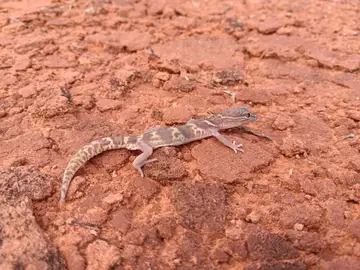
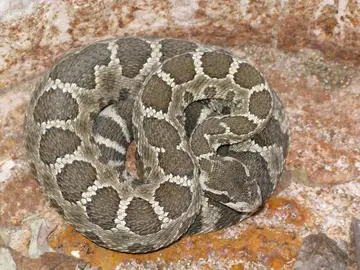
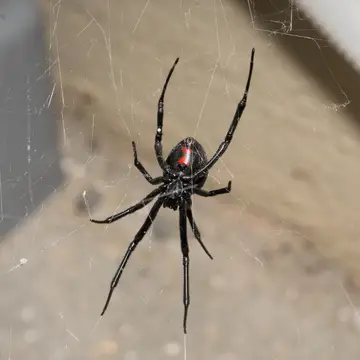
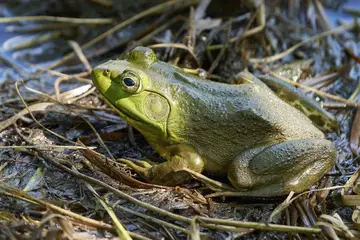
Nevada has 6 venomous snakes named by official sources: Great Basin Rattlesnake, Mojave Green Rattlesnake, Sidewinder, Southwestern Speckled Rattlesnake, Western Diamondback Rattlesnake and Panamint Rattlesnake, as labelled by NDOW. It also lists 2 snakes as mildly venomous or not dangerous to people. This guide covers 9 animal groups from Nevada Department of Wildlife (NDOW) lists and other official sources, with photos, venomous status and when each group is active.
Identification help has limits: a photo cannot confirm that an animal is safe. Watch from a distance and never handle a wild animal.
These are the animals official sources describe as venomous or as a risk to people in Nevada, across 6 groups. The reason is given in the source's own terms.
SNHD: “This highly aggressive mosquito species is well adapted to living in urban environments and capable of spreading emerging disease like Dengue, Chikungunya, and Zika virus.”
"dangerous because many bees participate in a stinging and they continue to attack for a long time and over a great distance": “They are dangerous because many bees participate in a stinging and they continue to attack for a long time and over a great distance.”
Darker cells are the months with more open-licence observation records of each group in Nevada (GBIF). They show when people see and record these animals, not how many there are. The current month, this month, is highlighted.
Report: NDOW dispatch 775-688-1331 for wildlife emergencies and residential mountain lion sightings; Las Vegas area urban wildlife hotline 702-668-3551 for venomous reptiles that threaten safety; reptile sightings to [email protected]; poaching to Operation Game Thief 1-800-992-3030 (NDOW page). NDOW
Official safety advice
Medical emergency: call 911 or Poison Help at 1-800-222-1222. HRSA
If bitten by a venomous reptile: call 911 or seek immediate medical care (NDOW). Do not wait for symptoms. NDOW
If a rattlesnake is found in the wild, leave it alone. NDOW
If a rattlesnake poses a public safety threat, call 911. NDOW
Give a snake at least 6 to 10 feet of space and let it move away. NDOW
NDOW: six rattlesnake species statewide, and rattlesnakes are the only snakes that are venomous and harmful to people and pets. NDOW also calls Smith's black-headed snake "technically venomous", and the NDOW 2022 SWAP calls the ring-necked snake rear-fanged; both are stated not to be a threat to people. NDOW
Are there rattlesnakes in Nevada?
Yes. Rattlesnakes occur throughout Nevada, primarily in open, rocky areas (NDOW). NDOW
Are all other snakes in nevada harmless?
NDOW makes this statement for native snakes but advises leaving any snake alone if you cannot identify it with certainty. NDOW
Is a gopher snake a rattlesnake?
No. Gopher snakes are non-venomous and can mimic rattlesnakes by flattening their heads and shaking their tails. NDOW
Are there coral snakes in Nevada?
No official Nevada source lists a coral snake as occurring. NDOW mentions coral snakes only because the Sonoran mountain kingsnake mimics them. NDOW
Not established. USGS lists a single American alligator record in Nevada: Sunset Park pond, Las Vegas, 2009, status "failed". USGS says records may not reflect established populations. No Nevada agency source lists alligators. US Geological Survey
Are there bears in Nevada?
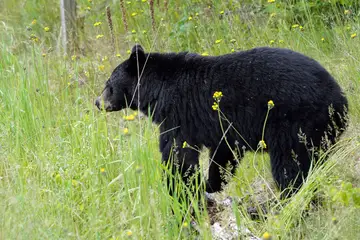
Yes. Black bears only, in the mountains and foothills of the Sierra Nevada and Lake Tahoe areas. NDOW
Are there grizzly bears in Nevada?
No. NDOW says black bears are the only bear species living in Nevada. NDOW
Are there mountain lions in Nevada?
Yes. They live in rocky terrain throughout Nevada; NDOW says the risk of attack is extremely small. NDOW
Are there wolves in Nevada?
Not established. NDOW says there is no established gray wolf population, though sporadic sightings have occurred. NDOW
Are there moose in Nevada?
Yes. NDOW calls the Shiras moose the newest resident to inhabit Nevada. NDOW
How many bat species are in Nevada?
NDOW states 23 native species; all bats are protected under NAC 503.030. NDOW
Is rabies common in nevada bats?
Rarely. NDOW: bats can carry rabies, but fewer than 1% test positive in the state; limit handling bats, dead or alive. NDOW
Are there quagga mussels in Nevada?
Yes. Lake Mead NRA and the lower Colorado River system; found in Boulder Basin in 2007. NDOW
Are there killer bees in Nevada?
Yes. Clark County Vector Control says Africanized honey bees are well established in Las Vegas; they attack in greater numbers and pursue intruders farther than common bees. Do not try to destroy a colony yourself. Clark County, Nevada, Public Works Department
Sources
Species Information. Nevada Department of Wildlife (NDOW). undated page; checked November 3, 2026.
“Gila Monsters are the only venomous lizard native to Nevada.”
Mosquito Surveillance. Southern Nevada Health District. undated page; checked November 3, 2026.Quoted passages (1)
“This highly aggressive mosquito species is well adapted to living in urban environments and capable of spreading emerging disease like Dengue, Chikungunya, and Zika virus.”
Living with Mountain Lions. Nevada Department of Wildlife (NDOW). undated page; checked November 3, 2026.Quoted passages (3)
“Encounters with mountain lions are rare and the risk of an attack is extremely small.”
“…report it to the Nevada Department of Wildlife dispatch line at (775) 688-1331.”
“Mountain lions occupy areas with rocky terrain throughout Nevada, especially where mule deer live.”
Living with Coyotes. Nevada Department of Wildlife (NDOW). undated page; checked November 3, 2026.Quoted passages (1)
“If an incident with a human does occur, please call 911 or our dispatch 775-688-1331 immediately.”
Living with Bats. Nevada Department of Wildlife (NDOW). undated page; checked November 3, 2026.Quoted passages (3)
“Bats can carry rabies (just like other mammals) and they are considered a vector species for rabies.”
“There are 23 species of bats native to Nevada.”
“…less than 1% of bats actually testing positive for rabies in the state”
Living with Bears. Nevada Department of Wildlife (NDOW). undated page; checked November 3, 2026.Quoted passages (1)
“They may sometimes get to the point where they are a public safety risk and have to be killed to avoid a dangerous encounter.”
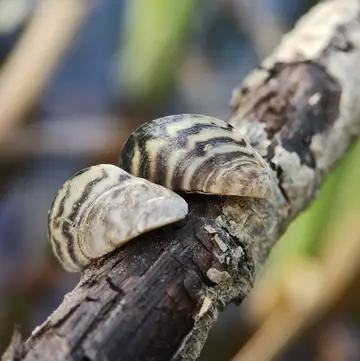
“In Nevada, zebra mussels are not currently present; however, Lake Mead National Recreation Area discovered quagga mussels in Boulder Basin in 2007.”
“In Nevada, NZMS occur in the Salmon Falls Creek drainage, Beaver Dam State Park, Lake Mead National Recreation Area and the Lower Colorado River, Maggie Creek and a small portion of the Humboldt River near Carlin.”
“In Nevada, zebra mussels are not currently present”
“Lake Mead National Recreation Area discovered quagga mussels in Boulder Basin in 2007”
Vector Control. Clark County, Nevada, Public Works Department. undated page; checked November 3, 2026.Quoted passages (1)
“The Africanized Honeybee (AHB) is well-established in Las Vegas.”
Poison Help. Health Resources and Services Administration (HRSA). archived copy, captured October 2, 2026; checked November 3, 2026.Quoted passages (1)
“1-800-222-1222”
Gila Monster (blog). Nevada Department of Wildlife (NDOW). undated page; checked November 3, 2026.Quoted passages (1)
“The lizards will enter brumation (similar to hibernation but for reptiles) November through March”