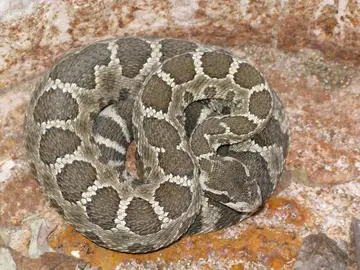
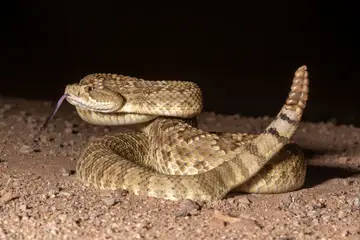
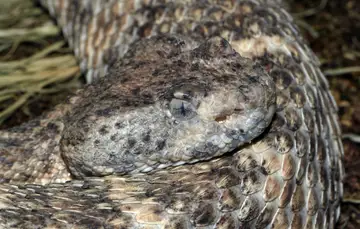
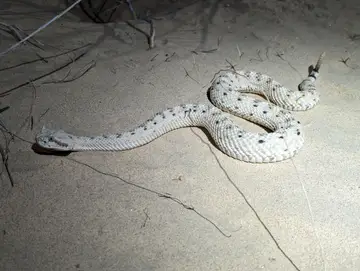
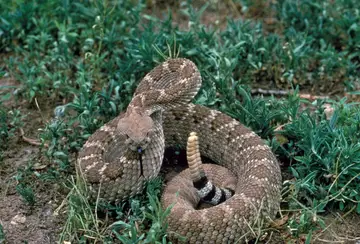
Nevada has 6 venomous snakes named by official sources: Great Basin Rattlesnake, Mojave Green Rattlesnake, Sidewinder, Southwestern Speckled Rattlesnake, Western Diamondback Rattlesnake and Panamint Rattlesnake. Each one is labelled venomous by NDOW. It also lists 2 snakes as mildly venomous or not dangerous to people; they are shown separately below.
The 6 venomous snakes of Nevada
Recognize them from a distance; a photo cannot confirm that a snake is safe. Identifying animals safely.
NV state status: Unprotected; federal column on NDOW page: Least Concern
What the sources say
Venom: “The Great Basin Rattlesnake is a pit viper and is venomous.” (NDOW)
Habitat: These snakes are found throughout all of Northern Nevada, and into parts of Southern Nevada. They are found in a variety of habitats including grassy, shrubby, and rocky areas. (NDOW)
Up to 50 inches excluding the rattle (Arizona). Grand Canyon-Parashant National Monument says it averages 2 to 4 feet. Texas calls it smaller and more slender than the western diamondback.
How to recognize it
Rattle at the end of the tail
Broad triangular head on a slender neck; vertical pupils
Thin light stripe from the back corner of the eye running past the corner of the mouth
NV state status: Unprotected; federal column on NDOW page: Least Concern
What the sources say
Venom: “The Mojave Green Rattlesnake is a large venomous snake” (NDOW)
Habitat: These desert dwelling snakes prefer areas with little vegetation. In Nevada, they are found in the southern part of the state. They utilize pre-existing rodent burrows to ride out the winter months. (NDOW)
NV state status: Priority Species, Unprotected; federal column on NDOW page: Least Concern
What the sources say
Venom: “The Sidewinder is a rattle snake and has the classic rattles on the end of their tail while also possessing venom.” (NDOW)
Habitat: The Sidewinder generally prefers sandy terrain. In the Mojave Desert, snakes concentrate near sandy washes and areas of relatively dense vegetation where mammal burrows are common, though in other areas the Sidewinder has been found to be more common where vegetation is sparse. (NDOW)
NV state status: Unprotected; federal column on NDOW page: Least Concern
What the sources say
Venom: “The Southwestern Speckled Rattlesnake is a large, venomous snake” (NDOW)
Habitat: The Southwestern Speckled Rattlesnake occupies a small range in southeastern Nevada, where it overlaps with the Panamint Rattlesnake in some parts of the Las Vegas Valley. This elusive species thrives in rugged canyons and rocky mountain areas, especially near Clark County and closer to the Colorado River. (NDOW)
Usually about 3.5 to 4.5 feet; Texas says it can reach seven feet. Arizona's maximum is 66 inches excluding the rattle; Saguaro National Park gives a range of 30 to 90 inches.
How to recognize it
Rattle at the end of the tail
Broad triangular head on a slender neck; vertical pupils
Thin light stripe from behind the eye down to the upper lip
NV state status: Unprotected; federal column on NDOW page: Least Concern
What the sources say
Venom: “The Western Diamondback Rattlesnake is venomous.” (NDOW)
Habitat: The Western Diamondback Rattlesnake is found in the very southern tip of Nevada. They call the Mojave Desert home and can occupy a range of habitats such as rocky areas in desert washes, rocky hillsides, and grassy areas. (NDOW)
For 16 other snakes on Nevada's list, no official source we use states whether it is venomous: Desert Striped Whipsnake, Glossy Snake (Desert and Mojave subspecies), Long-nosed Snake, Mojave Patch-nosed Snake, Mojave Shovel-nosed Snake, Northern Desert Nightsnake, Northern Rubber Boa and Red Racer and others. That does not make them harmless. Leave every snake alone.
Mildly venomous snakes
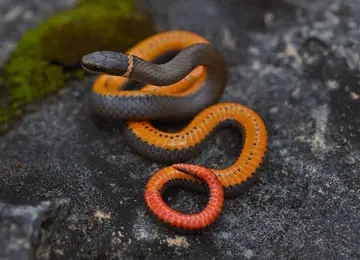
NDOW lists these 2 snakes as mildly venomous or not dangerous to people. Each card quotes what the source says about its venom. Like any snake, leave them alone.
NV state status: Priority Species, Unprotected; federal column on NDOW page: Least Concern
What the sources say
Venom: “Ring-necked snakes in the southwest envenomate their prey using enlarged, ungrooved upper rear teeth” (NDOW)
Habitat: The Ring-necked Snake is found in forests, woodlands, grassland, and riparian areas of arid regions. They do prefer areas that are seasonally wet at the very least. These snakes can be found taking cover under the bark of dead trees, under rocks, and on rocky hillsides. In Nevada, they are found in the southeastern part of the state. (NDOW)
Hard to tell apart. Arizona: the Mojave's eye-stripe angle, its evenly colored blotches and its relatively thin tail rings set it apart. NPS Saguaro: Mojaves are often slightly greenish, with thick white and narrower black tail bands; the diamondback's bands are more even.
Photos show typical adults; individuals vary. Never get close to compare.
When venomous snakes are active in Nevada
Records of snakes in Nevada peak in April to June. They show when people record snakes, not how many there are (about month bars).
JanFebMarAprMayJunJulAugSepOctNovDec
294 records of snakes in Nevada by month (GBIF, CC0 and CC BY records).
Rattlesnakes are most active March to October, day or night (NDOW). NDOW
In summer above 90°F rattlesnakes shelter from heat, and may enter shaded yards and garages (NDOW). NDOW
In winter, below about 60°F, rattlesnakes usually brumate (NDOW). NDOW
If you are bitten or stung
Call 911 or Poison Help at 1-800-222-1222 right away. Poison Help connects you to your local poison center, any time of day.
Official advice from NDOW and Nevada Department of Wildlife (NDOW) with University of Nevada, Reno Extension:
If a rattlesnake is found in the wild, leave it alone. NDOW
If a rattlesnake poses a public safety threat, call 911. NDOW
Give a snake at least 6 to 10 feet of space and let it move away. NDOW
NDOW dispatch 775-688-1331 for wildlife emergencies and residential mountain lion sightings; Las Vegas area urban wildlife hotline 702-668-3551 for venomous reptiles that threaten safety; reptile sightings to [email protected]; poaching to Operation Game Thief 1-800-992-3030 (NDOW page). NDOW