States Wildlife

Are there gila monsters in Nevada?

Last checked November 3, 2026 against official sources.

On this page
  1. The answer
  2. Which ones
  3. Where in the US
  4. Lookalikes
  5. Official advice
  6. Sources

Yes.

Only in the Mojave portion of southern Nevada. Protected by the state; it is illegal to handle one without NDOW authorization, except for a public safety threat.

Nevada Department of Wildlife (NDOW) with University of Nevada, Reno Extension: “The Gila Monster is known only to occur in the Mojave portion of southern Nevada” Source

How we answer questions

On Nevada's official list

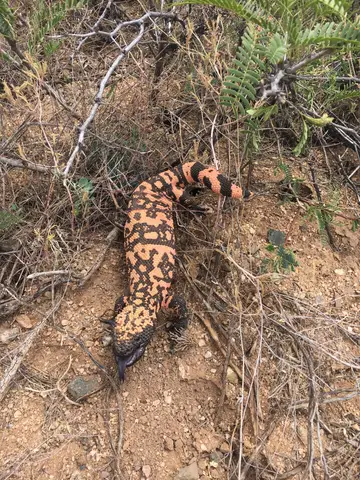
Gila Monster
Photo: Matt Berger · CC BY 4.0 · iNaturalist

Gila Monster

Heloderma suspectum

Venomous per NDOW

Danger to people
“A Gila monster bite is painful to humans but rarely deadly.” NDOW
Size
NPS: up to 22 inches (560 mm) long and over a pound (450 g), the largest lizard in the United States. AZGFD: up to 14 inches from snout to vent. NDOW lists 18-24 inches and 2-4 lb.
How to recognize it
  • Hard, rounded, beadlike scales; dark forked tongue; short fat tail
  • Short, stout legs with long, sharp-clawed toes; big head and round tail
Where in Nevada
The Gila Monster is known only to occur in the Mojave portion of southern Nevada Nevada Department of Wildlife (NDOW) with University of Nevada, Reno Extension
Conservation
NV state status: Priority Species, State Protected; federal column on NDOW page: Near Threatened
What the sources say

Venom: “Gila Monsters are the only venomous lizard native to Nevada.” (NDOW)

Habitat: The Gila Monster is usually found in rocky desert scrub habitats and semi-desert grassland. They use features such as rock crevices, boulders, burrows, and packrat middens. (NDOW)

Full Gila Monster guide

All lizards in the state: Nevada lizards.

Where the Gila monster lives in the US

California: on the state's official listUtah: on the state's official listNevada: on the state's official listNew Mexico: on the state's official listArizona: on the state's official list
Official presence. 5 states where a state list or official source names it. Gray means no official record in our data, not that it is absent.
  • Native or listed
  • Nonnative or not established
  • No official record in our data
Utah: 5 recordsNevada: 5 recordsNew Mexico: 13 recordsArizona: 180 records
Observation records. Open-licence records on GBIF in 4 states. Records are sightings people shared, not confirmation that a population lives there.
  • 1–9
  • 10–99
  • 100–999
  • 1,000+

Gila monster: identification, range and danger

What else it could be

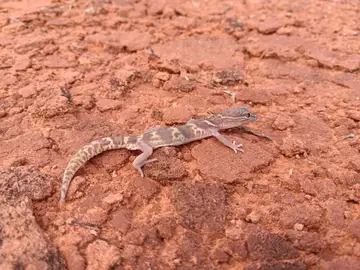
  • Western banded gecko
    Photo: Dylan C Thomas · CC0 1.0 · iNaturalist

    Western banded gecko

    NPS says Gila monster hatchlings are sometimes confused with the banded gecko, a small, thin-skinned lizard. Hatchlings are much larger than an adult banded gecko.

When lizards are seen in Nevada

1,548 records (GBIF, CC0 and CC BY).

What official sources advise

  • If a Gila monster is found in the wild, leave it alone; it is illegal to handle or harm one unless it poses a public safety threat. NDOW
  • Gila monsters brumate November through March (NDOW). NDOW
Sources

  1. Venomous Reptiles of Nevada (replaces SP-07-07; University of Nevada Extension SP-20-13 / NDOW brochure). Nevada Department of Wildlife (NDOW) with University of Nevada, Reno Extension. 2020 per University of Nevada Extension citation; checked November 3, 2026.
    Quoted passages (1)
    “The Gila Monster is known only to occur in the Mojave portion of southern Nevada”
  2. Gila Monster - Species Information. Nevada Department of Wildlife (NDOW). undated page; checked November 3, 2026.
    Quoted passages (1)
    “Gila Monsters are the only venomous lizard native to Nevada.”
  3. Gila Monster (blog). Nevada Department of Wildlife (NDOW). undated page; checked November 3, 2026.
    Quoted passages (3)
    “A Gila monster bite is painful to humans but rarely deadly.”
    “It is illegal to handle or harm a Gila monster, unless it is posing a public safety threat”
    “The lizards will enter brumation (similar to hibernation but for reptiles) November through March”
  4. GBIF.org occurrence records, human observations licensed CC0 1.0 or CC BY 4.0 only, accessed November 3, 2026. The datasets behind these counts are listed on our Sources page.