States Wildlife

Kansas Mammals: Species List With Pictures

Last checked November 3, 2026 against official sources.

On this page
  1. Which mammals can hurt you
  2. All 87 mammals
  3. Lookalikes
  4. When they are active
  5. If you are bitten or stung
  6. What official sources say
  7. About this list
  8. Sources

Kansas Mammal Atlas, Sternberg Museum of Natural History, Fort Hays State University: There are 89 species (different kinds) of mammals in Kansas.

This page lists 87 mammals. 1 is nonnative. Kansas Mammal Atlas, Sternberg Museum of Natural History, Fort Hays State University gives a total of 89; the 87 here are the mammals official sources name one by one.

Which mammals can hurt you

Official sources single out these mammals in Kansas, in their own words:

All 87 mammals

From A to Z. Do not handle them.

American Black Bear
Photo: U.S. Fish and Wildlife Service - Midwest Region · Public domain · Wikimedia Commons

American Black Bear

Ursus americanus

Size
Smokies: males average about 6 ft long, 3 ft at the shoulder and 250 lb in summer; females usually just over 100 lb. Missouri: 46 to 78 inches long, 86 to 600 lb.
How to recognize it
  • Straight facial profile, rounded erect ears, very short tail
  • Short curved claws for climbing

Full American Black Bear guide

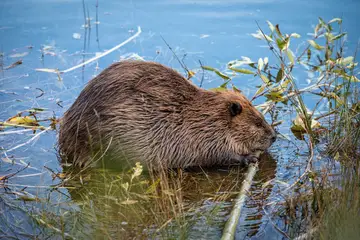
Beaver
Photo: GrandTetonNPS · Public domain · Wikimedia Commons

Beaver

Castor canadensis

72 records by month.
No confirmed photo of Big Brown Bat

Big Brown Bat

Eptesicus fuscus

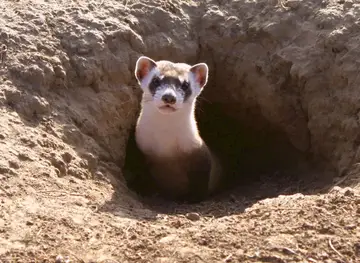
Black-footed Ferret
Photo: Colorado Front Range National Wildlife Refuge Complex · CC BY 4.0 · iNaturalist

Black-footed Ferret

Mustela nigripes

Conservation
Kansas State Endangered Species (as labelled by KMA)
No confirmed photo of Black-tailed Jackrabbit

Black-tailed Jackrabbit

Lepus californicus

No confirmed photo of Black-tailed Prairie Dog

Black-tailed Prairie Dog

Cynomys ludovicianus

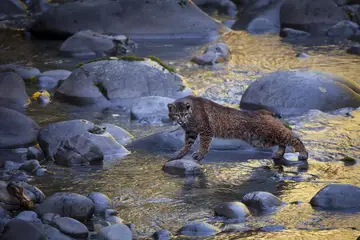
Bobcat
Photo: National Marine Sanctuaries · Public domain · Wikimedia Commons

Bobcat

Lynx rufus

Size
Total length 18 to 50 inches, tail 3 to 8 inches, weight 8 to 49 pounds (Missouri). About twice the size of a house cat.
How to recognize it
  • Short 'bobbed' tail, 4 to 8 inches, with a black tip and white underneath (Arizona). New Mexico instead describes black bars on top, white underneath and a white tip.
  • Pointed ears with tufts at the tips, often with cheek tufts
  • Backs of the ears are black with a light central spot

Full Bobcat guide

No confirmed photo of Brazilian free-tailed Bat

Brazilian free-tailed Bat

Tadarida brasiliensis

No confirmed photo of Cave Myotis

Cave Myotis

Myotis velifer

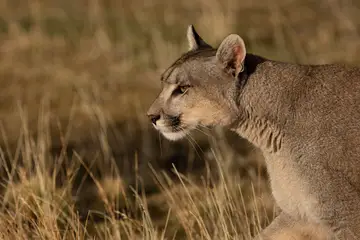
Cougar (Puma, Mountain Lion)
Photo: ArgentinaTurismo · CC BY 4.0 · Wikimedia Commons

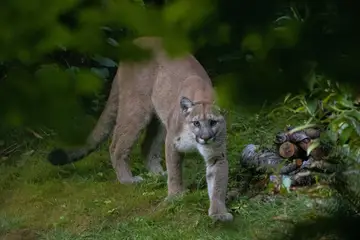
Cougar (Puma, Mountain Lion)

Puma concolor

Size
Total length 5 to 8.5 feet including a 21 to 37.5 inch tail; males 79 to 265 lb, females 64 to 141 lb (Missouri Department of Conservation).
How to recognize it
  • Very large, slender cat with a small head, small rounded ears without tufts and a long, heavy tail.
  • The tail may be one-third of the total length; much larger than a bobcat or lynx.
  • Tracks: 2.75 to 3.75 inches wide, three lobes at the bottom of the heel pad, claw marks usually absent.

Full Cougar (Puma, Mountain Lion) guide

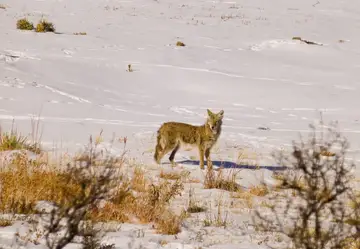
Coyote
Photo: Gaurav Vaidya from Chapel Hill, USA · CC BY 2.0 · Wikimedia Commons

Coyote

Canis latrans

Size
About 3.5 to 4 feet long including the tail and roughly 2 feet tall at the shoulder; weight varies by region: Arizona 20 to 30 lb, Florida average about 28 lb, Georgia 25 to 45 lb
How to recognize it
  • Large pointed ears, long narrow nose, bushy black-tipped tail
  • Like a slender medium-sized dog, much smaller than a wolf
  • Paw track about 2 inches long (Florida)

Full Coyote guide

No confirmed photo of Crawford's Desert Shrew

Crawford's Desert Shrew

Notiosorex crawfordi

No confirmed photo of Desert Cottontail

Desert Cottontail

Sylvilagus audubonii

No confirmed photo of Eastern Mole

Eastern Mole

Scalopus aquaticus

No confirmed photo of Eastern Spotted Skunk

Eastern Spotted Skunk

Spilogale putorius

Conservation
Kansas State Threatened Species (as labelled by KMA)
No confirmed photo of Eastern Woodrat

Eastern Woodrat

Neotoma floridana

No confirmed photo of Elliot's Short-tailed Shrew

Elliot's Short-tailed Shrew

Blarina hylophaga

No confirmed photo of Evening Bat

Evening Bat

Nycticeius humeralis

No confirmed photo of Franklin's Ground Squirrel

Franklin's Ground Squirrel

Poliocitellus franklinii

Conservation
Kansas Species in Need of Conservation (SINC) (as labelled by KMA)
No confirmed photo of Fulvous Harvest Mouse

Fulvous Harvest Mouse

Reithrodontomys fulvescens

No confirmed photo of Geomys lutescens

Geomys lutescens

Geomys lutescens

No confirmed photo of Gray Myotis

Gray Myotis

Myotis grisescens

Conservation
Kansas State Endangered Species (as labelled by KMA)
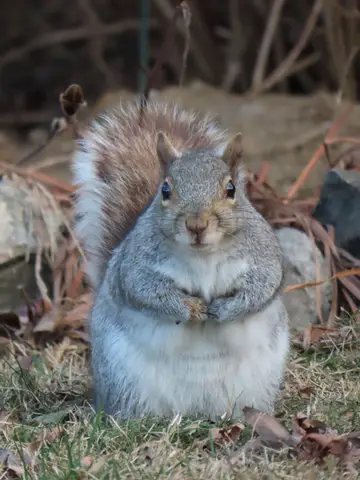
Gray Squirrel
Photo: Mila C · CC BY 4.0 · iNaturalist

Gray Squirrel

Sciurus carolinensis

58 records by month.
No confirmed photo of Hispid Cotton Rat

Hispid Cotton Rat

Sigmodon hispidus

No confirmed photo of Hispid Pocket Mouse

Hispid Pocket Mouse

Chaetodipus hispidus

No confirmed photo of Least Shrew

Least Shrew

Cryptotis parvus

No confirmed photo of Least Weasel

Least Weasel

Mustela nivalis

No confirmed photo of Little Brown Myotis

Little Brown Myotis

Myotis lucifugus

No confirmed photo of Masked Shrew

Masked Shrew

Sorex cinereus

No confirmed photo of Meadow Jumping Mouse

Meadow Jumping Mouse

Zapus hudsonius

No confirmed photo of Meadow Vole

Meadow Vole

Microtus pennsylvanicus

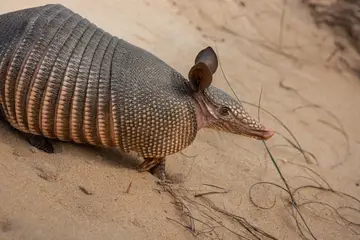
Nine-banded Armadillo
Photo: MartinKlippel · CC BY-SA 4.0 · Wikimedia Commons · resized

Nine-banded Armadillo

Dasypus novemcinctus

Size
Cat-sized: 15-17 in long not counting the tail, 8-17 lb (FWC); 24-32 in including a 9.5-14.5 in tail (UGA).
How to recognize it
  • Bony skin plates that form a shell, which make it easy to identify
  • Long scaly tail, deer-like ears, long pig-like snout
  • Tail encased in 12 bony rings; no canine or incisor teeth

Full Nine-banded Armadillo guide

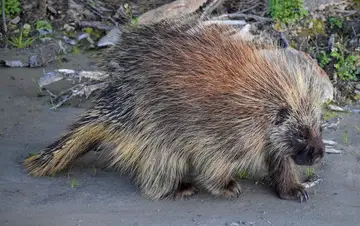
North American Porcupine
Photo: The Cosmonaut · CC BY-SA 2.5 ca · Wikimedia Commons · resized

North American Porcupine

Erethizon dorsatum

Size
Adults about 30 inches including a 6- to 10-inch tail, 9 to 15 pounds, older adults up to 20 pounds (Pennsylvania). Massachusetts: 25-31 inches, averaging 12 pounds in early spring to 20 in fall. Minnesota: 24 to 40 inches, 18 to 35 pounds.
How to recognize it
  • Coat of quills; up to 30,000
  • Only North American mammal with coat hairs modified as quills
  • Short legs, long claws, high-arching back

Full North American Porcupine guide

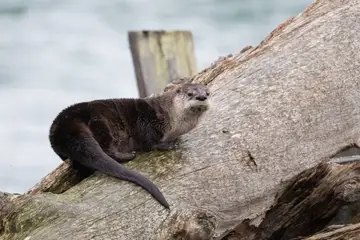
North American River Otter
Photo: Adam Jackson · CC0 1.0 · iNaturalist

North American River Otter

Lontra canadensis

No confirmed photo of Northern Grasshopper Mouse

Northern Grasshopper Mouse

Onychomys leucogaster

No confirmed photo of Northern Myotis

Northern Myotis

Myotis septentrionalis

Conservation
Kansas Species in Need of Conservation (SINC) (as labelled by KMA)
No confirmed photo of Northern Short-tailed Shrew

Northern Short-tailed Shrew

Blarina brevicauda

No confirmed photo of Ord's Kangaroo Rat

Ord's Kangaroo Rat

Dipodomys ordii

No confirmed photo of Pallid Bat

Pallid Bat

Antrozous pallidus

Conservation
Kansas Species in Need of Conservation (SINC) (as labelled by KMA)
No confirmed photo of Plains Harvest Mouse

Plains Harvest Mouse

Reithrodontomys montanus

No confirmed photo of Plains Pocket Gopher

Plains Pocket Gopher

Geomys bursarius

No confirmed photo of Plains Pocket Mouse

Plains Pocket Mouse

Perognathus flavescens

No confirmed photo of Prairie Shrew

Prairie Shrew

Sorex haydeni

No confirmed photo of Prairie Vole

Prairie Vole

Microtus ochrogaster

No confirmed photo of Silky Pocket Mouse

Silky Pocket Mouse

Perognathus flavus

No confirmed photo of Southern Bog Lemming

Southern Bog Lemming

Synaptomys cooperi

Conservation
Kansas Species in Need of Conservation (SINC) (as labelled by KMA)
No confirmed photo of Southern Flying Squirrel

Southern Flying Squirrel

Glaucomys volans

Conservation
Kansas Species in Need of Conservation (SINC) (as labelled by KMA)
No confirmed photo of Southern Plains Woodrat

Southern Plains Woodrat

Neotoma micropus

No confirmed photo of Swamp Rabbit

Swamp Rabbit

Sylvilagus aquaticus

No confirmed photo of Texas Mouse

Texas Mouse

Peromyscus attwateri

Conservation
Kansas Species in Need of Conservation (SINC) (as labelled by KMA)
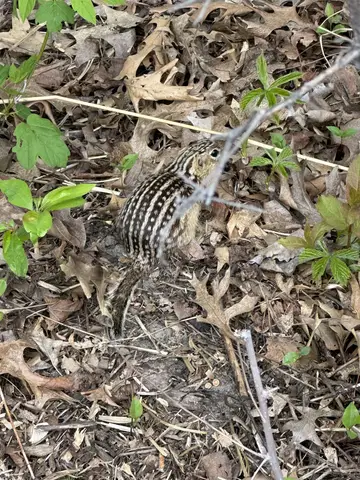
Thirteen-lined Ground Squirrel
Photo: Evan H · CC BY 4.0 · iNaturalist

Thirteen-lined Ground Squirrel

Ictidomys tridecemlineatus

No confirmed photo of Townsend's Big-eared Bat

Townsend's Big-eared Bat

Corynorhinus townsendii

Conservation
Kansas Species in Need of Conservation (SINC) (as labelled by KMA)
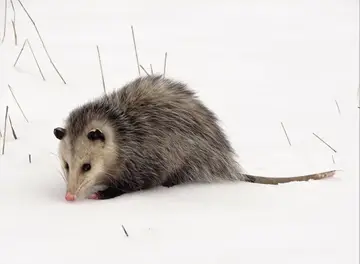
Virginia Opossum
Photo: Shirley Zundell · CC BY 4.0 · iNaturalist

Virginia Opossum

Didelphis virginiana

Size
Weighs 4 to 7 lb and stands 6 to 8 inches high at the shoulder (South Carolina DNR); about the size of a house cat
How to recognize it
  • Long pointed nose, black hairless ears, dark eyes, nearly hairless grasping (prehensile) tail
  • Long scaly tail and a pointed snout ending in a pink nose
  • Opposable thumb-like big toe (hallux) on each hind foot
31 records by month.

Full Virginia Opossum guide

No confirmed photo of Wapiti (Elk)

Wapiti (Elk)

Cervus elaphus

No confirmed photo of Western Deer Mouse

Western Deer Mouse

Peromyscus sonoriensis

No confirmed photo of Western Harvest Mouse

Western Harvest Mouse

Reithrodontomys megalotis

No confirmed photo of Western Small-footed Myotis

Western Small-footed Myotis

Myotis ciliolabrum

No confirmed photo of White-footed Mouse

White-footed Mouse

Peromyscus leucopus

No confirmed photo of White-tailed Deer

White-tailed Deer

Odocoileus virginianus

122 records by month.
Wild Boar
Photo: Cullen Hanks · CC BY 4.0 · iNaturalist

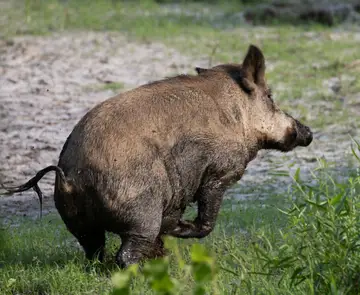
Wild Boar

Sus scrofa

Nonnative

Size
Adults average 75 to 250 pounds, but some get twice as large. They can stand up to 3 feet tall and reach 5 feet long, and males (boars) are larger than females (sows). FWC says Florida wild hogs can weigh more than 150 pounds and be 5 to 6 feet long. Ohio State Extension says Ohio adults typically weigh 125 to 200 pounds.
How to recognize it
  • Look much like domestic hogs but are generally thinner, with thicker hides of coarse, bristly hair and longer tusks
  • Four continuously growing tusks, 2 on top and 2 below
  • Russian (Eurasian) boar type: long, straight, narrow snout; dark-colored or camouflage coat; light-tipped bristles

Full Wild Boar guide

No confirmed photo of Woodland Vole

Woodland Vole

Microtus pinetorum

No confirmed photo of Yellow-faced Pocket Gopher

Yellow-faced Pocket Gopher

Cratogeomys castanops

Mammals people confuse

Bobcat or Mountain lion (cougar)?

Bobcat
Photo: National Marine Sanctuaries · Public domain · Wikimedia Commons

Bobcat Not stated

Mountain lion (cougar)
Photo: Jeff Bartlett · CC BY 4.0 · iNaturalist

Mountain lion (cougar) Not stated

Cougars are one color (yellow-brown to light cinnamon) with a long tail. The bobcat's tail is short and its coat is spotted. TWRA says cougars are many times larger and longer, with a very long tail.

Photos show typical adults; individuals vary. Never get close to compare.

When mammals are active in Kansas

Records of mammals in Kansas peak in April to June, August and October to November. They show when people record mammals, not how many there are (about month bars).

853 records of mammals in Kansas by month (GBIF, CC0 and CC BY records).

If you are bitten or stung

Call 911 or Poison Help at 1-800-222-1222 right away. Poison Help connects you to your local poison center, any time of day.

Official advice from Kansas Department of Wildlife and Parks:

What official sources say

Are there mountain lions in Kansas?

Yes. KDWP: eradicated by the early 1900s; first modern confirmation in Barber County in 2007; confirmed sightings in 49 of 105 counties. Kansas Department of Wildlife and Parks

“Kansas Department of Wildlife and Parks has confirmed mountain lion sightings in 49 of Kansas's 105 counties.”

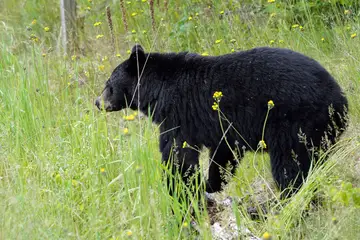
Are there bears in Kansas?

Rarely. KDWP: black bears have been documented only occasionally since the 1880s, with more sightings since 2000. Kansas Department of Wildlife and Parks

“They have been documented only occasionally since the 1880s, but established populations of black bears within short distances of Kansas have led to increased sightings since 2000.”
Are there armadillos in Kansas?

Yes. The Kansas Mammal Atlas lists the Nine-banded Armadillo among Kansas mammals. Kansas Mammal Atlas, Sternberg Museum of Natural History, Fort Hays State University

About this list

The species list comes from Kansas Mammal Atlas species accounts, "KANSAS MAMMALS" tables by order (Sternberg Museum of Natural History, Fort Hays State University; USFWS/KDWPT State Wildlife Grant) (Kansas Mammal Atlas, Sternberg Museum of Natural History, Fort Hays State University, page (c) 2026; retrieved 2026-11-03). 87 more entries come from other official sources named on each card.

Venom labels come only from official sources and link to them; "Not stated" never means harmless. How labels work.

"Nonnative" and "Invasive" follow the wording of the source list. See invasive species in Kansas.

Sources

  1. Threatened, Endangered & Species in Need of Conservation (KDWP). Kansas Department of Wildlife and Parks. undated page; checked November 3, 2026.
  2. Kansas Mammal Atlas: home page. Kansas Mammal Atlas, Sternberg Museum of Natural History, Fort Hays State University. page footer 2026; checked November 3, 2026.
    Quoted passages (1)
    “There are 89 species (different kinds) of mammals in Kansas.”
  3. Kansas Mammal Atlas species list, order ARTIODACTYLA. Kansas Mammal Atlas, Sternberg Museum of Natural History, Fort Hays State University. page footer 2026; checked November 3, 2026.
  4. Kansas Mammal Atlas species list, order CARNIVORA. Kansas Mammal Atlas, Sternberg Museum of Natural History, Fort Hays State University. page footer 2026; checked November 3, 2026.
  5. Kansas Mammal Atlas species list, order CHIROPTERA. Kansas Mammal Atlas, Sternberg Museum of Natural History, Fort Hays State University. page footer 2026; checked November 3, 2026.
  6. Kansas Mammal Atlas species list, order CINGULATA. Kansas Mammal Atlas, Sternberg Museum of Natural History, Fort Hays State University. page footer 2026; checked November 3, 2026.
  7. Kansas Mammal Atlas species list, order EULIPOTYPHLA. Kansas Mammal Atlas, Sternberg Museum of Natural History, Fort Hays State University. page footer 2026; checked November 3, 2026.
  8. Kansas Mammal Atlas species list, order LAGOMORPHA. Kansas Mammal Atlas, Sternberg Museum of Natural History, Fort Hays State University. page footer 2026; checked November 3, 2026.
  9. Kansas Mammal Atlas species list, order DIDELPHIMORPHIA. Kansas Mammal Atlas, Sternberg Museum of Natural History, Fort Hays State University. page footer 2026; checked November 3, 2026.
  10. Kansas Mammal Atlas species list, order RODENTIA. Kansas Mammal Atlas, Sternberg Museum of Natural History, Fort Hays State University. page footer 2026; checked November 3, 2026.
  11. Outdoor Health and Safety (KDWP). Kansas Department of Wildlife and Parks. undated page; checked November 3, 2026.
    Quoted passages (2)
    “Skunks and bats are the most common wildlife carriers in Kansas.”
    “Rabies in humans is 100 percent preventable with prompt medical care, so it is important to seek medical attention after a possible exposure.”
  12. Wildlife Sightings (KDWP). Kansas Department of Wildlife and Parks. undated page; checked November 3, 2026.
    Quoted passages (2)
    “Kansas Department of Wildlife and Parks has confirmed mountain lion sightings in 49 of Kansas's 105 counties.”
    “They have been documented only occasionally since the 1880s, but established populations of black bears within short distances of Kansas have led to increased sightings since 2000.”
  13. GBIF.org occurrence records, human observations licensed CC0 1.0 or CC BY 4.0 only, accessed November 3, 2026. The datasets behind these counts are listed on our Sources page.