Kansas has 7 venomous snakes named by official sources: Eastern Copperhead, Broad-banded Copperhead, Northern Cottonmouth, Western Diamond-backed Rattlesnake, Timber Rattlesnake, Prairie Rattlesnake and Western Massasauga, as labelled by Kansas Herpetofaunal Atlas (Travis W. Taggart), Sternberg Museum of Natural History, Fort Hays State University. It also lists 11 snakes as mildly venomous or not dangerous to people. This guide covers 9 animal groups from Kansas Department of Wildlife and Parks (KDWP) lists and other official sources, with photos, venomous status and when each group is active.
Identification help has limits: a photo cannot confirm that an animal is safe. Watch from a distance and never handle a wild animal.
These are the animals official sources describe as venomous or as a risk to people in Kansas, across 8 groups. The reason is given in the source's own terms.
Venomous: “…there are only four Kansas spiders whose bites are considered dangerous enough to require medical attention. These are the Brown Recluse and three species of black widow spiders.”
Venomous: “…there are only four Kansas spiders whose bites are considered dangerous enough to require medical attention. These are the Brown Recluse and three species of black widow spiders.”
Venomous: “…there are only four Kansas spiders whose bites are considered dangerous enough to require medical attention. These are the Brown Recluse and three species of black widow spiders.”
Venomous: “…there are only four Kansas spiders whose bites are considered dangerous enough to require medical attention. These are the Brown Recluse and three species of black widow spiders.”
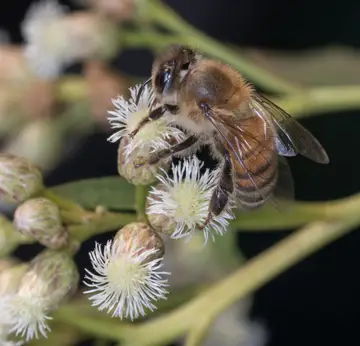
Venomous sting: “The sting includes venom designed to kill or paralyze prey but also may be used defensively when individuals or a colony is threatened.”
Darker cells are the months with more open-licence observation records of each group in Kansas (GBIF). They show when people see and record these animals, not how many there are. The current month, this month, is highlighted.
Report: Report mountain lion, bear or wolf sightings and threatened, endangered, SINC or rare species to KDWP (Wildlife Sightings page; Pratt Operations Office, 512 SE 25th Avenue, Pratt, KS 67124, 620-672-5911). Nuisance wildlife: KDWP lists Nuisance Wildlife Damage Control permit holders. Kansas Department of Wildlife and Parks
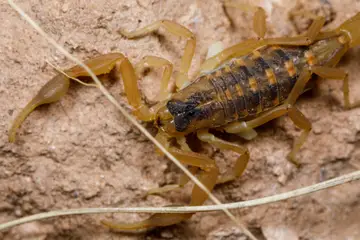
Yes. K-State: only one scorpion species occurs naturally in Kansas, Centruroides vittatus; its sting is painful and its venom is low in toxicity to humans, though some people react strongly. K-State Research and Extension
Yes. KDWP: eradicated by the early 1900s; first modern confirmation in Barber County in 2007; confirmed sightings in 49 of 105 counties. Kansas Department of Wildlife and Parks
Rarely. KDWP: gray wolves were gone by the early 1900s; two confirmed in Kansas (2012 northwest, 2017 southcentral). Kansas Department of Wildlife and Parks
Are there fire ants in Kansas?
Not established. K-State: red and black imported fire ants do not overwinter in Kansas; colonies arriving in nursery stock are quarantined and destroyed by the Kansas Department of Agriculture. K-State Research and Extension
What ticks are in Kansas?
KDWP/KDHE: these ticks can transmit ehrlichiosis, tularemia, anaplasmosis, Lyme disease and Rocky Mountain spotted fever. Kansas Department of Wildlife and Parks
KHA species account: Eastern Copperhead. Kansas Herpetofaunal Atlas (Travis W. Taggart), Sternberg Museum of Natural History, Fort Hays State University. updated February 19, 2026; checked November 3, 2026.Quoted passages (1)
“DANGEROUSLY VENOMOUS (a threat to life or limb)”
KHA species account: Broad-banded Copperhead. Kansas Herpetofaunal Atlas (Travis W. Taggart), Sternberg Museum of Natural History, Fort Hays State University. updated February 19, 2026; checked November 3, 2026.Quoted passages (1)
“DANGEROUSLY VENOMOUS (a threat to life or limb)”
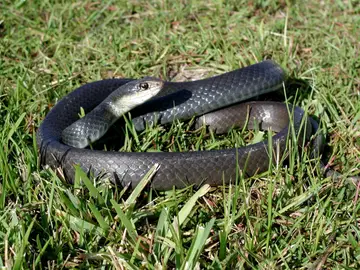
KHA species account: Northern Cottonmouth. Kansas Herpetofaunal Atlas (Travis W. Taggart), Sternberg Museum of Natural History, Fort Hays State University. updated February 19, 2026; checked November 3, 2026.Quoted passages (2)
“DANGEROUSLY VENOMOUS (a threat to life or limb)”
“The only credible records of this species in Kansas are from the Spring River drainage in extreme southeastern Kansas.”
KHA species account: Western Diamond-backed Rattlesnake. Kansas Herpetofaunal Atlas (Travis W. Taggart), Sternberg Museum of Natural History, Fort Hays State University. updated February 19, 2026; checked November 3, 2026.Quoted passages (2)
“DANGEROUSLY VENOMOUS (a threat to life or limb)”
“The only known extant 'population' of these large serpents was introduced in the vicinity of Kanopolis State Park in Ellsworth County, where they have been found regularly since 1993.”
KHA species account: Timber Rattlesnake. Kansas Herpetofaunal Atlas (Travis W. Taggart), Sternberg Museum of Natural History, Fort Hays State University. updated February 19, 2026; checked November 3, 2026.Quoted passages (1)
“DANGEROUSLY VENOMOUS (a threat to life or limb)”
KHA species account: Prairie Rattlesnake. Kansas Herpetofaunal Atlas (Travis W. Taggart), Sternberg Museum of Natural History, Fort Hays State University. updated February 19, 2026; checked November 3, 2026.Quoted passages (1)
“DANGEROUSLY VENOMOUS (a threat to life or limb)”
KHA species account: Western Massasauga. Kansas Herpetofaunal Atlas (Travis W. Taggart), Sternberg Museum of Natural History, Fort Hays State University. updated February 19, 2026; checked November 3, 2026.Quoted passages (1)
“DANGEROUSLY VENOMOUS (a threat to life or limb)”
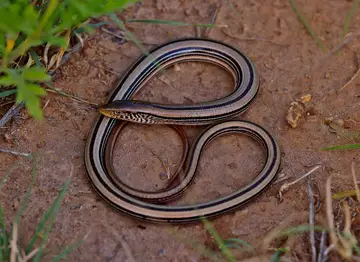
KHA species account: Flat-headed Snake. Kansas Herpetofaunal Atlas (Travis W. Taggart), Sternberg Museum of Natural History, Fort Hays State University. updated July 25, 2023; checked November 3, 2026.Quoted passages (1)
“HARMLESSLY VENOMOUS. Uses its venom to subdue prey, but is not dangerous to humans because a) they have an ineffective venom delivery mechanism, b) their mouths too small to gain purchase, and/or c) their venom is not adapted for causing physiological damage to mammals.”
KHA species account: Plains Black-headed Snake. Kansas Herpetofaunal Atlas (Travis W. Taggart), Sternberg Museum of Natural History, Fort Hays State University. updated July 25, 2023; checked November 3, 2026.Quoted passages (1)
“HARMLESSLY VENOMOUS. Uses its venom to subdue prey, but is not dangerous to humans because a) they have an ineffective venom delivery mechanism, b) their mouths too small to gain purchase, and/or c) their venom is not adapted for causing physiological damage to mammals.”
“Examples of venomous herps in Kansas are five species of the family Dipsadidae (harmless rear-fanged snakes; Carphophis vermis, Diadophis punctatus, Heterodon spp., and Hypsiglena jani), several species of the family Natricidae (e.g. Thamnophis spp. [Gartersnakes]), several species of the family Colubridae (e.g. Tantilla spp. [Crowned Snakes]), and five medically significant species of the family Crotalidae”
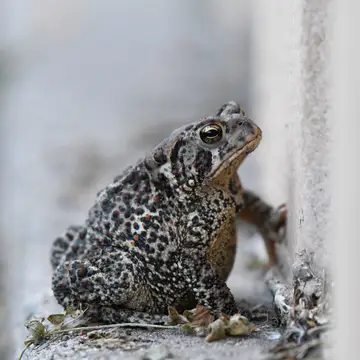
“Examples of poisonous herps in Kansas include True Toads (Anaxyrus spp.), Cope's/Gray Treefrog (Hyla chrysoscelis/versicolor), and Pickerel Frog (Lithobates palustris).”
“…and five medically significant species of the family Crotalidae”
“Seek medical attention as soon as possible (dial 911 or call local Emergency Medical Services EMS). … Call The University of Kansas Hospital Poison Control Center (KU-PCC) at 1-800-222-1222.”
KHA species account: Ring-necked Snake. Kansas Herpetofaunal Atlas (Travis W. Taggart), Sternberg Museum of Natural History, Fort Hays State University. updated February 25, 2024; checked November 3, 2026.Quoted passages (1)
“HARMLESSLY VENOMOUS. Uses its venom to subdue prey, but is not dangerous to humans because a) they have an ineffective venom delivery mechanism, b) their mouths too small to gain purchase, and/or c) their venom is not adapted for causing physiological damage to mammals.”
KHA species account: Western Hog-nosed Snake. Kansas Herpetofaunal Atlas (Travis W. Taggart), Sternberg Museum of Natural History, Fort Hays State University. updated April 8, 2025; checked November 3, 2026.Quoted passages (1)
“HARMLESSLY VENOMOUS. Uses its venom to subdue prey, but is not dangerous to humans because a) they have an ineffective venom delivery mechanism, b) their mouths are too small to gain purchase, and/or c) their venom is not adapted for causing physiological damage to mammals.”
KHA species account: Eastern Hog-nosed Snake. Kansas Herpetofaunal Atlas (Travis W. Taggart), Sternberg Museum of Natural History, Fort Hays State University. updated July 25, 2023; checked November 3, 2026.Quoted passages (1)
“HARMLESSLY VENOMOUS. Uses its venom to subdue prey, but is not dangerous to humans because a) they have an ineffective venom delivery mechanism, b) their mouths too small to gain purchase, and/or c) their venom is not adapted for causing physiological damage to mammals.”
KHA species account: Chihuahuan Nightsnake. Kansas Herpetofaunal Atlas (Travis W. Taggart), Sternberg Museum of Natural History, Fort Hays State University. updated July 25, 2023; checked November 3, 2026.Quoted passages (1)
“HARMLESSLY VENOMOUS. Uses its venom to subdue prey, but is not dangerous to humans because a) they have an ineffective venom delivery mechanism, b) their mouths too small to gain purchase, and/or c) their venom is not adapted for causing physiological damage to mammals.”
Kansas Herpetofaunal Atlas: home page. Kansas Herpetofaunal Atlas (Travis W. Taggart), Sternberg Museum of Natural History, Fort Hays State University. page footer 1999-2026; checked November 3, 2026.Quoted passages (5)
“42 snakes (Squamata),”
“15 others lizards (Squamata) (3 of which are established exotic species), and”
“22 frogs,”
“14 turtles.”
“The Atlas compiles occurrence records, some dating back to the 1830s”
A Pocket Guide to Common Kansas Spiders (Guarisco). Great Plains Nature Center (cooperative project of the U.S. Fish and Wildlife Service, Kansas Department of Wildlife and Parks and City of Wichita); published by the Friends of the Great Plains Nature Center. Copyright 2017 Great Plains Nature Center; checked November 3, 2026.Quoted passages (5)
“…there are approximately 500 species in Kansas.”
“…there are only four Kansas spiders whose bites are considered dangerous enough to require medical attention. These are the Brown Recluse and three species of black widow spiders.”
“The Brown Widow, a tropical species found across the globe, was discovered in the Wichita area several years ago. It is also venomous.”
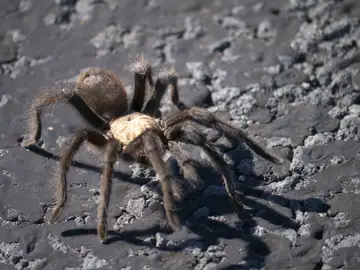
“Range: Southern Kansas, north to Trego, Russell, and Gove Counties;”
“Mating occurs in September when the males leave their burrows in search of females, and are seen crossing highways from sunset to after sunrise.”
Household Pests of Kansas, MF3291 (Davis & Whitworth). K-State Research and Extension (Kansas State University Agricultural Experiment Station and Cooperative Extension Service). July 2018; checked November 3, 2026.Quoted passages (7)
“Only one species of scorpion is known to occur naturally throughout Kansas — Centruroides vittatus, commonly called the striped bark scorpion.”
“…they use the stinger at the tip of the tail to inject venom, paralyzing the victim.”
“The sting includes venom designed to kill or paralyze prey but also may be used defensively when individuals or a colony is threatened.”
“When they do bite, it is extremely painful and results in localized swelling.”
“When detected, these colonies are quickly quarantined and destroyed by the Kansas Department of Agriculture.”
“In this case, the victim should seek medical help immediately.”
“The striped bark scorpion is most commonly found indoors in Kansas from mid-August through October.”
A Pocket Guide to Common Kansas Backyard Birds (Otte & Gress). Great Plains Nature Center (cooperative project of the U.S. Fish and Wildlife Service, Kansas Department of Wildlife and Parks and City of Wichita); published by the Friends of the Great Plains Nature Center. print file dated 8/27/12; checked November 3, 2026.Quoted passages (1)
“As of the publication of this guide, 475 species have been documented in Kansas.”
Kansas Mammal Atlas: home page. Kansas Mammal Atlas, Sternberg Museum of Natural History, Fort Hays State University. page footer 2026; checked November 3, 2026.Quoted passages (1)
“There are 89 species (different kinds) of mammals in Kansas.”
Brown Recluse Spiders (Kansas Structural Pests), MF3133. K-State Research and Extension (Kansas State University Agricultural Experiment Station and Cooperative Extension Service). April 2014; checked November 3, 2026.Quoted passages (4)
“In rare cases, the poisonous venom may cause a life-threatening systemic illness.”
“Of all the spiders in Kansas, the brown recluse, Loxosceles reclusa, is the most publicized and the most feared.”
“…contact your health provider immediately.”
“The brown recluse is inactive from late fall to early spring (October through March)”
Black Widow Spiders, MF3346. K-State Research and Extension (Kansas State University Agricultural Experiment Station and Cooperative Extension Service). March 2017; checked November 3, 2026.Quoted passages (3)
“The venom contains a neurotoxin, which can cause a range of symptoms.”
“Three species of black widow spiders can be found in Kansas: the northern, Latrodectus variolus, the southern, L. mactans, and the western, L. hesperus.”
“Seek medical attention right away.”
A Pocket Guide to Kansas Amphibians, Turtles and Lizards (Taggart & Riedle). Great Plains Nature Center (cooperative project of the U.S. Fish and Wildlife Service, Kansas Department of Wildlife and Parks and City of Wichita); published by the Friends of the Great Plains Nature Center. First Edition; checked November 3, 2026.Quoted passages (2)
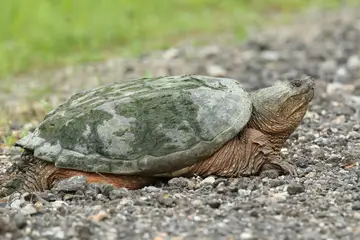
“…several large lizards and all turtles are capable of giving painful bites when handled.”
“No species are venomous.”
Outdoor Health and Safety (KDWP). Kansas Department of Wildlife and Parks. undated page; checked November 3, 2026.Quoted passages (5)
“West Nile virus is most commonly spread by infected mosquitoes that have fed on infected birds.”
“The ticks most often encountered in Kansas are the American dog tick, lone star tick and blacklegged tick (or deer tick). Ticks can transmit diseases, including ehrlichiosis, tularemia, anaplasmosis, Lyme disease and Rocky Mountain spotted fever.”
“Skunks and bats are the most common wildlife carriers in Kansas.”
“The ticks most often encountered in Kansas are the American dog tick, lone star tick and blacklegged tick (or deer tick).”
“Spring and summer are hunting, fishing, camping, and hiking seasons. It is also the time of year when ticks are out.”
Aquatic Invasive Species (KDWP). Kansas Department of Wildlife and Parks. undated page; checked November 3, 2026.Quoted passages (3)
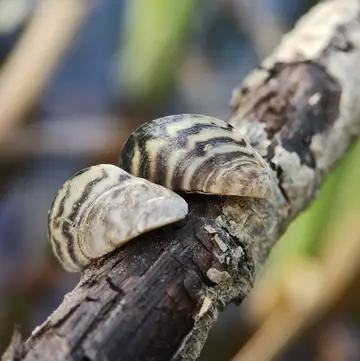
“Zebra mussels are named for the dark and white patter on their shells.”
“Silver carp, bighead carp, black carp, and grass carp are all invasive in Kansas.”
“White perch are native to the Atlantic coast of North America, but it's unclear how they came to Kansas.”
Wildlife Sightings (KDWP). Kansas Department of Wildlife and Parks. undated page; checked November 3, 2026.Quoted passages (4)
“If you observe a threatened or endangered species, a species in need of conservation, or a rare species in a new location, please report it to KDWP.”
“Kansas Department of Wildlife and Parks has confirmed mountain lion sightings in 49 of Kansas's 105 counties.”
“They have been documented only occasionally since the 1880s, but established populations of black bears within short distances of Kansas have led to increased sightings since 2000.”
“Since then, there have been 2 confirmed wolves in Kansas: in northwest Kansas in 2012 and in southcentral Kansas in 2017.”
KHA species account: American Alligator. Kansas Herpetofaunal Atlas (Travis W. Taggart), Sternberg Museum of Natural History, Fort Hays State University. updated June 5, 2025; checked November 3, 2026.Quoted passages (1)
“Known only from introduced individuals. There are no wild reproducing populations of the American Alligator in Kansas.”
A Pocket Guide to Kansas Snakes, Sixth Edition (Collins, Collins & Taggart). Great Plains Nature Center (cooperative project of the U.S. Fish and Wildlife Service, Kansas Department of Wildlife and Parks and City of Wichita); published by the Friends of the Great Plains Nature Center. Sixth Edition; checked November 3, 2026.Quoted passages (6)
“Only five species of Kansas snakes are venomous.”
“Stay on paths or trails and watch where you walk. If you discover a venomous snake, don’t try to catch or harass it.”
“For example, watersnakes are frequently mistaken for Northern Cottonmouths.”
“All Kansas snakes are permanent, year-round residents and none migrate far from suitable habitat.”
“In summer, it becomes nocturnal.”
“Suns on south-facing hillsides with large rocks in spring and fall; roams up to 15 miles from the den in summer, when it is often nocturnal.”