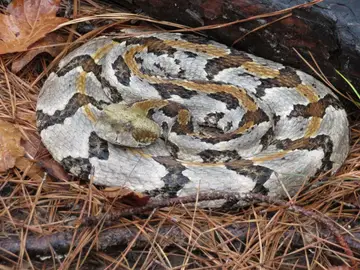
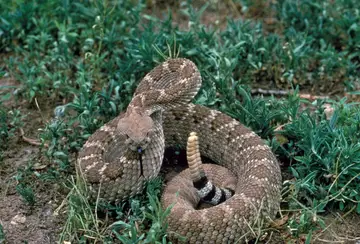
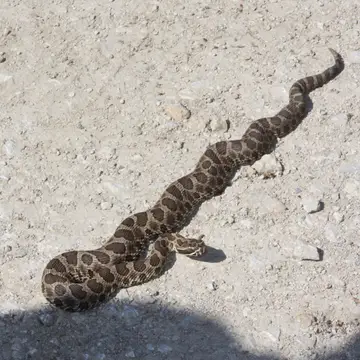
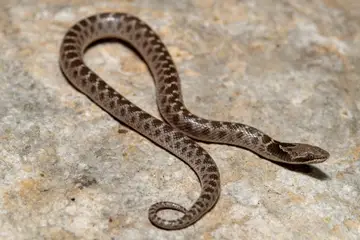
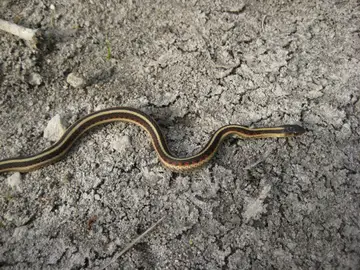
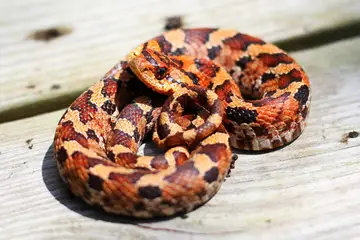
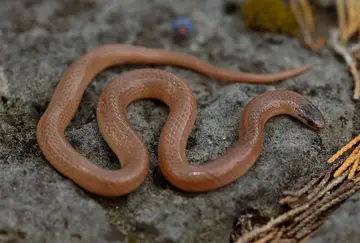
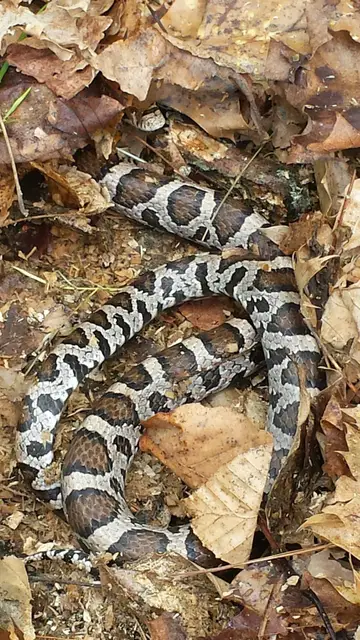
Kansas has 7 venomous snakes named by official sources: Eastern Copperhead, Broad-banded Copperhead, Northern Cottonmouth, Western Diamond-backed Rattlesnake, Timber Rattlesnake, Prairie Rattlesnake and Western Massasauga. Each one is labelled venomous by Kansas Herpetofaunal Atlas (Travis W. Taggart), Sternberg Museum of Natural History, Fort Hays State University. It also lists 11 snakes as mildly venomous or not dangerous to people; they are shown separately below.
The 7 venomous snakes of Kansas
Recognize them from a distance; a photo cannot confirm that a snake is safe. Identifying animals safely.
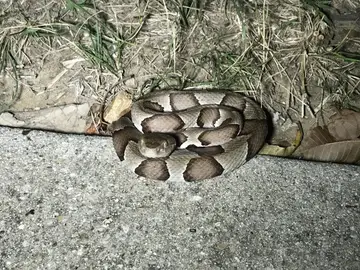
Venom: “DANGEROUSLY VENOMOUS (a threat to life or limb)” (Kansas Herpetofaunal Atlas (Travis W. Taggart), Sternberg Museum of Natural History, Fort Hays State University)
Range: The two forms are broadly overlapping. Agkistrodon contortrix is found generally north and east of the Neosho River basin, where it is scarce and occurs in scattered populations.
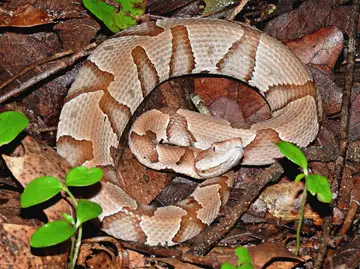
Venom: “DANGEROUSLY VENOMOUS (a threat to life or limb)” (Kansas Herpetofaunal Atlas (Travis W. Taggart), Sternberg Museum of Natural History, Fort Hays State University)
Range: The only credible records of this species in Kansas are from the Spring River drainage in extreme southeastern Kansas. The Spring River roughly defines the boundary of the Ozark Plateau in Kansas.
Usually about 3 to 4 feet; Montana gives 15 to 60 inches and NPS says up to 5 feet. Arizona gives a maximum of 28 to 64 inches (excluding rattle) depending on subspecies; in Colorado it is rarely over 39 inches.
How to recognize it
Rattle (or a button in newborns) at the tail tip
Head much broader than the neck, many small scales on top of the head, heat-sensing pit between eye and nostril
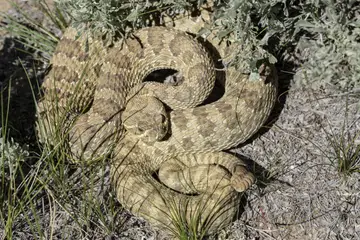
Venom: “DANGEROUSLY VENOMOUS (a threat to life or limb)” (Kansas Herpetofaunal Atlas (Travis W. Taggart), Sternberg Museum of Natural History, Fort Hays State University)
Range: The Prairie Rattlesnake is confined to the western half of the state although it is apparently absent from much of the Arkansas River drainage east of Ford County. A specimen (KU 2327) from "Republic County" (no specific locality) is not mapped due to its imprecise locality and the lack of corroborating specimens from adjacent Nebraska.
Kansas Species in Need of Conservation (SINC) (as labelled by KHA)
What the sources say
Venom: “DANGEROUSLY VENOMOUS (a threat to life or limb)” (Kansas Herpetofaunal Atlas (Travis W. Taggart), Sternberg Museum of Natural History, Fort Hays State University)
Range: The Timber Rattlesnake is known from the Marais des Cygnes drainage basin in Kansas and Missouri. It enters Kansas from Oklahoma in the Cross Timbers but is conspicuously absent from the Neosho River basin.
Usually about 3.5 to 4.5 feet; Texas says it can reach seven feet. Arizona's maximum is 66 inches excluding the rattle; Saguaro National Park gives a range of 30 to 90 inches.
How to recognize it
Rattle at the end of the tail
Broad triangular head on a slender neck; vertical pupils
Thin light stripe from behind the eye down to the upper lip
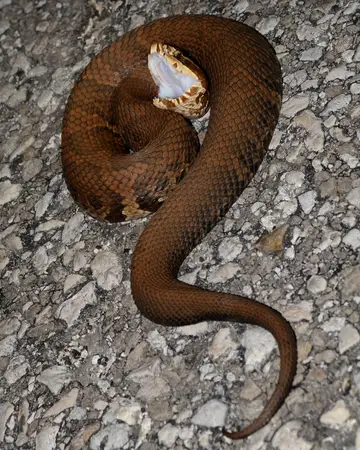
Venom: “DANGEROUSLY VENOMOUS (a threat to life or limb)” (Kansas Herpetofaunal Atlas (Travis W. Taggart), Sternberg Museum of Natural History, Fort Hays State University)
Range: Native populations approach Kansas just south of Comanche and Barber counties. In 2019, an adult was documented in southwest Barber County, and juvenile specimens have been recorded 3-8 miles to the south.
Venom: “DANGEROUSLY VENOMOUS (a threat to life or limb)” (Kansas Herpetofaunal Atlas (Travis W. Taggart), Sternberg Museum of Natural History, Fort Hays State University)
Range: Locally abundant throughout much of the eastern two-thirds of the state, yet conspicuously absent from the Ozark Plateau and rare in the Drift Hills. Makes it into the western third of the state along the Arkansas and Cimarron rivers.
Mildly venomous snakes
Kansas Herpetofaunal Atlas (Travis W. Taggart), Sternberg Museum of Natural History, Fort Hays State University lists these 11 snakes as mildly venomous or not dangerous to people. Each card quotes what the source says about its venom. Like any snake, leave them alone.
Photo: U.S. Customs and Border Protection · Public domain · Wikimedia Commons
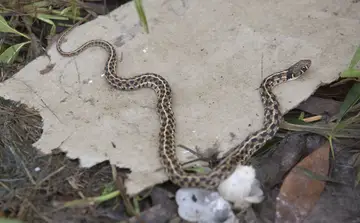
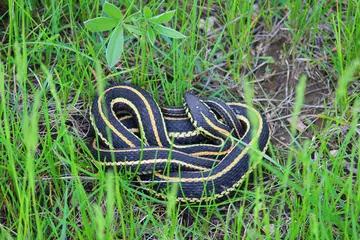
Venom: “Examples of venomous herps in Kansas are five species of the family Dipsadidae (harmless rear-fanged snakes; Carphophis vermis, Diadophis punctatus, Heterodon spp., and Hypsiglena jani), several species of the family Natricidae (e.g. Thamnophis spp. [Gartersnakes]), several species of the family Colubridae (e.g. Tantilla spp. [Crowned Snakes]), and five medically significant species of the family Crotalidae” (Kansas Herpetofaunal Atlas (Travis W. Taggart), Sternberg Museum of Natural History, Fort Hays State University)
Range: The Checkered Gartersnake is found along the southern Kansas border west of the Chikaskia River. Cornelius Rogers captured a specimen at the edge of an irrigation ditch in a vegetable garden at Lake City, Barber County, Kansas, on June 25, 1934 (Burt, 1934).
Kansas Species in Need of Conservation (SINC) (as labelled by KHA)
What the sources say
Venom: “HARMLESSLY VENOMOUS. Uses its venom to subdue prey, but is not dangerous to humans because a) they have an ineffective venom delivery mechanism, b) their mouths too small to gain purchase, and/or c) their venom is not adapted for causing physiological damage to mammals.” (Kansas Herpetofaunal Atlas (Travis W. Taggart), Sternberg Museum of Natural History, Fort Hays State University)
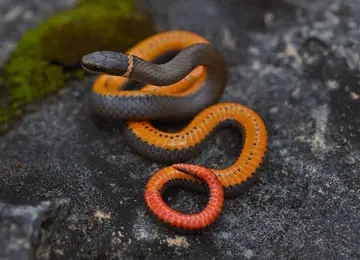
Range: Known from two isolated populations in the Red Hills, and is conspicuously absent from Meade and southeastern Seward counties. This small snake is known from two disjunct populations in Kansas as follows: 1) northern Clark County in the vicinity of Clark State Fishing Lake and environs to the immediate south; and along outcroppings of the Dog Creek and Blaine formations in southeastern Comanche County, and western Barber County.
Venom: “Examples of venomous herps in Kansas are five species of the family Dipsadidae (harmless rear-fanged snakes; Carphophis vermis, Diadophis punctatus, Heterodon spp., and Hypsiglena jani), several species of the family Natricidae (e.g. Thamnophis spp. [Gartersnakes]), several species of the family Colubridae (e.g. Tantilla spp. [Crowned Snakes]), and five medically significant species of the family Crotalidae” (Kansas Herpetofaunal Atlas (Travis W. Taggart), Sternberg Museum of Natural History, Fort Hays State University)
Kansas Species in Need of Conservation (SINC) (as labelled by KHA)
What the sources say
Venom: “HARMLESSLY VENOMOUS. Uses its venom to subdue prey, but is not dangerous to humans because a) they have an ineffective venom delivery mechanism, b) their mouths too small to gain purchase, and/or c) their venom is not adapted for causing physiological damage to mammals.” (Kansas Herpetofaunal Atlas (Travis W. Taggart), Sternberg Museum of Natural History, Fort Hays State University)
Range: This species is spottily distributed in the eastern half of Kansas but is rather well-documented along sandy regions (alluvial/riparian and dunes [and adjacent uplands] west of the Flint Hills. Pleistocene age fossil specimens are known from Meade, Rice, and McPherson counties.
Venom: “HARMLESSLY VENOMOUS. Uses its venom to subdue prey, but is not dangerous to humans because a) they have an ineffective venom delivery mechanism, b) their mouths too small to gain purchase, and/or c) their venom is not adapted for causing physiological damage to mammals.” (Kansas Herpetofaunal Atlas (Travis W. Taggart), Sternberg Museum of Natural History, Fort Hays State University)
Venom: “HARMLESSLY VENOMOUS. Uses its venom to subdue prey, but is not dangerous to humans because a) they have an ineffective venom delivery mechanism, b) their mouths too small to gain purchase, and/or c) their venom is not adapted for causing physiological damage to mammals.” (Kansas Herpetofaunal Atlas (Travis W. Taggart), Sternberg Museum of Natural History, Fort Hays State University)
Photo: Photo Credit: Krista Lundgren/USFWS USFWS Mountain-Prairie · Public domain · Wikimedia Commons
Venom: “Examples of venomous herps in Kansas are five species of the family Dipsadidae (harmless rear-fanged snakes; Carphophis vermis, Diadophis punctatus, Heterodon spp., and Hypsiglena jani), several species of the family Natricidae (e.g. Thamnophis spp. [Gartersnakes]), several species of the family Colubridae (e.g. Tantilla spp. [Crowned Snakes]), and five medically significant species of the family Crotalidae” (Kansas Herpetofaunal Atlas (Travis W. Taggart), Sternberg Museum of Natural History, Fort Hays State University)
Range: Found in all but the southeastern corner of the state. Seldom encountered east of the Flint Hills or in the central portion of the Red Hills where populations become localized.
Venom: “HARMLESSLY VENOMOUS. Uses its venom to subdue prey, but is not dangerous to humans because a) they have an ineffective venom delivery mechanism, b) their mouths too small to gain purchase, and/or c) their venom is not adapted for causing physiological damage to mammals.” (Kansas Herpetofaunal Atlas (Travis W. Taggart), Sternberg Museum of Natural History, Fort Hays State University)
Kansas Species in Need of Conservation (SINC) (as labelled by KHA)
What the sources say
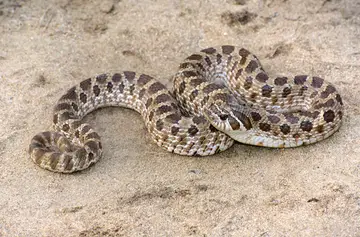
Venom: “HARMLESSLY VENOMOUS. Uses its venom to subdue prey, but is not dangerous to humans because a) they have an ineffective venom delivery mechanism, b) their mouths are too small to gain purchase, and/or c) their venom is not adapted for causing physiological damage to mammals.” (Kansas Herpetofaunal Atlas (Travis W. Taggart), Sternberg Museum of Natural History, Fort Hays State University)
Range: The Plains Hog-nosed Snake occurs throughout the western three-quarters of Kansas, reaching its peak abundance on the High Plains. Its range extends east to the Flint Hills, with a few isolated records along the western border of the Osage Cuestas.
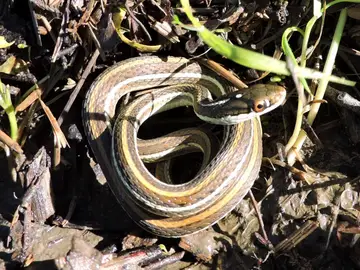
Venom: “Examples of venomous herps in Kansas are five species of the family Dipsadidae (harmless rear-fanged snakes; Carphophis vermis, Diadophis punctatus, Heterodon spp., and Hypsiglena jani), several species of the family Natricidae (e.g. Thamnophis spp. [Gartersnakes]), several species of the family Colubridae (e.g. Tantilla spp. [Crowned Snakes]), and five medically significant species of the family Crotalidae” (Kansas Herpetofaunal Atlas (Travis W. Taggart), Sternberg Museum of Natural History, Fort Hays State University)
Range: Widespread in the eastern third of the state south of the Kansas River and largely confined to riparian corridors west of the Flint Hills. Border vegetation around permanent bodies of water (swamps, marshes, ponds, rivers, ditches) and along the base of nearby rock outcrops where some individuals hibernate.
Venom: “Examples of venomous herps in Kansas are five species of the family Dipsadidae (harmless rear-fanged snakes; Carphophis vermis, Diadophis punctatus, Heterodon spp., and Hypsiglena jani), several species of the family Natricidae (e.g. Thamnophis spp. [Gartersnakes]), several species of the family Colubridae (e.g. Tantilla spp. [Crowned Snakes]), and five medically significant species of the family Crotalidae” (Kansas Herpetofaunal Atlas (Travis W. Taggart), Sternberg Museum of Natural History, Fort Hays State University)
See all 42 snakes, venomous and not, on Kansas snakes.
Snakes people confuse
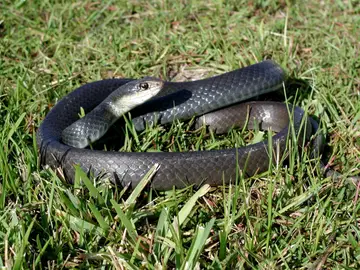
Black Racer or Cottonmouth?
Photo: Everglades NPS from Homestead, Florida, United States · Public domain · Wikimedia Commons
NPS says black racers can resemble the venomous water moccasin and advises leaving alone any snake you cannot identify. It gives no safe field mark, and none is offered here.
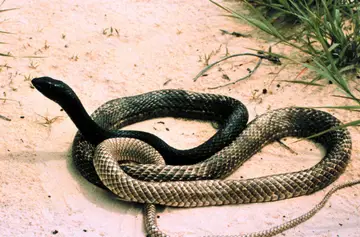
Black Racer or Timber rattlesnake?
Photo: Everglades NPS from Homestead, Florida, United States · Public domain · Wikimedia Commons
The copperhead's head is coppery with no marks; the milksnake's head is light with brownish marks (Pennsylvania). Tennessee: copperhead has a copper-colored, unmarked head and triangular shapes on the side of the body. Pennsylvania says the eastern milksnake is the snake most often killed by mistake for a copperhead. Belly colour is not used here: Pennsylvania's own pages describe the copperhead belly two different ways (uniform cream in one account, mottled white to gray in another).
TWRA: the racer lacks the coachwhip's reddish tint along the sides of the tail; an all-black coachwhip is distinctly lighter or reddish toward the rear. Oklahoma: the coachwhip is much larger.
Photos show typical adults; individuals vary. Never get close to compare.
When venomous snakes are active in Kansas
Records of snakes in Kansas peak in April to June and September. They show when people record snakes, not how many there are (about month bars).
JanFebMarAprMayJunJulAugSepOctNovDec
1,419 records of snakes in Kansas by month (GBIF, CC0 and CC BY records).
Call 911 or Poison Help at 1-800-222-1222 right away. Poison Help connects you to your local poison center, any time of day.
Official advice from Kansas Herpetofaunal Atlas (Travis W. Taggart), Sternberg Museum of Natural History, Fort Hays State University and Great Plains Nature Center (cooperative project of the U.S. Fish and Wildlife Service, Kansas Department of Wildlife and Parks and City of Wichita); published by the Friends of the Great Plains Nature Center:
Report mountain lion, bear or wolf sightings and threatened, endangered, SINC or rare species to KDWP (Wildlife Sightings page; Pratt Operations Office, 512 SE 25th Avenue, Pratt, KS 67124, 620-672-5911). Nuisance wildlife: KDWP lists Nuisance Wildlife Damage Control permit holders. Kansas Department of Wildlife and Parks
Kansas Herpetofaunal Atlas: home page. Kansas Herpetofaunal Atlas (Travis W. Taggart), Sternberg Museum of Natural History, Fort Hays State University. page footer 1999-2026; checked November 3, 2026.Quoted passages (1)
“42 snakes (Squamata),”
KHA species account: Common Glossy Snake. Kansas Herpetofaunal Atlas (Travis W. Taggart), Sternberg Museum of Natural History, Fort Hays State University. updated April 8, 2025; checked November 3, 2026.Quoted passages (1)
“HARMLESS.”
KHA species account: North American Racer. Kansas Herpetofaunal Atlas (Travis W. Taggart), Sternberg Museum of Natural History, Fort Hays State University. updated August 9, 2024; checked November 3, 2026.Quoted passages (1)
“HARMLESS.”
KHA species account: Prairie Kingsnake. Kansas Herpetofaunal Atlas (Travis W. Taggart), Sternberg Museum of Natural History, Fort Hays State University. updated May 19, 2024; checked November 3, 2026.Quoted passages (1)
“HARMLESS.”
KHA species account: Western Milksnake. Kansas Herpetofaunal Atlas (Travis W. Taggart), Sternberg Museum of Natural History, Fort Hays State University. updated April 30, 2024; checked November 3, 2026.Quoted passages (1)
“HARMLESS.”
KHA species account: Speckled Kingsnake. Kansas Herpetofaunal Atlas (Travis W. Taggart), Sternberg Museum of Natural History, Fort Hays State University. updated August 14, 2024; checked November 3, 2026.Quoted passages (1)
“HARMLESS.”
KHA species account: Eastern Milksnake. Kansas Herpetofaunal Atlas (Travis W. Taggart), Sternberg Museum of Natural History, Fort Hays State University. updated April 30, 2024; checked November 3, 2026.Quoted passages (1)
“HARMLESS.”
KHA species account: Common Coachwhip. Kansas Herpetofaunal Atlas (Travis W. Taggart), Sternberg Museum of Natural History, Fort Hays State University. updated April 29, 2025; checked November 3, 2026.Quoted passages (1)
“HARMLESS.”
KHA species account: Northern Rough Greensnake. Kansas Herpetofaunal Atlas (Travis W. Taggart), Sternberg Museum of Natural History, Fort Hays State University. updated April 8, 2025; checked November 3, 2026.Quoted passages (1)
“HARMLESS.”
KHA species account: Smooth Greensnake. Kansas Herpetofaunal Atlas (Travis W. Taggart), Sternberg Museum of Natural History, Fort Hays State University. updated June 5, 2025; checked November 3, 2026.Quoted passages (1)
“HARMLESS.”
KHA species account: Great Plains Ratsnake. Kansas Herpetofaunal Atlas (Travis W. Taggart), Sternberg Museum of Natural History, Fort Hays State University. updated February 25, 2024; checked November 3, 2026.Quoted passages (1)
“HARMLESS.”
KHA species account: Western Ratsnake. Kansas Herpetofaunal Atlas (Travis W. Taggart), Sternberg Museum of Natural History, Fort Hays State University. updated April 3, 2026; checked November 3, 2026.Quoted passages (1)
“HARMLESS.”
KHA species account: Gophersnake. Kansas Herpetofaunal Atlas (Travis W. Taggart), Sternberg Museum of Natural History, Fort Hays State University. updated March 11, 2025; checked November 3, 2026.Quoted passages (1)
“HARMLESS.”
KHA species account: Long-nosed Snake. Kansas Herpetofaunal Atlas (Travis W. Taggart), Sternberg Museum of Natural History, Fort Hays State University. updated June 20, 2023; checked November 3, 2026.Quoted passages (1)
“HARMLESS.”
KHA species account: Great Plains Groundsnake. Kansas Herpetofaunal Atlas (Travis W. Taggart), Sternberg Museum of Natural History, Fort Hays State University. updated May 9, 2023; checked November 3, 2026.Quoted passages (1)
“HARMLESS.”
KHA species account: Flat-headed Snake. Kansas Herpetofaunal Atlas (Travis W. Taggart), Sternberg Museum of Natural History, Fort Hays State University. updated July 25, 2023; checked November 3, 2026.Quoted passages (1)
“HARMLESSLY VENOMOUS. Uses its venom to subdue prey, but is not dangerous to humans because a) they have an ineffective venom delivery mechanism, b) their mouths too small to gain purchase, and/or c) their venom is not adapted for causing physiological damage to mammals.”
KHA species account: Plains Black-headed Snake. Kansas Herpetofaunal Atlas (Travis W. Taggart), Sternberg Museum of Natural History, Fort Hays State University. updated July 25, 2023; checked November 3, 2026.Quoted passages (1)
“HARMLESSLY VENOMOUS. Uses its venom to subdue prey, but is not dangerous to humans because a) they have an ineffective venom delivery mechanism, b) their mouths too small to gain purchase, and/or c) their venom is not adapted for causing physiological damage to mammals.”
KHA species account: Eastern Copperhead. Kansas Herpetofaunal Atlas (Travis W. Taggart), Sternberg Museum of Natural History, Fort Hays State University. updated February 19, 2026; checked November 3, 2026.Quoted passages (1)
“DANGEROUSLY VENOMOUS (a threat to life or limb)”
KHA species account: Broad-banded Copperhead. Kansas Herpetofaunal Atlas (Travis W. Taggart), Sternberg Museum of Natural History, Fort Hays State University. updated February 19, 2026; checked November 3, 2026.Quoted passages (1)
“DANGEROUSLY VENOMOUS (a threat to life or limb)”
KHA species account: Northern Cottonmouth. Kansas Herpetofaunal Atlas (Travis W. Taggart), Sternberg Museum of Natural History, Fort Hays State University. updated February 19, 2026; checked November 3, 2026.Quoted passages (1)
“DANGEROUSLY VENOMOUS (a threat to life or limb)”
KHA species account: Western Diamond-backed Rattlesnake. Kansas Herpetofaunal Atlas (Travis W. Taggart), Sternberg Museum of Natural History, Fort Hays State University. updated February 19, 2026; checked November 3, 2026.Quoted passages (2)
“DANGEROUSLY VENOMOUS (a threat to life or limb)”
“The only known extant 'population' of these large serpents was introduced in the vicinity of Kanopolis State Park in Ellsworth County, where they have been found regularly since 1993.”
KHA species account: Timber Rattlesnake. Kansas Herpetofaunal Atlas (Travis W. Taggart), Sternberg Museum of Natural History, Fort Hays State University. updated February 19, 2026; checked November 3, 2026.Quoted passages (1)
“DANGEROUSLY VENOMOUS (a threat to life or limb)”
KHA species account: Prairie Rattlesnake. Kansas Herpetofaunal Atlas (Travis W. Taggart), Sternberg Museum of Natural History, Fort Hays State University. updated February 19, 2026; checked November 3, 2026.Quoted passages (1)
“DANGEROUSLY VENOMOUS (a threat to life or limb)”
KHA species account: Western Massasauga. Kansas Herpetofaunal Atlas (Travis W. Taggart), Sternberg Museum of Natural History, Fort Hays State University. updated February 19, 2026; checked November 3, 2026.Quoted passages (1)
“Examples of venomous herps in Kansas are five species of the family Dipsadidae (harmless rear-fanged snakes; Carphophis vermis, Diadophis punctatus, Heterodon spp., and Hypsiglena jani), several species of the family Natricidae (e.g. Thamnophis spp. [Gartersnakes]), several species of the family Colubridae (e.g. Tantilla spp. [Crowned Snakes]), and five medically significant species of the family Crotalidae”
“Seek medical attention as soon as possible (dial 911 or call local Emergency Medical Services EMS). … Call The University of Kansas Hospital Poison Control Center (KU-PCC) at 1-800-222-1222.”
KHA species account: Western Wormsnake. Kansas Herpetofaunal Atlas (Travis W. Taggart), Sternberg Museum of Natural History, Fort Hays State University. updated April 30, 2024; checked November 3, 2026.
KHA species account: Ring-necked Snake. Kansas Herpetofaunal Atlas (Travis W. Taggart), Sternberg Museum of Natural History, Fort Hays State University. updated February 25, 2024; checked November 3, 2026.Quoted passages (1)
“HARMLESSLY VENOMOUS. Uses its venom to subdue prey, but is not dangerous to humans because a) they have an ineffective venom delivery mechanism, b) their mouths too small to gain purchase, and/or c) their venom is not adapted for causing physiological damage to mammals.”
KHA species account: Western Hog-nosed Snake. Kansas Herpetofaunal Atlas (Travis W. Taggart), Sternberg Museum of Natural History, Fort Hays State University. updated April 8, 2025; checked November 3, 2026.Quoted passages (1)
“HARMLESSLY VENOMOUS. Uses its venom to subdue prey, but is not dangerous to humans because a) they have an ineffective venom delivery mechanism, b) their mouths are too small to gain purchase, and/or c) their venom is not adapted for causing physiological damage to mammals.”
KHA species account: Eastern Hog-nosed Snake. Kansas Herpetofaunal Atlas (Travis W. Taggart), Sternberg Museum of Natural History, Fort Hays State University. updated July 25, 2023; checked November 3, 2026.Quoted passages (1)
“HARMLESSLY VENOMOUS. Uses its venom to subdue prey, but is not dangerous to humans because a) they have an ineffective venom delivery mechanism, b) their mouths too small to gain purchase, and/or c) their venom is not adapted for causing physiological damage to mammals.”
KHA species account: Chihuahuan Nightsnake. Kansas Herpetofaunal Atlas (Travis W. Taggart), Sternberg Museum of Natural History, Fort Hays State University. updated July 25, 2023; checked November 3, 2026.Quoted passages (1)
“HARMLESSLY VENOMOUS. Uses its venom to subdue prey, but is not dangerous to humans because a) they have an ineffective venom delivery mechanism, b) their mouths too small to gain purchase, and/or c) their venom is not adapted for causing physiological damage to mammals.”
A Pocket Guide to Kansas Snakes, Sixth Edition (Collins, Collins & Taggart). Great Plains Nature Center (cooperative project of the U.S. Fish and Wildlife Service, Kansas Department of Wildlife and Parks and City of Wichita); published by the Friends of the Great Plains Nature Center. Sixth Edition; checked November 3, 2026.Quoted passages (6)
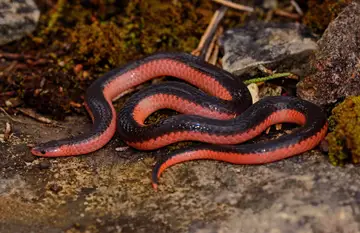
“Harmless. A small, delicate serpent with dysfunctional eyes.”
“Stay on paths or trails and watch where you walk. If you discover a venomous snake, don’t try to catch or harass it.”
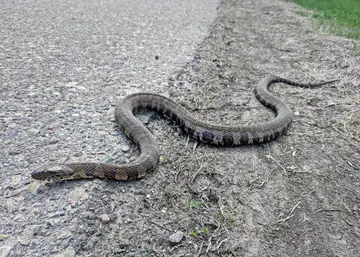
“For example, watersnakes are frequently mistaken for Northern Cottonmouths.”
“All Kansas snakes are permanent, year-round residents and none migrate far from suitable habitat.”
“In summer, it becomes nocturnal.”
“Suns on south-facing hillsides with large rocks in spring and fall; roams up to 15 miles from the den in summer, when it is often nocturnal.”
KHA species account: Texas Threadsnake. Kansas Herpetofaunal Atlas (Travis W. Taggart), Sternberg Museum of Natural History, Fort Hays State University. updated May 9, 2023; checked November 3, 2026.
KHA species account: Plain-bellied Watersnake. Kansas Herpetofaunal Atlas (Travis W. Taggart), Sternberg Museum of Natural History, Fort Hays State University. updated February 19, 2026; checked November 3, 2026.Quoted passages (1)
“HARMLESS.”
KHA species account: Diamond-backed Watersnake. Kansas Herpetofaunal Atlas (Travis W. Taggart), Sternberg Museum of Natural History, Fort Hays State University. updated February 19, 2026; checked November 3, 2026.Quoted passages (1)
“HARMLESS.”
KHA species account: Common Watersnake. Kansas Herpetofaunal Atlas (Travis W. Taggart), Sternberg Museum of Natural History, Fort Hays State University. updated February 19, 2026; checked November 3, 2026.Quoted passages (1)
“HARMLESS.”
KHA species account: Graham's Crawfish Snake. Kansas Herpetofaunal Atlas (Travis W. Taggart), Sternberg Museum of Natural History, Fort Hays State University. updated February 19, 2026; checked November 3, 2026.Quoted passages (1)
“HARMLESS.”
KHA species account: Dekay's Brownsnake. Kansas Herpetofaunal Atlas (Travis W. Taggart), Sternberg Museum of Natural History, Fort Hays State University. updated February 19, 2026; checked November 3, 2026.Quoted passages (1)
“HARMLESS.”
KHA species account: Red-bellied Snake. Kansas Herpetofaunal Atlas (Travis W. Taggart), Sternberg Museum of Natural History, Fort Hays State University. updated February 19, 2026; checked November 3, 2026.Quoted passages (1)
“HARMLESS.”
KHA species account: Checkered Gartersnake. Kansas Herpetofaunal Atlas (Travis W. Taggart), Sternberg Museum of Natural History, Fort Hays State University. updated February 19, 2026; checked November 3, 2026.
KHA species account: Western Ribbonsnake. Kansas Herpetofaunal Atlas (Travis W. Taggart), Sternberg Museum of Natural History, Fort Hays State University. updated February 19, 2026; checked November 3, 2026.
KHA species account: Plains Gartersnake. Kansas Herpetofaunal Atlas (Travis W. Taggart), Sternberg Museum of Natural History, Fort Hays State University. updated February 19, 2026; checked November 3, 2026.
KHA species account: Lined Snake. Kansas Herpetofaunal Atlas (Travis W. Taggart), Sternberg Museum of Natural History, Fort Hays State University. updated February 19, 2026; checked November 3, 2026.Quoted passages (1)
“HARMLESS.”
KHA species account: Rough Earthsnake. Kansas Herpetofaunal Atlas (Travis W. Taggart), Sternberg Museum of Natural History, Fort Hays State University. updated February 19, 2026; checked November 3, 2026.Quoted passages (1)
“HARMLESS.”
KHA species account: Smooth Earthsnake. Kansas Herpetofaunal Atlas (Travis W. Taggart), Sternberg Museum of Natural History, Fort Hays State University. updated August 12, 2026; checked November 3, 2026.Quoted passages (1)
“HARMLESS.”
Wildlife Sightings (KDWP). Kansas Department of Wildlife and Parks. undated page; checked November 3, 2026.Quoted passages (1)
“If you observe a threatened or endangered species, a species in need of conservation, or a rare species in a new location, please report it to KDWP.”