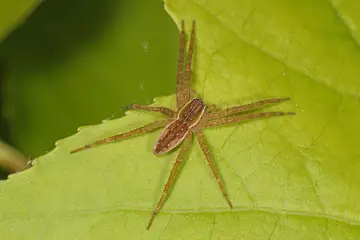
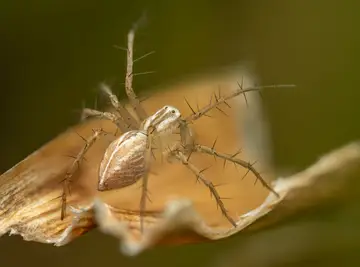
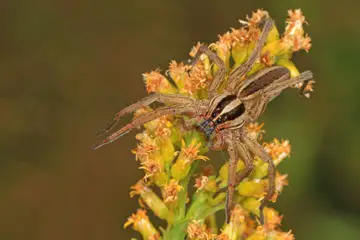
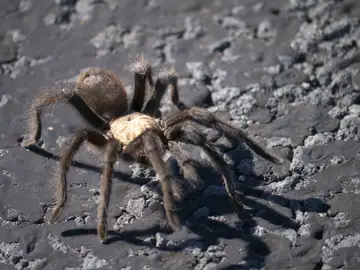
On this page Which spiders can hurt you All 55 spiders Lookalikes When they are active If you are bitten or stung What official sources say About this list Sources Great Plains Nature Center (cooperative project of the U.S. Fish and Wildlife Service, Kansas Department of Wildlife and Parks and City of Wichita); published by the Friends of the Great Plains Nature Center: …there are approximately 500 species in Kansas.
This page lists 55 spiders .
4 are venomous by official accounts. Great Plains Nature Center (cooperative project of the U.S. Fish and Wildlife Service, Kansas Department of Wildlife and Parks and City of Wichita); published by the Friends of the Great Plains Nature Center gives a total of 500; the 55 here are the spiders official sources name one by one.
Not every species: no complete official list of Kansas spiders exists, so this page covers the ones state and Extension sources name. How lists are built .
Which spiders can hurt you Official sources single out these spiders in Kansas, in their own words:
All 55 spiders Venomous species first, then A to Z. Do not handle them.
Find by name
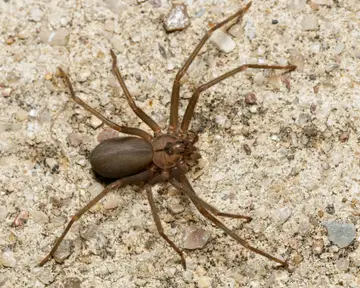
Photo: Meghan Cassidy · CC BY-SA 4.0 · iNaturalist · resized Loxosceles reclusa
Venomous per Great Plains Nature Center (cooperative project of the U.S. Fish and Wildlife Service, Kansas Department of Wildlife and Parks and City of Wichita); published by the Friends of the Great Plains Nature Center
Danger to people “In rare cases, the poisonous venom may cause a life-threatening systemic illness.” K-State Research and Extension Size Body about 7 to 12 mm (about 3/8 inch); females average about 9 mm and males about 8 mm. UC IPM says a recluse body is not more than 3/8 inch long. How to recognize it Six equal-sized eyes in three pairs. UC IPM calls this the most definitive feature, since most spiders have eight eyes. The violin mark alone is not a reliable way to identify it UC IPM's five-point check: six eyes in pairs, evenly colored finely haired abdomen, no spines on the legs, evenly colored legs, body no more than 3/8 inch Where in Kansas Statewide; found in south central U.S. from Ohio, Kentucky, Tennessee, and Georgia, west to Iowa, SE Nebraska, Kansas, Oklahoma, Texas and E. New Mexico. Great Plains Nature Center (cooperative project of the U.S. Fish and Wildlife Service, Kansas Department of Wildlife and Parks and City of Wichita); published by the Friends of the Great Plains Nature Center
J F M A M J J A S O N D
79 records by month. What the sources say Venom: “…there are only four Kansas spiders whose bites are considered dangerous enough to require medical attention. These are the Brown Recluse and three species of black widow spiders.” (Great Plains Nature Center (cooperative project of the U.S. Fish and Wildlife Service, Kansas Department of Wildlife and Parks and City of Wichita); published by the Friends of the Great Plains Nature Center)
Full Brown Recluse (Fiddleback) guide
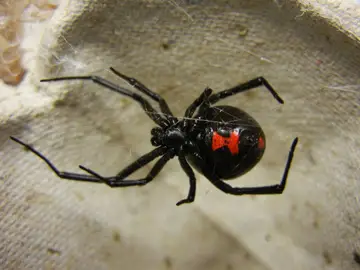
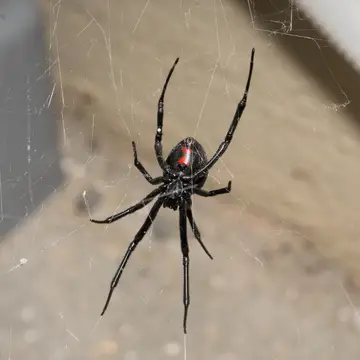
Photo: Judy Gallagher · CC BY 2.0 · Wikimedia Commons Northern Black Widow Latrodectus variolus
Venomous per Great Plains Nature Center (cooperative project of the U.S. Fish and Wildlife Service, Kansas Department of Wildlife and Parks and City of Wichita); published by the Friends of the Great Plains Nature Center
Where in Kansas Eastern 1/3 of Kansas; eastern 1/2 of U.S. Great Plains Nature Center (cooperative project of the U.S. Fish and Wildlife Service, Kansas Department of Wildlife and Parks and City of Wichita); published by the Friends of the Great Plains Nature Center What the sources say Venom: “…there are only four Kansas spiders whose bites are considered dangerous enough to require medical attention. These are the Brown Recluse and three species of black widow spiders.” (Great Plains Nature Center (cooperative project of the U.S. Fish and Wildlife Service, Kansas Department of Wildlife and Parks and City of Wichita); published by the Friends of the Great Plains Nature Center)
Photo: Shenrich91 · CC BY-SA 3.0 · Wikimedia Commons · resized Southern Black Widow Latrodectus mactans
Venomous per Great Plains Nature Center (cooperative project of the U.S. Fish and Wildlife Service, Kansas Department of Wildlife and Parks and City of Wichita); published by the Friends of the Great Plains Nature Center
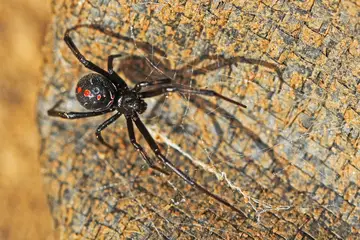
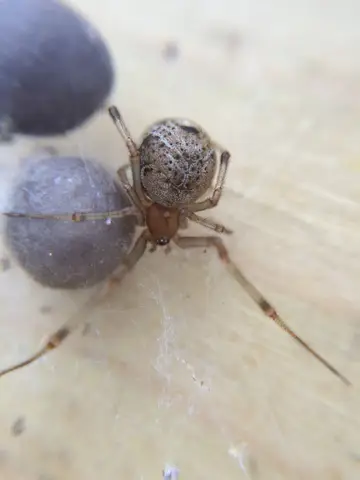
Where in Kansas Southern Black Widow: east and central 1/2 of Kansas; eastern 1/2 of U.S. Western Black Widow: Western 1/3 of the state; western 1/2 of US. continued on next page Brown … Great Plains Nature Center (cooperative project of the U.S. Fish and Wildlife Service, Kansas Department of Wildlife and Parks and City of Wichita); published by the Friends of the Great Plains Nature Center What the sources say Venom: “…there are only four Kansas spiders whose bites are considered dangerous enough to require medical attention. These are the Brown Recluse and three species of black widow spiders.” (Great Plains Nature Center (cooperative project of the U.S. Fish and Wildlife Service, Kansas Department of Wildlife and Parks and City of Wichita); published by the Friends of the Great Plains Nature Center)
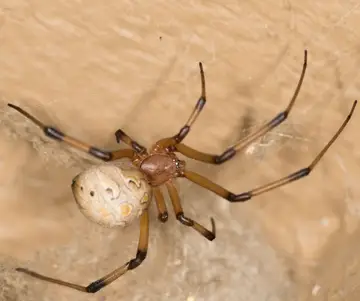
Range: Southern Black Widow: east and central 1/2 of Kansas; eastern 1/2 of U.S. Western Black Widow: Western 1/3 of the state; western 1/2 of US. continued on next page Brown Widow (female & egg sac) Southern Black Widow (female & egg sac) === PAGE 20 === 18
Photo: Dllu · CC BY-SA 4.0 · Wikimedia Commons · resized Western Black Widow Latrodectus hesperus
Venomous per Great Plains Nature Center (cooperative project of the U.S. Fish and Wildlife Service, Kansas Department of Wildlife and Parks and City of Wichita); published by the Friends of the Great Plains Nature Center
Where in Kansas Southern Black Widow: east and central 1/2 of Kansas; eastern 1/2 of U.S. Western Black Widow: Western 1/3 of the state; western 1/2 of US. continued on next page Brown … Great Plains Nature Center (cooperative project of the U.S. Fish and Wildlife Service, Kansas Department of Wildlife and Parks and City of Wichita); published by the Friends of the Great Plains Nature Center What the sources say Venom: “…there are only four Kansas spiders whose bites are considered dangerous enough to require medical attention. These are the Brown Recluse and three species of black widow spiders.” (Great Plains Nature Center (cooperative project of the U.S. Fish and Wildlife Service, Kansas Department of Wildlife and Parks and City of Wichita); published by the Friends of the Great Plains Nature Center)
Range: Southern Black Widow: east and central 1/2 of Kansas; eastern 1/2 of U.S. Western Black Widow: Western 1/3 of the state; western 1/2 of US. continued on next page Brown Widow (female & egg sac) Southern Black Widow (female & egg sac) === PAGE 20 === 18
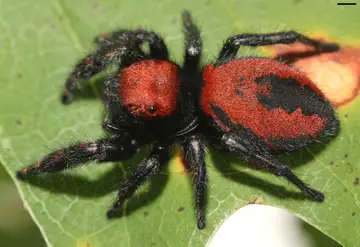
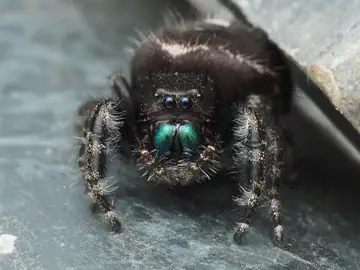
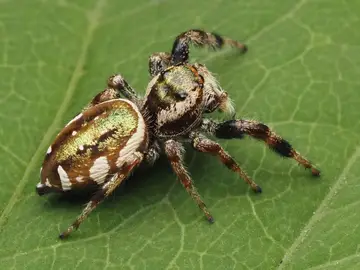
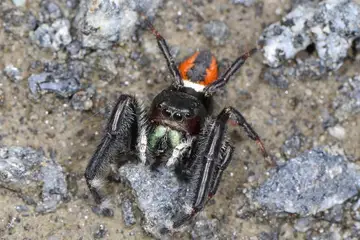
Photo: David Hill · CC BY 2.0 · Wikimedia Commons Apache Jumping Spider Phidippus apacheanus
Not stated
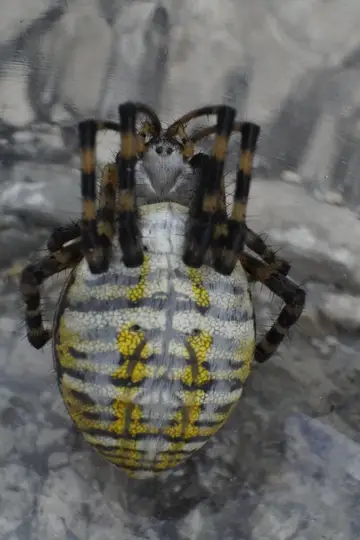
Venom No official source we use states whether this animal is venomous. That does not mean it is harmless: do not handle it. Where in Kansas Statewide; occurs throughout most of the U.S. Great Plains Nature Center (cooperative project of the U.S. Fish and Wildlife Service, Kansas Department of Wildlife and Parks and City of Wichita); published by the Friends of the Great Plains Nature Center Photo: Nick Chirico · CC BY 4.0 · iNaturalist Banded Garden Spider Argiope trifasciata
Not stated
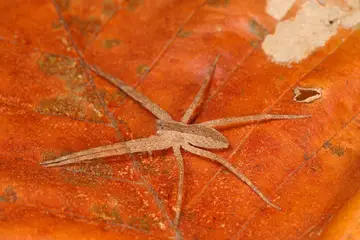
Venom No official source we use states whether this animal is venomous. That does not mean it is harmless: do not handle it. Where in Kansas Common across Kansas; throughout North, Central, and South America, also in Europe, Africa, and the South Pacific. Great Plains Nature Center (cooperative project of the U.S. Fish and Wildlife Service, Kansas Department of Wildlife and Parks and City of Wichita); published by the Friends of the Great Plains Nature Center No confirmed photo of Bark Crab Spider Bark Crab Spider Philodromus vulgaris
Not stated
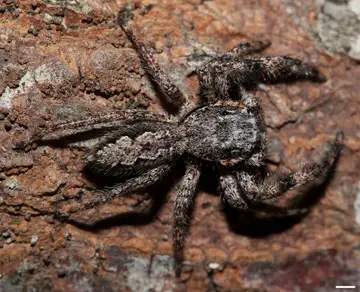
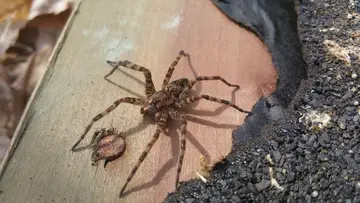
Venom No official source we use states whether this animal is venomous. That does not mean it is harmless: do not handle it. Where in Kansas Statewide in Kansas; eastern 1/2 of U.S. Great Plains Nature Center (cooperative project of the U.S. Fish and Wildlife Service, Kansas Department of Wildlife and Parks and City of Wichita); published by the Friends of the Great Plains Nature Center Photo: David Hill · CC BY 2.0 · Wikimedia Commons Bark Jumping Spider Platycryptus undatus
Not stated
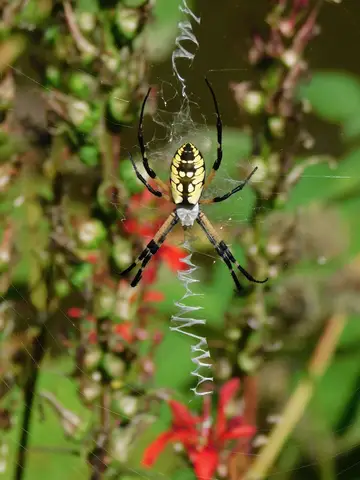
Venom No official source we use states whether this animal is venomous. That does not mean it is harmless: do not handle it. Where in Kansas Statewide; eastern 1/2 of U.S. Great Plains Nature Center (cooperative project of the U.S. Fish and Wildlife Service, Kansas Department of Wildlife and Parks and City of Wichita); published by the Friends of the Great Plains Nature Center Photo: Michael J. Papay · CC BY 4.0 · iNaturalist Argiope aurantia
Not stated
Venom No official source we use states whether this animal is venomous. That does not mean it is harmless: do not handle it. Size Females 3/4 to 1 inch long, not counting legs (Missouri); 19 to 28 mm (Penn State); Texas A&M says the female body is more than 1 inch. Males about 1/4 inch (Missouri); 5 to 8 mm (Penn State). How to recognize it Round web about 2 feet across, built only by females; the spider rests head-down at the center, where a zigzag silk band (stabilimentum) runs vertically. Abdomen an elongated oval, pointed at the rear, with two humps (shoulders) at the front. Males are much smaller than females and rarely noticed. Where in Kansas Throughout most of Kansas; most of the U.S., except the Rocky Mountains. Great Plains Nature Center (cooperative project of the U.S. Fish and Wildlife Service, Kansas Department of Wildlife and Parks and City of Wichita); published by the Friends of the Great Plains Nature Center
J F M A M J J A S O N D
80 records by month. Full Black and Yellow Garden Spider guide
No confirmed photo of Black-banded Crab Spider Black-banded Crab Spider Synema parvulum
Not stated
Venom No official source we use states whether this animal is venomous. That does not mean it is harmless: do not handle it. Where in Kansas Eastern 1/3 of Kansas; eastern 1/2 of U.S. Great Plains Nature Center (cooperative project of the U.S. Fish and Wildlife Service, Kansas Department of Wildlife and Parks and City of Wichita); published by the Friends of the Great Plains Nature Center Photo: Zygy · CC0 1.0 · iNaturalist Bold Jumping Spider Phidippus audax
Not stated
Venom No official source we use states whether this animal is venomous. That does not mean it is harmless: do not handle it. Where in Kansas Statewide; Canada, most of U.S. and Mexico. Great Plains Nature Center (cooperative project of the U.S. Fish and Wildlife Service, Kansas Department of Wildlife and Parks and City of Wichita); published by the Friends of the Great Plains Nature Center
J F M A M J J A S O N D
101 records by month. Photo: xpda · CC BY-SA 4.0 · Wikimedia Commons · resized Bowl and Doily Spider Frontinella communis
Not stated
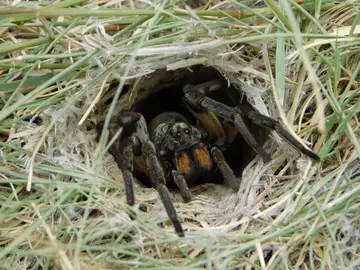
Venom No official source we use states whether this animal is venomous. That does not mean it is harmless: do not handle it. Where in Kansas Statewide; widespread in North America, most common in eastern 1/2 U.S. Great Plains Nature Center (cooperative project of the U.S. Fish and Wildlife Service, Kansas Department of Wildlife and Parks and City of Wichita); published by the Friends of the Great Plains Nature Center Photo: NathanScientific · CC0 · Wikimedia Commons Carolina Wolf Spider Hogna carolinensis
Not stated
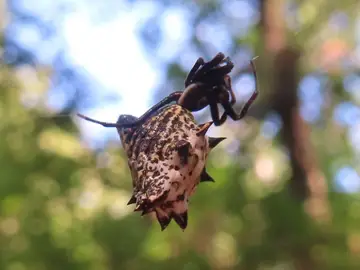
Venom No official source we use states whether this animal is venomous. That does not mean it is harmless: do not handle it. Where in Kansas Statewide in Kansas; throughout the U.S. Great Plains Nature Center (cooperative project of the U.S. Fish and Wildlife Service, Kansas Department of Wildlife and Parks and City of Wichita); published by the Friends of the Great Plains Nature Center Photo: Ken Clark · CC BY 4.0 · iNaturalist Castleback Orbweaver Micrathena gracilis
Not stated
Venom No official source we use states whether this animal is venomous. That does not mean it is harmless: do not handle it. Where in Kansas Eastern 2/3 of Kansas; eastern U.S., south to Panama. Great Plains Nature Center (cooperative project of the U.S. Fish and Wildlife Service, Kansas Department of Wildlife and Parks and City of Wichita); published by the Friends of the Great Plains Nature Center Photo: dhasdf · CC BY 4.0 · iNaturalist Checkered Cobweb Weaver Steatoda triangulosa
Not stated
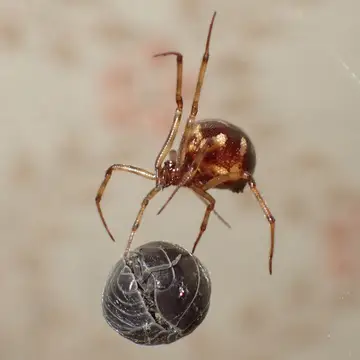
Venom No official source we use states whether this animal is venomous. That does not mean it is harmless: do not handle it. Where in Kansas Probably statewide; cosmopolitan, found across most of the U.S. Great Plains Nature Center (cooperative project of the U.S. Fish and Wildlife Service, Kansas Department of Wildlife and Parks and City of Wichita); published by the Friends of the Great Plains Nature Center No confirmed photo of Cherokee Star-bellied Orbweaver Cherokee Star-bellied Orbweaver Acanthepeira cherokee
Not stated
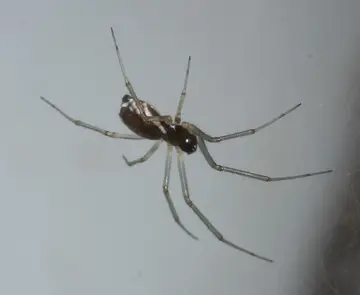
Venom No official source we use states whether this animal is venomous. That does not mean it is harmless: do not handle it. Where in Kansas Probably statewide; eastern U.S. and Mexico. Great Plains Nature Center (cooperative project of the U.S. Fish and Wildlife Service, Kansas Department of Wildlife and Parks and City of Wichita); published by the Friends of the Great Plains Nature Center Photo: Erin Lalime · CC BY 4.0 · iNaturalist Common Cellar Spider Parasteatoda tepidariorum
Not stated
Venom No official source we use states whether this animal is venomous. That does not mean it is harmless: do not handle it. Where in Kansas Statewide; cosmopolitan, found on most continents. Great Plains Nature Center (cooperative project of the U.S. Fish and Wildlife Service, Kansas Department of Wildlife and Parks and City of Wichita); published by the Friends of the Great Plains Nature Center Photo: Judy Gallagher · CC BY 2.0 · Wikimedia Commons Common Nurseryweb Spider Pisaurina mira
Not stated
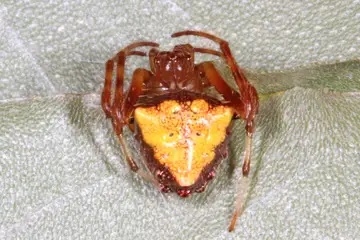
Venom No official source we use states whether this animal is venomous. That does not mean it is harmless: do not handle it. Where in Kansas Eastern 1/2 of Kansas; eastern 1/2 of U.S. Great Plains Nature Center (cooperative project of the U.S. Fish and Wildlife Service, Kansas Department of Wildlife and Parks and City of Wichita); published by the Friends of the Great Plains Nature Center Photo: Douglas Hooper · CC BY 4.0 · iNaturalist Common Star-bellied Orbweaver Acanthepeira stellata
Not stated
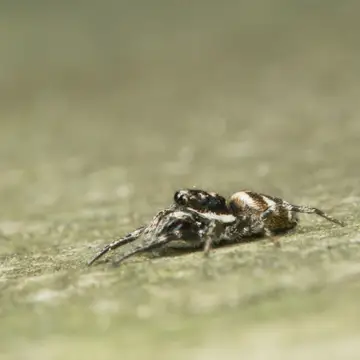
Venom No official source we use states whether this animal is venomous. That does not mean it is harmless: do not handle it. Where in Kansas Probably statewide; eastern U.S. and Mexico. Great Plains Nature Center (cooperative project of the U.S. Fish and Wildlife Service, Kansas Department of Wildlife and Parks and City of Wichita); published by the Friends of the Great Plains Nature Center Photo: a6475 · CC BY-SA 4.0 · iNaturalist · resized Common Zebra Spider Salticus scenicus
Not stated
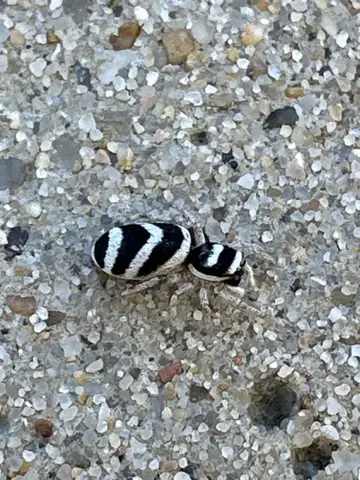
Venom No official source we use states whether this animal is venomous. That does not mean it is harmless: do not handle it. Where in Kansas The Common Zebra Spider occurs in northern 1/2 of Kansas; northern 1/2 of North America, also in Europe and North Africa … Great Plains Nature Center (cooperative project of the U.S. Fish and Wildlife Service, Kansas Department of Wildlife and Parks and City of Wichita); published by the Friends of the Great Plains Nature Center Photo: Calinsdad · CC0 1.0 · iNaturalist Convict Zebra Spider Salticus austinensis
Not stated
Venom No official source we use states whether this animal is venomous. That does not mean it is harmless: do not handle it. Where in Kansas The Common Zebra Spider occurs in northern 1/2 of Kansas; northern 1/2 of North America, also in Europe and North Africa … Great Plains Nature Center (cooperative project of the U.S. Fish and Wildlife Service, Kansas Department of Wildlife and Parks and City of Wichita); published by the Friends of the Great Plains Nature Center Photo: Caitlin Domon · CC0 1.0 · iNaturalist Dimorphic Jumping Spider Maevia inclemens
Not stated
Venom No official source we use states whether this animal is venomous. That does not mean it is harmless: do not handle it. Where in Kansas Eastern 1/2 of Kansas; eastern 1/2 of U.S. Great Plains Nature Center (cooperative project of the U.S. Fish and Wildlife Service, Kansas Department of Wildlife and Parks and City of Wichita); published by the Friends of the Great Plains Nature Center No confirmed photo of Dotted Wolf Spider Dotted Wolf Spider Rabidosa punctulata
Not stated
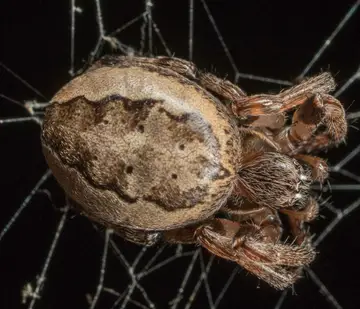
Venom No official source we use states whether this animal is venomous. That does not mean it is harmless: do not handle it. Where in Kansas Common in eastern 1/3 of Kansas; found throughout eastern U.S. Great Plains Nature Center (cooperative project of the U.S. Fish and Wildlife Service, Kansas Department of Wildlife and Parks and City of Wichita); published by the Friends of the Great Plains Nature Center Photo: dhasdf · CC BY 4.0 · iNaturalist Eastern Arboreal Orbweaver Neoscona crucifera
Not stated
Venom No official source we use states whether this animal is venomous. That does not mean it is harmless: do not handle it. Where in Kansas Statewide, more common in eastern 1/2; eastern U.S., Texas, New Mexico, and Arizona. Great Plains Nature Center (cooperative project of the U.S. Fish and Wildlife Service, Kansas Department of Wildlife and Parks and City of Wichita); published by the Friends of the Great Plains Nature Center
J F M A M J J A S O N D
40 records by month. Photo: Curtis Burke · CC BY 4.0 · iNaturalist Eastern Funnelweb Spider Agelenopsis naevia
Not stated
Venom No official source we use states whether this animal is venomous. That does not mean it is harmless: do not handle it. Where in Kansas Eastern 1/3 of Kansas; eastern 1/2 of U.S. The Pennsylvania Funnelweb Spider (A. pennsylvanica) is also common in the same habitat. Great Plains Nature Center (cooperative project of the U.S. Fish and Wildlife Service, Kansas Department of Wildlife and Parks and City of Wichita); published by the Friends of the Great Plains Nature Center Photo: Judy Gallagher · CC BY 2.0 · Wikimedia Commons Eastern Labyrinth Orbweaver Metepeira labyrinthea
Not stated
Venom No official source we use states whether this animal is venomous. That does not mean it is harmless: do not handle it. Where in Kansas Scattered across Kansas; eastern 1/2 of U.S. Great Plains Nature Center (cooperative project of the U.S. Fish and Wildlife Service, Kansas Department of Wildlife and Parks and City of Wichita); published by the Friends of the Great Plains Nature Center Photo: Even Dankowicz · CC BY 4.0 · iNaturalist Eastern Parson Spider Herpyllus ecclesiasticus
Not stated
Venom No official source we use states whether this animal is venomous. That does not mean it is harmless: do not handle it. Where in Kansas Eastern Parson Spider in eastern 2/3 of Kansas and eastern 1/2 of U.S; Western Parson Spider in western 1/3 of Kansas and western 1/2 of U.S. Great Plains Nature Center (cooperative project of the U.S. Fish and Wildlife Service, Kansas Department of Wildlife and Parks and City of Wichita); published by the Friends of the Great Plains Nature Center No confirmed photo of Eastern Pirate Spider Eastern Pirate Spider Mimetus notius
Not stated
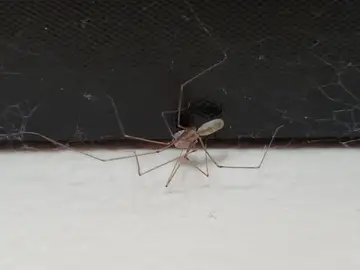
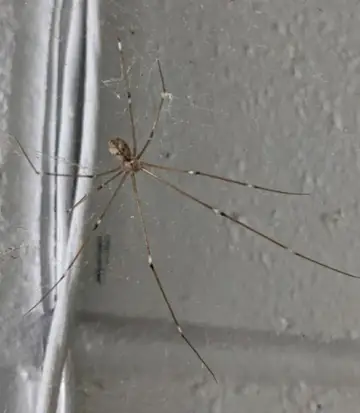
Venom No official source we use states whether this animal is venomous. That does not mean it is harmless: do not handle it. Where in Kansas Eastern Pirate Spider in eastern 2/3 KS and eastern 1/2 U.S. with a few western records; Four-lined Pirate Spider across KS and eastern 1/2 U.S. Great Plains Nature Center (cooperative project of the U.S. Fish and Wildlife Service, Kansas Department of Wildlife and Parks and City of Wichita); published by the Friends of the Great Plains Nature Center Photo: Gavin Slater · CC BY 4.0 · iNaturalist Elongated Cellar Spider Pholcus phalangioides
Not stated
Venom No official source we use states whether this animal is venomous. That does not mean it is harmless: do not handle it. Where in Kansas Statewide; entire U.S.; European immigrant found worldwide. Great Plains Nature Center (cooperative project of the U.S. Fish and Wildlife Service, Kansas Department of Wildlife and Parks and City of Wichita); published by the Friends of the Great Plains Nature Center Photo: Zygy · CC0 1.0 · iNaturalist Emerald Jumping Spider Paraphidippus aurantius
Not stated
Venom No official source we use states whether this animal is venomous. That does not mean it is harmless: do not handle it. Where in Kansas Eastern 2/3 of Kansas; eastern, central, and southern U.S. Great Plains Nature Center (cooperative project of the U.S. Fish and Wildlife Service, Kansas Department of Wildlife and Parks and City of Wichita); published by the Friends of the Great Plains Nature Center Photo: Julia Beach · CC BY 4.0 · iNaturalist Filmy Dome Spider Neriene radiata
Not stated
Venom No official source we use states whether this animal is venomous. That does not mean it is harmless: do not handle it. Where in Kansas E 1/2 Kansas; eastern 1/2 U.S. and Canada, with scattered western records. Great Plains Nature Center (cooperative project of the U.S. Fish and Wildlife Service, Kansas Department of Wildlife and Parks and City of Wichita); published by the Friends of the Great Plains Nature Center No confirmed photo of Four-lined Pirate Spider Four-lined Pirate Spider Mimetus epeiroides
Not stated
Venom No official source we use states whether this animal is venomous. That does not mean it is harmless: do not handle it. Where in Kansas Eastern Pirate Spider in eastern 2/3 KS and eastern 1/2 U.S. with a few western records; Four-lined Pirate Spider across KS and eastern 1/2 U.S. Great Plains Nature Center (cooperative project of the U.S. Fish and Wildlife Service, Kansas Department of Wildlife and Parks and City of Wichita); published by the Friends of the Great Plains Nature Center Photo: Jesse Rorabaugh · CC0 1.0 · iNaturalist Furrow Orbweaver Larinioides cornutus
Not stated
Venom No official source we use states whether this animal is venomous. That does not mean it is harmless: do not handle it. Where in Kansas Statewide in KS; entire U.S., Alaska and Canada to Central America; Europe and Asia. Great Plains Nature Center (cooperative project of the U.S. Fish and Wildlife Service, Kansas Department of Wildlife and Parks and City of Wichita); published by the Friends of the Great Plains Nature Center No confirmed photo of Garden Ghost Spider Garden Ghost Spider Hibana gracilis
Not stated
Venom No official source we use states whether this animal is venomous. That does not mean it is harmless: do not handle it. Where in Kansas Statewide in Kansas, eastern 1/2 of U.S. Great Plains Nature Center (cooperative project of the U.S. Fish and Wildlife Service, Kansas Department of Wildlife and Parks and City of Wichita); published by the Friends of the Great Plains Nature Center Photo: Naota3k · CC BY-SA 4.0 · Wikimedia Commons · resized Giant Fishing Spider Dolomedes tenebrosus
Not stated
Venom No official source we use states whether this animal is venomous. That does not mean it is harmless: do not handle it. Where in Kansas Statewide; throughout eastern U.S. Great Plains Nature Center (cooperative project of the U.S. Fish and Wildlife Service, Kansas Department of Wildlife and Parks and City of Wichita); published by the Friends of the Great Plains Nature Center No confirmed photo of Giant Long-jawed Orbweaver Giant Long-jawed Orbweaver Tetragnatha elongata
Not stated
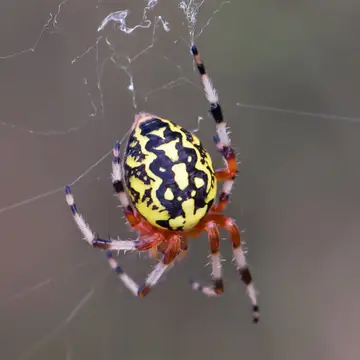
Venom No official source we use states whether this animal is venomous. That does not mean it is harmless: do not handle it. Where in Kansas Probably statewide; eastern 1/2 U.S., with scattered western records. Great Plains Nature Center (cooperative project of the U.S. Fish and Wildlife Service, Kansas Department of Wildlife and Parks and City of Wichita); published by the Friends of the Great Plains Nature Center Photo: Bill Keim · CC BY 4.0 · iNaturalist Marbled Orbweaver Araneus marmoreus
Not stated
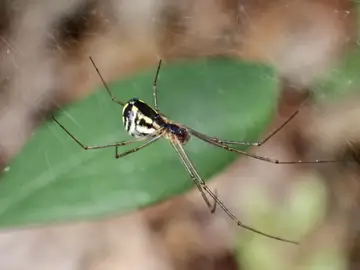
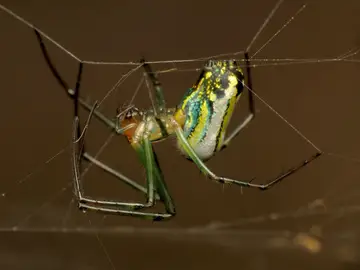
Venom No official source we use states whether this animal is venomous. That does not mean it is harmless: do not handle it. Where in Kansas Eastern 1/3 Kansas; most of U.S., except southwestern states; Alaska, and Canada. Great Plains Nature Center (cooperative project of the U.S. Fish and Wildlife Service, Kansas Department of Wildlife and Parks and City of Wichita); published by the Friends of the Great Plains Nature Center Photo: Katja Schulz · CC BY 4.0 · iNaturalist Orchard Spider Leucauge venusta
Not stated
Venom No official source we use states whether this animal is venomous. That does not mean it is harmless: do not handle it. Where in Kansas Eastern 1/2 of Kansas; eastern U.S. with scattered western records; found S to Panama. Great Plains Nature Center (cooperative project of the U.S. Fish and Wildlife Service, Kansas Department of Wildlife and Parks and City of Wichita); published by the Friends of the Great Plains Nature Center No confirmed photo of Prairie Crab Spider Prairie Crab Spider Philodromus pratariae
Not stated
Venom No official source we use states whether this animal is venomous. That does not mean it is harmless: do not handle it. Where in Kansas Across Kansas; in central U.S. Great Plains Nature Center (cooperative project of the U.S. Fish and Wildlife Service, Kansas Department of Wildlife and Parks and City of Wichita); published by the Friends of the Great Plains Nature Center Photo: Judy Gallagher · CC BY 2.0 · Wikimedia Commons Prairie Jumping Spider Phidippus clarus
Not stated
Venom No official source we use states whether this animal is venomous. That does not mean it is harmless: do not handle it. Where in Kansas Statewide; across the U.S., more common in E 1/2. Great Plains Nature Center (cooperative project of the U.S. Fish and Wildlife Service, Kansas Department of Wildlife and Parks and City of Wichita); published by the Friends of the Great Plains Nature Center No confirmed photo of Puritan Pirate Spider Puritan Pirate Spider Mimetus puritanus
Not stated
Venom No official source we use states whether this animal is venomous. That does not mean it is harmless: do not handle it. Where in Kansas Across Kansas and eastern 1/2 of U.S. with a few Arizona and New Mexico records. Great Plains Nature Center (cooperative project of the U.S. Fish and Wildlife Service, Kansas Department of Wildlife and Parks and City of Wichita); published by the Friends of the Great Plains Nature Center No confirmed photo of Quasi-social Cobweb Spider Quasi-social Cobweb Spider Anelosimus studiosus
Not stated
Venom No official source we use states whether this animal is venomous. That does not mean it is harmless: do not handle it. Where in Kansas Southeastern 12 counties in KS; eastern 1/2 of U.S. Great Plains Nature Center (cooperative project of the U.S. Fish and Wildlife Service, Kansas Department of Wildlife and Parks and City of Wichita); published by the Friends of the Great Plains Nature Center No confirmed photo of Silver Long-jawed Orbweaver Silver Long-jawed Orbweaver Tetragnatha laboriosa
Not stated
Venom No official source we use states whether this animal is venomous. That does not mean it is harmless: do not handle it. Where in Kansas Statewide; Alaska, Canada, entire U.S., south to Panama. Great Plains Nature Center (cooperative project of the U.S. Fish and Wildlife Service, Kansas Department of Wildlife and Parks and City of Wichita); published by the Friends of the Great Plains Nature Center Photo: Judy Gallagher · CC BY 2.0 · Wikimedia Commons Six-spotted Fishing Spider Dolomedes triton
Not stated
Venom No official source we use states whether this animal is venomous. That does not mean it is harmless: do not handle it. Where in Kansas Statewide; eastern and central U.S. and some western states. Great Plains Nature Center (cooperative project of the U.S. Fish and Wildlife Service, Kansas Department of Wildlife and Parks and City of Wichita); published by the Friends of the Great Plains Nature Center Photo: cesar stastny · CC BY 4.0 · iNaturalist Striped Lynx Spider Oxyopes salticus
Not stated
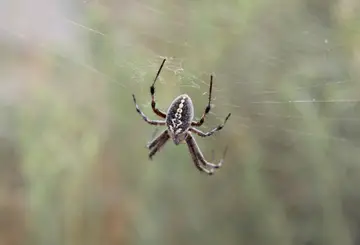
Venom No official source we use states whether this animal is venomous. That does not mean it is harmless: do not handle it. Where in Kansas Statewide; most of the U.S., south to South America. Great Plains Nature Center (cooperative project of the U.S. Fish and Wildlife Service, Kansas Department of Wildlife and Parks and City of Wichita); published by the Friends of the Great Plains Nature Center Photo: Judy Gallagher · CC BY 2.0 · Wikimedia Commons Striped Wolf Spider Rabidosa rabida
Not stated
Venom No official source we use states whether this animal is venomous. That does not mean it is harmless: do not handle it. Where in Kansas Common in eastern and central Kansas; throughout eastern U.S. Great Plains Nature Center (cooperative project of the U.S. Fish and Wildlife Service, Kansas Department of Wildlife and Parks and City of Wichita); published by the Friends of the Great Plains Nature Center Photo: xpda · CC BY-SA 4.0 · Wikimedia Commons · resized Texas Brown Tarantula Aphonopelma hentzi
Not stated
Venom No official source we use states whether this animal is venomous. That does not mean it is harmless: do not handle it. Where in Kansas Southern Kansas, north to Trego, Russell, and Gove Counties; in south central U.S. east of the Rockies in Missouri, Kansas, Arkansas, Louisiana, Oklahoma, Texas … Great Plains Nature Center (cooperative project of the U.S. Fish and Wildlife Service, Kansas Department of Wildlife and Parks and City of Wichita); published by the Friends of the Great Plains Nature Center No confirmed photo of Texas Crab Spider Texas Crab Spider Xysticus texanus
Not stated
Venom No official source we use states whether this animal is venomous. That does not mean it is harmless: do not handle it. Where in Kansas Statewide in Kansas; southeastern 1/4 of U.S. Great Plains Nature Center (cooperative project of the U.S. Fish and Wildlife Service, Kansas Department of Wildlife and Parks and City of Wichita); published by the Friends of the Great Plains Nature Center Photo: Judy Gallagher · CC BY-SA 4.0 · iNaturalist · resized Triangulate Orbweaver Verrucosa arenata
Not stated
Venom No official source we use states whether this animal is venomous. That does not mean it is harmless: do not handle it. Where in Kansas Eastern 1/4 of the state; eastern 1/2 of U.S., south to Panama and West Indies. Great Plains Nature Center (cooperative project of the U.S. Fish and Wildlife Service, Kansas Department of Wildlife and Parks and City of Wichita); published by the Friends of the Great Plains Nature Center Photo: Rusty · CC BY 4.0 · iNaturalist Truncated Cellar Spider Crossopriza lyoni
Not stated
Venom No official source we use states whether this animal is venomous. That does not mean it is harmless: do not handle it. Where in Kansas In towns scattered across Kansas: Lawrence, Manhattan, Salina, Hays, and Wichita. In south and central US, and tropical areas from southeast Asia to India. Great Plains Nature Center (cooperative project of the U.S. Fish and Wildlife Service, Kansas Department of Wildlife and Parks and City of Wichita); published by the Friends of the Great Plains Nature Center No confirmed photo of Tufted Nurseryweb Spider Tufted Nurseryweb Spider Pisaurina dubia
Not stated
Venom No official source we use states whether this animal is venomous. That does not mean it is harmless: do not handle it. Where in Kansas Eastern 1/2 of KS; eastern 1/2 of U.S. Great Plains Nature Center (cooperative project of the U.S. Fish and Wildlife Service, Kansas Department of Wildlife and Parks and City of Wichita); published by the Friends of the Great Plains Nature Center Photo: Rebecca Ray · CC BY 4.0 · iNaturalist Western Arboreal Orbweaver Neoscona oaxacensis
Not stated
Venom No official source we use states whether this animal is venomous. That does not mean it is harmless: do not handle it. Where in Kansas Western 1/2 of KS; western U.S., Utah and California south to Central America. Great Plains Nature Center (cooperative project of the U.S. Fish and Wildlife Service, Kansas Department of Wildlife and Parks and City of Wichita); published by the Friends of the Great Plains Nature Center No confirmed photo of Western Lance Spider Western Lance Spider Schizocosa mccooki
Not stated
Venom No official source we use states whether this animal is venomous. That does not mean it is harmless: do not handle it. Where in Kansas Western 2/3 of Kansas; across Canada, and western 2/3 of U.S. Great Plains Nature Center (cooperative project of the U.S. Fish and Wildlife Service, Kansas Department of Wildlife and Parks and City of Wichita); published by the Friends of the Great Plains Nature Center No confirmed photo of Western Parson Spider Western Parson Spider Herpyllus propinquus
Not stated
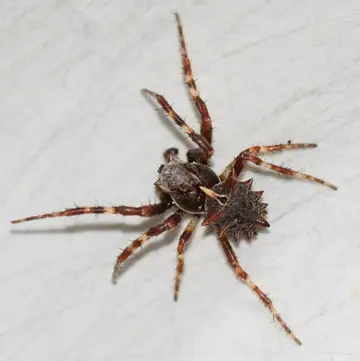
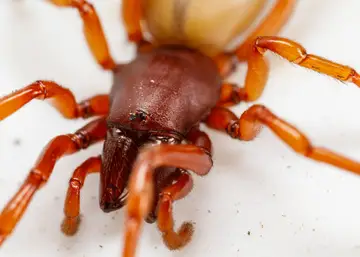
Venom No official source we use states whether this animal is venomous. That does not mean it is harmless: do not handle it. Where in Kansas Eastern Parson Spider in eastern 2/3 of Kansas and eastern 1/2 of U.S; Western Parson Spider in western 1/3 of Kansas and western 1/2 of U.S. Great Plains Nature Center (cooperative project of the U.S. Fish and Wildlife Service, Kansas Department of Wildlife and Parks and City of Wichita); published by the Friends of the Great Plains Nature Center Photo: Meghan Cassidy · CC BY-SA 4.0 · iNaturalist · resized Woodlouse Spider Dysdera crocata
Not stated
Venom No official source we use states whether this animal is venomous. That does not mean it is harmless: do not handle it. Where in Kansas Statewide in Kansas; cosmopolitan, occurs in North and South America, Hawaii, Europe, North Africa, Australia, and Japan. Great Plains Nature Center (cooperative project of the U.S. Fish and Wildlife Service, Kansas Department of Wildlife and Parks and City of Wichita); published by the Friends of the Great Plains Nature Center Spiders people confuse Brown recluse spider or Woodlouse spider? Ohio DNR says it is sometimes confused with the recluse, perhaps because it also has six eyes; recluses are much smaller, dull brown and have tiny fangs. UC IPM says the woodlouse spider's six eyes are in two groups of three (a recluse has three pairs) and it has no body markings.
Yellow garden spider or Banded garden spider (banded orb weaver)? Missouri Department of Conservation: the banded garden spider is slightly smaller than the black-and-yellow garden spider, with a pointier hind end, and its abdomen has many thin silver and yellow crosswise lines and thicker black, spotty lines.
Photos show typical adults; individuals vary. Never get close to compare.
When spiders are active in Kansas Records of spiders in Kansas peak in June to September. They show when people record spiders, not how many there are (about month bars ).
Jan Feb Mar Apr May Jun Jul Aug Sep Oct Nov Dec
1,250 records of spiders in Kansas by month (GBIF, CC0 and CC BY records). If you are bitten or stung Call 911 or Poison Help at 1-800-222-1222 right away. Poison Help connects you to your local poison center, any time of day.
Official advice from K-State Research and Extension:
What official sources say Are there black widows in Kansas? Yes. K-State MF3346: three black widow species occur in Kansas. K-State Research and Extension
“Three species of black widow spiders can be found in Kansas: the northern, Latrodectus variolus, the southern, L. mactans, and the western, L. hesperus.” Are there brown recluse spiders in Kansas? Yes. GPNC: Brown Recluse range "Statewide"; K-State calls it the most feared spider in Kansas. K-State Research and Extension
“Of all the spiders in Kansas, the brown recluse, Loxosceles reclusa, is the most publicized and the most feared.” Sources Threatened, Endangered & Species in Need of Conservation (KDWP) . Kansas Department of Wildlife and Parks. undated page; checked November 3, 2026. A Pocket Guide to Common Kansas Spiders (Guarisco) . Great Plains Nature Center (cooperative project of the U.S. Fish and Wildlife Service, Kansas Department of Wildlife and Parks and City of Wichita); published by the Friends of the Great Plains Nature Center. Copyright 2017 Great Plains Nature Center; checked November 3, 2026. Quoted passages (4) “…there are approximately 500 species in Kansas.” “…there are only four Kansas spiders whose bites are considered dangerous enough to require medical attention. These are the Brown Recluse and three species of black widow spiders.” “The Brown Widow, a tropical species found across the globe, was discovered in the Wichita area several years ago. It is also venomous.” “Range: Southern Kansas, north to Trego, Russell, and Gove Counties;” Brown Recluse Spiders (Kansas Structural Pests), MF3133 . K-State Research and Extension (Kansas State University Agricultural Experiment Station and Cooperative Extension Service). April 2014; checked November 3, 2026. Quoted passages (4) “In rare cases, the poisonous venom may cause a life-threatening systemic illness.” “…contact your health provider immediately.” “The brown recluse is inactive from late fall to early spring (October through March)” “Of all the spiders in Kansas, the brown recluse, Loxosceles reclusa, is the most publicized and the most feared.” Black Widow Spiders, MF3346 . K-State Research and Extension (Kansas State University Agricultural Experiment Station and Cooperative Extension Service). March 2017; checked November 3, 2026. Quoted passages (3) “The venom contains a neurotoxin, which can cause a range of symptoms.” “Seek medical attention right away.” “Three species of black widow spiders can be found in Kansas: the northern, Latrodectus variolus, the southern, L. mactans, and the western, L. hesperus.” GBIF.org occurrence records, human observations licensed CC0 1.0 or CC BY 4.0 only, accessed November 3, 2026. The datasets behind these counts are listed on our Sources page.