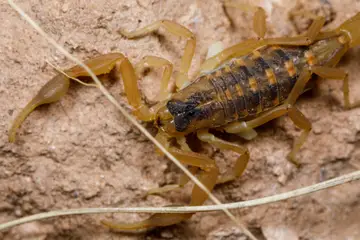
K-State Research and Extension: Only one species of scorpion is known to occur naturally throughout Kansas — Centruroides vittatus, commonly called the striped bark scorpion.
This page lists 1 scorpion: all from K-State Research and Extension's K-State Research and Extension "Household Pests of Kansas": Striped Bark Scorpion; GPNC spider guide: Other Arachnids - Scorpions.
1 is venomous by official accounts.
Not every species: no complete official list of Kansas scorpions exists, so this page covers the ones state and Extension sources name. How lists are built.
Which scorpions can hurt you
Official sources single out these scorpions in Kansas, in their own words:
Venomous sting. “Individuals react differently, and some people may have an intense reaction, including agitation, slurred speech, high temperature, and tightening of the throat.” K-State Research and Extension
The one scorpion on the list
Venomous species first, then A to Z. Do not handle them.
“Individuals react differently, and some people may have an intense reaction, including agitation, slurred speech, high temperature, and tightening of the throat.” K-State Research and Extension
Size
Usually about 2.5 inches. Sources range from 1 to 1.5 inches on average (Missouri Department of Conservation) to up to 3.5 inches (Oklahoma State).
How to recognize it
Slender pincers and a long, slender tail. The tail is longer on males than females.
Tail ends in a stinger, usually carried up and over the body.
Venom: “…they use the stinger at the tip of the tail to inject venom, paralyzing the victim.” (K-State Research and Extension)
Habitat: Outdoors, scorpions spend the day hidden in damp, cool areas such as under rocks, boards, mulch or other dead vegetation. (K-State Research and Extension)
Call 911 or Poison Help at 1-800-222-1222 right away. Poison Help connects you to your local poison center, any time of day.
Official advice from K-State Research and Extension:
Scorpion sting with an intense reaction: seek medical help immediately (call 911 or Poison Help at 1-800-222-1222). K-State Research and Extension
What official sources say
Are there scorpions in Kansas?
Yes. K-State: only one scorpion species occurs naturally in Kansas, Centruroides vittatus; its sting is painful and its venom is low in toxicity to humans, though some people react strongly. K-State Research and Extension
“Only one species of scorpion is known to occur naturally throughout Kansas — Centruroides vittatus, commonly called the striped bark scorpion.”
Household Pests of Kansas, MF3291 (Davis & Whitworth). K-State Research and Extension (Kansas State University Agricultural Experiment Station and Cooperative Extension Service). July 2018; checked November 3, 2026.Quoted passages (5)
“Only one species of scorpion is known to occur naturally throughout Kansas — Centruroides vittatus, commonly called the striped bark scorpion.”
“…they use the stinger at the tip of the tail to inject venom, paralyzing the victim.”
“Individuals react differently, and some people may have an intense reaction, including agitation, slurred speech, high temperature, and tightening of the throat.”
“In this case, the victim should seek medical help immediately.”
“The striped bark scorpion is most commonly found indoors in Kansas from mid-August through October.”
A Pocket Guide to Common Kansas Spiders (Guarisco). Great Plains Nature Center (cooperative project of the U.S. Fish and Wildlife Service, Kansas Department of Wildlife and Parks and City of Wichita); published by the Friends of the Great Plains Nature Center. Copyright 2017 Great Plains Nature Center; checked November 3, 2026.