States Wildlife

North Dakota Mammals: Species List With Pictures

Last checked November 3, 2026 against official sources.

On this page
  1. Which mammals can hurt you
  2. All 53 mammals
  3. Lookalikes
  4. When they are active
  5. If you are bitten or stung
  6. What official sources say
  7. About this list
  8. Sources

North Dakota Game and Fish Department: Nearly 400 species of birds, 80 species of mammals, 75 fish, 16 reptiles, and 13 amphibians inhabit North Dakota.

This page lists 53 mammals. North Dakota Game and Fish Department gives a total of 80; the 53 here are the mammals official sources name one by one.

Not every species: this page shows the mammals named in the official sources below. How lists are built.

Which mammals can hurt you

Official sources single out these mammals in North Dakota, in their own words:

All 53 mammals

From A to Z. Do not handle them.

No confirmed photo of American Marten

American Marten

Martes Americana

No confirmed photo of Arctic Shrew

Arctic Shrew

Sorex arcticus

Conservation
SWAP 2025 Species of Greatest Information Need (SGIN)
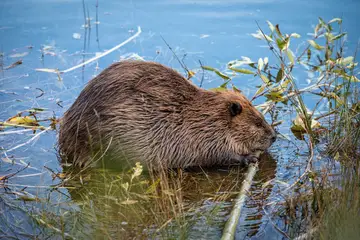
Beaver
Photo: GrandTetonNPS · Public domain · Wikimedia Commons

Beaver

Castor canadensis

No confirmed photo of Big Brown Bat

Big Brown Bat

Eptesicus fuscus

Conservation
SWAP 2025 Species of Greatest Conservation Need (SGCN)
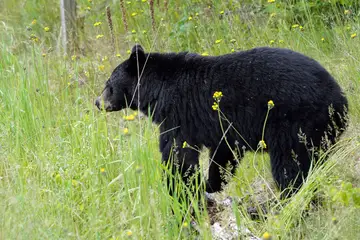
Black Bear
Photo: U.S. Fish and Wildlife Service - Midwest Region · Public domain · Wikimedia Commons

Black Bear

Ursus americanus

Danger to people
“Black bears are seldom aggressive and rarely injure people, however there are some basic steps you should take to avoid dangerous interactions with bears:” North Dakota Game and Fish Department
Size
Smokies: males average about 6 ft long, 3 ft at the shoulder and 250 lb in summer; females usually just over 100 lb. Missouri: 46 to 78 inches long, 86 to 600 lb.
How to recognize it
  • Straight facial profile, rounded erect ears, very short tail
  • Short curved claws for climbing
Where in North Dakota
There is a breeding population of black bears in northeastern North Dakota where they are year-round residents, and the population is believed to be increasing. North Dakota Game and Fish Department

Full Black Bear guide

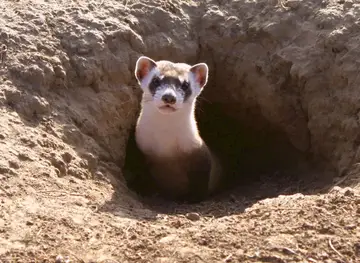
Black-footed Ferret
Photo: Colorado Front Range National Wildlife Refuge Complex · CC BY 4.0 · iNaturalist

Black-footed Ferret

Mustela nigripes

Conservation
SWAP 2025 Species of Greatest Conservation Need (SGCN); federally endangered (ESA), per NDGF
No confirmed photo of Black-tailed Prairie Dog

Black-tailed Prairie Dog

Cynomys ludovicianus

Conservation
SWAP 2025 Species of Greatest Conservation Need (SGCN)
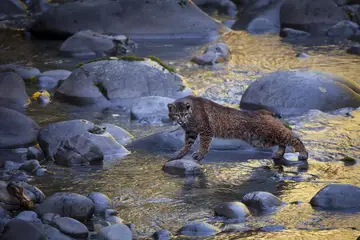
Bobcat
Photo: National Marine Sanctuaries · Public domain · Wikimedia Commons

Bobcat

Lynx rufus

Size
Total length 18 to 50 inches, tail 3 to 8 inches, weight 8 to 49 pounds (Missouri). About twice the size of a house cat.
How to recognize it
  • Short 'bobbed' tail, 4 to 8 inches, with a black tip and white underneath (Arizona). New Mexico instead describes black bars on top, white underneath and a white tip.
  • Pointed ears with tufts at the tips, often with cheek tufts
  • Backs of the ears are black with a light central spot

Full Bobcat guide

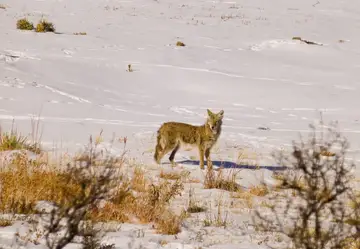
Coyote
Photo: Gaurav Vaidya from Chapel Hill, USA · CC BY 2.0 · Wikimedia Commons

Coyote

Canis latrans

Size
About 3.5 to 4 feet long including the tail and roughly 2 feet tall at the shoulder; weight varies by region: Arizona 20 to 30 lb, Florida average about 28 lb, Georgia 25 to 45 lb
How to recognize it
  • Large pointed ears, long narrow nose, bushy black-tipped tail
  • Like a slender medium-sized dog, much smaller than a wolf
  • Paw track about 2 inches long (Florida)

Full Coyote guide

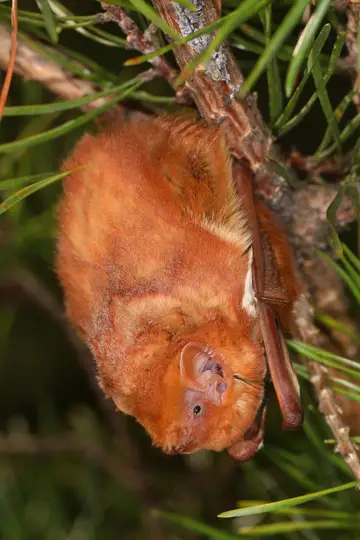
Eastern Red Bat
Photo: Judy Gallagher · CC BY-SA 4.0 · iNaturalist · resized

Eastern Red Bat

Lasiurus borealis

Conservation
SWAP 2025 Species of Greatest Conservation Need (SGCN)
No confirmed photo of Eastern Spotted Skunk

Eastern Spotted Skunk

Spilogale putorius

Conservation
SWAP 2025 Species of Greatest Conservation Need (SGCN)
No confirmed photo of Elk

Elk

Cervus elaphus

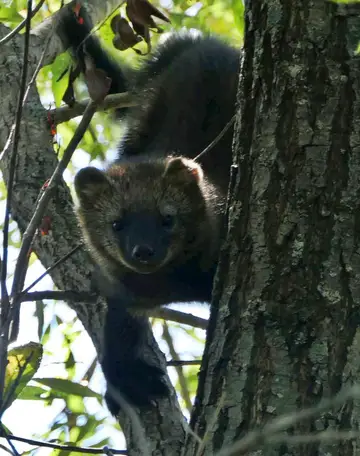
Fisher
Photo: christine123 · CC BY 4.0 · iNaturalist

Fisher

Pekania pennanti

Size
New York: males 7 to 15 pounds and 35 to 47 inches; females 3 to 7 pounds and 30 to 37 inches. Figures vary by state.
How to recognize it
  • Low to the ground with short legs, small ears and a well-furred tail
  • Tail about one-third of total length
  • Five toes and sharp semi-retractable claws; bright green eyeshine at night

Full Fisher guide

No confirmed photo of Flying Squirrel

Flying Squirrel

Glaucomys sabrinus

No confirmed photo of Franklin's Ground Squirrel

Franklin's Ground Squirrel

Poliocitellus franklinii

Conservation
SWAP 2025 Species of Greatest Information Need (SGIN)
No confirmed photo of Fringed Myotis

Fringed Myotis

Myotis thysanodes

Conservation
SWAP 2025 Species of Greatest Information Need (SGIN)
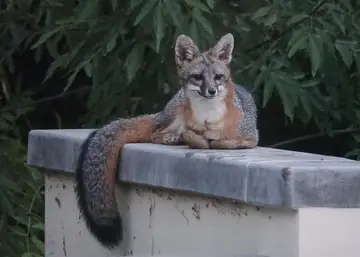
Gray Fox
Photo: Mike's Birds from Riverside, CA, US · CC BY-SA 2.0 · Wikimedia Commons · resized

Gray Fox

Urocyon cinereoargenteus

Conservation
SWAP 2025 Species of Greatest Conservation Need (SGCN)
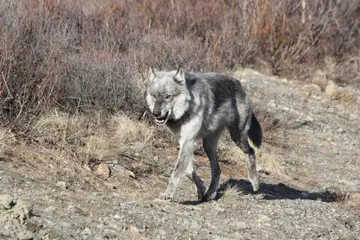
Gray Wolf
Photo: Robbie Hannawacker · CC0 1.0 · iNaturalist

Gray Wolf

Canis lupus

Size
Adults about 40 to 175 pounds depending on sex and region; on average about five to six feet long (Isle Royale), up to 6 feet including the tail (Washington), and 26 to 34 inches at the shoulder. Twice the size of a coyote.
How to recognize it
  • Longer legs, larger feet, wider head and snout, shorter ears, narrow body and straight tail compared with most coyotes and dogs.
  • Tracks about 5 inches long by 4 inches wide, with claws showing.
  • Long, drawn-out howls, audible up to five miles.
Where in North Dakota
Wolves are occasional visitors to North Dakota due to our proximity to nearby breeding populations in adjacent states and provinces. North Dakota Game and Fish Department
Conservation
federally endangered (ESA), per NDGF

Full Gray Wolf guide

No confirmed photo of Hispid Pocket Mouse

Hispid Pocket Mouse

Chaetodipus hispidus

Conservation
SWAP 2025 Species of Greatest Information Need (SGIN)
Hoary Bat
Photo: otiegoat · CC BY 4.0 · iNaturalist

Hoary Bat

Lasiurus cinereus

Conservation
SWAP 2025 Species of Greatest Conservation Need (SGCN)
No confirmed photo of Little Brown Bat

Little Brown Bat

Myotis lucifugus

Conservation
SWAP 2025 Species of Greatest Conservation Need (SGCN)
No confirmed photo of Long-eared Bat

Long-eared Bat

Myotis evotis

Conservation
SWAP 2025 Species of Greatest Information Need (SGIN)
No confirmed photo of Long-legged Bat

Long-legged Bat

Myotis volans

Conservation
SWAP 2025 Species of Greatest Information Need (SGIN)
No confirmed photo of Merriam's Shrew

Merriam's Shrew

Sorex merriami

Conservation
SWAP 2025 Species of Greatest Information Need (SGIN)
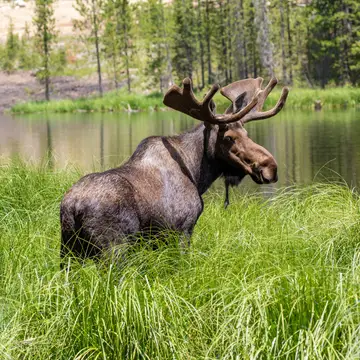
Moose
Photo: Dan Vickers · CC BY 4.0 · iNaturalist

Moose

Alces alces

Danger to people
“While moose are generally perceived as less dangerous than some other large wild animals like bears and bison, across the country many people are injured each year by moose.” North Dakota Game and Fish Department
Size
Alaska: adults 800 lb (small cow) to 1,600 lb (large bull), up to almost 6 feet tall. Elsewhere, NY DEC: bulls 600-1,200 lb, cows 500-800 lb.
How to recognize it
  • "Bell": flap of skin and hair hanging from the throat (both sexes)
  • Antlers on males only; flat and palmate (hand-shaped), up to five feet wide
  • Antlers only on males (ADF&G)
Where in North Dakota
Found primarily in the Turtle Mountains and along forested rivers in the northern one-third of North Dakota. North Dakota Game and Fish Department

Full Moose guide

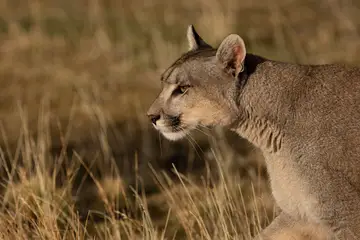
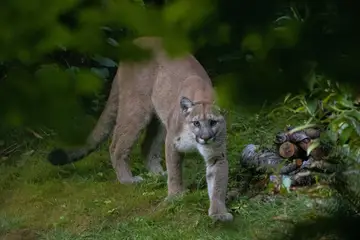
Mountain Lion
Photo: ArgentinaTurismo · CC BY 4.0 · Wikimedia Commons

Mountain Lion

Puma concolor

Danger to people
“Although not common, mountain lions are known to kill livestock.” North Dakota Game and Fish Department
Size
Total length 5 to 8.5 feet including a 21 to 37.5 inch tail; males 79 to 265 lb, females 64 to 141 lb (Missouri Department of Conservation).
How to recognize it
  • Very large, slender cat with a small head, small rounded ears without tufts and a long, heavy tail.
  • The tail may be one-third of the total length; much larger than a bobcat or lynx.
  • Tracks: 2.75 to 3.75 inches wide, three lobes at the bottom of the heel pad, claw marks usually absent.
Where in North Dakota
There is a stable mountain lion population in western North Dakota, where there is a limited hunting season. North Dakota Game and Fish Department

Full Mountain Lion guide

No confirmed photo of Northern Long-eared Bat

Northern Long-eared Bat

Myotis septentrionalis

Conservation
SWAP 2025 Species of Greatest Conservation Need (SGCN); federally endangered (ESA), per NDGF
No confirmed photo of Northern Water Shrew

Northern Water Shrew

Sorex palustris

Conservation
SWAP 2025 Species of Greatest Information Need (SGIN)
No confirmed photo of Ord's Kangaroo Rat

Ord's Kangaroo Rat

Dipodomys ordii

Conservation
SWAP 2025 Species of Greatest Information Need (SGIN)
No confirmed photo of Plains Pocket Mouse

Plains Pocket Mouse

Perognathus flavescens

Conservation
SWAP 2025 Species of Greatest Information Need (SGIN)
No confirmed photo of Pygmy Shrew

Pygmy Shrew

Sorex minutus

Conservation
SWAP 2025 Species of Greatest Information Need (SGIN)
No confirmed photo of Richardson's Ground Squirrel

Richardson's Ground Squirrel

Urocitellus richardsonii

Conservation
SWAP 2025 Species of Greatest Conservation Need (SGCN)
No confirmed photo of Sagebrush Vole

Sagebrush Vole

Lemmiscus curtatus

Conservation
SWAP 2025 Species of Greatest Information Need (SGIN)
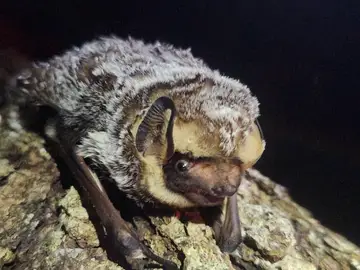
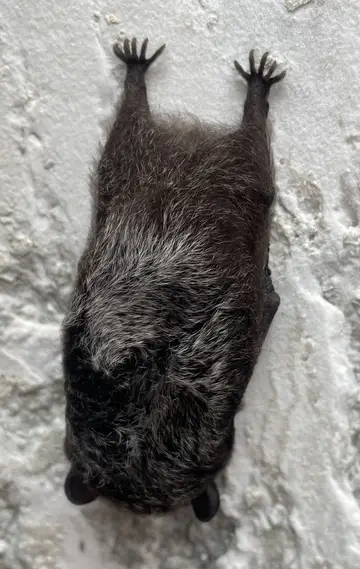
Silver-haired Bat
Photo: Sam Kieschnick · CC BY 4.0 · iNaturalist

Silver-haired Bat

Lasionycteris noctivagans

Conservation
SWAP 2025 Species of Greatest Conservation Need (SGCN)
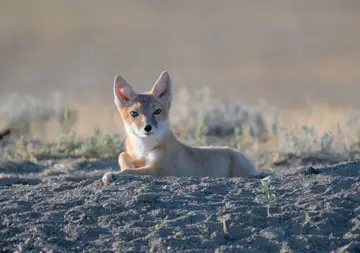
Swift Fox
Photo: Spencer Hurt · CC BY 4.0 · iNaturalist

Swift Fox

Vulpes velox

Conservation
SWAP 2025 Species of Greatest Conservation Need (SGCN)
No confirmed photo of Townsend's Big-eared bat

Townsend's Big-eared bat

Corynorhinus townsendii

Conservation
SWAP 2025 Species of Greatest Information Need (SGIN)
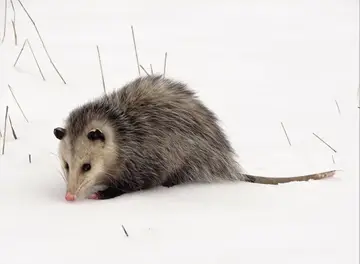
Virginia Opossum
Photo: Shirley Zundell · CC BY 4.0 · iNaturalist

Virginia Opossum

Didelphis virginiana

Size
Weighs 4 to 7 lb and stands 6 to 8 inches high at the shoulder (South Carolina DNR); about the size of a house cat
How to recognize it
  • Long pointed nose, black hairless ears, dark eyes, nearly hairless grasping (prehensile) tail
  • Long scaly tail and a pointed snout ending in a pink nose
  • Opposable thumb-like big toe (hallux) on each hind foot

Full Virginia Opossum guide

No confirmed photo of Weasels

Weasels

No confirmed photo of Western Small-footed Bat

Western Small-footed Bat

Myotis ciliolabrum

Conservation
SWAP 2025 Species of Greatest Information Need (SGIN)
No confirmed photo of White-tailed Deer

White-tailed Deer

Odocoileus virginianus

Mammals people confuse

Bobcat or Mountain lion (cougar)?

Bobcat
Photo: National Marine Sanctuaries · Public domain · Wikimedia Commons

Bobcat Not stated

Mountain lion (cougar)
Photo: Jeff Bartlett · CC BY 4.0 · iNaturalist

Mountain lion (cougar) Not stated

Cougars are one color (yellow-brown to light cinnamon) with a long tail. The bobcat's tail is short and its coat is spotted. TWRA says cougars are many times larger and longer, with a very long tail.

Coyote or Gray wolf?

Coyote
Photo: Gaurav Vaidya from Chapel Hill, USA · CC BY 2.0 · Wikimedia Commons

Coyote Not stated

Gray wolf
Photo: Robbie Hannawacker · CC0 1.0 · iNaturalist

Gray wolf Not stated

NY DEC: gray wolves are much larger (females typically 50-100 lb, males 70-145 lb, 5-6 ft nose to tail, 27-33 in at the shoulder); eastern coyotes rarely exceed 50 lb and generally stand under 2 ft at the shoulder. Wolves have small rounded ears and a short blocky snout; coyotes have larger, more pointed ears (can look rounded in winter coat) and a long, narrow, pointed snout. Coyote tracks are typically 3 x 2 in, wolf tracks about 5 x 4 in. NY DEC says most wolf reports in New York were coyotes, dogs or wolf-dog hybrids.

Photos show typical adults; individuals vary. Never get close to compare.

When mammals are active in North Dakota

Records of mammals in North Dakota peak in May to August. They show when people record mammals, not how many there are (about month bars).

627 records of mammals in North Dakota by month (GBIF, CC0 and CC BY records).

If you are bitten or stung

Call 911 or Poison Help at 1-800-222-1222 right away. Poison Help connects you to your local poison center, any time of day.

Official advice from North Dakota Department of Health and Human Services:

What official sources say

Are there mountain lions in North Dakota?

Yes. NDGF says there is a stable mountain lion population in western North Dakota, and they have turned up in all parts of the state. North Dakota Game and Fish Department

“There is a stable mountain lion population in western North Dakota, where there is a limited hunting season.”

Are there bears in North Dakota?

Yes. NDGF says a breeding population of black bears lives year-round in northeastern North Dakota. North Dakota Game and Fish Department

“There is a breeding population of black bears in northeastern North Dakota where they are year-round residents, and the population is believed to be increasing.”

Are there moose in North Dakota?

Yes. NDGF says moose live mainly in the Turtle Mountains and along forested rivers in the northern third of the state, and sightings are not uncommon anywhere. North Dakota Game and Fish Department

“As such, moose sightings are not uncommon anywhere in the state”

About this list

The species list comes from No statewide mammal checklist found. Compiled from NDGF 'Game Species, Common Fish Species, Etc.' (Species ID) page and the NDGF 2025 SWAP SGCN/SGIN full list (North Dakota Game and Fish Department, Species ID page undated (2025 site); SWAP 2025). 26 more entries come from other official sources named on each card.

Venom labels come only from official sources and link to them; "Not stated" never means harmless. How labels work.

Sources

  1. Contact Us. North Dakota Game and Fish Department. undated page; checked November 3, 2026.
  2. Game Species, Common Fish Species, Etc. North Dakota Game and Fish Department. undated page; checked November 3, 2026.
  3. North Dakota State Wildlife Action Plan 2025. North Dakota Game and Fish Department. 2025; checked November 3, 2026.
    Quoted passages (1)
    “Nearly 400 species of birds, 80 species of mammals, 75 fish, 16 reptiles, and 13 amphibians inhabit North Dakota.”
  4. Safety - Theodore Roosevelt National Park. National Park Service, Theodore Roosevelt National Park. undated page; checked November 3, 2026.
    Quoted passages (1)
    “Bison and other large mammals inhabit the park. They generally appear tranquil, but may attack without warning if they are disturbed.”
  5. Moose. North Dakota Game and Fish Department. undated page; checked November 3, 2026.
    Quoted passages (2)
    “While moose are generally perceived as less dangerous than some other large wild animals like bears and bison, across the country many people are injured each year by moose.”
    “As such, moose sightings are not uncommon anywhere in the state”
  6. Mountain Lion. North Dakota Game and Fish Department. undated page; checked November 3, 2026.
    Quoted passages (2)
    “Although not common, mountain lions are known to kill livestock.”
    “There is a stable mountain lion population in western North Dakota, where there is a limited hunting season.”
  7. Black Bear. North Dakota Game and Fish Department. undated page; checked November 3, 2026.
    Quoted passages (2)
    “Black bears are seldom aggressive and rarely injure people, however there are some basic steps you should take to avoid dangerous interactions with bears:”
    “There is a breeding population of black bears in northeastern North Dakota where they are year-round residents, and the population is believed to be increasing.”
  8. Gray Wolf. North Dakota Game and Fish Department. undated page; checked November 3, 2026.
  9. 2025 SWAP Species of Greatest Conservation Need (SGCN) and Species of Greatest Information Need (SGIN): Full List. North Dakota Game and Fish Department. 2025 State Wildlife Action Plan list; checked November 3, 2026.
  10. Rabies FAQs. North Dakota Department of Health and Human Services. undated page; checked November 3, 2026.
    Quoted passages (3)
    “The skunk serves as the primary reservoir for rabies in North Dakota. Any bite from a skunk should be considered an exposure to rabies until a laboratory test indicates otherwise.”
    “Any mammal, including bats can get rabies. Bites from bats may not be easily noticed.”
    “You should contact your physician or a public health department if you come into contact with a bat or find a bat in your home.”
  11. Natural History Calendar. North Dakota Game and Fish Department. undated page; checked November 3, 2026.
    Quoted passages (1)
    “Snow geese are in the midst of spring migration, black bears begin emerging from hibernation”
  12. GBIF.org occurrence records, human observations licensed CC0 1.0 or CC BY 4.0 only, accessed November 3, 2026. The datasets behind these counts are listed on our Sources page.