States Wildlife

North Dakota Bugs and Insects That Sting or Bite

Last checked November 3, 2026 against official sources.

On this page
  1. Which insects can hurt you
  2. Ticks (arachnids, not insects)
  3. All 6 insects and 3 ticks
  4. When they are active
  5. If you are bitten or stung
  6. About this list
  7. Sources

This page lists 6 insects and 3 ticks: 3 from North Dakota Department of Health and Human Services, Division of Laboratory Services's North Dakota Tick Surveillance Program Annual Report 2024, plus NDGF ESA list and 2025 SWAP SGCN list and 6 named in other official sources. 1 is venomous by official accounts.

Not every species: no complete official list of North Dakota insects exists, so this page covers the ones state and Extension sources name. How lists are built.

Which insects can hurt you

Official sources single out these insects in North Dakota, in their own words:

  • Mosquitoes

    Disease. “It is most commonly spread to people by the bite of an infected mosquito.” North Dakota Department of Health and Human Services

  • Bees, wasps and hornets

    Venomous stings. “People who are allergic to venom may experience anaphylaxis, a severe and potentially life-threatening allergic reaction that requires immediate emergency care.” CDC / NIOSH

Ticks (arachnids, not insects)

Official sources single out these ticks in North Dakota, in their own words:

All 6 insects and 3 ticks

Venomous species first, then A to Z. Do not handle them.

No confirmed photo of Bees, wasps and hornets

Bees, wasps and hornets

Venomous per CDC / NIOSH

Danger to people
“People who are allergic to venom may experience anaphylaxis, a severe and potentially life-threatening allergic reaction that requires immediate emergency care.” CDC / NIOSH
What the sources say

Venom: “A sting or bite from an insect or scorpion may cause mild discomfort or pain. People who are allergic to venom may experience anaphylaxis, a severe and potentially life-threatening allergic reaction that requires immediate emergency care.” (CDC / NIOSH)

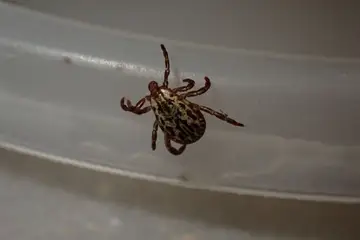
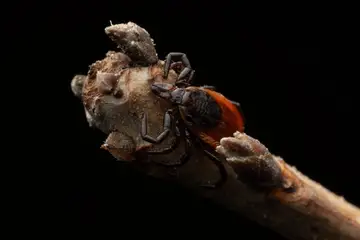
American dog tick ("dog" or wood tick)
Photo: Turner Brockman · CC BY-SA 4.0 · iNaturalist · resized

American dog tick ("dog" or wood tick)

Dermacentor variabilis

Not stated Tick: an arachnid, not an insect

Venom
No official source we use states whether this animal is venomous. That does not mean it is harmless: do not handle it.
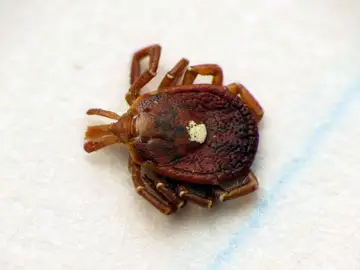
Blacklegged tick ("deer" tick)
Photo: Jack Forrester · CC BY 4.0 · iNaturalist

Blacklegged tick ("deer" tick)

Ixodes scapularis

Not stated Tick: an arachnid, not an insect

Venom
No official source we use states whether this animal is venomous. That does not mean it is harmless: do not handle it.
Danger to people
“Two of the females and one male deer ticks collected from Ransom county tested positive for Borrelia burgdorferi, the causative agent for Lyme disease.” North Dakota Department of Health and Human Services, Division of Laboratory Services
Where in North Dakota
Collected 2024; Lyme-positive ticks from Ransom County North Dakota Department of Health and Human Services, Division of Laboratory Services
No confirmed photo of Dakota Skipper

Dakota Skipper

Hesperia dacotae

Not stated

Venom
No official source we use states whether this animal is venomous. That does not mean it is harmless: do not handle it.
Conservation
federally threatened (ESA), per NDGF
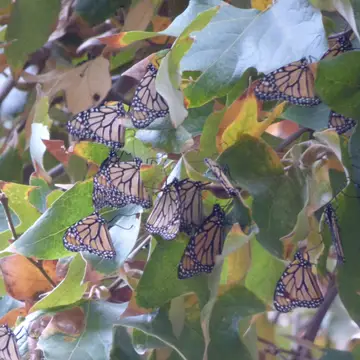
Monarch Butterfly
Photo: Dave West · CC0 1.0 · iNaturalist

Monarch Butterfly

Danaus plexippus

Not stated

Venom
No official source we use states whether this animal is venomous. That does not mean it is harmless: do not handle it.
Conservation
ESA candidate species, per NDGF
1,062 records by month.
No confirmed photo of Mosquitoes (West Nile virus carriers)

Mosquitoes (West Nile virus carriers)

Not stated

Venom
No official source we use states whether this animal is venomous. That does not mean it is harmless: do not handle it.
No confirmed photo of Poweshiek Skipperling

Poweshiek Skipperling

Oarisma poweshiek

Not stated

Venom
No official source we use states whether this animal is venomous. That does not mean it is harmless: do not handle it.
Conservation
federally endangered (ESA), per NDGF
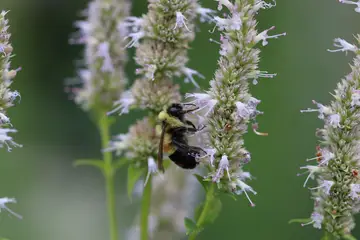
Rusty Patched Bumble Bee
Photo: U.S. Fish and Wildlife Service - Midwest Region · Public domain · Wikimedia Commons (U.S. federal work, public domain)

Rusty Patched Bumble Bee

Bombus affinis

Not stated

Venom
No official source we use states whether this animal is venomous. That does not mean it is harmless: do not handle it.
Conservation
federally endangered (ESA), per NDGF

When insects are active in North Dakota

Records of insects in North Dakota peak in July to August. They show when people record insects, not how many there are (about month bars).

4,977 records of insects in North Dakota by month (GBIF, CC0 and CC BY records).

If you are bitten or stung

Call 911 or Poison Help at 1-800-222-1222 right away. Poison Help connects you to your local poison center, any time of day.

Official advice from North Dakota Department of Health and Human Services:

About this list

The species list comes from North Dakota Tick Surveillance Program Annual Report 2024 (ND HHS), plus NDGF ESA list and 2025 SWAP SGCN list (North Dakota Department of Health and Human Services, Division of Laboratory Services, 2024). 6 more entries come from other official sources named on each card.

Venom labels come only from official sources and link to them; "Not stated" never means harmless. How labels work.

Sources

  1. Contact Us. North Dakota Game and Fish Department. undated page; checked November 3, 2026.
  2. North Dakota Tick Surveillance Program Annual Report 2024. North Dakota Department of Health and Human Services, Division of Laboratory Services. 2024 annual report; checked November 3, 2026.
    Quoted passages (2)
    “Two of the females and one male deer ticks collected from Ransom county tested positive for Borrelia burgdorferi, the causative agent for Lyme disease.”
    “Submissions were received weekly starting week one of collection on April 14th-20th and ending week 16 July 28th-August 3rd.”
  3. West Nile Virus About. North Dakota Department of Health and Human Services. archived copy, captured October 31, 2025; checked November 3, 2026.
    Quoted passages (3)
    “It is most commonly spread to people by the bite of an infected mosquito.”
    “You can reduce your risk of WNV by using insect repellent and wearing long-sleeved shirts and long pants to prevent mosquito bites.”
    “Cases of WNV occur during mosquito season, which starts in the summer and continues through fall.”
  4. Insects and Scorpions at Work. CDC / NIOSH. archived copy, captured October 4, 2026; checked November 3, 2026.
    Quoted passages (2)
    “A sting or bite from an insect or scorpion may cause mild discomfort or pain. People who are allergic to venom may experience anaphylaxis, a severe and potentially life-threatening allergic reaction that requires immediate emergency care.”
    “People who are allergic to venom may experience anaphylaxis, a severe and potentially life-threatening allergic reaction that requires immediate emergency care.”
  5. Threatened and Endangered Species. North Dakota Game and Fish Department. page states "Last updated 5/2021"; checked November 3, 2026.
  6. Tickborne Diseases. North Dakota Department of Health and Human Services. archived copy, captured September 26, 2026; checked November 3, 2026.
    Quoted passages (1)
    “In North Dakota, some ticks carry pathogens that can cause human diseases.”
  7. GBIF.org occurrence records, human observations licensed CC0 1.0 or CC BY 4.0 only, accessed November 3, 2026. The datasets behind these counts are listed on our Sources page.