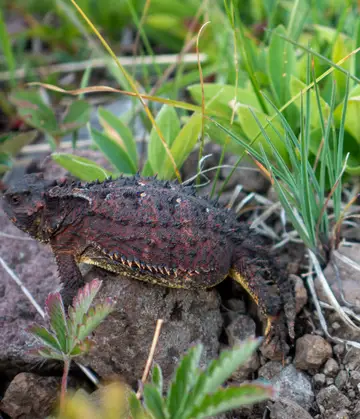
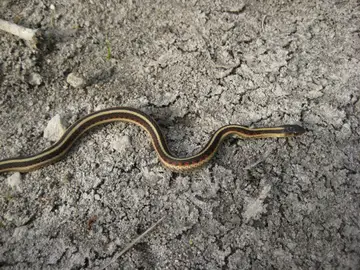
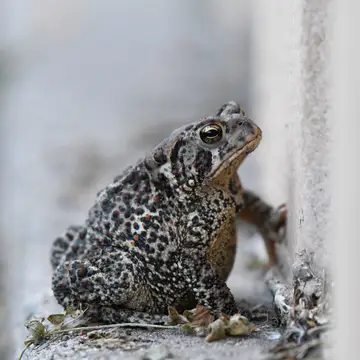
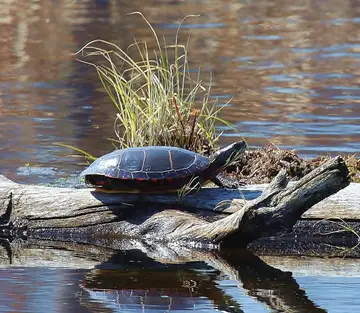
North Dakota has 1 venomous snake named by official sources: Prairie Rattlesnake, as labelled by North Dakota Game and Fish Department. This guide covers 8 animal groups from North Dakota Game and Fish Department lists and other official sources, with photos, venomous status and when each group is active.
Identification help has limits: a photo cannot confirm that an animal is safe. Watch from a distance and never handle a wild animal.
These are the animals official sources describe as venomous or as a risk to people in North Dakota, across 6 groups. The reason is given in the source's own terms.
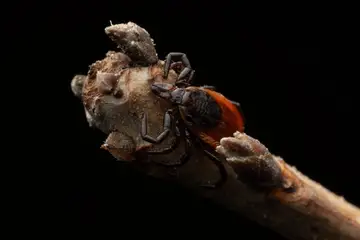
Disease: “Two of the females and one male deer ticks collected from Ransom county tested positive for Borrelia burgdorferi, the causative agent for Lyme disease.”
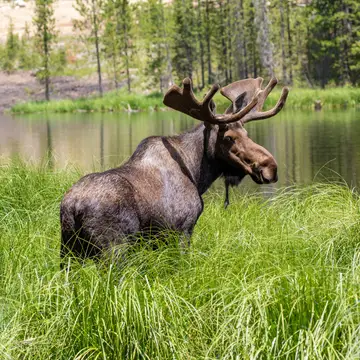
Can charge and injure people: “While moose are generally perceived as less dangerous than some other large wild animals like bears and bison, across the country many people are injured each year by moose.”
May attack without warning if disturbed (NPS, Theodore Roosevelt NP): “Bison and other large mammals inhabit the park. They generally appear tranquil, but may attack without warning if they are disturbed.”
Seldom aggressive and rarely injures people: “Black bears are seldom aggressive and rarely injure people, however there are some basic steps you should take to avoid dangerous interactions with bears:”
Disease: “The skunk serves as the primary reservoir for rabies in North Dakota. Any bite from a skunk should be considered an exposure to rabies until a laboratory test indicates otherwise.”
Darker cells are the months with more open-licence observation records of each group in North Dakota (GBIF). They show when people see and record these animals, not how many there are. The current month, this month, is highlighted.
Prairie rattlesnakes hunt by day in early spring and late fall, shelter from summer heat and ambush prey in the evening; they hibernate together in winter. North Dakota Game and Fish Department
Report: North Dakota Game and Fish Department: 701-328-6300 (general), Report All Poachers 701-328-9921, online observation and ANS report forms (gf.nd.gov/ans/report). Report any amphibian or reptile not in the NDGF guide (including released pets or bullfrogs) to NDGF. Unusual ticks: submit a picture to ND HHS via its tickborne page. North Dakota Game and Fish Department
Prairie rattlesnakes are found mainly in southwestern North Dakota, and have been seen in counties bordering the Missouri River on the east (NDGF). North Dakota Game and Fish Department
Are there copperheads or water moccasins in North Dakota?
Not on the official list. Neither appears in the NDGF guide to all amphibians and reptiles known in the state, and NDGF says the prairie rattlesnake is the only venomous snake. North Dakota Game and Fish Department
Is the bullsnake venomous?
No. NDGF calls bullsnakes North Dakota’s largest nonvenomous snakes; they are sometimes killed when mistaken for rattlesnakes. North Dakota Game and Fish Department
Is the hognose snake venomous?
NDGF: plains hog-nosed snakes are not venomous to humans but have venom for prey delivered by enlarged rear teeth. North Dakota Game and Fish Department
Yes. NDGF says there is a stable mountain lion population in western North Dakota, and they have turned up in all parts of the state. North Dakota Game and Fish Department
NDGF says wolves are occasional visitors, with evidence of some year-round residents and possibly a breeding population. North Dakota Game and Fish Department
Are there moose in North Dakota?
Yes. NDGF says moose live mainly in the Turtle Mountains and along forested rivers in the northern third of the state, and sightings are not uncommon anywhere. North Dakota Game and Fish Department
Are there ticks with lyme disease in North Dakota?
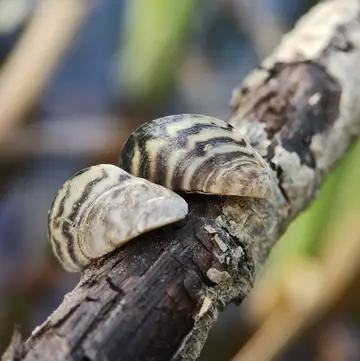
Yes. NDGF confirmed zebra mussels in Horseshoe Lake (Richland County) in June 2026 and in the eastern end of Lake Sakakawea in October 2026. North Dakota Game and Fish Department
Does north dakota have a state endangered species list?
No. NDGF says only species listed under the federal Endangered Species Act are considered threatened or endangered in North Dakota. North Dakota Game and Fish Department
Sources
Contact Us. North Dakota Game and Fish Department. undated page; checked November 3, 2026.Quoted passages (1)
“Nearly 400 species of birds, 80 species of mammals, 75 fish, 16 reptiles, and 13 amphibians inhabit North Dakota.”
Venomous Spiders at Work. CDC / NIOSH. archived copy, captured October 6, 2026; checked November 3, 2026.Quoted passages (1)
“Black widows and brown recluses are two types of venomous spiders in the United States.”
Insects and Scorpions at Work. CDC / NIOSH. archived copy, captured October 4, 2026; checked November 3, 2026.Quoted passages (1)
“A sting or bite from an insect or scorpion may cause mild discomfort or pain. People who are allergic to venom may experience anaphylaxis, a severe and potentially life-threatening allergic reaction that requires immediate emergency care.”
“Two of the females and one male deer ticks collected from Ransom county tested positive for Borrelia burgdorferi, the causative agent for Lyme disease.”
“Submissions were received weekly starting week one of collection on April 14th-20th and ending week 16 July 28th-August 3rd.”
Tickborne Diseases. North Dakota Department of Health and Human Services. archived copy, captured September 26, 2026; checked November 3, 2026.Quoted passages (1)
“In North Dakota, some ticks carry pathogens that can cause human diseases.”
West Nile Virus About. North Dakota Department of Health and Human Services. archived copy, captured October 31, 2025; checked November 3, 2026.Quoted passages (2)
“It is most commonly spread to people by the bite of an infected mosquito.”
“Cases of WNV occur during mosquito season, which starts in the summer and continues through fall.”
Moose. North Dakota Game and Fish Department. undated page; checked November 3, 2026.Quoted passages (4)
“While moose are generally perceived as less dangerous than some other large wild animals like bears and bison, across the country many people are injured each year by moose.”
“As such, moose sightings are not uncommon anywhere in the state”
“Never approach a moose. They may look docile, but they are wild animals and may act unpredictably. Always stay at least 100 yards away from any moose.”
“Breeding peaks in late September and early October with bulls tending individual cows, and at times defending harems.”
“Bison and other large mammals inhabit the park. They generally appear tranquil, but may attack without warning if they are disturbed.”
“Rattlesnakes and black widow spiders often live in prairie dog burrows.”
“Be alert while walking, and do not put your hands or feet in a place you cannot see.”
“Bison have right of way. Give them plenty of space!”
Black Bear. North Dakota Game and Fish Department. undated page; checked November 3, 2026.Quoted passages (2)
“Black bears are seldom aggressive and rarely injure people, however there are some basic steps you should take to avoid dangerous interactions with bears:”
“There is a breeding population of black bears in northeastern North Dakota where they are year-round residents, and the population is believed to be increasing.”
Mountain Lion. North Dakota Game and Fish Department. undated page; checked November 3, 2026.Quoted passages (2)
“Although not common, mountain lions are known to kill livestock.”
“There is a stable mountain lion population in western North Dakota, where there is a limited hunting season.”
Rabies FAQs. North Dakota Department of Health and Human Services. undated page; checked November 3, 2026.Quoted passages (3)
“The skunk serves as the primary reservoir for rabies in North Dakota. Any bite from a skunk should be considered an exposure to rabies until a laboratory test indicates otherwise.”
“Any mammal, including bats can get rabies. Bites from bats may not be easily noticed.”
“The skunk serves as the primary reservoir for rabies in North Dakota.”
ANS Species List. North Dakota Game and Fish Department. undated page; checked November 3, 2026.Quoted passages (5)
Gray Wolf. North Dakota Game and Fish Department. undated page; checked November 3, 2026.Quoted passages (1)
“Additionally, evidence suggests there are some year-round residents and possibly even a breeding population in recent years.”
Aquatic Nuisance Species (ANS). North Dakota Game and Fish Department. page shows ANS news dated 10/27/2026; checked November 3, 2026.Quoted passages (1)
“…confirmed invasive zebra mussels in Horseshoe Lake”
Threatened and Endangered Species. North Dakota Game and Fish Department. page states "Last updated 5/2021"; checked November 3, 2026.Quoted passages (1)
“North Dakota does not have a state endangered or threatened species list.”
Natural History Calendar. North Dakota Game and Fish Department. undated page; checked November 3, 2026.Quoted passages (1)
“Snow geese are in the midst of spring migration, black bears begin emerging from hibernation”