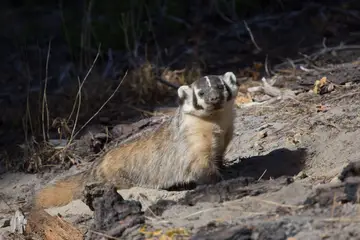
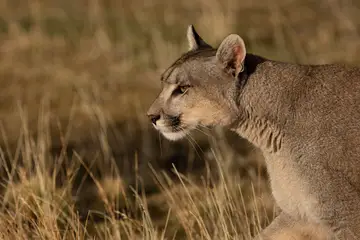
Smokies: males average about 6 ft long, 3 ft at the shoulder and 250 lb in summer; females usually just over 100 lb. Missouri: 46 to 78 inches long, 86 to 600 lb.
How to recognize it
Straight facial profile, rounded erect ears, very short tail
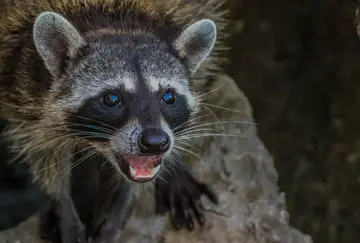
Total length 18 to 50 inches, tail 3 to 8 inches, weight 8 to 49 pounds (Missouri). About twice the size of a house cat.
How to recognize it
Short 'bobbed' tail, 4 to 8 inches, with a black tip and white underneath (Arizona). New Mexico instead describes black bars on top, white underneath and a white tip.
Pointed ears with tufts at the tips, often with cheek tufts
Backs of the ears are black with a light central spot
About 3.5 to 4 feet long including the tail and roughly 2 feet tall at the shoulder; weight varies by region: Arizona 20 to 30 lb, Florida average about 28 lb, Georgia 25 to 45 lb
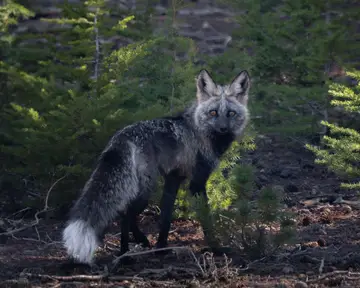
How to recognize it
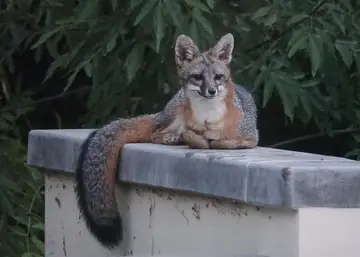
Large pointed ears, long narrow nose, bushy black-tipped tail
Like a slender medium-sized dog, much smaller than a wolf
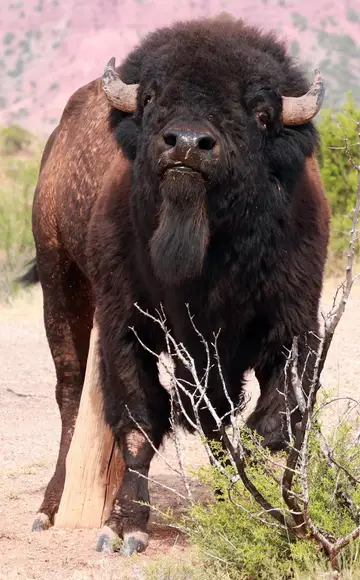
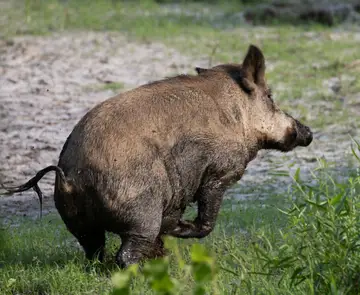
Adults average 75 to 250 pounds, but some get twice as large. They can stand up to 3 feet tall and reach 5 feet long, and males (boars) are larger than females (sows). FWC says Florida wild hogs can weigh more than 150 pounds and be 5 to 6 feet long. Ohio State Extension says Ohio adults typically weigh 125 to 200 pounds.
How to recognize it
Look much like domestic hogs but are generally thinner, with thicker hides of coarse, bristly hair and longer tusks
Four continuously growing tusks, 2 on top and 2 below
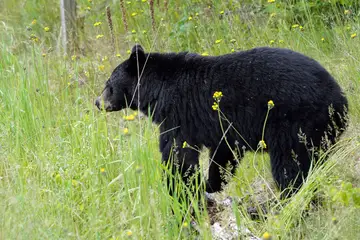
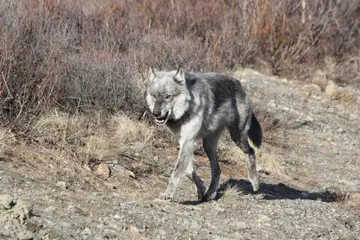
Adults about 40 to 175 pounds depending on sex and region; on average about five to six feet long (Isle Royale), up to 6 feet including the tail (Washington), and 26 to 34 inches at the shoulder. Twice the size of a coyote.
How to recognize it
Longer legs, larger feet, wider head and snout, shorter ears, narrow body and straight tail compared with most coyotes and dogs.
Tracks about 5 inches long by 4 inches wide, with claws showing.
Adults about 30 inches including a 6- to 10-inch tail, 9 to 15 pounds, older adults up to 20 pounds (Pennsylvania). Massachusetts: 25-31 inches, averaging 12 pounds in early spring to 20 in fall. Minnesota: 24 to 40 inches, 18 to 35 pounds.
How to recognize it
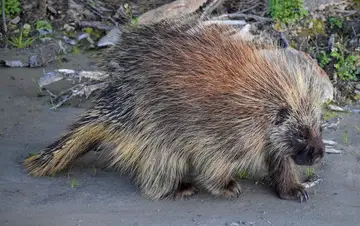
Coat of quills; up to 30,000
Only North American mammal with coat hairs modified as quills
NY DEC: gray wolves are much larger (females typically 50-100 lb, males 70-145 lb, 5-6 ft nose to tail, 27-33 in at the shoulder); eastern coyotes rarely exceed 50 lb and generally stand under 2 ft at the shoulder. Wolves have small rounded ears and a short blocky snout; coyotes have larger, more pointed ears (can look rounded in winter coat) and a long, narrow, pointed snout. Coyote tracks are typically 3 x 2 in, wolf tracks about 5 x 4 in. NY DEC says most wolf reports in New York were coyotes, dogs or wolf-dog hybrids.
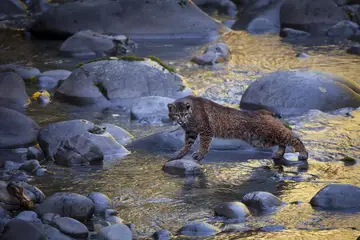
Bobcat or Mountain lion (cougar)?
Photo: National Marine Sanctuaries · Public domain · Wikimedia Commons
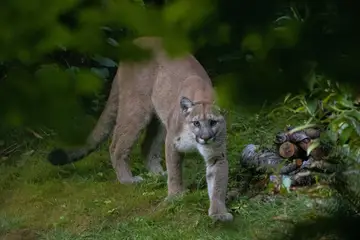
Cougars are one color (yellow-brown to light cinnamon) with a long tail. The bobcat's tail is short and its coat is spotted. TWRA says cougars are many times larger and longer, with a very long tail.
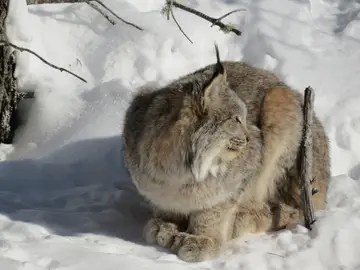
Bobcat or Canada lynx?
Photo: National Marine Sanctuaries · Public domain · Wikimedia Commons
A lynx has longer ear tufts and large, fur-covered feet (3.5 to 4.5 inches wide). A bobcat's feet are small and hairless (up to 2.5 inches). A lynx's tail has a black tip and no white underneath; a bobcat's tail is white underneath. Do not use the tail tip alone, because agencies describe the bobcat's tip differently (New Mexico white, Arizona black).
Bobcat or Domestic cat?
Photo: National Marine Sanctuaries · Public domain · Wikimedia Commons
TWRA says the domestic cat is smaller, usually has a longer tail and is not spotted with black. NCWRC says a bobcat is about twice as large, and South Carolina DNR says its legs are longer. Tracks of young bobcats are easily confused with house cat tracks (Missouri).
Photos show typical adults; individuals vary. Never get close to compare.
When mammals are active in Iowa
Records of mammals in Iowa peak in March and May to August. They show when people record mammals, not how many there are (about month bars).
JanFebMarAprMayJunJulAugSepOctNovDec
1,058 records of mammals in Iowa by month (GBIF, CC0 and CC BY records).
Active season for bears in Iowa: late May to late June (Iowa DNR). Iowa DNR
If you are bitten or stung
Call 911 or Poison Help at 1-800-222-1222 right away. Poison Help connects you to your local poison center, any time of day.
Official advice from Iowa DNR:
Bears: remove food attractants (pet food, grills, trash, bird feeders) when a bear is in the area. Iowa DNR
How to report
Aquatic invasive species: report suspected sightings to the nearest Iowa DNR fisheries station or by email (address on the DNR AIS page, [email protected] as decoded from the page link). Elk sightings: local conservation officer or wildlife field staff. Nuisance wildlife in a home: a DNR-licensed Nuisance Wildlife Control Operator. Iowa DNR
What official sources say
Are there bears in Iowa?
No. Iowa DNR (2026): Iowa does not currently have a black bear population; since 2014 two to three bears have wandered through each year, mainly in northeast Iowa. Iowa DNR
“Unlike its northern neighbors – and most other states in the U.S. – Iowa does not currently have a black bear population.”
Are there mountain lions in Iowa?
No. Iowa DNR: young males from South Dakota and Nebraska sometimes pass through; there are no breeding populations in Iowa. Iowa DNR
“So they often continue moving on, which means there are no breeding populations in Iowa.”
Are there moose in Iowa?
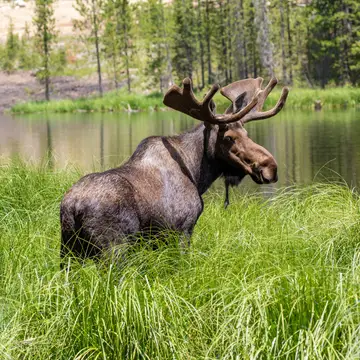
Rarely. Iowa DNR: a moose occasionally wanders into Iowa from northern Minnesota; moose are protected in Iowa. Iowa DNR
“From time to time, a moose will wander into Iowa from northern Minnesota.”
“We humans can take steps to live with bears much like our neighboring states – usually that means simply taking away food attractants when a bear is in the area.”
“We’re heading in to the active season for bears – late May to late June – which coincides with the breeding season.”
“Unlike its northern neighbors – and most other states in the U.S. – Iowa does not currently have a black bear population.”
Aquatic Invasive Species. Iowa Department of Natural Resources (Iowa DNR). sitemap lastmod 2026-02-23; checked November 3, 2026.Quoted passages (1)
“Learn to identify aquatic invasive species and report any suspected sightings to the nearest DNR fisheries station.”
Occasional Wildlife Visitors. Iowa Department of Natural Resources (Iowa DNR). sitemap lastmod 2025-12-22; checked November 3, 2026.Quoted passages (2)
“So they often continue moving on, which means there are no breeding populations in Iowa.”
“From time to time, a moose will wander into Iowa from northern Minnesota.”