Iowa has 5 venomous snakes named by official sources: Eastern Copperhead, Timber Rattlesnake, Prairie Rattlesnake, Eastern Massasauga and Western Massasauga, as labelled by Iowa DNR. This guide covers 8 animal groups from Iowa Department of Natural Resources (Iowa DNR) lists and other official sources, with photos, venomous status and when each group is active.
Identification help has limits: a photo cannot confirm that an animal is safe. Watch from a distance and never handle a wild animal.
These are the animals official sources describe as venomous or as a risk to people in Iowa, across 5 groups. The reason is given in the source's own terms.
Venomous: “Iowa has only four venomous snakes, and their bites are rarely fatal if treated. The massasauga and timber rattlesnakes are rare, but found in eastern and southern Iowa …”
Venomous: “Iowa has only four venomous snakes, and their bites are rarely fatal if treated. The massasauga and timber rattlesnakes are rare, but found in eastern and southern Iowa …”
Venomous: “Iowa has only four venomous snakes, and their bites are rarely fatal if treated. The massasauga and timber rattlesnakes are rare, but found in eastern and southern Iowa …”
Venomous: “Iowa has only four venomous snakes, and their bites are rarely fatal if treated. The massasauga and timber rattlesnakes are rare, but found in eastern and southern Iowa …”
Venomous: “Iowa has only four venomous snakes, and their bites are rarely fatal if treated. The massasauga and timber rattlesnakes are rare, but found in eastern and southern Iowa …”
Darker cells are the months with more open-licence observation records of each group in Iowa (GBIF). They show when people see and record these animals, not how many there are. The current month, this month, is highlighted.
Active season for bears in Iowa: late May to late June (Iowa DNR). Iowa DNR
Bull elk wander into Iowa especially in September (Iowa DNR). Iowa DNR
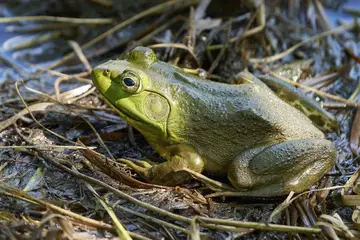
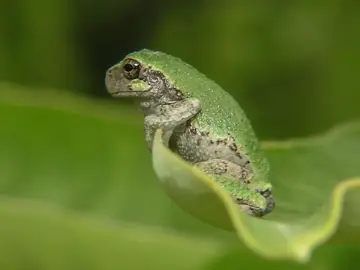
Frog calling, approximate (Iowa DNR): chorus frogs March/April; spring peeper and plains leopard frog April; American toad late April-early May; gray treefrogs May; bullfrog and green frog around June. Iowa DNR
Emerald ash borer adults emerge May through mid-July (Iowa DNR). Iowa DNR
Report: Aquatic invasive species: report suspected sightings to the nearest Iowa DNR fisheries station or by email (address on the DNR AIS page, [email protected] as decoded from the page link). Elk sightings: local conservation officer or wildlife field staff. Nuisance wildlife in a home: a DNR-licensed Nuisance Wildlife Control Operator. Iowa DNR
Official safety advice
If a snake or spider bites you, or you may have been exposed to venom: call 911 or Poison Help at 1-800-222-1222. HRSA
Bites from Iowa venomous snakes are rarely fatal if treated. Iowa DNR
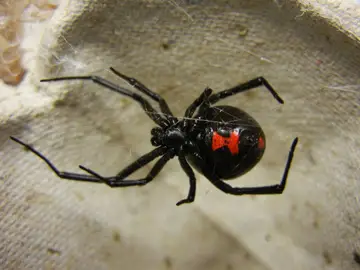
Anyone bitten by a black widow should seek immediate medical attention; if you believe you were bitten by a brown recluse, see a medical professional. Iowa DNR
Prevent tick bites: avoid wooded and brushy areas with high grass and leaf litter, treat clothing with permethrin, use EPA-registered repellents, and check for ticks after coming indoors. Iowa HHS
Mountain lion passing through: Iowa DNR asks people not to shoot it unless there is a direct safety threat. Iowa DNR
Questions people ask about Iowa wildlife
How many venomous snakes are in Iowa?
Iowa DNR says Iowa has only four venomous snakes: massasauga, timber rattlesnake, prairie rattlesnake and copperhead. The 2025 IWAP lists the eastern and western massasauga as separate species in the viper family, giving five. Iowa DNR
Yes, but rare. Timber rattlesnake, prairie rattlesnake and massasaugas. Timber rattlesnakes can be common in very localized forested areas. Iowa State University Extension and Outreach
Are there copperheads in Iowa?
Yes, but rare. Iowa DNR: the copperhead is even rarer than the massasauga and timber rattlesnake; it is state endangered. Iowa DNR
Rarely. Iowa DNR: the brown recluse range reaches southern Iowa but they are rarely seen. ISU: rare and absent from northern Iowa. Iowa DNR
Are there black widow spiders in Iowa?
Yes, but rare. Iowa DNR calls the black widow rare in Iowa and nonaggressive. ISU (2017) says finding one here is more likely an accidental introduction than an established population. Iowa DNR
Are there bears in Iowa?
No. Iowa DNR (2026): Iowa does not currently have a black bear population; since 2014 two to three bears have wandered through each year, mainly in northeast Iowa. Iowa DNR
Are there mountain lions in Iowa?
No. Iowa DNR: young males from South Dakota and Nebraska sometimes pass through; there are no breeding populations in Iowa. Iowa DNR
Are there wolves in Iowa?
No. Iowa DNR (2024): Iowa averages one to five wolves roaming through; wolves are protected in Iowa. Iowa DNR
Are there moose in Iowa?
Rarely. Iowa DNR: a moose occasionally wanders into Iowa from northern Minnesota; moose are protected in Iowa. Iowa DNR
How many kinds of turtles are in Iowa?
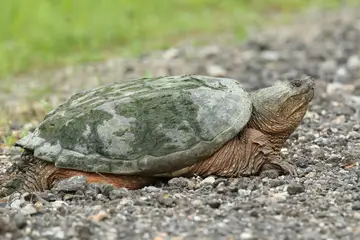
Iowa DNR (2015) says 13 turtle species; the 2025 IWAP lists 13 plus the three-toed box turtle, recorded but most likely released pets. Iowa DNR
How many kinds of frogs and toads are in Iowa?
Iowa DNR frog-call page says 16 species of frog and toad; the IWAP list has 17 anurans, one (crawfish frog) presumed extirpated. Iowa DNR
Sources
Mission, Vision & Leadership. Iowa Department of Natural Resources (Iowa DNR). sitemap lastmod 2024-11-20; checked November 3, 2026.
“Iowa has only four venomous snakes, and their bites are rarely fatal if treated. The massasauga and timber rattlesnakes are rare, but found in eastern and southern Iowa. The prairie rattlesnake and copperhead are even rarer in our state.”
“The prairie rattlesnake and copperhead are even rarer in our state.”
“Iowa has only four venomous snakes, and their bites are rarely fatal if treated.”
Are Spiders Poisonous? (Yard and Garden). Iowa State University Extension and Outreach. originally published December 10, 2008; checked November 3, 2026.Quoted passages (2)
“There are only two spiders, both rarely found in Iowa that have venom capable of causing illness in humans. The black widow spider venom is a neurotoxin that can cause headache, dizziness, shortness of breath and other systemic symptoms. Death is very rare. The brown recluse spider bite is usually painless. If sufficient venom is injected a skin ulcer may develop at the bite site.”
“Thus, venomous snakes inject venom through their fangs, venomous bees, wasps and hornets inject venom through their "stingers"”
“Being bitten by a wolf spider is rare, unless you were trying to pick it up, and even if it did bite, its venom is not lethal to people.”
“Yes, the brown recluse spider’s range goes as far north as southern Iowa, but as its name implies, brown recluses are rarely seen.”
“Even the black widow, rare in Iowa, is nonaggressive and bites only in self-defense.”
“If you believe you’ve been bitten by a brown recluse, see a medical professional, but also know that many skin issues can be misdiagnosed as a brown recluse bite.”
“Ehrlichiosis is transmitted to humans by the lone star tick (Amblyomma americanum)”
“…transmitted by the blacklegged tick (Ixodes scapularis)”
Tick- and Mosquito-borne Diseases. Iowa Department of Health and Human Services (Iowa HHS). undated page; checked November 3, 2026.Quoted passages (1)
“West Nile virus is carried by mosquitoes (especially Culex species). West Nile virus (WNV) can cause serious illness in humans and animals.”
Rabies. Iowa Department of Health and Human Services (Iowa HHS). undated page; checked November 3, 2026.Quoted passages (2)
“For example, wild animals (especially skunks and bats) most often get rabies in Iowa.”
“If the bite is from wildlife known to carry rabies (e.g. skunks or raccoons)”
Aquatic Invasive Species. Iowa Department of Natural Resources (Iowa DNR). sitemap lastmod 2026-02-23; checked November 3, 2026.Quoted passages (1)
“Learn to identify aquatic invasive species and report any suspected sightings to the nearest DNR fisheries station.”
Dealing with Snakes Around Homes. Iowa State University Extension and Outreach (Natural Resource Ecology and Management). undated page; checked November 3, 2026.Quoted passages (3)
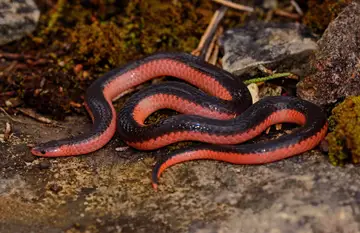
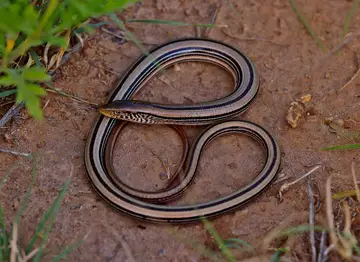
“The 28 species of Iowa snakes range from the tiny and uncommon 7-inch western worm snake to the common bullsnake which can be over 5 feet long.”
“Timber rattlesnakes are venomous and can be common in some very localized forested areas of the state.”
“We don’t have venomous Cottonmouths or Water Moccasins in Iowa so all water snakes in Iowa are harmless.”
“If you are still a bit uneasy, rest assured that most snakes encountered in Iowa are harmless, but should be left alone especially if you are unsure of their identification.”
“They are usually one of the first frogs to start calling in the spring (March/April). / They start calling earlier in the spring, usually in April. / They usually start to call towards the end of April to early May. / They usually start calling sometime in May. / They are one of the later frogs to start calling, usually around June.”
Poison Help. Health Resources and Services Administration (HRSA). archived copy, captured October 17, 2026; checked November 3, 2026.Quoted passages (1)
“Tick bites can be prevented by avoiding wooded and brushy areas with high grass and leaf litter, treating clothing and gear with products containing 0.5% permethrin, and using EPA-registered insect repellents containing DEET, picaridin, IR3535, Oil of Lemon Eucalyptus (OLE), para-menthane-diol (PMD), or 2-undecanone.”
“In Iowa, ER visits for tick bites usually peak in May.”