This page lists 3 spiders.
3 are venomous by official accounts.
Not every species: no complete official list of Iowa spiders exists, so this page covers the ones state and Extension sources name. How lists are built.
Which spiders can hurt you
Official sources single out these spiders in Iowa, in their own words:
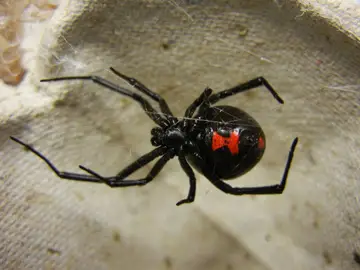
Venomous. “There are only two spiders, both rarely found in Iowa that have venom capable of causing illness in humans. The black widow spider venom is a neurotoxin that can cause headache, dizziness, shortness of breath and other systemic symptoms. Death is very rare …” Iowa State University Extension and Outreach
All 3 spiders
Venomous species first, then A to Z. Do not handle them.
“While anyone bitten by a black widow should seek immediate medical attention, the bite is rarely fatal when treated.” Iowa DNR
What the sources say
Venom: “There are only two spiders, both rarely found in Iowa that have venom capable of causing illness in humans. The black widow spider venom is a neurotoxin that can cause headache, dizziness, shortness of breath and other systemic symptoms. Death is very rare. The brown recluse spider bite is usually painless. If sufficient venom is injected a skin ulcer may develop at the bite site.” (Iowa State University Extension and Outreach)
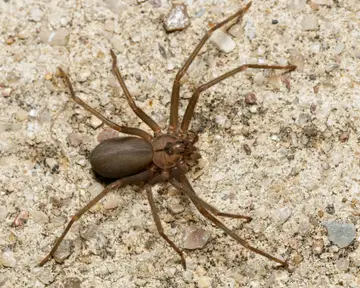
Body about 7 to 12 mm (about 3/8 inch); females average about 9 mm and males about 8 mm. UC IPM says a recluse body is not more than 3/8 inch long.
How to recognize it
Six equal-sized eyes in three pairs. UC IPM calls this the most definitive feature, since most spiders have eight eyes.
The violin mark alone is not a reliable way to identify it
UC IPM's five-point check: six eyes in pairs, evenly colored finely haired abdomen, no spines on the legs, evenly colored legs, body no more than 3/8 inch
Venom: “There are only two spiders, both rarely found in Iowa that have venom capable of causing illness in humans. The black widow spider venom is a neurotoxin that can cause headache, dizziness, shortness of breath and other systemic symptoms. Death is very rare. The brown recluse spider bite is usually painless. If sufficient venom is injected a skin ulcer may develop at the bite site.” (Iowa State University Extension and Outreach)
Venom: “Being bitten by a wolf spider is rare, unless you were trying to pick it up, and even if it did bite, its venom is not lethal to people.” (Iowa DNR)
When spiders are active in Iowa
Records of spiders in Iowa peak in June to September. They show when people record spiders, not how many there are (about month bars).
JanFebMarAprMayJunJulAugSepOctNovDec
629 records of spiders in Iowa by month (GBIF, CC0 and CC BY records).
If you are bitten or stung
Call 911 or Poison Help at 1-800-222-1222 right away. Poison Help connects you to your local poison center, any time of day.
Official advice from HRSA and Iowa DNR:
If a snake or spider bites you, or you may have been exposed to venom: call 911 or Poison Help at 1-800-222-1222. HRSA
Anyone bitten by a black widow should seek immediate medical attention; if you believe you were bitten by a brown recluse, see a medical professional. Iowa DNR
How to report
Aquatic invasive species: report suspected sightings to the nearest Iowa DNR fisheries station or by email (address on the DNR AIS page, [email protected] as decoded from the page link). Elk sightings: local conservation officer or wildlife field staff. Nuisance wildlife in a home: a DNR-licensed Nuisance Wildlife Control Operator. Iowa DNR
What official sources say
Are there brown recluse spiders in Iowa?
Rarely. Iowa DNR: the brown recluse range reaches southern Iowa but they are rarely seen. ISU: rare and absent from northern Iowa. Iowa DNR
“Yes, the brown recluse spider’s range goes as far north as southern Iowa, but as its name implies, brown recluses are rarely seen.”
Are there black widow spiders in Iowa?
Yes, but rare. Iowa DNR calls the black widow rare in Iowa and nonaggressive. ISU (2017) says finding one here is more likely an accidental introduction than an established population. Iowa DNR
“Even the black widow, rare in Iowa, is nonaggressive and bites only in self-defense.”
About this list
Venom labels come only from official sources and link to them; "Not stated" never means harmless. How labels work.
Sources
Mission, Vision & Leadership. Iowa Department of Natural Resources (Iowa DNR). sitemap lastmod 2024-11-20; checked November 3, 2026.
“While anyone bitten by a black widow should seek immediate medical attention, the bite is rarely fatal when treated.”
“Being bitten by a wolf spider is rare, unless you were trying to pick it up, and even if it did bite, its venom is not lethal to people.”
“If you believe you’ve been bitten by a brown recluse, see a medical professional, but also know that many skin issues can be misdiagnosed as a brown recluse bite.”
“Yes, the brown recluse spider’s range goes as far north as southern Iowa, but as its name implies, brown recluses are rarely seen.”
“Even the black widow, rare in Iowa, is nonaggressive and bites only in self-defense.”
Are Spiders Poisonous? (Yard and Garden). Iowa State University Extension and Outreach. originally published December 10, 2008; checked November 3, 2026.Quoted passages (1)
“There are only two spiders, both rarely found in Iowa that have venom capable of causing illness in humans. The black widow spider venom is a neurotoxin that can cause headache, dizziness, shortness of breath and other systemic symptoms. Death is very rare. The brown recluse spider bite is usually painless. If sufficient venom is injected a skin ulcer may develop at the bite site.”
Poison Help. Health Resources and Services Administration (HRSA). archived copy, captured October 17, 2026; checked November 3, 2026.Quoted passages (1)
“1-800-222-1222”
Aquatic Invasive Species. Iowa Department of Natural Resources (Iowa DNR). sitemap lastmod 2026-02-23; checked November 3, 2026.Quoted passages (1)
“Learn to identify aquatic invasive species and report any suspected sightings to the nearest DNR fisheries station.”