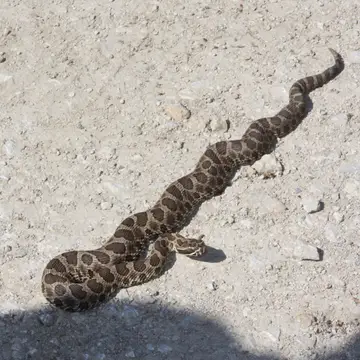
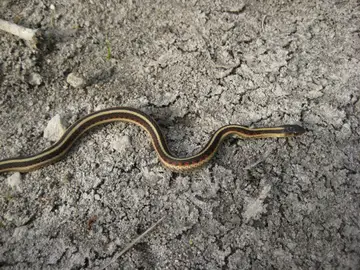
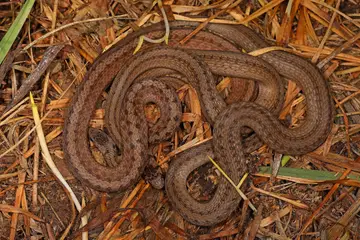
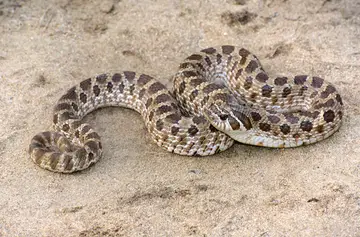
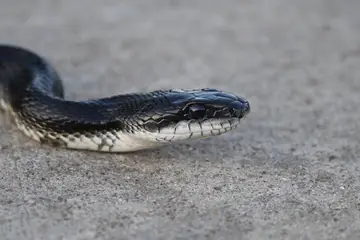
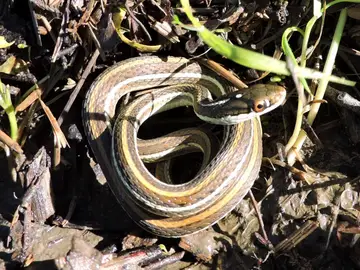
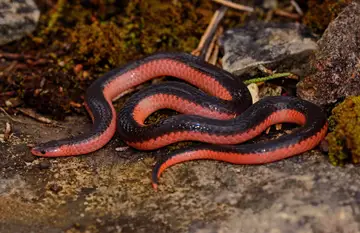
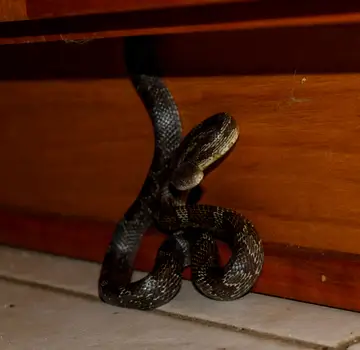
This page lists 28 snakes: all from Iowa DNR's List of Iowa Reptiles Evaluated by the IWAP.
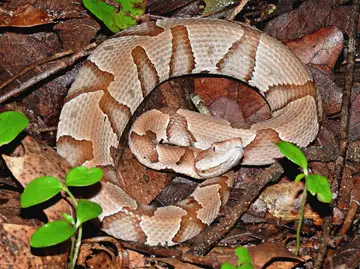
5 are venomous by official accounts: Eastern Copperhead, Timber Rattlesnake, Prairie Rattlesnake, Eastern Massasauga and Western Massasauga.
Venomous snakes in Iowa
Official sources label these snakes venomous in Iowa. Venomous snakes in Iowa has more on each one.
Adults usually about 2 to 3 feet (24-36 in); record about 53 inches.
How to recognize it
Vertical (cat-like) pupils and a heat-sensing pit between eye and nostril
Heavy-bodied; keeled scales
Head shape alone is not a reliable way to identify copperheads
Conservation
state endangered; Iowa Species of Greatest Conservation Need (SGCN)
What the sources say
Venom: “Iowa has only four venomous snakes, and their bites are rarely fatal if treated. The massasauga and timber rattlesnakes are rare, but found in eastern and southern Iowa. The prairie rattlesnake and copperhead are even rarer in our state.” (Iowa DNR)
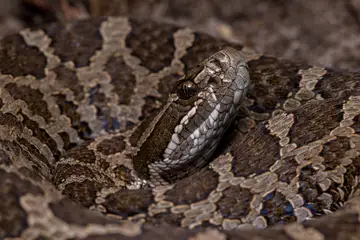
Usually 18 to 30 inches long (New York DEC: 18 to 40 inches, average 27.5). The western massasauga in Arizona reaches only about 22 inches.
How to recognize it
A segmented rattle (a single button in newborns) and vertical, catlike pupils. In Michigan it is the only snake with both.
Nine large plates on top of the head (the timber rattlesnake has many small scales there)
A heat-sensing pit on each side of the head between the eye and nostril; the head is flat and much wider than the neck
What the sources say
Venom: “Iowa has only four venomous snakes, and their bites are rarely fatal if treated. The massasauga and timber rattlesnakes are rare, but found in eastern and southern Iowa. The prairie rattlesnake and copperhead are even rarer in our state.” (Iowa DNR)
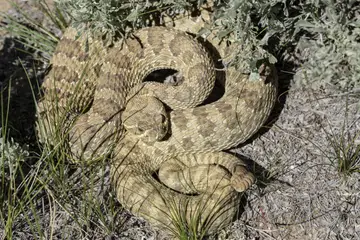
Usually about 3 to 4 feet; Montana gives 15 to 60 inches and NPS says up to 5 feet. Arizona gives a maximum of 28 to 64 inches (excluding rattle) depending on subspecies; in Colorado it is rarely over 39 inches.
How to recognize it
Rattle (or a button in newborns) at the tail tip
Head much broader than the neck, many small scales on top of the head, heat-sensing pit between eye and nostril
Vertical (cat-like) pupils
Conservation
state endangered; Iowa Species of Greatest Conservation Need (SGCN)
What the sources say
Venom: “Iowa has only four venomous snakes, and their bites are rarely fatal if treated. The massasauga and timber rattlesnakes are rare, but found in eastern and southern Iowa. The prairie rattlesnake and copperhead are even rarer in our state.” (Iowa DNR)
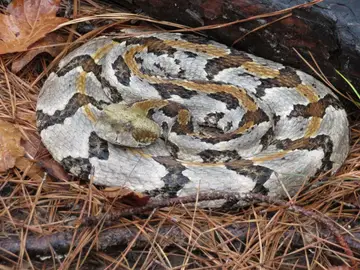
Most adults 36 to 60 inches (3 to 5 feet); record 74.5 inches.
How to recognize it
Black tail ending in a rattle
Heat-sensing pit between nostril and eye
Large, thick head distinct from the neck; cat-like vertical pupil
Where in Iowa
Eastern and southern Iowa (DNR); localized forested areas (ISU) Iowa DNR
Conservation
state special concern (IWAP code I-SC; not protected by the T&E law); Iowa Species of Greatest Conservation Need (SGCN)
What the sources say
Venom: “Iowa has only four venomous snakes, and their bites are rarely fatal if treated. The massasauga and timber rattlesnakes are rare, but found in eastern and southern Iowa. The prairie rattlesnake and copperhead are even rarer in our state.” (Iowa DNR)
state endangered; Iowa Species of Greatest Conservation Need (SGCN)
What the sources say
Venom: “Iowa has only four venomous snakes, and their bites are rarely fatal if treated. The massasauga and timber rattlesnakes are rare, but found in eastern and southern Iowa. The prairie rattlesnake and copperhead are even rarer in our state.” (Iowa DNR)
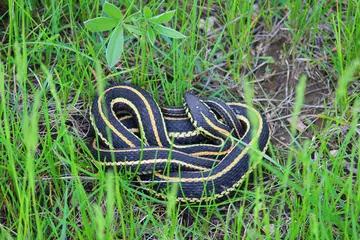
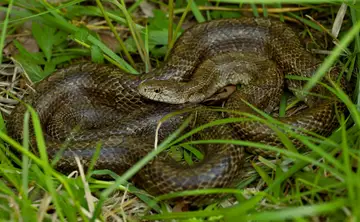
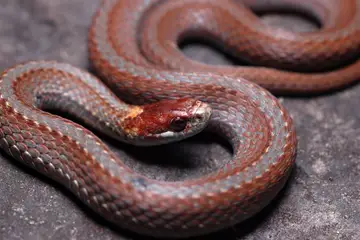
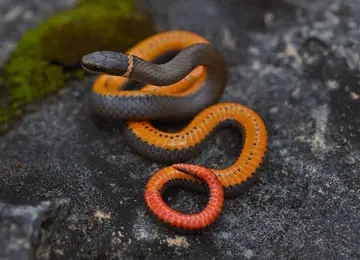
The other 23 snakes
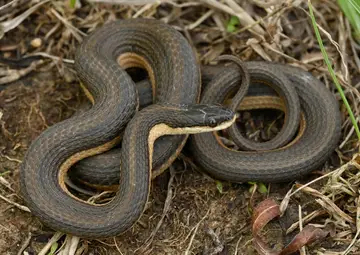
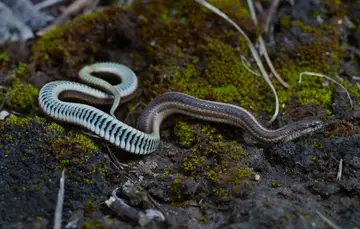
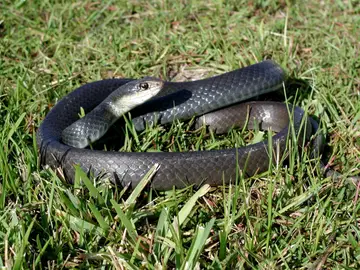
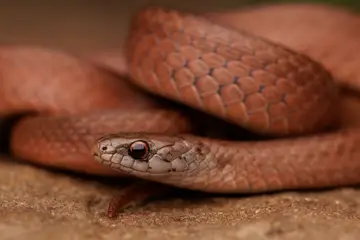
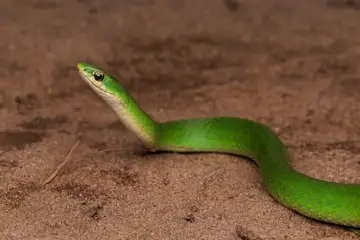
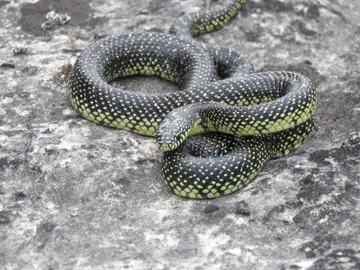
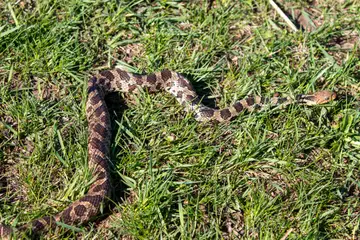
From A to Z. Some harmless snakes mimic venomous ones: leave every snake alone.
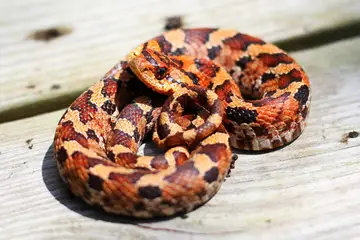
The copperhead's head is coppery with no marks; the milksnake's head is light with brownish marks (Pennsylvania). Tennessee: copperhead has a copper-colored, unmarked head and triangular shapes on the side of the body. Pennsylvania says the eastern milksnake is the snake most often killed by mistake for a copperhead. Belly colour is not used here: Pennsylvania's own pages describe the copperhead belly two different ways (uniform cream in one account, mottled white to gray in another).
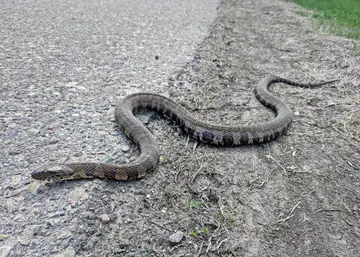
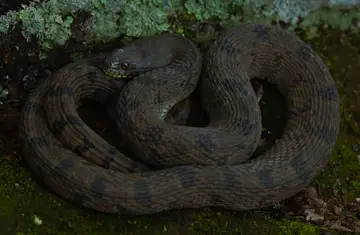
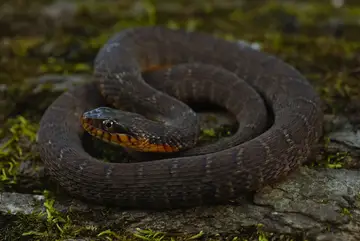
Northern watersnake or Copperhead?
Photo: U.S. Fish and Wildlife Service - Midwest Region · Public domain · Wikimedia Commons
Florida Museum (midland watersnake): the watersnake's crossbands are darker, narrower and much more numerous than a copperhead's and turn into blotches halfway down the body. Watersnakes have round pupils and dark vertical lines near the mouth; copperheads have no such lines.
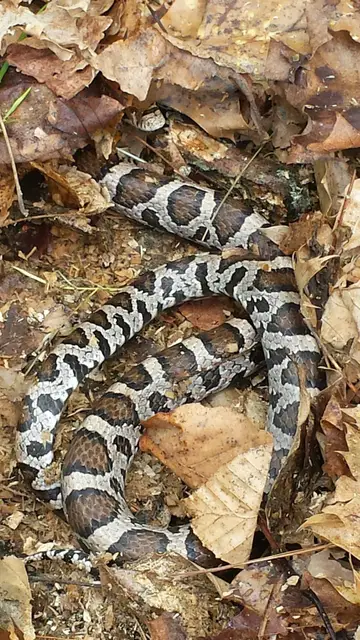
Georgia DNR lists the gray rat snake and the yellow phase of the eastern rat snake among nonvenomous snakes often confused with copperheads. Virginia DWR says baby eastern ratsnakes (black snakes) and northern black racers are the most commonly misidentified baby snakes, and that juvenile copperheads look much like adults but with a bright yellow tail. New Jersey DFW: copperheads have a unique hourglass pattern, wide on the sides and narrow across the back, and young copperheads have a greenish-yellow-tipped tail. Hatchling and yearling black rat snakes have irregularly shaped blotches, and the pattern runs through the tip of a pointed tail.
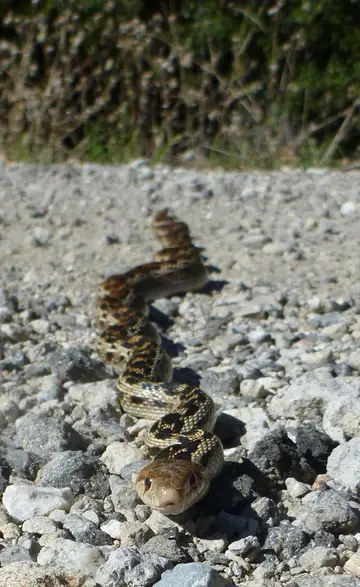
Photos show typical adults; individuals vary. Never get close to compare.
When snakes are active in Iowa
Records of snakes in Iowa peak in April to June and August. They show when people record snakes, not how many there are (about month bars).
JanFebMarAprMayJunJulAugSepOctNovDec
254 records of snakes in Iowa by month (GBIF, CC0 and CC BY records).
Bites from Iowa venomous snakes are rarely fatal if treated. Iowa DNR
How to report
Aquatic invasive species: report suspected sightings to the nearest Iowa DNR fisheries station or by email (address on the DNR AIS page, [email protected] as decoded from the page link). Elk sightings: local conservation officer or wildlife field staff. Nuisance wildlife in a home: a DNR-licensed Nuisance Wildlife Control Operator. Iowa DNR
What official sources say
Are there rattlesnakes in Iowa?
Yes, but rare. Timber rattlesnake, prairie rattlesnake and massasaugas. Timber rattlesnakes can be common in very localized forested areas. Iowa State University Extension and Outreach
“Timber rattlesnakes are venomous and can be common in some very localized forested areas of the state.”
Are there copperheads in Iowa?
Yes, but rare. Iowa DNR: the copperhead is even rarer than the massasauga and timber rattlesnake; it is state endangered. Iowa DNR
“The prairie rattlesnake and copperhead are even rarer in our state.”
“Iowa has only four venomous snakes, and their bites are rarely fatal if treated. The massasauga and timber rattlesnakes are rare, but found in eastern and southern Iowa. The prairie rattlesnake and copperhead are even rarer in our state.”
“Iowa has only four venomous snakes, and their bites are rarely fatal if treated.”
“The prairie rattlesnake and copperhead are even rarer in our state.”
Poison Help. Health Resources and Services Administration (HRSA). archived copy, captured October 17, 2026; checked November 3, 2026.Quoted passages (1)
“If you are still a bit uneasy, rest assured that most snakes encountered in Iowa are harmless, but should be left alone especially if you are unsure of their identification.”
“We don’t have venomous Cottonmouths or Water Moccasins in Iowa so all water snakes in Iowa are harmless.”
Dealing with Snakes Around Homes. Iowa State University Extension and Outreach (Natural Resource Ecology and Management). undated page; checked November 3, 2026.Quoted passages (2)
“Snakes will hibernate from November until March”
“Timber rattlesnakes are venomous and can be common in some very localized forested areas of the state.”
Aquatic Invasive Species. Iowa Department of Natural Resources (Iowa DNR). sitemap lastmod 2026-02-23; checked November 3, 2026.Quoted passages (1)
“Learn to identify aquatic invasive species and report any suspected sightings to the nearest DNR fisheries station.”