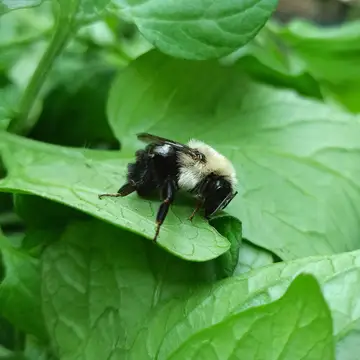
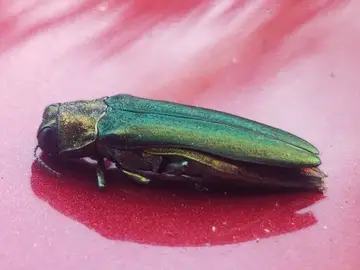
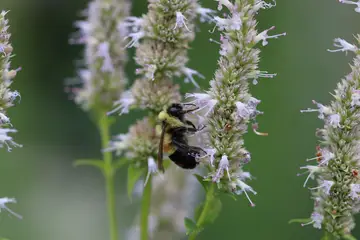
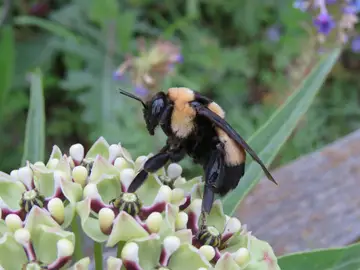
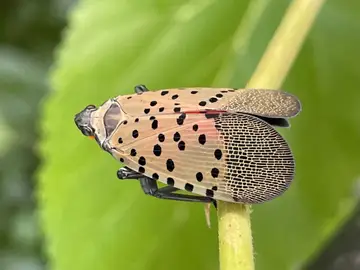
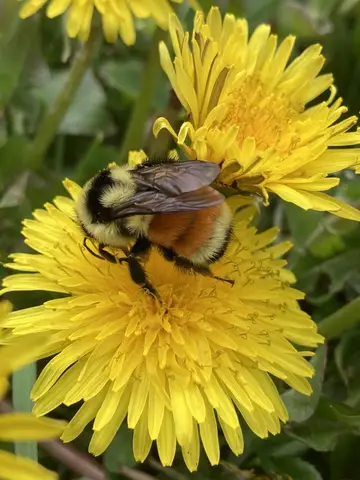
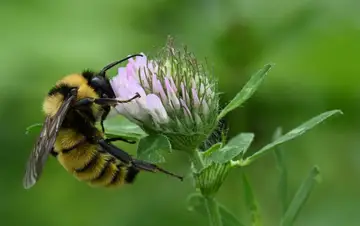
This page lists 20 insects and 3 ticks: 15 from Iowa DNR's List of Iowa Bumble Bees Evaluated by the IWAP - bumble bees only and 8 named in other official sources.
2 are venomous by official accounts. 2 are nonnative. Iowa DNR gives a total of 15; the 23 here are the insects official sources name one by one.
Not every species: no complete official list of Iowa insects exists, so this page covers the ones state and Extension sources name. How lists are built.
Which insects can hurt you
Official sources single out these insects in Iowa, in their own words:
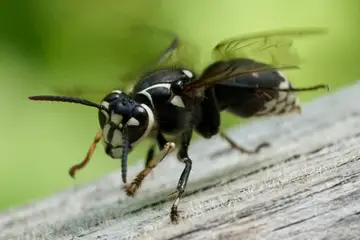
Yellowjacket wasps
Stings. “Pest management professionals can be utilized and only attmpt to control a colony yourself if you know you are not allergic to wasp stings.” Iowa State University Extension and Outreach
Disease. “West Nile virus is carried by mosquitoes (especially Culex species). West Nile virus (WNV) can cause serious illness in humans and animals.” Iowa HHS
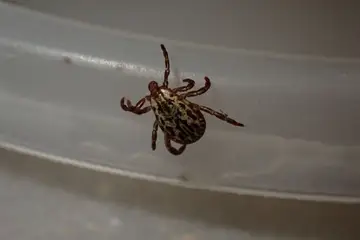
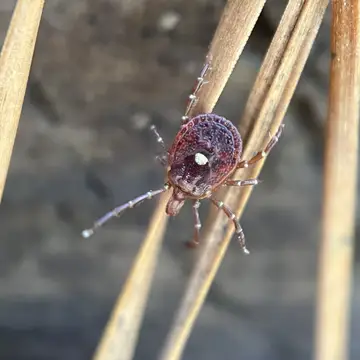
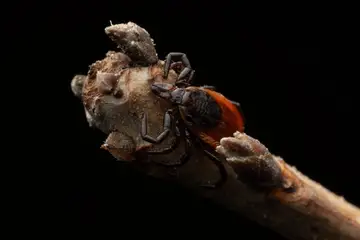
Ticks (arachnids, not insects)
Official sources single out these ticks in Iowa, in their own words:
Disease. “Although dog ticks do not carry Lyme disease, they are the main carrier of Rocky Mountain Spotted Fever in the Midwest states.” Iowa State University Extension and Outreach
Venom: “Thus, venomous snakes inject venom through their fangs, venomous bees, wasps and hornets inject venom through their "stingers"” (Iowa State University Extension and Outreach)
“Pest management professionals can be utilized and only attmpt to control a colony yourself if you know you are not allergic to wasp stings.” Iowa State University Extension and Outreach
What the sources say
Venom: “Thus, venomous snakes inject venom through their fangs, venomous bees, wasps and hornets inject venom through their "stingers"” (Iowa State University Extension and Outreach)
No confirmed photo of American Bumble Bee
American Bumble Bee
Bombus pensylvanicus
Not stated
Venom
No official source we use states whether this animal is venomous. That does not mean it is harmless: do not handle it.
Call 911 or Poison Help at 1-800-222-1222 right away. Poison Help connects you to your local poison center, any time of day.
Official advice from HRSA, Iowa HHS and Iowa DNR:
If a snake or spider bites you, or you may have been exposed to venom: call 911 or Poison Help at 1-800-222-1222. HRSA
Prevent tick bites: avoid wooded and brushy areas with high grass and leaf litter, treat clothing with permethrin, use EPA-registered repellents, and check for ticks after coming indoors. Iowa HHS
Bears: remove food attractants (pet food, grills, trash, bird feeders) when a bear is in the area. Iowa DNR
How to report
Aquatic invasive species: report suspected sightings to the nearest Iowa DNR fisheries station or by email (address on the DNR AIS page, [email protected] as decoded from the page link). Elk sightings: local conservation officer or wildlife field staff. Nuisance wildlife in a home: a DNR-licensed Nuisance Wildlife Control Operator. Iowa DNR
“Pest management professionals can be utilized and only attmpt to control a colony yourself if you know you are not allergic to wasp stings.”
Are Spiders Poisonous? (Yard and Garden). Iowa State University Extension and Outreach. originally published December 10, 2008; checked November 3, 2026.Quoted passages (1)
“Thus, venomous snakes inject venom through their fangs, venomous bees, wasps and hornets inject venom through their "stingers"”
“Hornets are very protective of their colony and will usually attack if someone approaches within 3 feet of the nest.”
Tick- and Mosquito-borne Diseases. Iowa Department of Health and Human Services (Iowa HHS). undated page; checked November 3, 2026.Quoted passages (1)
“West Nile virus is carried by mosquitoes (especially Culex species). West Nile virus (WNV) can cause serious illness in humans and animals.”
Poison Help. Health Resources and Services Administration (HRSA). archived copy, captured October 17, 2026; checked November 3, 2026.Quoted passages (1)
“Tick bites can be prevented by avoiding wooded and brushy areas with high grass and leaf litter, treating clothing and gear with products containing 0.5% permethrin, and using EPA-registered insect repellents containing DEET, picaridin, IR3535, Oil of Lemon Eucalyptus (OLE), para-menthane-diol (PMD), or 2-undecanone.”
“In Iowa, ER visits for tick bites usually peak in May.”
“We humans can take steps to live with bears much like our neighboring states – usually that means simply taking away food attractants when a bear is in the area.”
Aquatic Invasive Species. Iowa Department of Natural Resources (Iowa DNR). sitemap lastmod 2026-02-23; checked November 3, 2026.Quoted passages (1)
“Learn to identify aquatic invasive species and report any suspected sightings to the nearest DNR fisheries station.”