Wyoming Mammals: Species List With Pictures
Last checked November 3, 2026 against official sources.
On this page
This page lists 121 mammals: all from Wyoming Game and Fish Department, Nongame Section's Atlas of Birds, Mammals, Amphibians, and Reptiles in Wyoming. 3 are nonnative.
Which mammals can hurt you
Official sources single out these mammals in Wyoming, in their own words:
-
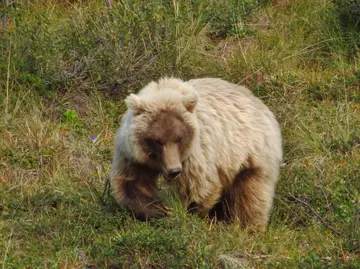
Photo: Annika Lindqvist · CC BY 4.0 · iNaturalist Grizzly Bear
Attacks. “Because grizzly bears are inherently more aggressive than their black bear counterparts, the Wyoming Game and Fish continually works to reduce conflict potential between grizzly bears and humans through education and outreach.” Wyoming Game and Fish Department
-
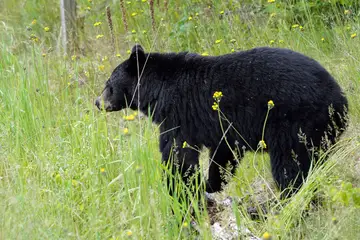
Photo: U.S. Fish and Wildlife Service - Midwest Region · Public domain · Wikimedia Commons Black Bear
Attacks (defensive or predatory encounters). “These behaviors and how you react to them are true for both black and grizzly bears.” Wyoming Game and Fish Department
-
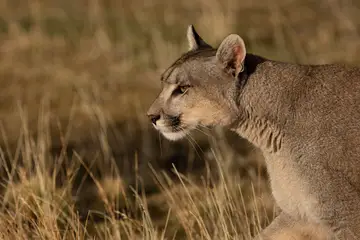
Photo: ArgentinaTurismo · CC BY 4.0 · Wikimedia Commons Mountain Lion
Attacks (rare). “If a mountain lion attacks you, fight back and defend yourself.” Wyoming Game and Fish Department
-
Bats
Rabies. “In Wyoming, rabies is most commonly found in bats and skunks.” Wyoming Department of Health
-
Skunks
Rabies (WDH). “In Wyoming, rabies is most commonly found in bats and skunks.” Wyoming Department of Health
-
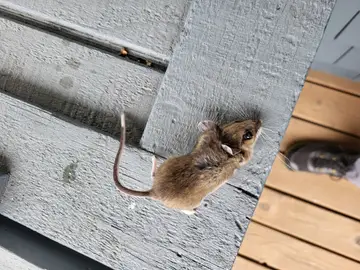
Photo: Charlie Pavlisich · CC BY 4.0 · iNaturalist North American Deermouse (deer mouse)
Hantavirus. “In the United States, the most common hantavirus is Sin Nombre virus which is spread by the deer mouse.” Wyoming Department of Health


All 121 mammals on the list
- Abert's Squirrel Sciurus aberti
- American Badger Taxidea taxus
- American Mink Neogale vison
- American Perimyotis (Tri-colored Bat) Perimyotis subflavus
- American Pika Ochotona princeps
- Beaver Castor canadensis
- Big Brown Bat Eptesicus fuscus
- Big Free-tailed Bat Nyctinomops macrotis
- Bighorn Sheep (Mountain Sheep) Ovis canadensis
- Bison Bos bison
- Black Bear Ursus americanus
- Black-footed Ferret Mustela nigripes
- Black-tailed Jackrabbit Lepus californicus
- Black-tailed Prairie Dog Cynomys ludovicianus
- Bobcat Lynx rufus
- Brazilian Free-tailed Bat Tadarida brasiliensis
- Bushy-tailed Woodrat Neotoma cinerea
- California Myotis Myotis californicus
- Canada Lynx Lynx canadensis
- Canyon Deermouse Peromyscus crinitus
- Cliff Chipmunk Neotamias dorsalis
- Common Gray Fox Urocyon cinereoargenteus
- Common Muskrat Ondatra zibethicus
- Coyote Canis latrans
- Desert Cottontail Sylvilagus audubonii
- Dusky Shrew Sorex monticola
- Dwarf Shrew Sorex nanus
- Eastern Cottontail Sylvilagus floridanus
- Eastern Fox Squirrel Sciurus niger
- Eastern Gray Squirrel Sciurus carolinensis
- Eastern Mole Scalopus aquaticus
- Eastern Red Bat Lasiurus borealis
- Eastern Spotted Skunk Spilogale putorius
- Fisher Pekania pennanti
- Fringed Myotis Myotis thysanodes
- Golden-mantled Ground Squirrel Callospermophilus lateralis
- Gray Wolf Canis lupus
- Great Basin Pocket Mouse Perognathus mollipilosus
- Grizzly Bear Ursus arctos
- Hayden's Shrew Sorex haydeni
- Hispid Pocket Mouse Chaetodipus hispidus
- House Mouse Mus musculusNonnative
- Idaho Pocket Gopher Thomomys idahoensis
- Least Chipmunk Neotamias minimus
- Least Weasel Mustela nivalis
- Long-eared Myotis Myotis evotis
- Long-legged Myotis Myotis volans
- Long-tailed Vole Microtus longicaudus
- Long-tailed Weasel Neogale frenata
- Masked Shrew Sorex cinereus
- Meadow Jumping Mouse Zapus hudsonius
- Meadow Vole Microtus pennsylvanicus
- Merriam's Shrew Sorex merriami
- Montane Vole Microtus montanus
- Moose Alces alces
- Mountain Cottontail Sylvilagus nutallii
- Mountain Goat Oreamnos americanusNonnative
- Mountain Lion (Puma) Puma concolor
- Mule Deer (Black-tailed Deer) Odocoileus hemionus
- North American Deermouse Peromyscus maniculatus
- North American Porcupine Erethizon dorsatum
- Northern Flying Squirrel Glaucomys sabrinus
- Northern Grasshopper Mouse Onychomys leucogaster
- Northern Hoary Bat Aeorestes cinereus
- Northern Long-eared Myotis Myotis septentrionalis
- Northern Pocket Gopher Thomomys talpoides
- Northern Raccoon Procyon lotor
- Northern River Otter Lontra canadensis
- Norway Rat Rattus norvegicusNonnative
- Olive-backed Pocket Mouse Perognathus fasciatus
- Ord's Kangaroo Rat Dipodomys ordii
- Pacific Marten Martes caurina
- Pallid Bat Antrozous pallidus
- Piñon Deermouse Peromyscus truei
- Plains Harvest Mouse Reithrodontomys montanus
- Plains Pocket Mouse Perognathus flavescens
- Prairie Vole Microtus ochrogaster
- Preble's Meadow Jumping Mouse Zapus hudsonius preblei
- Preble's Shrew Sorex preblei
- Pronghorn Antilocapra americana
- Pygmy Rabbit Brachylagus idahoensis
- Red Fox Vulpes vulpes
- Red Squirrel Tamiasciurus hudsonicus
- Ringtail Bassariscus astutus
- Sagebrush Vole Lemmiscus curtatus
- Sand Hills Pocket Gopher Geomys lutescens
- Short-tailed Weasel (Ermine) Mustela erminea
- Silky Pocket Mouse Perognathus flavus
- Silver-haired Bat Lasionycteris noctivagans
- Snowshoe Hare Lepus americanus
- Southern Red-backed Vole Clethrionomys gapperi
- Spotted Bat Euderma maculatum
- Spotted Ground Squirrel Xerospermophilus spilosoma
- Striped Skunk Mephitis mephitis
- Swift Fox Vulpes velox
- Thirteen-lined Ground Squirrel Ictidomys tridecemlineatus
- Townsend's Big-eared Bat Corynorhinus townsendii
- Uinta Chipmunk Neotamias umbrinus
- Uinta Ground Squirrel Urocittelus armatus
- Vagrant Shrew Sorex vagrans
- Virginia Opossum Didelphis virginiana
- Wapiti (Elk) Cervus canadensis
- Water Vole Microtus richardsoni
- Western Harvest Mouse Reithrodontomys megalotis
- Western Heather Vole Phenacomys intermedius
- Western Jumping Mouse Zapus princeps
- Western Little Brown Myotis Myotis carissima
- Western Pygmy Shrew Sorex eximius
- Western Small-footed Myotis Myotis ciliolabrum
- Western Spotted Skunk Spilogale gracilis
- Western Water Shrew Sorex navigator
- White-footed Deermouse Peromyscus leucopus
- White-tailed Deer Odocoileus virginianus
- White-tailed Jackrabbit Lepus townsendii
- White-tailed Prairie Dog Cynomys leucurus
- Wolverine Gulo gulo
- Wyoming Ground Squirrel Urocitellus elegans
- Wyoming Pocket Gopher Thomomys clusius
- Yellow-bellied Marmot Marmota flaviventris
- Yellow-pine Chipmunk Neotamias amoenus
- Yuma Myotis Myotis yumanensis
Mammals people confuse
Coyote or Gray wolf?
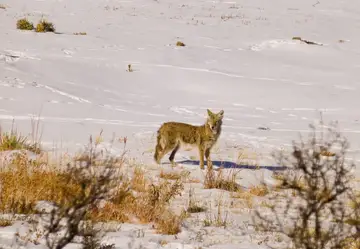

Coyote Not stated
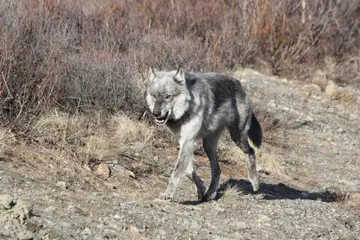
Gray wolf Not stated
NY DEC: gray wolves are much larger (females typically 50-100 lb, males 70-145 lb, 5-6 ft nose to tail, 27-33 in at the shoulder); eastern coyotes rarely exceed 50 lb and generally stand under 2 ft at the shoulder. Wolves have small rounded ears and a short blocky snout; coyotes have larger, more pointed ears (can look rounded in winter coat) and a long, narrow, pointed snout. Coyote tracks are typically 3 x 2 in, wolf tracks about 5 x 4 in. NY DEC says most wolf reports in New York were coyotes, dogs or wolf-dog hybrids.
Bobcat or Mountain lion (cougar)?
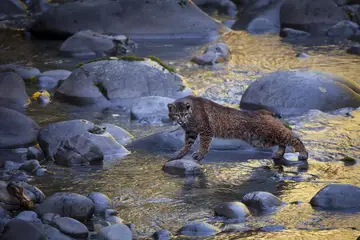

Bobcat Not stated
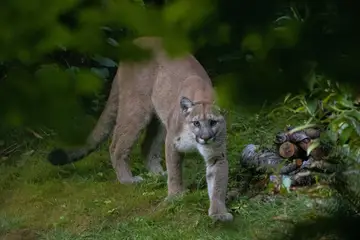
Mountain lion (cougar) Not stated
Cougars are one color (yellow-brown to light cinnamon) with a long tail. The bobcat's tail is short and its coat is spotted. TWRA says cougars are many times larger and longer, with a very long tail.
Bobcat or Canada lynx?
Bobcat Not stated
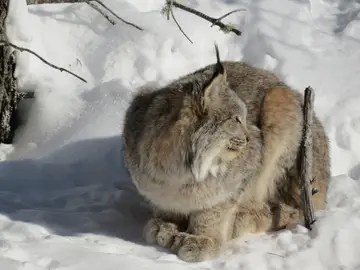
Canada lynx Not stated
A lynx has longer ear tufts and large, fur-covered feet (3.5 to 4.5 inches wide). A bobcat's feet are small and hairless (up to 2.5 inches). A lynx's tail has a black tip and no white underneath; a bobcat's tail is white underneath. Do not use the tail tip alone, because agencies describe the bobcat's tip differently (New Mexico white, Arizona black).
American Black Bear or Grizzly (Brown) Bear?
American Black Bear Not stated
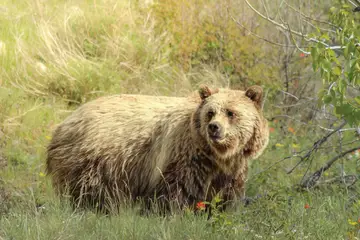
Grizzly (Brown) Bear Not stated
Grizzlies have longer front claws, humped shoulders and a more concave face. Color does not settle it: brown bears can be black to blonde.
Photos show typical adults; individuals vary. Never get close to compare.
When mammals are active in Wyoming
Records of mammals in Wyoming peak in June to August. They show when people record mammals, not how many there are (about month bars).
If you are bitten or stung
Call 911 or Poison Help at 1-800-222-1222 right away. Poison Help connects you to your local poison center, any time of day.
Official advice from Wyoming Game and Fish Department and Wyoming Department of Health:
- Anyone with possible direct contact with a bat should contact a healthcare professional (rabies). Wyoming Game and Fish Department
- Anyone who has direct contact with a bat or wakes up with a bat in the room should immediately contact a doctor or public health provider. Wyoming Department of Health
- Bears: never run; carry EPA-registered bear spray for a charging or aggressive bear. Wyoming Game and Fish Department
What official sources say
Are there grizzly bears in Wyoming?
Yes. WGFD: grizzly bears live throughout northwest Wyoming as part of the Yellowstone-area population; listed as threatened under the ESA. Wyoming Game and Fish Department
“Grizzly bears can be found throughout northwest Wyoming and exist in high densities throughout suitable habitat for the species.”
Are there mountain lions in Wyoming?
Yes. WGFD: mountain lions are found statewide but rarely seen; conflicts with people are rare. Wyoming Game and Fish Department
“Mountain lions, the most elusive of the large carnivore species in Wyoming, are found statewide but rarely seen.”
About this list
The species list comes from Atlas of Birds, Mammals, Amphibians, and Reptiles in Wyoming (Mammals section) (Wyoming Game and Fish Department, Nongame Section, December 2021).
Venom labels come only from official sources and link to them; "Not stated" never means harmless. How labels work.
"Nonnative" and "Invasive" follow the wording of the source list. See invasive species in Wyoming.
Sources
- Nongame Wildlife. Wyoming Game and Fish Department. no page date shown; checked November 3, 2026.
- Atlas of Birds, Mammals, Amphibians, and Reptiles in Wyoming. Wyoming Game and Fish Department, Nongame Section. December 2021; checked November 3, 2026.
- Hantavirus. Wyoming Department of Health. archived copy, captured July 12, 2026; checked November 3, 2026.
Quoted passages (1)
“In the United States, the most common hantavirus is Sin Nombre virus which is spread by the deer mouse.”
- Mountain Lions in Wyoming. Wyoming Game and Fish Department. no page date shown; checked November 3, 2026.
Quoted passages (2)
“If a mountain lion attacks you, fight back and defend yourself.”
“Mountain lions, the most elusive of the large carnivore species in Wyoming, are found statewide but rarely seen.”
- How to React in an Encounter (Bear Wise Wyoming). Wyoming Game and Fish Department. no page date shown; checked November 3, 2026.
Quoted passages (2)
“These behaviors and how you react to them are true for both black and grizzly bears.”
“NEVER run away from the bear.”
- Grizzly Bears in Wyoming. Wyoming Game and Fish Department. no page date shown; checked November 3, 2026.
Quoted passages (2)
“Because grizzly bears are inherently more aggressive than their black bear counterparts, the Wyoming Game and Fish continually works to reduce conflict potential between grizzly bears and humans through education and outreach.”
“Grizzly bears can be found throughout northwest Wyoming and exist in high densities throughout suitable habitat for the species.”
- Rabies. Wyoming Department of Health. archived copy, captured January 13, 2025; checked November 3, 2026.
Quoted passages (2)
“In Wyoming, rabies is most commonly found in bats and skunks.”
“Because bat bites are not always visible, anyone who has direct contact with a bat or who wakes up with a bat in their room should immediately contact a doctor or public health provider for assessment.”
- Nongame Mammals. Wyoming Game and Fish Department. no page date shown; checked November 3, 2026.
Quoted passages (1)
“Anyone having possible direct contact with a bat should contact a healthcare professional.”
- GBIF.org occurrence records, human observations licensed CC0 1.0 or CC BY 4.0 only, accessed November 3, 2026. The datasets behind these counts are listed on our Sources page.