Wyoming has 2 venomous snakes named by official sources: Midget Faded Rattlesnake and Prairie Rattlesnake, as labelled by Wyoming Game and Fish Department and National Park Service. This guide covers 9 animal groups from Wyoming Game and Fish Department (WGFD) lists and other official sources, with photos, venomous status and when each group is active.
Identification help has limits: a photo cannot confirm that an animal is safe. Watch from a distance and never handle a wild animal.
These are the animals official sources describe as venomous or as a risk to people in Wyoming, across 5 groups. The reason is given in the source's own terms.
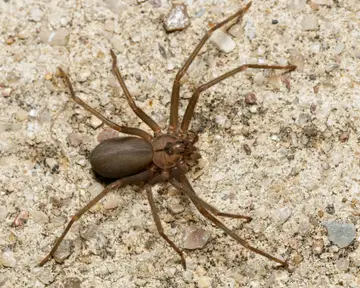
Venomous: “Brown recluses do have the ability to cause a necrotic skin wound with a venomous bite but are not aggressive and are reluctant to bite even where they are abundant.”
Primary vector of West Nile virus to humans in the western US (UW): “The Culex tarsalis mosquito is the primary vector of WNV to humans in the western US.”
Disease (tularemia, Rocky Mountain spotted fever, Colorado tick fever) per Wyoming Department of Health: “Diseases sometimes passed on by infected ticks in Wyoming include tularemia, Rocky Mountain spotted fever (RMSF) and Colorado tick fever (CTF).”
Stings: “People who are allergic to venom may experience anaphylaxis, a severe and potentially life-threatening allergic reaction that requires immediate emergency care.”
Attacks: “Because grizzly bears are inherently more aggressive than their black bear counterparts, the Wyoming Game and Fish continually works to reduce conflict potential between grizzly bears and humans …”
Darker cells are the months with more open-licence observation records of each group in Wyoming (GBIF). They show when people see and record these animals, not how many there are. The current month, this month, is highlighted.
Report: Report mountain lion sightings to Wyoming Game and Fish at 1-877-WGFD-TIP (or the non-emergency police line). Rare or interesting nongame birds, mammals, amphibians and reptiles can be reported to the WGFD Nongame Section through its "Report an Observation" form. Wyoming Game and Fish Department
Official safety advice
Medical emergency: call 911 or Poison Help at 1-800-222-1222 (Wyoming Poison Center line). Wyoming Department of Health
If you come across a rattlesnake, do not try to move or kill it; back off quietly and let it retreat. Wyoming Game and Fish Department
In rattlesnake country wear sturdy boots and long pants, stay on trails, step on logs and rocks rather than over them, keep pets leashed, and use a flashlight at night. Wyoming Game and Fish Department
Anyone with possible direct contact with a bat should contact a healthcare professional (rabies). Wyoming Game and Fish Department
Anyone who has direct contact with a bat or wakes up with a bat in the room should immediately contact a doctor or public health provider. Wyoming Department of Health
Questions people ask about Wyoming wildlife
Are there venomous snakes in Wyoming?
Yes. Two rattlesnakes are on the WGFD reptile list: the prairie rattlesnake (all counties east of the Continental Divide and Carbon County west of the Divide, per the WGFD SWAP account) and the midget faded rattlesnake (lower Green River Valley). Wyoming Game and Fish Department
How many venomous snakes are in Wyoming?
WGFD lists two rattlesnakes. Counted from the WGFD Reptiles list; WGFD does not state the number in a sentence. Wyoming Game and Fish Department
Are there rattlesnakes in Wyoming?
Yes. WGFD: rattlesnakes occur in many parts of Wyoming; they like rocky areas, prairie dog colonies, river corridors and debris that gives cover. Wyoming Game and Fish Department
How many kinds of snakes are in Wyoming?
Counted from the WGFD Reptiles species list (16 snake rows, some subspecies); WGFD states no total. Wyoming Game and Fish Department
Are there venomous snakes in yellowstone?
Yes. NPS: the prairie rattlesnake is the only dangerously venomous snake in Yellowstone; it lives in the lower Yellowstone River areas. National Park Service
Are there venomous snakes in grand teton national park?
No. NPS: Grand Teton has three snakes (wandering and valley garter snakes, rubber boa) and no venomous snakes. National Park Service
Are bullsnakes venomous?
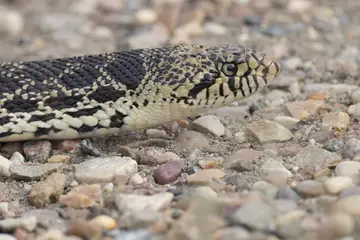
No. NPS Devils Tower: bullsnakes can mimic rattlesnakes but are not venomous. National Park Service
Are there black widows in Wyoming?
Yes. UW Extension: the western black widow can be very common outdoors in Wyoming but bites very few people. University of Wyoming Extension
Are there brown recluse spiders in Wyoming?
UW Extension: brown recluses are very rare in Wyoming; most spiders submitted as recluses are barn funnel weavers. University of Wyoming Extension
Are there scorpions in Wyoming?
Yes. University of Wyoming Extension: the northern scorpion (Paruroctonus boreus) is the only scorpion species known to inhabit Wyoming. University of Wyoming Extension
Are there grizzly bears in Wyoming?
Yes. WGFD: grizzly bears live throughout northwest Wyoming as part of the Yellowstone-area population; listed as threatened under the ESA. Wyoming Game and Fish Department
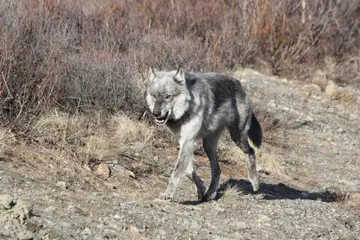
Yes. WGFD: gray wolves are concentrated in northwest Wyoming; no documented wolf attacks on humans in recent history in the northern Rocky Mountains. Wyoming Game and Fish Department
No. WDH: tick-borne diseases in Wyoming include tularemia, Rocky Mountain spotted fever and Colorado tick fever; Lyme is not known to be spread by Wyoming ticks. Wyoming Department of Health
“Their venom acts as a neurotoxin and doesn’t cause a large wound at the bite site.”
“Brown recluses do have the ability to cause a necrotic skin wound with a venomous bite but are not aggressive and are reluctant to bite even where they are abundant.”
“Black widows bite very few people despite being common in Wyoming.”
“Black widow and brown recluse spiders One very common, the other very rare in Wyoming”
“Diseases sometimes passed on by infected ticks in Wyoming include tularemia, Rocky Mountain spotted fever (RMSF) and Colorado tick fever (CTF).”
“Lyme and Powasssan diseases can be a concern during travel to other states, but are not known to be spread by Wyoming ticks.”
“Ticks can be active in Wyoming most of the year, but spring and summer are typically the peak seasons when we see related illnesses.”
Insects and Scorpions at Work. CDC / NIOSH. archived copy, captured October 4, 2026; checked November 3, 2026.Quoted passages (1)
“People who are allergic to venom may experience anaphylaxis, a severe and potentially life-threatening allergic reaction that requires immediate emergency care.”
Grizzly Bears in Wyoming. Wyoming Game and Fish Department. no page date shown; checked November 3, 2026.Quoted passages (2)
“Because grizzly bears are inherently more aggressive than their black bear counterparts, the Wyoming Game and Fish continually works to reduce conflict potential between grizzly bears and humans through education and outreach.”
“Grizzly bears can be found throughout northwest Wyoming and exist in high densities throughout suitable habitat for the species.”
“These behaviors and how you react to them are true for both black and grizzly bears.”
Mountain Lions in Wyoming. Wyoming Game and Fish Department. no page date shown; checked November 3, 2026.Quoted passages (3)
“If a mountain lion attacks you, fight back and defend yourself.”
“Please report sightings to Game and Fish at 1-877-WGFD-TIP or the non-emergency Police Department phone.”
“Mountain lions, the most elusive of the large carnivore species in Wyoming, are found statewide but rarely seen.”
Rabies. Wyoming Department of Health. archived copy, captured January 13, 2025; checked November 3, 2026.Quoted passages (2)
“In Wyoming, rabies is most commonly found in bats and skunks.”
“Because bat bites are not always visible, anyone who has direct contact with a bat or who wakes up with a bat in their room should immediately contact a doctor or public health provider for assessment.”
Hantavirus. Wyoming Department of Health. archived copy, captured July 12, 2026; checked November 3, 2026.Quoted passages (1)
“In the United States, the most common hantavirus is Sin Nombre virus which is spread by the deer mouse.”
AIS Threats. Wyoming Game and Fish Department. no page date shown; checked November 3, 2026.Quoted passages (5)
“They are present in Wyoming in Yellowstone National Park, Lake Cameahwait, Boysen Reservoir, Alsop Lake, Flaming Gorge Reservoir and in the Bighorn, Shoshone, North Platte, Salt and Snake rivers.”
“In Wyoming they are present in Glendo and Guernsey Reservoirs and the North Platte River downstream of Glendo Reservoir, the Fort Laramie irrigation canal, the Laramie River below Grayrocks Reservoir, Keyhole Reservoir and Horse Creek.”
“Distribution - Found in Laramie River below Wheatland Reservoir #2 to Tunnel Road, Bluegrass and Wagonhound Creeks in Wyoming.”
“Brook stickleback have been introduced to many Wyoming waters.”
“Wyoming does not currently have any known populations of zebra or quagga mussels.”
“There are no species of venomous snakes in the park.”
Wolves in Wyoming. Wyoming Game and Fish Department. no page date shown; checked November 3, 2026.Quoted passages (1)
“There have been no documented cases of wolves attacking humans in recent history in the northern Rocky Mountains, and attacks throughout the remainder of North America are extremely rare.”
Poisoning - Poison Help. Wyoming Department of Health. archived copy, captured June 11, 2026; checked November 3, 2026.Quoted passages (1)
“Call the Poison Help line to speak with medical professionals who can give you free advice anytime, 24 hours a day.”