Colorado Mammals: Species List With Pictures
Last checked November 3, 2026 against official sources.
On this page
This page lists 91 mammals: 70 from Colorado Parks and Wildlife's CPW Species Profile List, Type = Mammal, plus CPW 2025 SWAP SGCN list and 21 named in other official sources. 1 is nonnative.
Which mammals can hurt you
Official sources single out these mammals in Colorado, in their own words:
-
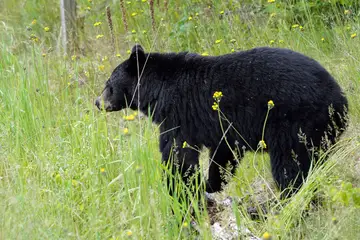
Photo: U.S. Fish and Wildlife Service - Midwest Region · Public domain · Wikimedia Commons Black bear
Can fight back if threatened (CPW). “Black bears seldom ‘attack’ or behave truly aggressively, but will fight back if they feel threatened.” Colorado Parks and Wildlife
-
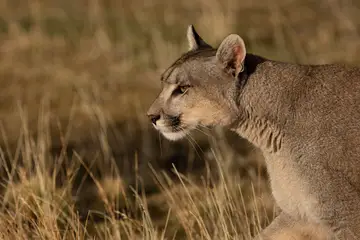
Photo: ArgentinaTurismo · CC BY 4.0 · Wikimedia Commons Mountain lion
Attacks rare but possible (CPW). “Lion attacks on people are rare, with fewer than a dozen deaths in North America in more than 100 years.” Colorado Parks and Wildlife
-
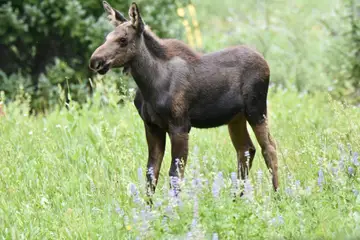
Photo: Parker James Lloyd · CC BY 4.0 · iNaturalist Moose
Aggressive if approached, especially cows with calves and bulls in rut (CPW). “Cows can be dangerous if approached or caught off guard, so keep dogs on leash and avoid forage areas like thick willows when recreating.” Colorado Parks and Wildlife
-
Bats and skunks
Disease. “Rabies is rare in all mammals in Colorado, but bats and skunks are the most commonly infected.” Colorado Parks and Wildlife
-
Prairie dogs
Disease. “Plague is a bacterial disease that most commonly affects prairie dogs.” Colorado Parks and Wildlife
-
Deer mice (white-footed mice)
Disease. “Deer mice have been implicated as a major carrier of Hantavirus, a serious, acute lung disease.” Colorado Parks and Wildlife
-
Rabbits, hares and rodents (particularly beavers)
Disease. “Tularemia is a fatal bacterial disease that infects rodents (particularly beavers), rabbits and hares; it can also infect humans and domestic animals.” Colorado Parks and Wildlife


All 91 mammals on the list
- Abert's Squirrel Sciurus aberti
- Allen's Big-eared Bat Idionycteris phyllotis
- American Pika Ochotona princeps
- Arizona Myotis Myotis occultus
- Badger Taxidea taxus
- Beaver Castor canadensis
- Big Brown Bat Eptesicus fuscus
- Big Free-Tailed Bat Nyctinomops macrotis
- Bison Bison bison
- Black Bear Ursus americanus
- Black-Footed Ferret Mustela nigripes
- Black-Tailed Jackrabbit Lepus californicus
- Black-tailed Prairie Dog Cynomys ludovicianus
- Bobcat Lynx rufus
- Botta's Pocket Gopher Subsp Thomomys bottae rubidus
- Brazilian Free-Tailed Bat Tadarida brasiliensis
- California Myotis Myotis californicus
- Canyon Bat Parastrellus hesperus
- Chipmunks Genus Tamias
- Common Hog-nosed Skunk Conepatus leuconotus
- Cottontail Rabbits Genus Sylvilagus
- Coyote Canis latrans
- Desert Woodrat Neotoma lepida
- Eastern Mole Scalopus aquaticus
- Elk Cervus canadensis nelsoni
- European Wild Hog/Feral Hog/European-Feral Crossbreed Family SuidaeInvasive
- Fringed Myotis Myotis thysanodes
- Gray Fox Urocyon cinereoargenteus
- Gray Wolf Canis lupus
- Great Basin Pocket Mouse Perognathus mollipilosus
- Grizzly Bear Ursus arctos
- Gunnison's Prairie Dog Cynomys gunnisoni
- Harvest Mice Genus Reithrodontomys
- Hispid Cotton Rat Sigmodon hispidus
- Hoary Bat Lasiurus cinereus
- Jumping Mice Family Zapodidae
- Kit Fox Vulpes macrotis
- Little Brown Myotis Myotis lucifugus
- Long-Eared Myotis Myotis evotis
- Long-Legged Myotis Myotis Volans
- Lynx Lynx canadensis
- Marten Martes caurina
- Mexican Long-Nosed Armadillo Dasypus mexicanus
- Mexican Vole Microtus mogollonensis
- Mink Mustela vison
- Moose Alces alces shirasi
- Mountain Goat Oreamnos americanus
- Mountain Lion Felis concolor
- Mule Deer Odocoileus hemionus
- Muskrat Ondatra zibethicus
- New Mexico Meadow Jumping Mouse Zapus hudsonius luteus
- Northern Grasshopper Mouse Onychomys leucogaster
- Northern Pocket Gopher Subsp Thomomys talpoides macrotis
- Olive-backed Pocket Mouse Perognathus fasciatus
- Ord's Kangaroo Rat Dipodomys ordii
- Pallid Bat Antrozous pallidus
- Plains Spotted Skunk Spilogale interrupta
- Pocket Gophers Family Geomyidae
- Pocket Mice Genus Perognathus
- Porcupine Erethizon dorsatum
- Prairie Dogs Genus Cynomys
- Preble’s Meadow Jumping Mouse Zapus hudsonius preblei
- Preble's Shrew Sorex preblei
- Pronghorn Antilocapra americana
- Pygmy Rabbit Sylvilagus idahoensis
- Raccoon Procyon lotor
- Red Bat Lasiurus borealis
- Red Fox Vulpes vulpes
- Ringtail Bassariscus astutus
- River Otter Lontra canadensis
- Rocky Mountain Bighorn Sheep Ovis canadensis
- Sagebrush Vole Lemmiscus curtatus
- Silver-haired Bat Lasionycteris noctivagans
- Snowshoe Hare Lepus americanus
- Spotted Bat Euderma maculatum
- Swift Fox Vulpes velox
- Townsend's Big-Eared Bat Corynorhinus townsendii pallescens
- Tree Squirrels Genus Sciurus
- Tri-Colored Bat Perimyotis subflavus
- Virginia Opossum Didelphis virginiana
- Western Pygmy Shrew Sorex eximius
- Western Small-Footed Myotis Myotis ciliolabrum
- Western Spotted Skunk Spilogale gracilis
- White-Footed Mice Genus Peromyscus
- White-Tailed Deer Odocoileus virginianus
- White-Tailed Jackrabbit Lepus townsendii
- White-tailed Prairie Dog Cynomys leucurus
- Wolverine Gulo gulo
- Woodrats Genus Neotoma
- Yellow-Bellied Marmot Marmota flaviventris
- Yuma Myotis Myotis yumanensis
Mammals people confuse
American Black Bear or Grizzly (Brown) Bear?
American Black Bear Not stated
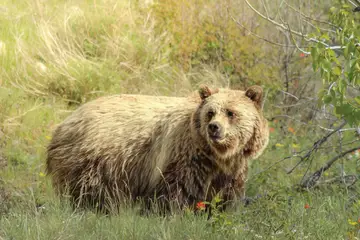
Grizzly (Brown) Bear Not stated
Grizzlies have longer front claws, humped shoulders and a more concave face. Color does not settle it: brown bears can be black to blonde.
Bobcat or Mountain lion (cougar)?
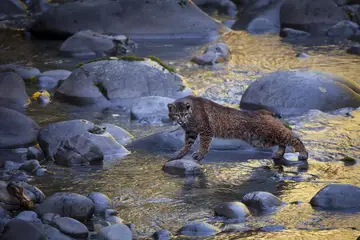

Bobcat Not stated
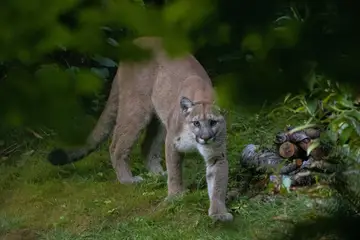
Mountain lion (cougar) Not stated
Cougars are one color (yellow-brown to light cinnamon) with a long tail. The bobcat's tail is short and its coat is spotted. TWRA says cougars are many times larger and longer, with a very long tail.
Bobcat or Canada lynx?
Bobcat Not stated
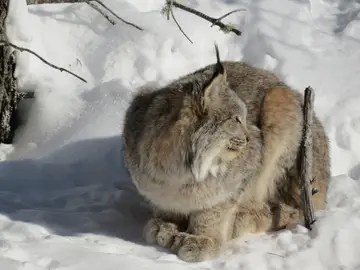
Canada lynx Not stated
A lynx has longer ear tufts and large, fur-covered feet (3.5 to 4.5 inches wide). A bobcat's feet are small and hairless (up to 2.5 inches). A lynx's tail has a black tip and no white underneath; a bobcat's tail is white underneath. Do not use the tail tip alone, because agencies describe the bobcat's tip differently (New Mexico white, Arizona black).
Coyote or Gray wolf?
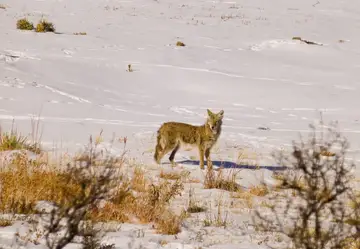

Coyote Not stated
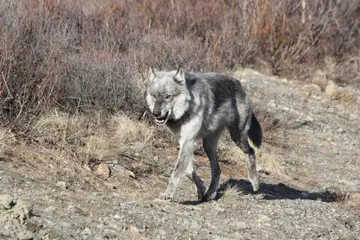
Gray wolf Not stated
NY DEC: gray wolves are much larger (females typically 50-100 lb, males 70-145 lb, 5-6 ft nose to tail, 27-33 in at the shoulder); eastern coyotes rarely exceed 50 lb and generally stand under 2 ft at the shoulder. Wolves have small rounded ears and a short blocky snout; coyotes have larger, more pointed ears (can look rounded in winter coat) and a long, narrow, pointed snout. Coyote tracks are typically 3 x 2 in, wolf tracks about 5 x 4 in. NY DEC says most wolf reports in New York were coyotes, dogs or wolf-dog hybrids.
Photos show typical adults; individuals vary. Never get close to compare.
When mammals are active in Colorado
Records of mammals in Colorado peak in May to August. They show when people record mammals, not how many there are (about month bars).
- Black bears: mothers and cubs den over the winter. Colorado Parks and Wildlife
If you are bitten or stung
Call 911 or Poison Help at 1-800-222-1222 right away. Poison Help connects you to your local poison center, any time of day.
Official advice from Colorado Parks and Wildlife:
- Black bear attack: do not play dead; fight back. Colorado Parks and Wildlife
- Do not handle sick, injured or dead wildlife; after a bite, scratch or other contact with a wild animal, contact your doctor (rabies, plague). Colorado Parks and Wildlife
- Do not feed wildlife; it is illegal to feed deer, elk, pronghorn, mountain goats, bighorn sheep, mountain lions and bears. Colorado Parks and Wildlife
How to report
Invasive species: file a report with CPW (online "Report a Sighting" form linked from cpw.state.co.us/invasive-wildlife). Injured/abandoned animals, feeding or illegal activity: CPW Denver Headquarters 303-297-1192 or any CPW office; anonymous: Operation Game Thief 877-265-6648. After-hours emergency: Colorado State Patrol 303-239-4500. Wildlife posing immediate danger: local CPW office or law enforcement. Colorado Parks and Wildlife
Common questions
What official sources say
Are there grizzly bears in Colorado?
No. CPW says grizzlies were extirpated in Colorado in the mid 1950s and no longer live in Colorado. Colorado Parks and Wildlife
“Grizzlies no longer live in Colorado.”
About this list
The species list comes from CPW Species Profile List (cpw.state.co.us/species-profiles), Type = Mammal, plus CPW 2025 SWAP SGCN list (mammals) (Colorado Parks and Wildlife, retrieved 2026-11-03). 21 more entries come from other official sources named on each card.
Venom labels come only from official sources and link to them; "Not stated" never means harmless. How labels work.
"Nonnative" and "Invasive" follow the wording of the source list. See invasive species in Colorado.
Sources
- Species Profile List. Colorado Parks and Wildlife. page states 2026-04-09T13:47:52-0600; checked November 3, 2026.
- Species Profile List, filtered to Type = Mammal. Colorado Parks and Wildlife. species-profiles page modified 2026-04-09; checked November 3, 2026.
- Species profile: American Pika. Colorado Parks and Wildlife. undated page; checked November 3, 2026.
- Species profile: Badger. Colorado Parks and Wildlife. undated page; checked November 3, 2026.
- Species profile: Beaver. Colorado Parks and Wildlife. undated page; checked November 3, 2026.
- Species profile: Big Brown Bat. Colorado Parks and Wildlife. undated page; checked November 3, 2026.
- Species profile: Big Free-Tailed Bat. Colorado Parks and Wildlife. undated page; checked November 3, 2026.
- Species profile: Bison. Colorado Parks and Wildlife. undated page; checked November 3, 2026.
- Living with Bears. Colorado Parks and Wildlife. page states 2026-10-06T10:46:47-0600; checked November 3, 2026.
Quoted passages (3)
“Black bears seldom ‘attack’ or behave truly aggressively, but will fight back if they feel threatened.”
“If you’re attacked, don’t play dead.”
“Cubs stay with the mother bear for their first year, denning with the mother and littermates over the winter.”
- Species profile: Black Bear. Colorado Parks and Wildlife. undated page; checked November 3, 2026.
- Species profile: Black-Footed Ferret. Colorado Parks and Wildlife. undated page; checked November 3, 2026.
- Species profile: Black-Tailed Jackrabbit. Colorado Parks and Wildlife. undated page; checked November 3, 2026.
- Species profile: Bobcat. Colorado Parks and Wildlife. undated page; checked November 3, 2026.
- Species profile: Brazilian Free-Tailed Bat. Colorado Parks and Wildlife. undated page; checked November 3, 2026.
- Species profile: California Myotis. Colorado Parks and Wildlife. undated page; checked November 3, 2026.
- Species profile: Canyon Bat. Colorado Parks and Wildlife. undated page; checked November 3, 2026.
- Species profile: Chipmunks. Colorado Parks and Wildlife. undated page; checked November 3, 2026.
- Species profile: Cottontail Rabbits. Colorado Parks and Wildlife. undated page; checked November 3, 2026.
- Species profile: Coyote. Colorado Parks and Wildlife. undated page; checked November 3, 2026.
- Species profile: Eastern Mole. Colorado Parks and Wildlife. undated page; checked November 3, 2026.
- Species profile: Elk. Colorado Parks and Wildlife. undated page; checked November 3, 2026.
- Species profile: European Wild Hog/Feral Hog/European-Feral Crossbreed. Colorado Parks and Wildlife. undated page; checked November 3, 2026.
- Species profile: Fringed Myotis. Colorado Parks and Wildlife. undated page; checked November 3, 2026.
- Species profile: Gray Fox. Colorado Parks and Wildlife. undated page; checked November 3, 2026.
- Species profile: Gray Wolf. Colorado Parks and Wildlife. undated page; checked November 3, 2026.
- Species profile: Harvest Mice. Colorado Parks and Wildlife. undated page; checked November 3, 2026.
- Species profile: Hispid Cotton Rat. Colorado Parks and Wildlife. undated page; checked November 3, 2026.
- Species profile: Hoary Bat. Colorado Parks and Wildlife. undated page; checked November 3, 2026.
- Species profile: Jumping Mice. Colorado Parks and Wildlife. undated page; checked November 3, 2026.
- Species profile: Kit Fox. Colorado Parks and Wildlife. undated page; checked November 3, 2026.
- Species profile: Little Brown Myotis. Colorado Parks and Wildlife. undated page; checked November 3, 2026.
- Species profile: Long-Eared Myotis. Colorado Parks and Wildlife. undated page; checked November 3, 2026.
- Species profile: Long-Legged Myotis. Colorado Parks and Wildlife. undated page; checked November 3, 2026.
- Species profile: Lynx. Colorado Parks and Wildlife. undated page; checked November 3, 2026.
- Species profile: Marten. Colorado Parks and Wildlife. undated page; checked November 3, 2026.
- Species profile: Mexican Long-Nosed Armadillo. Colorado Parks and Wildlife. undated page; checked November 3, 2026.
- Species profile: Mink. Colorado Parks and Wildlife. undated page; checked November 3, 2026.
- Moose. Colorado Parks and Wildlife. undated page; checked November 3, 2026.
Quoted passages (1)
“Cows can be dangerous if approached or caught off guard, so keep dogs on leash and avoid forage areas like thick willows when recreating.”
- Species profile: Moose. Colorado Parks and Wildlife. undated page; checked November 3, 2026.
- Species profile: Mountain Goat. Colorado Parks and Wildlife. undated page; checked November 3, 2026.
- Living with Mountain Lions. Colorado Parks and Wildlife. page states 2026-01-21T13:33:35-0700; checked November 3, 2026.
Quoted passages (1)
“Lion attacks on people are rare, with fewer than a dozen deaths in North America in more than 100 years.”
- Species profile: Mountain Lion. Colorado Parks and Wildlife. undated page; checked November 3, 2026.
- Species profile: Mule Deer. Colorado Parks and Wildlife. undated page; checked November 3, 2026.
- Species profile: Muskrat. Colorado Parks and Wildlife. undated page; checked November 3, 2026.
- Species profile: Northern Grasshopper Mouse. Colorado Parks and Wildlife. undated page; checked November 3, 2026.
- Species profile: Ord's Kangaroo Rat. Colorado Parks and Wildlife. undated page; checked November 3, 2026.
- Species profile: Pallid Bat. Colorado Parks and Wildlife. undated page; checked November 3, 2026.
- Species profile: Pocket Gophers. Colorado Parks and Wildlife. undated page; checked November 3, 2026.
- Species profile: Pocket Mice. Colorado Parks and Wildlife. undated page; checked November 3, 2026.
- Species profile: Porcupine. Colorado Parks and Wildlife. undated page; checked November 3, 2026.
- Disease Exposure. Colorado Parks and Wildlife. page states 2026-06-26T09:19:37-0600; checked November 3, 2026.
Quoted passages (4)
“Plague is a bacterial disease that most commonly affects prairie dogs.”
“Rabies is rare in all mammals in Colorado, but bats and skunks are the most commonly infected.”
“Tularemia is a fatal bacterial disease that infects rodents (particularly beavers), rabbits and hares; it can also infect humans and domestic animals.”
“Contact your doctor or veterinarian immediately if you or your pet suffers a bite, scratch or other contact from a wild animal, or if you or your pet become ill or develop skin lesions following contact with wild animals, ticks or biting insects such as fleas.”
- Species profile: Prairie Dogs. Colorado Parks and Wildlife. undated page; checked November 3, 2026.
- Species profile: Pronghorn. Colorado Parks and Wildlife. undated page; checked November 3, 2026.
- Species profile: Raccoon. Colorado Parks and Wildlife. undated page; checked November 3, 2026.
- Species profile: Red Bat. Colorado Parks and Wildlife. undated page; checked November 3, 2026.
- Species profile: Red Fox. Colorado Parks and Wildlife. undated page; checked November 3, 2026.
- Species profile: Ringtail. Colorado Parks and Wildlife. undated page; checked November 3, 2026.
- Species profile: River Otter. Colorado Parks and Wildlife. undated page; checked November 3, 2026.
- Species profile: Rocky Mountain Bighorn Sheep. Colorado Parks and Wildlife. undated page; checked November 3, 2026.
- Species profile: Silver-haired Bat. Colorado Parks and Wildlife. undated page; checked November 3, 2026.
- Species profile: Snowshoe Hare. Colorado Parks and Wildlife. undated page; checked November 3, 2026.
- Species profile: Spotted Bat. Colorado Parks and Wildlife. undated page; checked November 3, 2026.
- Species profile: Swift Fox. Colorado Parks and Wildlife. undated page; checked November 3, 2026.
- Species profile: Townsend's Big-Eared Bat. Colorado Parks and Wildlife. undated page; checked November 3, 2026.
- Species profile: Tree Squirrels. Colorado Parks and Wildlife. undated page; checked November 3, 2026.
- Species profile: Tri-Colored Bat. Colorado Parks and Wildlife. undated page; checked November 3, 2026.
- Species profile: Virginia Opossum. Colorado Parks and Wildlife. undated page; checked November 3, 2026.
- Species profile: Western Small-Footed Myotis. Colorado Parks and Wildlife. undated page; checked November 3, 2026.
- Species profile: White-Footed Mice. Colorado Parks and Wildlife. undated page; checked November 3, 2026.
Quoted passages (1)
“Deer mice have been implicated as a major carrier of Hantavirus, a serious, acute lung disease.”
- Species profile: White-Tailed Deer. Colorado Parks and Wildlife. undated page; checked November 3, 2026.
- Species profile: White-Tailed Jackrabbit. Colorado Parks and Wildlife. undated page; checked November 3, 2026.
- Species profile: Wolverine. Colorado Parks and Wildlife. undated page; checked November 3, 2026.
- Species profile: Woodrats. Colorado Parks and Wildlife. undated page; checked November 3, 2026.
- Species profile: Yellow-Bellied Marmot. Colorado Parks and Wildlife. undated page; checked November 3, 2026.
- Species profile: Yuma Myotis. Colorado Parks and Wildlife. undated page; checked November 3, 2026.
- Colorado 2025 State Wildlife Action Plan data hub download, sheet "SGCN List". Colorado Parks and Wildlife. 2025 State Wildlife Action Plan data hub download; checked November 3, 2026.
- Living with Wildlife in Colorado. Colorado Parks and Wildlife. page states 2026-05-01T10:57:56-0600; checked November 3, 2026.
Quoted passages (1)
“Under Colorado law, intentionally feeding deer, elk, pronghorn, mountain goats, bighorn sheep, mountain lions and bears is illegal.”
- Known Invasive Wildlife in Colorado. Colorado Parks and Wildlife. page states 2026-01-21T15:12:28-0700; checked November 3, 2026.
Quoted passages (1)
“If you spot any invasive species, file a report with CPW.”
- Species profile: Grizzly Bear. Colorado Parks and Wildlife. undated page; checked November 3, 2026.
Quoted passages (1)
“Grizzlies no longer live in Colorado.”
- GBIF.org occurrence records, human observations licensed CC0 1.0 or CC BY 4.0 only, accessed November 3, 2026. The datasets behind these counts are listed on our Sources page.