This page lists 7 turtles: 5 from Colorado Parks and Wildlife's CPW Species Profile List, Type = Reptile, plus CPW Quick Key, 2025 SWAP SGCN list and USGS NAS and 2 named in other official sources.
1 is nonnative.
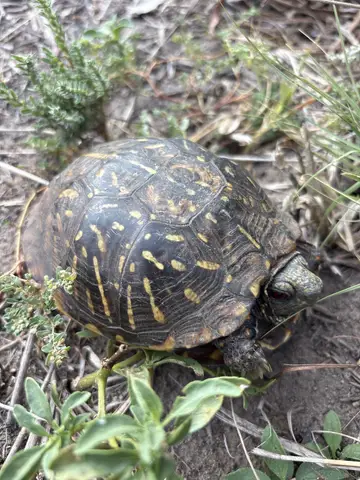
Eastern Colorado. Common in favorable habitat. Often picked up by people and released in areas outside the natural range, which usually results in the turtle’s death. Colorado Parks and Wildlife
Conservation
CPW: State Special Concern; 2025 SWAP: SGCN Tier 2
What the sources say
Habitat: Prairie grassland and sandhills. Land dwelling, but sometimes soaks in pools. (Colorado Parks and Wildlife)
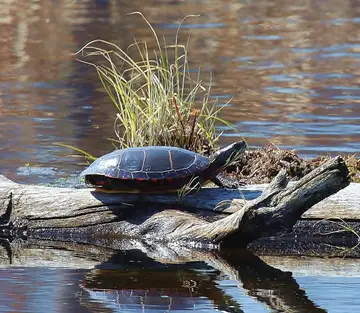
Photo: U. S. Fish and Wildlife Service - Northeast Region · Public domain · Wikimedia Commons
Small: adult shell usually 4 to 7 inches, up to about 10 inches; females are larger than males.
How to recognize it
Smooth, fairly flat shell with no keel and a smooth (not saw-toothed) rear edge
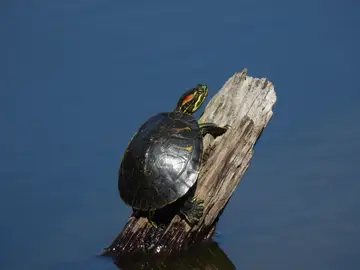
Red markings on the marginal shell plates
Yellow spot behind each eye and yellow stripes on the chin
Where in Colorado
Found throughout most of eastern Colorado, locally in La Plata and Archuleta counties in southwestern Colorado … Colorado Parks and Wildlife
JFMAMJJASOND
105 records by month.What the sources say
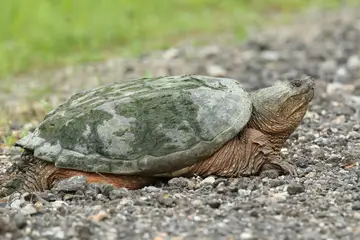
Range: Found throughout most of eastern Colorado, locally in La Plata and Archuleta counties in southwestern Colorado. Introduced and established in several areas in western Colorado. Common.
Habitat: Permanent ponds, reservoirs, marshes, river backwaters, slow-moving streams, and nearby temporary waters such as those that are seasonally flooded. Favors waters with a soft bottom, abundant aquatic vegetation, and partially submerged logs or other places for basking. Often many bask on a single log. (Colorado Parks and Wildlife)
Upper shell usually 8 to 14 inches, occasionally to nearly 20; usually 10 to 35 lb, occasionally to 75 lb in the wild.
How to recognize it
Large head, long tail
Saw-toothed scales on the long tail
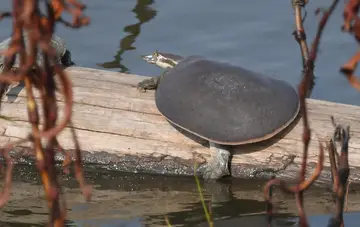
Small, cross-shaped lower shell
Where in Colorado
Fairly common in the lowlands of eastern Colorado and can be found in urban, suburban, and rural areas. Colorado Parks and Wildlife
JFMAMJJASOND
67 records by month.What the sources say
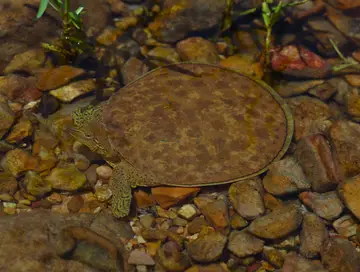
Habitat: Usually in permanent streams, rivers, ponds, lakes, and reservoirs; sometimes in temporary ponds and pools along intermittent streams. (Colorado Parks and Wildlife)
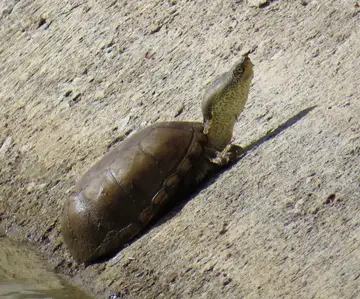
Habitat: Streams ranging from large rivers to intermittently flowing creeks with permanent pools; also stream impoundments and ponds adjacent to permanent streams. Often basks on logs or banks. (Colorado Parks and Wildlife)
Colorado Distribution: Localized areas along the eastern margin of Colorado. Fairly common in a few areas, generally scarce. Colorado Parks and Wildlife
Conservation
CPW: State Special Concern; 2025 SWAP: SGIN
What the sources say
Habitat: Yellow mud turtles require three basic habitats to complete their life cycle: (1) an upland hibernation site, (2) aquatic habitats, often wetlands and other bottomlands, and (3) a sandy site for aestivation (summer dormancy, similar to winter hibernation) and egg-laying. Additionally, they require suitable habitat to move among these sites. They will occupy almost any wetland type that has adjacent sandy areas, such as sand ridges and sandhills. (Colorado Parks and Wildlife)
When turtles are active in Colorado
Records of turtles in Colorado peak in April to June. They show when people record turtles, not how many there are (about month bars).
JanFebMarAprMayJunJulAugSepOctNovDec
411 records of turtles in Colorado by month (GBIF, CC0 and CC BY records).
How to report
Invasive species: file a report with CPW (online "Report a Sighting" form linked from cpw.state.co.us/invasive-wildlife). Injured/abandoned animals, feeding or illegal activity: CPW Denver Headquarters 303-297-1192 or any CPW office; anonymous: Operation Game Thief 877-265-6648. After-hours emergency: Colorado State Patrol 303-239-4500. Wildlife posing immediate danger: local CPW office or law enforcement. Colorado Parks and Wildlife