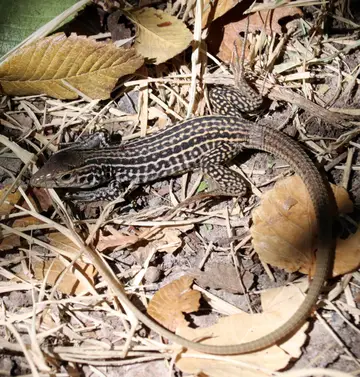
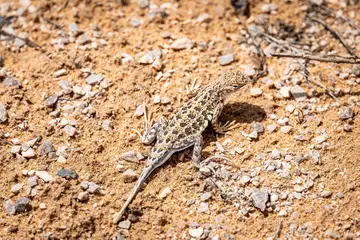
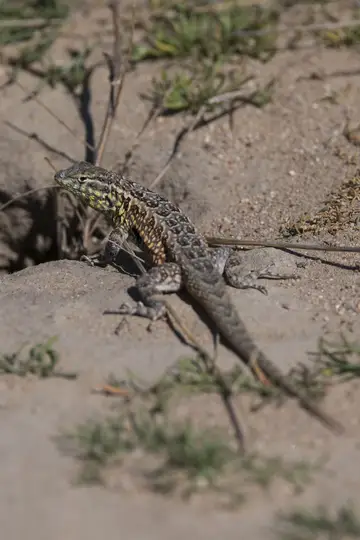
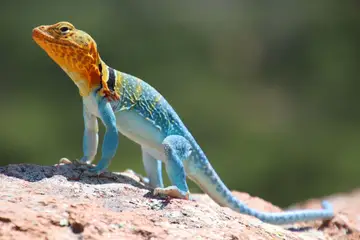
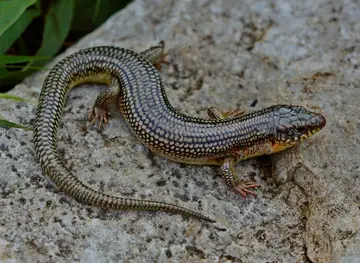
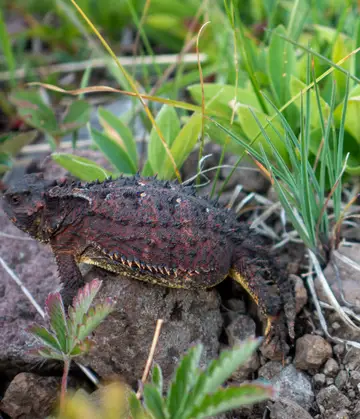
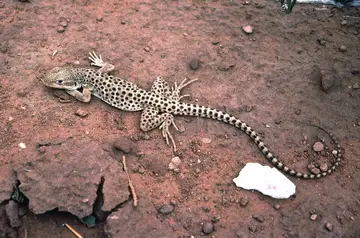
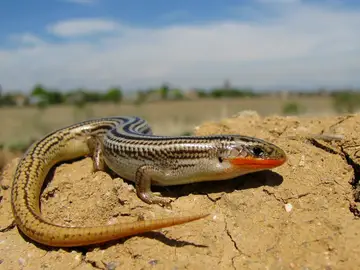
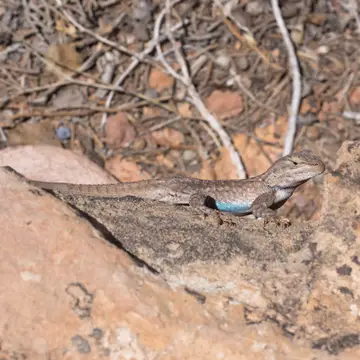
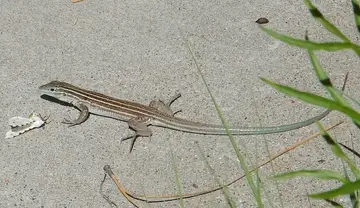
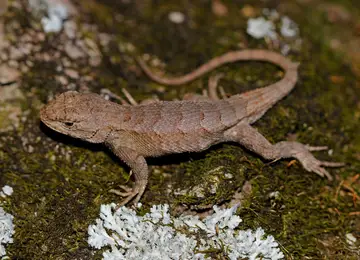
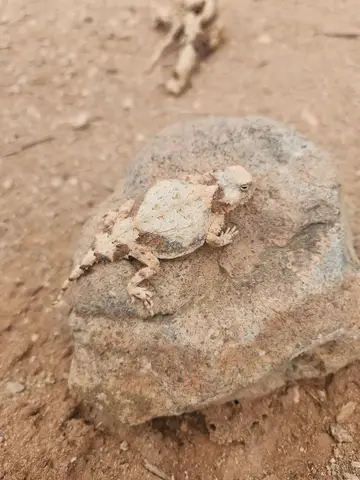
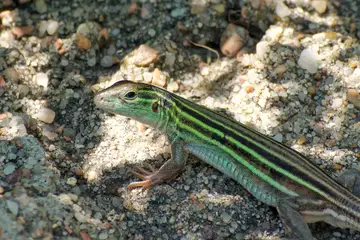
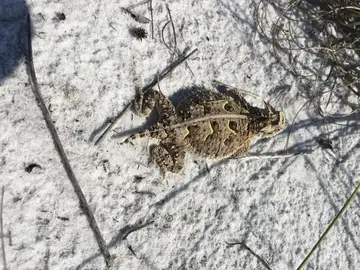
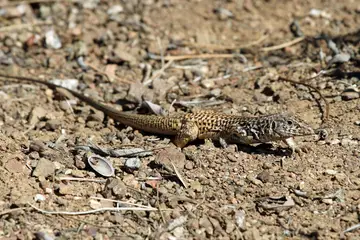
This page lists 20 lizards: 19 from Colorado Parks and Wildlife's CPW Species Profile List, Type = Reptile, plus CPW Quick Key and 2025 SWAP SGCN list and 1 named in other official sources.
All 20 lizards
From A to Z.
No confirmed photo of Colorado Checkered Whiptail
Colorado Checkered Whiptail
Aspidoscelis neotesselatus
Not stated
Venom
No official source we use states whether this animal is venomous. That does not mean it is harmless: do not handle it.
Where in Colorado
Endemic to southeastern Colorado below 7,000 feet. Spotty distribution; locally common, but has declined in some areas as a result of habitat destruction. Colorado Parks and Wildlife
What the sources say
Habitat: Hillsides, arroyos, and canyons associated with the Arkansas River valley; the canyon-grassland transition along the Huerfano River; grassland-surrounded rocky arroyo habitat along tributaries of the Apishapa River; and roadsides, shrubby areas, and juniper-grass associations in valleys, arroyos, and canyons associated with the Purgatoire River and some of its tributaries; a ground dweller, digs burrows used for shelter. (Colorado Parks and Wildlife)
Habitat: Bottoms, slopes, and escarpments of rocky canyons, often where grassland or grassy-weedy associations meet open juniper woodland. This ground-dwelling species hides in burrows or in spaces under rocks; it may dig its own burrows. (Colorado Parks and Wildlife)
Habitat: Sandhills, plains grassland with a sparse cover of grass and low shrubs, prairie-dog towns, sandy or gravelly areas along streams, and other relatively flat areas with expanses of open ground. Uses rodent burrows for cover, or burrows into sand. (Colorado Parks and Wildlife)
No confirmed photo of Common Sagebrush Lizard
Common Sagebrush Lizard
Sceloporous graciosus
Not stated
Venom
No official source we use states whether this animal is venomous. That does not mean it is harmless: do not handle it.
Where in Colorado
Colorado Distribution: Much of the western third of the state up to 7,000 feet elevation, though can get up to 8,500 feet in Montezuma County. Colorado Parks and Wildlife
What the sources say
Habitat: Often found on bare ground under shrub species, such as saltbush-sagebrush, mountain shrubland, and semidesert shrubland. Can also be found using pinon-juniper woodland, shale hills, and montane woodlands. (Colorado Parks and Wildlife)
No official source we use states whether this animal is venomous. That does not mean it is harmless: do not handle it.
Where in Colorado
Throughout much of lowland western Colorado. Common and most widespread in west-central Colorado, locally common elsewhere. Colorado Parks and Wildlife
JFMAMJJASOND
84 records by month.What the sources say
Habitat: Washes, arroyos, boulder-strewn ravines, rocky canyon slopes, bedrock exposures, rimrock outcroppings, rocky cliff bases, and flat, shrubby areas in canyon bottoms where soils are soft and deep; mainly in the bottoms or mouths of canyons in areas of open pinyon-juniper woodland, semidesert shrubland, or patchy streamside vegetation, usually where there is plenty of bare ground. When disturbed, often seeks cover in crevices or under plants or rocks. Wintering sites include burrows, deep crevices, or other underground cavities. (Colorado Parks and Wildlife)
No confirmed photo of Desert Spiny Lizard
Desert Spiny Lizard
Sceloporous magister
Not stated
Venom
No official source we use states whether this animal is venomous. That does not mean it is harmless: do not handle it.
No official source we use states whether this animal is venomous. That does not mean it is harmless: do not handle it.
Size
Adult total length 8 to 14 inches (Missouri); up to about 14 inches (Colorado). Snout to vent up to 4.65 inches (Arizona).
How to recognize it
Large head, long tail about twice the body length, distinct black collar
Round tail in cross-section, separating it from the Great Basin collared lizard; inside of mouth and throat often black
Runs on its hind legs at top speed
Where in Colorado
Southeastern Colorado, mainly south of the Arkansas River; southwestern and west-central Colorado, south of Rio Blanco County. Locally fairly common. Colorado Parks and Wildlife
JFMAMJJASOND
99 records by month.What the sources say
Habitat: Rocky canyons, slopes, and gullies; rocky ledges above cliffs; exposures of bedrock; and areas with scattered large rocks and sparse vegetation, and sometimes nearby in rockless gullies, flat canyon bottoms, and mesa tops where soils are firm. Often in areas with pinyon pine, juniper, sagebrush, rabbitbrush, greasewood, scrub oak, other shrubs, or sparse nonwoody plants. Often basks on boulders. (Colorado Parks and Wildlife)
No official source we use states whether this animal is venomous. That does not mean it is harmless: do not handle it.
Where in Colorado
Most common in the Arkansas River drainage in southeastern Colorado (to about 7,200 feet), also occurs northward into the Republican River drainage and the South Platte … Colorado Parks and Wildlife
What the sources say
Range: Most common in the Arkansas River drainage in southeastern Colorado (to about 7,200 feet), also occurs northward into the Republican River drainage and the South Platte River drainage in extreme northeastern Colorado. Secretive; locally fairly common.
Habitat: In southeastern Colorado, habitat includes rocky slopes and outcrops, canyon bottoms, floodplains of streams, and areas along irrigation ditches in prairie and semi-wooded regions, usually in sites near water. Found in sandhill habitats in northeastern Colorado. Secretive, readily burrows under objects; usually found beneath rocks, logs, wood, and other items on the ground; logs and rocks along streams or debris around old, abandoned ranch buildings provide favorable habitat. (Colorado Parks and Wildlife)
No official source we use states whether this animal is venomous. That does not mean it is harmless: do not handle it.
Where in Colorado
Throughout most of western, southern, and eastern Colorado, but absent from high mountains in the central part of the state and from all or most of extreme eastern … Colorado Parks and Wildlife
What the sources say
Range: Throughout most of western, southern, and eastern Colorado, but absent from high mountains in the central part of the state and from all or most of extreme eastern Colorado. Reaches 11,000 feet in southwestern Colorado. Generally scarce, fairly common in localized areas.
Habitat: Short-grass prairie, sagebrush, semidesert shrubland, shale barrens, piñon-juniper woodland, pine-oak woodland, oak-grass associations, and open conifer forests in the mountains. Sparse vegetation at ground level and easy access to sunlight are among the most important habitat features. Soil texture may vary from sandy to rocky, though rocky habitats generally have at least some patches of soft soil or underground access via rodent burrows. (Colorado Parks and Wildlife)
No official source we use states whether this animal is venomous. That does not mean it is harmless: do not handle it.
Where in Colorado
Colorado Distribution: Far western border, in Garfield, Mesa, and Montezuma counties. Colorado Parks and Wildlife
Conservation
CPW: State Special Concern; 2025 SWAP: SGCN Tier 2
What the sources say
Habitat: Leopard lizards prefer areas with bare ground or sparse vegetation, including greesewood, sagebrush, and rabbitbrush. The presence of numerous rodent burrows is also preferred as these lizards will take refuge in the burrows at night or during the winter. (Colorado Parks and Wildlife)
No official source we use states whether this animal is venomous. That does not mean it is harmless: do not handle it.
Where in Colorado
Colorado Distribution: Northeastern and east-central Colorado, at elevation principally below 5,500 feet … Colorado Parks and Wildlife
What the sources say
Range: Colorado Distribution: Northeastern and east-central Colorado, at elevation principally below 5,500 feet. Montane areas of southwestern and south-central Colorado, including the San Luis Valley, at elevations up to about 8,500 feet. Spotty distribution in much of the range; secretive and hard to find in most areas, but generally more abundant than it appears to be.
Habitat: Eastern Colorado (Colorado Parks and Wildlife)
No confirmed photo of Ornate Tree Lizard
Ornate Tree Lizard
Urosaurus ornata
Not stated
Venom
No official source we use states whether this animal is venomous. That does not mean it is harmless: do not handle it.
Habitat: Prefers rocky areas such as cliffs, canyon walls, and talus slopes. Vegetation often consists of pinyon pine, juniper, and shrubs. (Colorado Parks and Wildlife)
No official source we use states whether this animal is venomous. That does not mean it is harmless: do not handle it.
Where in Colorado
Throughout most of Colorado, except the high mountains in the central part of the state. Colorado Parks and Wildlife
What the sources say
Habitat: Throughout most of Colorado, this species inhabits sunny, rocky habitats including cliffs, talus, old lava flows and cones, canyons, hogbacks, and various outcroppings. Vegetation adjacent to and among the rocks is variable and may include coniferous montane forest (e.g., ponderosa pine, Douglas-fir), pinyon-juniper woodland, mountain shrubland, semidesert shrubland, or various grasses and forbs. Perch sites often are on rocks but also include trees, logs, piles of debris, buildings, and dirt banks, though the lizards also may spend a considerable amount of time on the ground. In southern Colorado, common habitat includes montane woodland with downed logs. In northeastern, east-central, and extreme southeastern Colorado, this lizard is a ground-dweller, occurring in areas with soft sandy soil and often associated with barren wind-eroded areas and patches of yucca. In some areas of eastern Colorado, the species is associated with rocky scarp woodlands and sandstone- or limestone-capped bluffs and buttes, and in prairie habitats, it commonly occurs in association with isolated rocks, debris, or other cover. Burrows, spaces under rocks, and various crevices are used as shelter during extended periods of inactivity or as refuges from danger. (Colorado Parks and Wildlife)
Habitat: Plains grassland (including rocky out-croppings and roadsides), sandhills, sandy or gravelly banks and floodplains of streams, grassy openings among ponderosa pines in the foothills, and open areas among rocks at the base of the mountains. Unvegetated or sparsely vegetated openings are required; the lizards spend nearly all of their active time moving about on the ground. During periods of inactivity, racerunners hide beneath rocks, logs, and various debris, or underground; commonly digs own burrow under object or in sandy soil. (Colorado Parks and Wildlife)
No official source we use states whether this animal is venomous. That does not mean it is harmless: do not handle it.
Where in Colorado
Southeastern Colorado, almost entirely south of the Arkansas River. Fairly common. Colorado Parks and Wildlife
Conservation
CPW: State Special Concern; 2025 SWAP: SGIN
What the sources say
Habitat: Plains grassland, particularly where there are large patches of bare ground (but generally absent from areas that are barren due to extensive plowing). Buries itself in the soil or seeks cover in rodent burrows. (Colorado Parks and Wildlife)
Habitat: Lowland habitats of western river valleys with shrubs, pinon pine, or juniper present. Use underground burrows during inactive periods. (Colorado Parks and Wildlife)
No confirmed photo of Variable Skink
Variable Skink
Not stated
Venom
No official source we use states whether this animal is venomous. That does not mean it is harmless: do not handle it.
When lizards are active in Colorado
Records of lizards in Colorado peak in May to June and August. They show when people record lizards, not how many there are (about month bars).
JanFebMarAprMayJunJulAugSepOctNovDec
1,274 records of lizards in Colorado by month (GBIF, CC0 and CC BY records).
How to report
Invasive species: file a report with CPW (online "Report a Sighting" form linked from cpw.state.co.us/invasive-wildlife). Injured/abandoned animals, feeding or illegal activity: CPW Denver Headquarters 303-297-1192 or any CPW office; anonymous: Operation Game Thief 877-265-6648. After-hours emergency: Colorado State Patrol 303-239-4500. Wildlife posing immediate danger: local CPW office or law enforcement. Colorado Parks and Wildlife