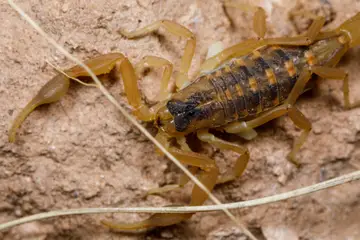
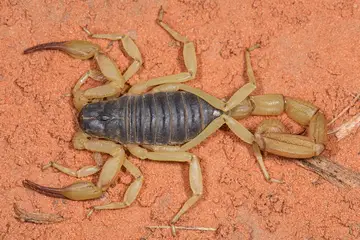
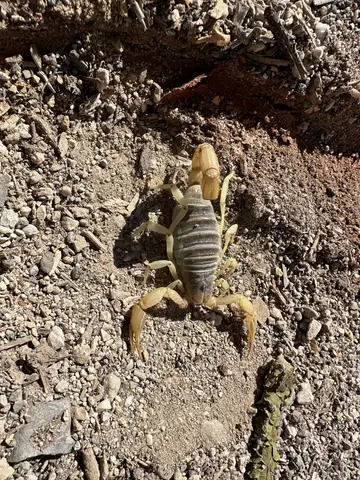
Colorado State University, Department of Agricultural Biology: Three species of scorpions are confirmed to occur in Colorado.
This page lists 5 scorpions: all from Colorado State University, Department of Agricultural Biology's Scorpions of Colorado, Colorado State University.
Colorado State University, Department of Agricultural Biology gives a total of 3; the 5 here are the scorpions official sources name one by one.
Colorado State University Extension says: “Only when necessary do they bend the stinger over their body and inject poison into the prey. Species found in Colorado are not dangerous to humans although the sting can be painful.” No official source we use names any of them as dangerous to people. The other 5 scorpions are marked “Not named as dangerous”. That does not make them harmless: do not handle scorpions.
Not every species: no complete official list of Colorado scorpions exists, so this page covers the ones state and Extension sources name. How lists are built.
“Only when necessary do they bend the stinger over their body and inject poison into the prey. Species found in Colorado are not dangerous to humans although the sting can be painful.” Colorado State University Extension. Colorado State University Extension says this of the whole group; it does not name this species as dangerous to people. Do not handle it.
Size
Usually about 2.5 inches. Sources range from 1 to 1.5 inches on average (Missouri Department of Conservation) to up to 3.5 inches (Oklahoma State).
How to recognize it
Slender pincers and a long, slender tail. The tail is longer on males than females.
Tail ends in a stinger, usually carried up and over the body.
“Only when necessary do they bend the stinger over their body and inject poison into the prey. Species found in Colorado are not dangerous to humans although the sting can be painful.” Colorado State University Extension. Colorado State University Extension says this of the whole group; it does not name this species as dangerous to people. Do not handle it.
“Only when necessary do they bend the stinger over their body and inject poison into the prey. Species found in Colorado are not dangerous to humans although the sting can be painful.” Colorado State University Extension. Colorado State University Extension says this of the whole group; it does not name this species as dangerous to people. Do not handle it.
No confirmed photo of Serradigitus wupatkiensis (no common name)
Serradigitus wupatkiensis (no common name)
Serradigitus wupatkiensis
Not named as dangerous
Venom
“Only when necessary do they bend the stinger over their body and inject poison into the prey. Species found in Colorado are not dangerous to humans although the sting can be painful.” Colorado State University Extension. Colorado State University Extension says this of the whole group; it does not name this species as dangerous to people. Do not handle it.
No confirmed photo of Vaejovis russelli (no common name)
Vaejovis russelli (no common name)
Vaejovis russelli
Not named as dangerous
Venom
“Only when necessary do they bend the stinger over their body and inject poison into the prey. Species found in Colorado are not dangerous to humans although the sting can be painful.” Colorado State University Extension. Colorado State University Extension says this of the whole group; it does not name this species as dangerous to people. Do not handle it.
Invasive species: file a report with CPW (online "Report a Sighting" form linked from cpw.state.co.us/invasive-wildlife). Injured/abandoned animals, feeding or illegal activity: CPW Denver Headquarters 303-297-1192 or any CPW office; anonymous: Operation Game Thief 877-265-6648. After-hours emergency: Colorado State Patrol 303-239-4500. Wildlife posing immediate danger: local CPW office or law enforcement. Colorado Parks and Wildlife
Venom labels come only from official sources and link to them; "Not stated" never means harmless. How labels work.
Sources
Species Profile List. Colorado Parks and Wildlife. page states 2026-04-09T13:47:52-0600; checked November 3, 2026.
Scorpions of Colorado. Colorado State University, Department of Agricultural Biology (Extension entomology). undated page; checked November 3, 2026.Quoted passages (2)
“Three species of scorpions are confirmed to occur in Colorado.”
“Birth of the northern scorpion usually occurs around August.”
“Only when necessary do they bend the stinger over their body and inject poison into the prey. Species found in Colorado are not dangerous to humans although the sting can be painful.”
Known Invasive Wildlife in Colorado. Colorado Parks and Wildlife. page states 2026-01-21T15:12:28-0700; checked November 3, 2026.Quoted passages (1)
“If you spot any invasive species, file a report with CPW.”