“Only when necessary do they bend the stinger over their body and inject poison into the prey. Species found in Colorado are not dangerous to humans although the sting can be painful.” Colorado State University Extension. Colorado State University Extension says this of the whole group; it does not name this species as dangerous to people. Do not handle it.
Size
Usually about 2.5 inches. Sources range from 1 to 1.5 inches on average (Missouri Department of Conservation) to up to 3.5 inches (Oklahoma State).
How to recognize it
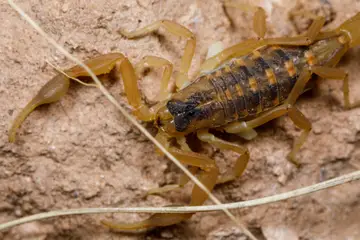
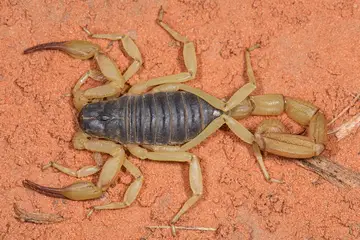
Slender pincers and a long, slender tail. The tail is longer on males than females.
Tail ends in a stinger, usually carried up and over the body.
“Only when necessary do they bend the stinger over their body and inject poison into the prey. Species found in Colorado are not dangerous to humans although the sting can be painful.” Colorado State University Extension. Colorado State University Extension says this of the whole group; it does not name this species as dangerous to people. Do not handle it.
“Only when necessary do they bend the stinger over their body and inject poison into the prey. Species found in Colorado are not dangerous to humans although the sting can be painful.” Colorado State University Extension. Colorado State University Extension says this of the whole group; it does not name this species as dangerous to people. Do not handle it.
No confirmed photo of Vaejovis russelli (no common name)
Vaejovis russelli (no common name)
Vaejovis russelli
Not named as dangerous
Venom
“Only when necessary do they bend the stinger over their body and inject poison into the prey. Species found in Colorado are not dangerous to humans although the sting can be painful.” Colorado State University Extension. Colorado State University Extension says this of the whole group; it does not name this species as dangerous to people. Do not handle it.
No confirmed photo of Serradigitus wupatkiensis (no common name)
Serradigitus wupatkiensis (no common name)
Serradigitus wupatkiensis
Not named as dangerous
Venom
“Only when necessary do they bend the stinger over their body and inject poison into the prey. Species found in Colorado are not dangerous to humans although the sting can be painful.” Colorado State University Extension. Colorado State University Extension says this of the whole group; it does not name this species as dangerous to people. Do not handle it.
Scorpions of Colorado. Colorado State University, Department of Agricultural Biology (Extension entomology). undated page; checked November 3, 2026.Quoted passages (2)
“Three species of scorpions are confirmed to occur in Colorado.”
“Birth of the northern scorpion usually occurs around August.”
“Only when necessary do they bend the stinger over their body and inject poison into the prey. Species found in Colorado are not dangerous to humans although the sting can be painful.”