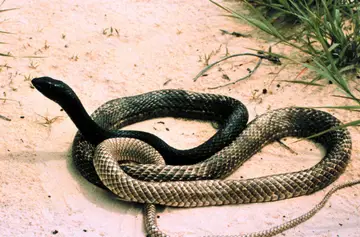
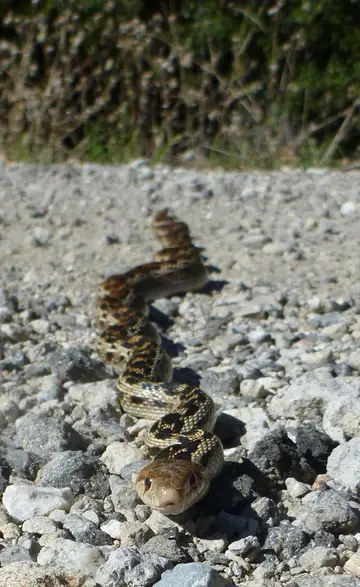
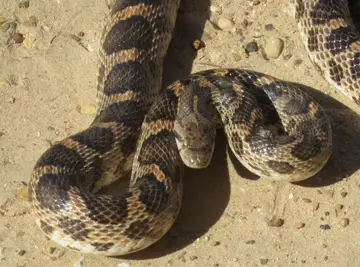
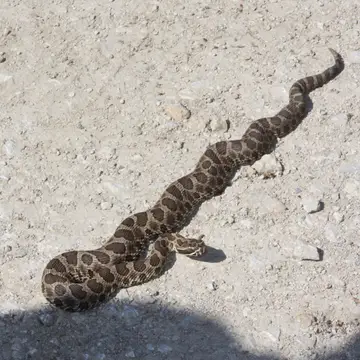
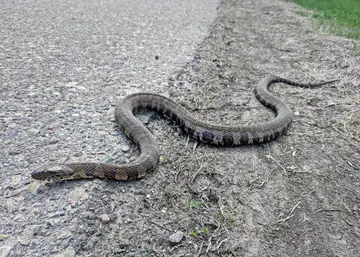
Colorado has 3 venomous snakes named by official sources: Massasauga Rattlesnake, Midget Faded Rattlesnake and Prairie Rattlesnake. Each one is labelled venomous by Colorado Parks and Wildlife. It also lists 11 snakes as mildly venomous or not dangerous to people; they are shown separately below.
The 3 venomous snakes of Colorado
Recognize them from a distance; a photo cannot confirm that a snake is safe. Identifying animals safely.
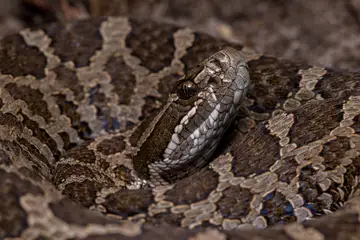
“Like all rattlesnakes, the Massasauga rattlesnake has a rattle on its tail that warns predators of its presence and has a venomous bite that is dangerous to humans.” Colorado Parks and Wildlife
Size
Usually 18 to 30 inches long (New York DEC: 18 to 40 inches, average 27.5). The western massasauga in Arizona reaches only about 22 inches.
How to recognize it
A segmented rattle (a single button in newborns) and vertical, catlike pupils. In Michigan it is the only snake with both.
Nine large plates on top of the head (the timber rattlesnake has many small scales there)
A heat-sensing pit on each side of the head between the eye and nostril; the head is flat and much wider than the neck
CPW: State Special Concern; 2025 SWAP: SGCN Tier 2
What the sources say
Habitat: Dry plains grassland and sandhill areas; attracted to sandy soils supporting abundant rodent and lizard populations; hibernates singly in rodent burrows, often in firm, loamy soils adjacent to sandy areas used for feeding. (Colorado Parks and Wildlife)
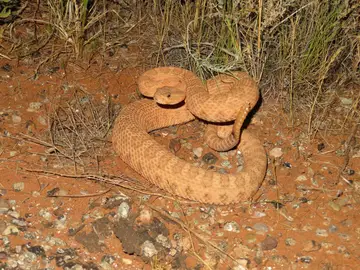
“Like all rattlesnakes, the faded midget rattlesnake has a rattle on its tail that warns predators of its presence and has a venomous bite that is dangerous to humans.” Colorado Parks and Wildlife
Venom: “Western Rattlesnake (Midget Faded Rattlesnake)*” (Colorado Parks and Wildlife)
Habitat: Virtually every terrestrial habitat within the geographic and elevational range; sandhills, semidesert shrubland, mountain shrubland, riparian zones, pinyon-juniper woodland, and montane woodland; soils may be sandy to rocky; absent from perennially wet areas and high mountains; basically terrestrial, but sometimes climbs into vegetation or onto rocks or logs. Takes shelter in crevices, woodpiles, brushy vegetation, or mammal burrows. Hibernates in rodent burrows or in crevices in rock outcrops. (Colorado Parks and Wildlife)
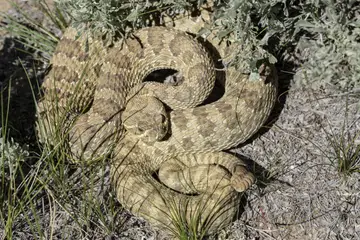
Usually about 3 to 4 feet; Montana gives 15 to 60 inches and NPS says up to 5 feet. Arizona gives a maximum of 28 to 64 inches (excluding rattle) depending on subspecies; in Colorado it is rarely over 39 inches.
How to recognize it
Rattle (or a button in newborns) at the tail tip
Head much broader than the neck, many small scales on top of the head, heat-sensing pit between eye and nostril
Vertical (cat-like) pupils
Where in Colorado
Found throughout most of Colorado, except the high mountains, reaching an upper elevational limit of 7,500–9,500 feet in different areas of the state … Colorado Parks and Wildlife
JFMAMJJASOND
195 records by month.What the sources say
Range: Found throughout most of Colorado, except the high mountains, reaching an upper elevational limit of 7,500–9,500 feet in different areas of the state. Fairly common in many areas.
Habitat: Virtually every terrestrial habitat within the broad geographic and elevational range; plains grassland, sandhills, semidesert shrubland, mountain shrubland, riparian zones, pinyon-juniper woodland, and montane woodland; soils may be sandy to rocky; absent from perennially wet areas and high mountains; basically terrestrial, but sometimes climbs into vegetation or onto rocks or logs. Takes shelter in crevices, woodpiles, brushy vegetation, or mammal burrows. Hibernates in rodent burrows or in crevice s in rock outcrops. (Colorado Parks and Wildlife)
For 1 other snake on Colorado's list, no official source we use states whether it is venomous: Rubber Boa. That does not make them harmless. Leave every snake alone.
Mildly venomous snakes
Colorado Parks and Wildlife lists these 11 snakes as mildly venomous or not dangerous to people. Each card quotes what the source says about its venom. Like any snake, leave them alone.
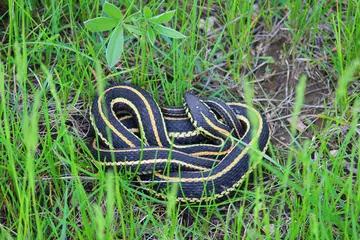
“Like all garter snakes, they are mildly venomous”
Where in Colorado
Known to occur as far north as the Arkansas River valley in southeastern Colorado, in John Brown Canyon in Mesa County in west-central Colorado, and in southern La Plata … Colorado Parks and Wildlife
What the sources say
Venom: “Like all garter snakes, they are mildly venomous, but are not considered dangerous to humans.” (Colorado Parks and Wildlife)
Range: Known to occur as far north as the Arkansas River valley in southeastern Colorado, in John Brown Canyon in Mesa County in west-central Colorado, and in southern La Plata and Archuleta counties in southwestern Colorado, at elevations below 6,500 feet. Spotty distribution, uncommon.
Habitat: Vicinity o f permanent and intermittent streams, often in canyon bottoms with rocky slopes covered in oak and/or juniper; frequently wanders away from streams, sometimes observed in open grassland, especially near dry washes or at temporary pools used by breeding toads. Takes shelters under rocks or wood, in crevices or burrows, or among exposed streamside tree roots. (Colorado Parks and Wildlife)
Colorado Distribution: Southeastern Colorado, mostly south of the Arkansas River, and west-central Colorado and southwestern Colorado; occurs at elevations below 6,000 … Colorado Parks and Wildlife
What the sources say
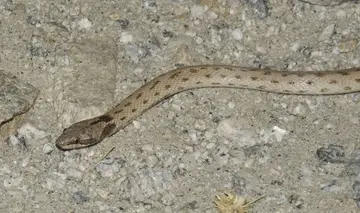
Venom: “Otherwise, both snakes are mildly venomous, exclusively nocturnal, and rarely seen.” (Colorado Parks and Wildlife)
Range: Colorado Distribution: Southeastern Colorado, mostly south of the Arkansas River, and west-central Colorado and southwestern Colorado; occurs at elevations below 6,000 feet in the southeast, below 6,600 feet in west-central Colorado, and up to 7,900 feet at Mesa Verde in southwestern Colorado. Secretive, difficult to find, but not necessarily rare.
Habitat: Rocky slopes and canyons sparsely vegetated with piñon-juniper woodland and/or various shrubs and grasses; occasionally found in flat plains grassland far from rocky slopes; a ground-dwelling species that seems to spend most of the time under rocks, in crevices or in rodent burrows; found beneath rocks mainly during the mild weather of spring, late summer, and fall. (Colorado Parks and Wildlife)
Northeastern Colorado along the South Platte River and its tributaries at elevations below 6,000 feet and North Fork Republican River drainage in Yuma County at about … Colorado Parks and Wildlife
Conservation
CPW: State Special Concern; 2025 SWAP: SGIN
What the sources say
Venom: “The common garter snake is mildly venomous, but its venom is considered non-dangerous to humans.” (Colorado Parks and Wildlife)
Range: Northeastern Colorado along the South Platte River and its tributaries at elevations below 6,000 feet and North Fork Republican River drainage in Yuma County at about 3,500–3,600 feet; widely distributed along the eastern base of the Front Range.
Habitat: Marshes, ponds, and the edges of streams; basically restricted to aquatic, wetland, and riparian habitats along the floodplains of streams; seldom found away from water or at isolated ponds. Active in shallow water and on land adjacent to water. (Colorado Parks and Wildlife)
Colorado Distribution: Southeastern Colorado, mostly south of the Arkansas River, and west-central Colorado and southwestern Colorado; occurs at elevations below 6,000 … Colorado Parks and Wildlife
Venom: “Otherwise, both snakes are mildly venomous, exclusively nocturnal, and rarely seen.” (Colorado Parks and Wildlife)
Range: Colorado Distribution: Southeastern Colorado, mostly south of the Arkansas River, and west-central Colorado and southwestern Colorado; occurs at elevations below 6,000 feet in the southeast, below 6,600 feet in west-central Colorado, and up to 7,900 feet at Mesa Verde in southwestern Colorado. Secretive, difficult to find, but not necessarily rare.
Habitat: Rocky slopes and canyons sparsely vegetated with piñon-juniper woodland and/or various shrubs and grasses; occasionally found in flat plains grassland far from rocky slopes; a ground-dwelling species that seems to spend most of the time under rocks, in crevices or in rodent burrows; found beneath rocks mainly during the mild weather of spring, late summer, and fall. (Colorado Parks and Wildlife)
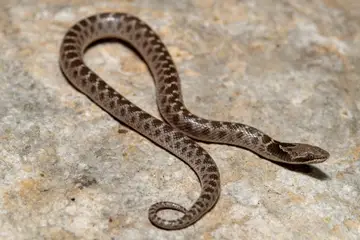
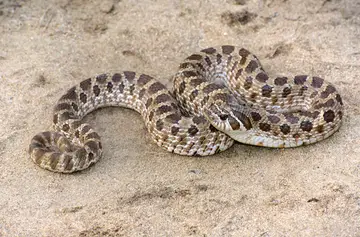
Venom: “Only known to exist in one area of Colorado, the eastern hognose is a mildly-venomous snake that specializes in eating toads.” (Colorado Parks and Wildlife)
Habitat: Typically found in sandy habitats. (Colorado Parks and Wildlife)
Known from southeastern Colorado, the Republican River drainage in northeastern Colorado, and the eastern margin of the Front Range … Colorado Parks and Wildlife
What the sources say
Venom: “While they are venomous, they are considered harmless to humans.” (Colorado Parks and Wildlife)
Range: Known from southeastern Colorado, the Republican River drainage in northeastern Colorado, and the eastern margin of the Front Range. Secretive, usually difficult to find, but locally common.
Habitat: Flat plains grassland, sandhills, mountain foothills, and rocky canyons; sometimes can be found in old rubbish dumps. A terrestrial and fossorial species that during daylight hours can be found beneath rocks, wood, dried cow dung, or other debris; in yucca plants; and in rotting logs near streams. (Colorado Parks and Wildlife)
Photo: Photo Credit: Krista Lundgren/USFWS USFWS Mountain-Prairie · Public domain · Wikimedia Commons
Throughout the Great Plains region of Colorado, primarily at elevations below 6,000 feet, but individuals sometimes range to 7,000–7,500 feet in foothill canyons. Colorado Parks and Wildlife
What the sources say
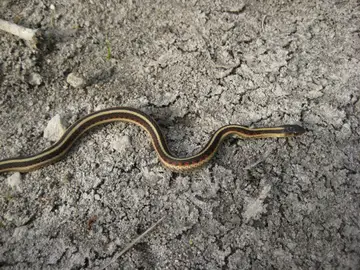
Venom: “While plains garter snakes are venomous, their venom is non-toxic to humans.” (Colorado Parks and Wildlife)
Habitat: Vicinity of virtually any permanent or semipermanent flowing or nonflowing body of water; typically along shores and shallows of marshy areas but often strays far from water, showing up in residential areas, dry grasslands, and sandhills. Seeks shelter underground or beneath rocks, logs, or similar cover. (Colorado Parks and Wildlife)
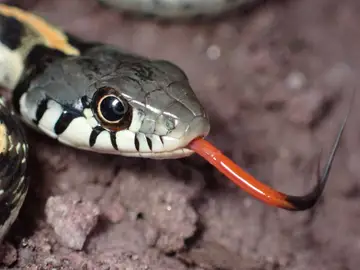
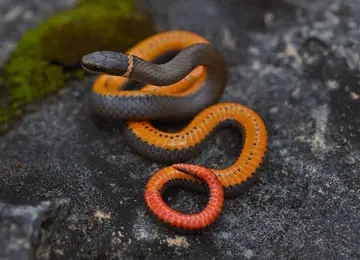
Usually 8 to 15 inches long; Alabama reports up to about 18 inches, rarely 24. AZGFD gives a maximum of 34 inches for Arizona animals.
How to recognize it
A yellow, cream or orange ring around the neck; it may be incomplete, and some Lower Florida Keys and western Arizona snakes lack it.
Bright yellow to orange or red belly, often with a row of black half-moon spots; the underside of the tail is often red.
Smooth, shiny scales and a small head only slightly wider than the neck.
Where in Colorado
Southeastern Colorado south of the Arkansas River, at elevations below 6,000 feet. Generally scarce; common in highly localized areas. Colorado Parks and Wildlife
What the sources say
Venom: “This snake uses its venom to subdue prey, but it is harmless to humans and mammals.” (Colorado Parks and Wildlife)
Habitat: Plains grassland, especially where abundant surface cover is present, and, more often, canyon bottoms or riparian areas; infrequently seen in the open; usually under flat rocks or wood in canyon bottoms. Sometimes several individuals of various ages and either sex aggregate under a single rock or log, especially in spring. (Colorado Parks and Wildlife)
West-central Colorado at elevations of about 4,500-6,500 feet. Secretive, usually difficult to find, but locally common. Colorado Parks and Wildlife
What the sources say
Venom: “It is a rear-fanged, venomous snake, but is considered harmless to humans due to its small size and venom being specialized to arthropods.” (Colorado Parks and Wildlife)
Habitat: Mouths of large canyons in areas dominated by sandy, rock-laden soils and xerophytic shrubs (greasewood, sagebrush, saltbush); narrow bottoms of deep, rocky canyons near streamside cottonwood trees; rocky, shrubby slopes above creeks; under rocks in piñon-juniper woodland; under trash in dumps. (Colorado Parks and Wildlife)
Photo: Yellowstone National Park · Public domain · Wikimedia Commons
Throughout most of Colorado, excluding most of the plains region in the northeastern quarter of the state, usually at elevations below 11,000 feet but has been found … Colorado Parks and Wildlife
What the sources say
Venom: “Like all garter snakes, they are mildly venomous, but are not considered dangerous to humans.” (Colorado Parks and Wildlife)
Range: Throughout most of Colorado, excluding most of the plains region in the northeastern quarter of the state, usually at elevations below 11,000 feet but has been found higher. Common.
Habitat: Almost any terrestrial or wetland habitat in the vicinity of virtually any flowing or non-flowing body of water; not restricted to riparian-aquatic environments, frequently occupies terrestrial habitats far from water. Activity takes place on the ground, in water, or in low vegetation. (Colorado Parks and Wildlife)
Throughout most of eastern Colorado at elevations below 6,000 feet. Fairly common. Records of this species in Moffat County in northwestern Colorado need to be confirmed. Colorado Parks and Wildlife
What the sources say
Venom: “This is a rear-fanged snake that is venomous, but it is considered non-dangerous to humans.” (Colorado Parks and Wildlife)
Habitat: Sandhills, plains grassland, and sandy floodplains, often in the vicinity of, or along the margins of, streams, irrigation ditches, and ponds. Active on the ground surface or underground. Periods of inactivity are spent burrowed in the soil, in mammal burrows, or, less commonly, under rocks or debris. (Colorado Parks and Wildlife)
TWRA: the racer lacks the coachwhip's reddish tint along the sides of the tail; an all-black coachwhip is distinctly lighter or reddish toward the rear. Oklahoma: the coachwhip is much larger.
Gopher snake (gophersnake) or Glossy snake?
Photo: National Park Service from USA · Public domain · Wikimedia Commons
If you hear a rattlesnake, freeze until you locate it, then get at least five feet away; never try to catch, kill, provoke or move it. Colorado Parks and Wildlife
Rattlesnake country: wear sturdy footwear and long pants; watch where you put hands and feet. Colorado Parks and Wildlife
How to report
Invasive species: file a report with CPW (online "Report a Sighting" form linked from cpw.state.co.us/invasive-wildlife). Injured/abandoned animals, feeding or illegal activity: CPW Denver Headquarters 303-297-1192 or any CPW office; anonymous: Operation Game Thief 877-265-6648. After-hours emergency: Colorado State Patrol 303-239-4500. Wildlife posing immediate danger: local CPW office or law enforcement. Colorado Parks and Wildlife
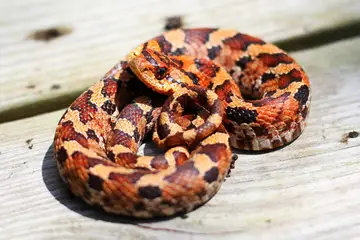
“Gophersnakes and bullsnakes are non-venomous and harmless to humans, but they do deter predators by mimicking rattlesnakes' coiling behavior, which can cause them to erroneously be killed by humans thinking they are threats.”
“Like all rattlesnakes, the Massasauga rattlesnake has a rattle on its tail that warns predators of its presence and has a venomous bite that is dangerous to humans.”
“Like all rattlesnakes, the faded midget rattlesnake has a rattle on its tail that warns predators of its presence and has a venomous bite that is dangerous to humans.”
Species profile: Milksnake. Colorado Parks and Wildlife. undated page; checked November 3, 2026.Quoted passages (1)
“Horny rattle or button on end of tail; numerous small scales on top of head; head much broader than neck; pit on each side of face between (but lower than) eye and nostril”
“If you are bitten by a snake, call 911 immediately.”
“Rattlesnakes can strike at a distance of half their body length; a good rule of thumb is to put at least five feet between you and the snake.”
“Sturdy footwear and long pants should be the first line of defense.”
“During the coldest months of the year, they shelter in winter dens and usually resume activity in late March or early April.”
“Exercise extra caution around dawn and dusk when the snakes become active and human visibility drops.”
“A member of the colubrid family of snakes - the largest group of snakes in the world - the Western Ground Snake is widely distributed and non-venomous.”