This page lists 18 species: all from Colorado Parks and Wildlife's CPW Species Profile List, Type = Amphibian, plus CPW Quick Key and 2025 SWAP SGCN list.
1 is nonnative.
No official source we use states whether this animal is venomous. That does not mean it is harmless: do not handle it.
Size
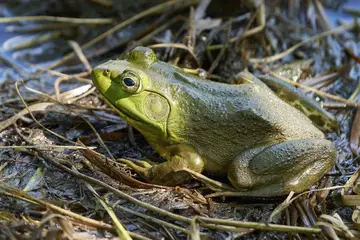
Usually 6 to 8 inches long (NCWRC); can reach 8 inches or more and weigh over 2 pounds (CDFW). Missouri gives 3.5 to 6 inches snout to vent, occasionally to 8.75.
How to recognize it
No ridge (dorsolateral fold) down each side of the back
Large round eardrum: about twice the eye in males, about eye-sized in females
Fully webbed hind feet, longest toe extends past the webbing
Range: Not native. Widely distributed in eastern Colorado, increasing range in river valleys of western Colorado; also present in San Luis Valley and in some warm waters in the mountains.
Habitat: Typically in permanent ponds, reservoirs, quiet stream pools, and large, deep marshes. Also in flowing streams and irrigation ditches if the current is not too swift. Primary habitat often includes areas of deep water, cattails, and woody vegetation overhanging the water’s edge. Juveniles can be found in all kinds of aquatic habitats. (Colorado Parks and Wildlife)
No official source we use states whether this animal is venomous. That does not mean it is harmless: do not handle it.
Where in Colorado
Nearly statewide, from low river valleys to high mountains, but scarce or absent in most of southeastern Colorado. Common in many areas. Colorado Parks and Wildlife
What the sources say
Habitat: Vicinity of wet meadows, marshes, ponds, and lakes. (Colorado Parks and Wildlife)
No confirmed photo of Boreal Toad
Boreal Toad
Bufo boreas boreas, Bufo boreas complex
Not stated
Venom
No official source we use states whether this animal is venomous. That does not mean it is harmless: do not handle it.
Where in Colorado
The species occurs throughout most of western North America, from southeastern Alaska to northern Baja California, Utah and northern New Mexico … Colorado Parks and Wildlife
Conservation
CPW: State Endangered; 2025 SWAP: SGCN Tier 1
What the sources say
Range: The species occurs throughout most of western North America, from southeastern Alaska to northern Baja California, Utah and northern New Mexico. The distinct Southern Rocky Mountain population is distributed from southern Wyoming to southern Colorado, and is currently believed to be extirpated from northern New Mexico.
Habitat: In Colorado, the boreal toad is distributed throughout the Rockies from the northern state border to Mineral and Hinsdale counties in the south at elevations between 7,500 and 12,000 feet. Throughout most of the Rocky Mountains, usually at elevations between 8,500 feet and 11,500 feet. Formerly widespread and common, now scarce except in localized areas. The boreal toad is restricted to areas with suitable breeding habitat in spruce-fir forests and alpine meadows. Breeding habitat includes lakes, marshes, ponds, and bogs with sunny exposures and quiet, shallow water. Vicinity of mountain lakes, ponds, meadows, and wetlands in subalpine forest (for example, spruce, fir, lodgepole pine, aspen). (Colorado Parks and Wildlife)
No confirmed photo of Canyon Treefrog
Canyon Treefrog
Hyla arenicolor
Not stated
Venom
No official source we use states whether this animal is venomous. That does not mean it is harmless: do not handle it.
Where in Colorado
Canyons of west-central and southwestern Colorado. Fairly common within restricted habitat. Colorado Parks and Wildlife
What the sources say
Habitat: Occurs only along rocky stream courses in canyons. Basks on rocks, hides in rock crevices. (Colorado Parks and Wildlife)
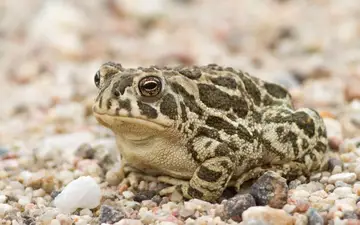
Habitat: Breeds in pools and stock ponds filled by heavy rains or flooding in basins and rocky canyons, in areas with sagebrush, semidesert shrubland, or pinyon-juniper woodland. (Colorado Parks and Wildlife)
Habitat: Vicinity of sunny, muddy or marshy edges of permanent or semipermanent ponds, reservoirs, and streams, and along irrigation ditches, in pastures and sandhill country. (Colorado Parks and Wildlife)
No confirmed photo of Northern Leopard Frog
Northern Leopard Frog
Rana/Lithobates pipiens
Not stated
Venom
No official source we use states whether this animal is venomous. That does not mean it is harmless: do not handle it.
Where in Colorado
Nearly statewide in mountains and lowlands, but scarce or absent in most of southeastern Colorado and the Republican River drainage in northeastern Colorado … Colorado Parks and Wildlife
Conservation
CPW: State Special Concern; 2025 SWAP: SGCN Tier 1
What the sources say
Range: Nearly statewide in mountains and lowlands, but scarce or absent in most of southeastern Colorado and the Republican River drainage in northeastern Colorado. Locally common, but now rare or extirpated in many areas, particularly in the mountains.
Habitat: Wet meadows and the banks and shallows of marshes, ponds, lakes, reservoirs, streams, and irrigation ditches. May roam far from water during wet, mild weather. (Colorado Parks and Wildlife)
No confirmed photo of Plains Leopard Frog
Plains Leopard Frog
Rana/Lithobates blairi
Not stated
Venom
No official source we use states whether this animal is venomous. That does not mean it is harmless: do not handle it.
Where in Colorado
Colorado Distribution: Great Plains portion of the Arkansas River drainage in southeastern Colorado and the Republican River drainage in northeastern Colorado … Colorado Parks and Wildlife
Conservation
CPW: State Special Concern
What the sources say
Range: Colorado Distribution: Great Plains portion of the Arkansas River drainage in southeastern Colorado and the Republican River drainage in northeastern Colorado. Locally common.
Habitat: Vicinity of streams, natural and artificial ponds, reservoirs, creek pools, irrigation ditches, and other bodies of water in plains grassland, sandhills, stream valleys, and canyon bottoms. May disperse far from water during wet, mild weather. (Colorado Parks and Wildlife)
No confirmed photo of Plains Spadefoot
Plains Spadefoot
Spea bombifrons
Not stated
Venom
No official source we use states whether this animal is venomous. That does not mean it is harmless: do not handle it.
Where in Colorado
Plains of eastern Colorado and the San Luis Valley. Probably occurs in the valley lowlands of western Montezuma County. Common. Colorado Parks and Wildlife
What the sources say
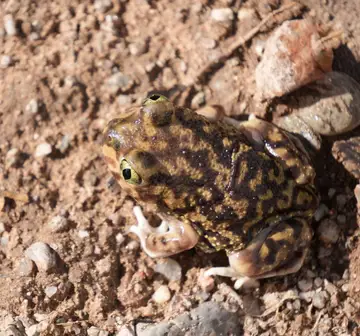
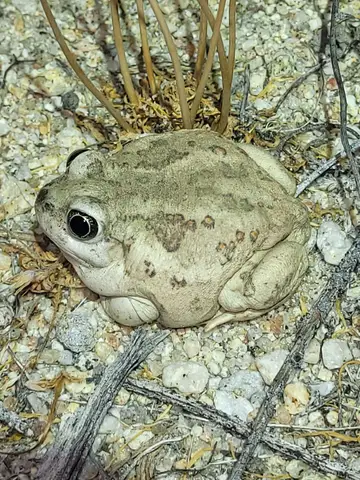
Habitat: Breeds in pools and stock ponds filled by heavy rains, in plains grassland, sandhills, or semidesert shrubland. (Colorado Parks and Wildlife)
No confirmed photo of Red-spotted Toad
Red-spotted Toad
Bufo/Anaxyrus punctatus
Not stated
Venom
No official source we use states whether this animal is venomous. That does not mean it is harmless: do not handle it.
Where in Colorado
Southeastern Colorado and southwestern Colorado (north to the vicinity of Grand Junction. Often common in restricted habitat. Colorado Parks and Wildlife
What the sources say
Habitat: Generally associated with rocky canyons and stream courses. Hides under rocks or in burrows. (Colorado Parks and Wildlife)
No confirmed photo of Western Chorus Frog
Western Chorus Frog
Pseudacris triseriata
Not stated
Venom
No official source we use states whether this animal is venomous. That does not mean it is harmless: do not handle it.
Where in Colorado
Nearly statewide, from low river valleys to high mountains, but scarce or absent in most of southeastern Colorado. Common in many areas. Colorado Parks and Wildlife
No official source we use states whether this animal is venomous. That does not mean it is harmless: do not handle it.
Where in Colorado
Extreme southeastern Colorado. Generally scarce, locally fairly common in restricted range. Colorado Parks and Wildlife
Conservation
CPW: State Special Concern; 2025 SWAP: SGCN Tier 2
What the sources say
Habitat: Grassy areas on rocky slopes and in bottoms of rock-rimmed canyons. Hides under rocks or in burrows, sometimes with tarantulas. (Colorado Parks and Wildlife)
No official source we use states whether this animal is venomous. That does not mean it is harmless: do not handle it.
Size
Adults 1.5 to 2.75 inches snout to vent, occasionally to 3.5 inches; females are larger than males.
How to recognize it
Dark eye mask: SREL calls it the only frog in the Southeast with such a facial pattern
Distinct ridge of skin (dorsolateral fold) down each side of the back to the groin
Call: a rapid, hoarse 'waaaduck' like a quacking duck, repeated three or four times
Where in Colorado
Mountains surrounding North Park; upper tributaries of the Colorado River in Grand County; upper Laramie River drainage in Larimer County … Colorado Parks and Wildlife
Conservation
CPW: State Special Concern; 2025 SWAP: SGIN
What the sources say
Range: Mountains surrounding North Park; upper tributaries of the Colorado River in Grand County; upper Laramie River drainage in Larimer County. Mainly at elevations of 7,900-9,800 feet. Locally fairly common in suitable habitat.
Habitat: Subalpine zone, in marshes, bogs, pothole ponds, beaver ponds, lakes, stream borders, wet meadows, willow thickets, and forests (lodgepole pine, spruce, fir, or aspen) bordering these habitats. (Colorado Parks and Wildlife)
No official source we use states whether this animal is venomous. That does not mean it is harmless: do not handle it.
Where in Colorado
Colorado Distribution: Statewide at elevations below 7,000 feet, to around 8,000 feet in the San Luis Valley. Common. Colorado Parks and Wildlife
What the sources say
Habitat: Associated primarily with deep soils in river valleys and floodplains, including irrigated agricultural areas. Burrows into soil to escape drought and cold. (Colorado Parks and Wildlife)
When frogs and toads are active in Colorado
Records of frogs and toads in Colorado peak in June to August. They show when people record frogs and toads, not how many there are (about month bars).
JanFebMarAprMayJunJulAugSepOctNovDec
832 records of frogs and toads in Colorado by month (GBIF, CC0 and CC BY records).
How to report
Invasive species: file a report with CPW (online "Report a Sighting" form linked from cpw.state.co.us/invasive-wildlife). Injured/abandoned animals, feeding or illegal activity: CPW Denver Headquarters 303-297-1192 or any CPW office; anonymous: Operation Game Thief 877-265-6648. After-hours emergency: Colorado State Patrol 303-239-4500. Wildlife posing immediate danger: local CPW office or law enforcement. Colorado Parks and Wildlife