States Wildlife

Colorado wildlife: what lives here and what is dangerous

Last checked November 3, 2026 against official sources.

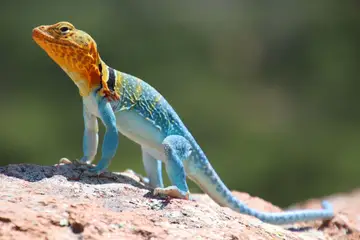
Eastern Collared Lizard
Photo: B. P. White · CC BY-SA 4.0 · iNaturalist · resized

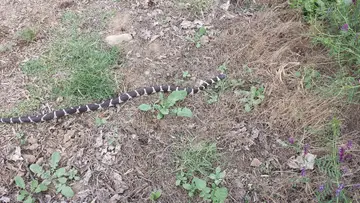
Colorado has 3 venomous snakes named by official sources: Massasauga Rattlesnake, Midget Faded Rattlesnake and Prairie Rattlesnake, as labelled by Colorado Parks and Wildlife. It also lists 11 snakes as mildly venomous or not dangerous to people. This guide covers 9 animal groups from Colorado Parks and Wildlife (CPW) lists and other official sources, with photos, venomous status and when each group is active.

Identification help has limits: a photo cannot confirm that an animal is safe. Watch from a distance and never handle a wild animal.

On this page
  1. Animal groups
  2. Dangerous animals
  3. Invasive species
  4. Seasons
  5. Official agency and reporting
  6. Questions
  7. Sources

Animal groups in Colorado

Dangerous animals in Colorado

These are the animals official sources describe as venomous or as a risk to people in Colorado, across 5 groups. The reason is given in the source's own terms.

AnimalGroupWhy, per the sourceSource
Massasauga RattlesnakeSnakesVenomousColorado Parks and Wildlife
Midget Faded Rattlesnake (Western Rattlesnake)SnakesVenomous: “Western Rattlesnake (Midget Faded Rattlesnake)*”Colorado Parks and Wildlife
Prairie RattlesnakeSnakesVenomousColorado Parks and Wildlife
Western widow (black widow)SpidersVenomous: “Bites from the widow spider are painful and potentially dangerous because they contain a nerve venom.”Colorado State University Extension
Wood louse hunterSpidersVenomous: “Their bite can be painful but they are not aggressive and their venom is not known to cause medical problems.”Colorado State University Extension
Tarantula hawksInsects and BugsVenomous: “They have among the largest quantity of venom per body mass of any insect (Schmidt 2004).”Colorado State University Extension
Velvet antsInsects and BugsVenomous: “…the implied claim about its ability to kill a cow is absurd and their venom is not particularly toxic.”CSU Extension, Western Colorado Insects (Tri River Area) - Colorado Insects of Interest
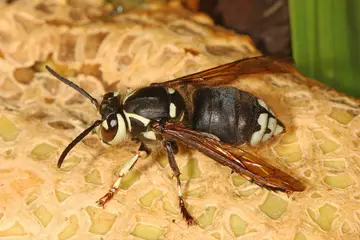
YellowjacketsInsects and BugsStings: “Several yellowjacket species are native to Colorado and these historically have been the most significant stinging insects of the region.”Colorado State University Extension
Harvester antsInsects and BugsPainful stings when nests are disturbed (CSU): “If their nests are directly disturbed, harvester ants will vigorously defend the mound and are capable of very painful stings.”CSU Extension, Western Colorado Insects (Tri River Area) - Colorado Insects of Interest
Western conenose (kissing bug)Insects and BugsDisease: “The greatest concern about these insects is that they can transmit a pathogen (Trypanosoma cruzi) that produces Chagas Disease.”Colorado State University Extension
Culex mosquitoesInsects and BugsDisease: “Culex tarsalis, one of the main West Nile virus vectors, commonly occurs up to altitudes of 8,500 feet and is found as high as 10,000 feet above sea level.”Colorado State University Extension
Rocky Mountain wood tickTicks (arachnids)Disease: “By far, the most common disease that is spread by ticks in Colorado is Colorado tick fever.”Colorado State University Extension
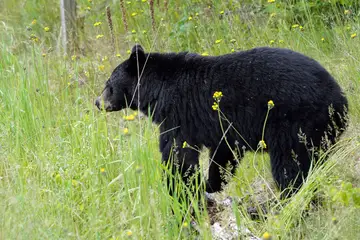
Black bearMammalsCan fight back if threatened (CPW): “Black bears seldom ‘attack’ or behave truly aggressively, but will fight back if they feel threatened.”Colorado Parks and Wildlife
Mountain lionMammalsAttacks rare but possible (CPW): “Lion attacks on people are rare, with fewer than a dozen deaths in North America in more than 100 years.”Colorado Parks and Wildlife
MooseMammalsAggressive if approached, especially cows with calves and bulls in rut (CPW): “Cows can be dangerous if approached or caught off guard, so keep dogs on leash and avoid forage areas like thick willows when recreating.”Colorado Parks and Wildlife
Bats and skunksMammalsDisease: “Rabies is rare in all mammals in Colorado, but bats and skunks are the most commonly infected.”Colorado Parks and Wildlife
Prairie dogsMammalsDisease: “Plague is a bacterial disease that most commonly affects prairie dogs.”Colorado Parks and Wildlife
Deer mice (white-footed mice)MammalsDisease: “Deer mice have been implicated as a major carrier of Hantavirus, a serious, acute lung disease.”Colorado Parks and Wildlife
Rabbits, hares and rodents (particularly beavers)MammalsDisease: “Tularemia is a fatal bacterial disease that infects rodents (particularly beavers), rabbits and hares; it can also infect humans and domestic animals.”Colorado Parks and Wildlife

Not native here

Official sources say the brown recluse is not native to Colorado or not found there. It is not counted among the dangerous animals above; each entry quotes the source.

Venomous snakes in Colorado shows each venomous snake with photos and range.

Invasive and nonnative species

6 nonnative animals are named on Colorado's official lists (Colorado Parks and Wildlife).

All invasive species in Colorado, with where they live and how to report them.

When animals are active in Colorado

Darker cells are the months with more open-licence observation records of each group in Colorado (GBIF). They show when people see and record these animals, not how many there are. The current month, this month, is highlighted.

JanFebMarAprMayJunJulAugSepOctNovDec
SnakesJanuary: 0 recordsFebruary: 1 recordMarch: 11 recordsApril: 71 recordsMay: 265 recordsJune: 227 recordsJuly: 235 recordsAugust: 198 recordsSeptember: 164 recordsOctober: 67 recordsNovember: 4 recordsDecember: 2 records
SpidersJanuary: 26 recordsFebruary: 31 recordsMarch: 93 recordsApril: 302 recordsMay: 409 recordsJune: 514 recordsJuly: 517 recordsAugust: 542 recordsSeptember: 626 recordsOctober: 270 recordsNovember: 58 recordsDecember: 22 records
LizardsJanuary: 0 recordsFebruary: 0 recordsMarch: 13 recordsApril: 70 recordsMay: 280 recordsJune: 293 recordsJuly: 214 recordsAugust: 221 recordsSeptember: 147 recordsOctober: 34 recordsNovember: 2 recordsDecember: 0 records
Frogs and ToadsJanuary: 0 recordsFebruary: 1 recordMarch: 18 recordsApril: 52 recordsMay: 93 recordsJune: 143 recordsJuly: 223 recordsAugust: 178 recordsSeptember: 98 recordsOctober: 25 recordsNovember: 1 recordDecember: 0 records
TurtlesJanuary: 1 recordFebruary: 6 recordsMarch: 20 recordsApril: 85 recordsMay: 105 recordsJune: 74 recordsJuly: 24 recordsAugust: 36 recordsSeptember: 38 recordsOctober: 17 recordsNovember: 3 recordsDecember: 2 records
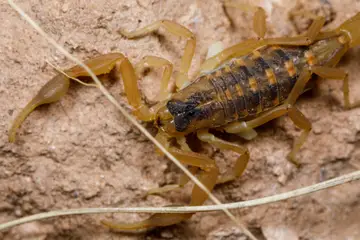
ScorpionsJanuary: 0 recordsFebruary: 0 recordsMarch: 1 recordApril: 3 recordsMay: 12 recordsJune: 16 recordsJuly: 7 recordsAugust: 27 recordsSeptember: 9 recordsOctober: 3 recordsNovember: 1 recordDecember: 0 records
Insects and BugsJanuary: 232 recordsFebruary: 534 recordsMarch: 920 recordsApril: 2,112 recordsMay: 4,625 recordsJune: 9,178 recordsJuly: 15,402 recordsAugust: 11,192 recordsSeptember: 6,211 recordsOctober: 2,270 recordsNovember: 518 recordsDecember: 143 records
MammalsJanuary: 304 recordsFebruary: 220 recordsMarch: 448 recordsApril: 632 recordsMay: 1,022 recordsJune: 1,618 recordsJuly: 1,759 recordsAugust: 1,476 recordsSeptember: 1,014 recordsOctober: 524 recordsNovember: 380 recordsDecember: 290 records

What official sources say about seasons

Official agency and how to report

Colorado's wildlife agency is the Colorado Parks and Wildlife (CPW).

Report: Invasive species: file a report with CPW (online "Report a Sighting" form linked from cpw.state.co.us/invasive-wildlife). Injured/abandoned animals, feeding or illegal activity: CPW Denver Headquarters 303-297-1192 or any CPW office; anonymous: Operation Game Thief 877-265-6648. After-hours emergency: Colorado State Patrol 303-239-4500. Wildlife posing immediate danger: local CPW office or law enforcement. Colorado Parks and Wildlife

Official safety advice

Questions people ask about Colorado wildlife

Are there venomous snakes in Colorado?

Yes. CPW says there are three kinds of rattlesnakes in Colorado (prairie rattlesnake, midget faded/western rattlesnake, massasauga); CPW's Quick Key lists these three as the venomous snakes of Colorado. Colorado Parks and Wildlife

Are there copperheads or cottonmouths in Colorado?

Not on the official list. Neither is in CPW's list of Colorado snakes; CPW names only rattlesnakes as venomous. USGS NAS has one non-native Cottonmouth record (collected 1965, Adams County). USGS Nonindigenous Aquatic Species (NAS) database

Are there alligators in Colorado?

Not established. USGS NAS lists four nonindigenous alligator records in Colorado (1978, 1991, 2005, 2009), each with status "failed" (not established). USGS Nonindigenous Aquatic Species (NAS) database · More

Are there scorpions in Colorado?

Yes. CSU Extension says three scorpion species are confirmed in Colorado and none has venom associated with dangerous complications. Colorado State University, Department of Agricultural Biology · More

Are there black widows in Colorado?

Yes. CSU Extension says widow spiders, particularly the western widow, are common in Colorado. Colorado State University Extension

Are there brown recluse spiders in Colorado?

Rarely. CSU Extension says brown recluse and all other recluse spiders are extremely rare in Colorado; sightings often come from spiders carried in from other states. Colorado State University Extension · More

Are there tarantulas in Colorado?

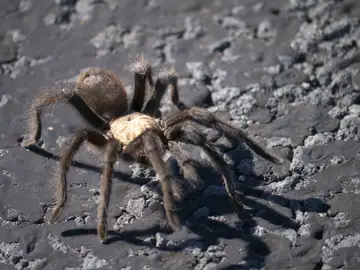
Yes. CSU Extension says tarantulas are found in southeastern and southwestern Colorado. Colorado State University Extension · More

Are there grizzly bears in Colorado?

No. CPW says grizzlies were extirpated in Colorado in the mid 1950s and no longer live in Colorado. Colorado Parks and Wildlife

Are there wolves in Colorado?

Yes. CPW says gray wolves have an established population in Colorado for the first time since being extirpated in the early 1900s. Colorado Parks and Wildlife

Are there moose in Colorado?

Yes. CPW warns that dangerous conflicts between people and moose are increasing. Colorado Parks and Wildlife · More

Is there lyme disease in Colorado?

CSU Extension says Lyme disease is not present in wild animal populations in Colorado; Colorado tick fever is by far the most common tick-borne disease. Colorado State University Extension

Are there kissing bugs in Colorado?

Yes. CSU Extension has a fact sheet on conenose (kissing) bugs in Colorado; they feed on the blood of wild animals, especially rodents. Colorado State University Extension

Sources

  1. Species Profile List. Colorado Parks and Wildlife. page states 2026-04-09T13:47:52-0600; checked November 3, 2026.
  2. Quick Key to Amphibians and Reptiles of Colorado. Colorado Parks and Wildlife. archived copy, captured October 11, 2023; checked November 3, 2026.
    Quoted passages (1)
    “Western Rattlesnake (Midget Faded Rattlesnake)*”
  3. Species profile: Terrestrial Garter Snake. Colorado Parks and Wildlife. undated page; checked November 3, 2026.
    Quoted passages (1)
    “Like all garter snakes, they are mildly venomous, but are not considered dangerous to humans.”
  4. Species profile: Chihuahuan Nightsnake and Desert Nightsnake. Colorado Parks and Wildlife. undated page; checked November 3, 2026.
    Quoted passages (1)
    “Otherwise, both snakes are mildly venomous, exclusively nocturnal, and rarely seen.”
  5. Species profile: Common Garter Snake. Colorado Parks and Wildlife. undated page; checked November 3, 2026.
    Quoted passages (1)
    “The common garter snake is mildly venomous, but its venom is considered non-dangerous to humans.”
  6. Species profile: Eastern Hognose Snake. Colorado Parks and Wildlife. undated page; checked November 3, 2026.
    Quoted passages (1)
    “Only known to exist in one area of Colorado, the eastern hognose is a mildly-venomous snake that specializes in eating toads.”
  7. Species profile: Plains Black-Headed Snake. Colorado Parks and Wildlife. undated page; checked November 3, 2026.
    Quoted passages (1)
    “While they are venomous, they are considered harmless to humans.”
  8. Species profile: Plains Garter Snake. Colorado Parks and Wildlife. undated page; checked November 3, 2026.
    Quoted passages (1)
    “While plains garter snakes are venomous, their venom is non-toxic to humans.”
  9. Species profile: Ring-Necked Snake. Colorado Parks and Wildlife. undated page; checked November 3, 2026.
    Quoted passages (1)
    “This snake uses its venom to subdue prey, but it is harmless to humans and mammals.”
  10. Species profile: Smith's Black-Headed Snake. Colorado Parks and Wildlife. undated page; checked November 3, 2026.
    Quoted passages (1)
    “It is a rear-fanged, venomous snake, but is considered harmless to humans due to its small size and venom being specialized to arthropods.”
  11. Species profile: Western Hognose Snake. Colorado Parks and Wildlife. undated page; checked November 3, 2026.
    Quoted passages (1)
    “This is a rear-fanged snake that is venomous, but it is considered non-dangerous to humans.”
  12. Scorpions of Colorado. Colorado State University, Department of Agricultural Biology (Extension entomology). undated page; checked November 3, 2026.
    Quoted passages (2)
    “Three species of scorpions are confirmed to occur in Colorado.”
    “Birth of the northern scorpion usually occurs around August.”
  13. Spiders in the Home (Fact Sheet 5.512). Colorado State University Extension. Published September 2013; checked November 3, 2026.
    Quoted passages (7)
    “Bites from the widow spider are painful and potentially dangerous because they contain a nerve venom.”
    “Their bite can be painful but they are not aggressive and their venom is not known to cause medical problems.”
    “Funnel web spiders are harmless but are often mistaken for the brown recluse, a spider whose venom is of medical importance, that does not naturally occur in Colorado.”
    “Widow spiders, particularly the western widow (Latrodectus hesperus), are common in Colorado.”
    “Tarantulas are found in southeastern and southwestern Colorado.”
    “Funnel web spiders are the most common spiders found in homes, particularly during late summer and early fall.”
    “They occasionally enter buildings, particularly in early summer.”
  14. Tarantula Hawks of Colorado. Colorado State University Extension. Published August 2025; checked November 3, 2026.
    Quoted passages (1)
    “They have among the largest quantity of venom per body mass of any insect (Schmidt 2004).”
  15. Velvet Ants (Colorado Insects of Interest). CSU Extension, Western Colorado Insects (Tri River Area) - Colorado Insects of Interest. undated page; checked November 3, 2026.
    Quoted passages (1)
    “…the implied claim about its ability to kill a cow is absurd and their venom is not particularly toxic.”
  16. European Paper Wasp. Colorado State University Extension. Published June 2013; checked November 3, 2026.
    Quoted passages (1)
    “Several yellowjacket species are native to Colorado and these historically have been the most significant stinging insects of the region.”
  17. Harvester Ants (Colorado Insects of Interest). CSU Extension, Western Colorado Insects (Tri River Area) - Colorado Insects of Interest. undated page; checked November 3, 2026.
    Quoted passages (1)
    “If their nests are directly disturbed, harvester ants will vigorously defend the mound and are capable of very painful stings.”
  18. Conenose Bugs (Kissing Bugs) and Insects of Similar Appearance in Colorado. Colorado State University Extension. Published May 2025; checked November 3, 2026.
    Quoted passages (2)
    “The greatest concern about these insects is that they can transmit a pathogen (Trypanosoma cruzi) that produces Chagas Disease.”
    “Conenose bugs (Triatoma species) are insects that feed on the blood of various wild animals, particularly rodents.”
  19. West Nile Virus and Mosquito Management. Colorado State University Extension. Reviewed January 2025; checked November 3, 2026.
    Quoted passages (1)
    “Culex tarsalis, one of the main West Nile virus vectors, commonly occurs up to altitudes of 8,500 feet and is found as high as 10,000 feet above sea level.”
  20. Colorado Ticks and Tick-Borne Diseases. Colorado State University Extension. Published February 2019; checked November 3, 2026.
    Quoted passages (2)
    “By far, the most common disease that is spread by ticks in Colorado is Colorado tick fever.”
    “Fortunately, the most important tick-borne disease in North America, Lyme disease, is not present in wild animal populations in Colorado (i.e., not endemic).”
  21. Living with Bears. Colorado Parks and Wildlife. page states 2026-10-06T10:46:47-0600; checked November 3, 2026.
    Quoted passages (2)
    “Black bears seldom ‘attack’ or behave truly aggressively, but will fight back if they feel threatened.”
    “If you’re attacked, don’t play dead.”
  22. Living with Mountain Lions. Colorado Parks and Wildlife. page states 2026-01-21T13:33:35-0700; checked November 3, 2026.
    Quoted passages (2)
    “Lion attacks on people are rare, with fewer than a dozen deaths in North America in more than 100 years.”
    “If the lion does not leave the area, face the lion and slowly back away. Fight back if attacked.”
  23. Moose. Colorado Parks and Wildlife. undated page; checked November 3, 2026.
    Quoted passages (2)
    “Cows can be dangerous if approached or caught off guard, so keep dogs on leash and avoid forage areas like thick willows when recreating.”
    “Dangerous conflicts between people and moose are increasing.”
  24. Disease Exposure. Colorado Parks and Wildlife. page states 2026-06-26T09:19:37-0600; checked November 3, 2026.
    Quoted passages (3)
    “Rabies is rare in all mammals in Colorado, but bats and skunks are the most commonly infected.”
    “Plague is a bacterial disease that most commonly affects prairie dogs.”
    “Tularemia is a fatal bacterial disease that infects rodents (particularly beavers), rabbits and hares; it can also infect humans and domestic animals.”
  25. Species profile: White-Footed Mice. Colorado Parks and Wildlife. undated page; checked November 3, 2026.
    Quoted passages (1)
    “Deer mice have been implicated as a major carrier of Hantavirus, a serious, acute lung disease.”
  26. Known Invasive Wildlife in Colorado. Colorado Parks and Wildlife. page states 2026-01-21T15:12:28-0700; checked November 3, 2026.
    Quoted passages (3)
    “Invasive feral hogs are illegal to possess, live or import into Colorado.”
    “Examples of ANS are the zebra mussel, quagga mussel, New Zealand mudsnail, and rusty crayfish, Asian carp or Eurasian watermilfoil.”
    “If you spot any invasive species, file a report with CPW.”
  27. Species profile: American Bullfrog. Colorado Parks and Wildlife. undated page; checked November 3, 2026.
    Quoted passages (1)
    “The American bullfrog is a non-native species that causes damage to the Colorado ecosystem.”
  28. Species profile: Emerald Ash Borer. Colorado Parks and Wildlife. undated page; checked November 3, 2026.
    Quoted passages (1)
    “The emerald ash borer is an invasive species that causes damage to the ecosystem of Colorado.”
  29. Species profile: Japanese Beetle. Colorado Parks and Wildlife. undated page; checked November 3, 2026.
    Quoted passages (1)
    “The Japanese beetle is an invasive species which causes damage to the Colorado ecosystem.”
  30. Species profile: Spongy Moth. Colorado Parks and Wildlife. undated page; checked November 3, 2026.
    Quoted passages (1)
    “The spongy moth is an invasive species that causes harm to the ecosystem of Colorado.”
  31. Crossing Paths with Wildlife. Colorado Parks and Wildlife. page states 2026-01-28T13:29:23-0700; checked November 3, 2026.
    Quoted passages (1)
    “There are three kinds of rattlesnakes in Colorado.”
  32. NAS Species List: Reptiles, Colorado. USGS Nonindigenous Aquatic Species (NAS) database. undated page; checked November 3, 2026.
  33. NAS occurrence API: Alligator mississippiensis in Colorado. USGS Nonindigenous Aquatic Species (NAS) database. live API query 2026-11-03; checked November 3, 2026.
  34. Brown Recluse Spiders in Colorado: Recognition and Spiders of Similar Appearance. Colorado State University Extension. Published February 2008; checked November 3, 2026.
    Quoted passages (1)
    “The brown recluse, and all other recluse spiders, are extremely rare in Colorado.”
  35. Species profile: Grizzly Bear. Colorado Parks and Wildlife. undated page; checked November 3, 2026.
    Quoted passages (1)
    “Grizzlies no longer live in Colorado.”
  36. Species profile: Gray Wolf. Colorado Parks and Wildlife. undated page; checked November 3, 2026.
    Quoted passages (1)
    “The largest member of the canine family has an established population in Colorado for the first time since being extirpated in the early 1900s.”
  37. Species profile: Prairie Rattlesnake. Colorado Parks and Wildlife. undated page; checked November 3, 2026.
    Quoted passages (5)
    “If you are bitten by a snake, call 911 immediately.”
    “Rattlesnakes can strike at a distance of half their body length; a good rule of thumb is to put at least five feet between you and the snake.”
    “Sturdy footwear and long pants should be the first line of defense.”
    “During the coldest months of the year, they shelter in winter dens and usually resume activity in late March or early April.”
    “Exercise extra caution around dawn and dusk when the snakes become active and human visibility drops.”
  38. Coping with Snakes. Colorado State University Extension. Published May 2025; checked November 3, 2026.
    Quoted passages (1)
    “Toll free: (800) 222-1222”
  39. Species profile: Massasauga Rattlesnake. Colorado Parks and Wildlife. undated page; checked November 3, 2026.
    Quoted passages (1)
    “Females give birth to their young beginning in late August or early September.”
  40. Living with Wildlife in Colorado. Colorado Parks and Wildlife. page states 2026-05-01T10:57:56-0600; checked November 3, 2026.
    Quoted passages (2)
    “There is an increase during the winter migration season, especially between dusk and dawn hours, when animals move to lower elevations for the coming winter.”
    “You may see more young wildlife during spring months in Colorado, including baby deer, elk, pronghorn, moose, rabbits, foxes and birds.”
  41. GBIF.org occurrence records, human observations licensed CC0 1.0 or CC BY 4.0 only, accessed November 3, 2026. The datasets behind these counts are listed on our Sources page.