Maine Department of Inland Fisheries and Wildlife: Mammals 83 7 11 26 marine (MDMR) 24 5 5 7 terrestrial (MDIFW) 59 2 6 19
This page lists 53 mammals.
Maine Department of Inland Fisheries and Wildlife gives a total of 83; the 53 here are the mammals official sources name one by one.
Which mammals can hurt you
Official sources single out these mammals in Maine, in their own words:
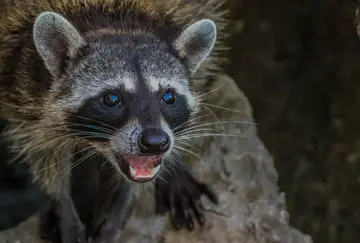
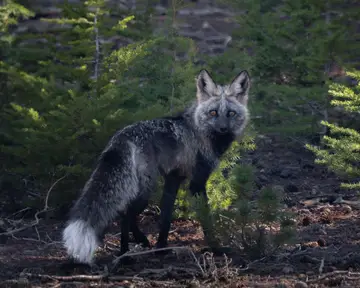
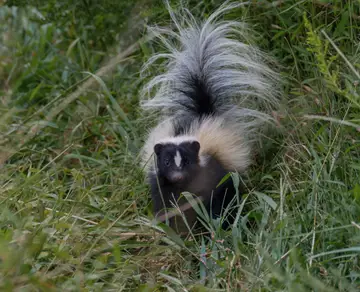
Rabies carriers: skunks, raccoons, bats and foxes
Maine CDC. “In Maine, the most commonly infected animals are skunks, raccoons, bats, and foxes.” Maine DHHS
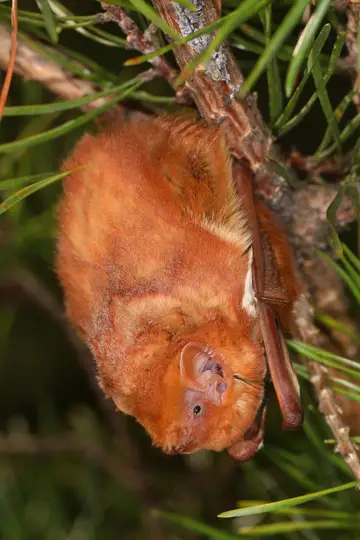
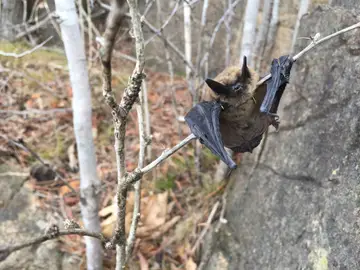
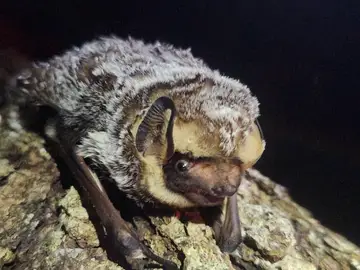
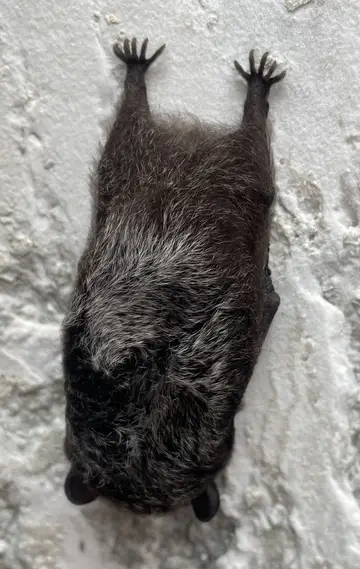
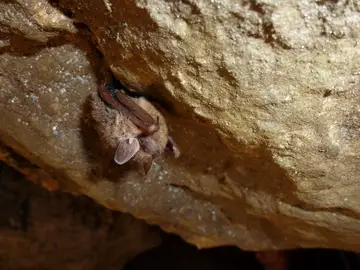
Bats (rabies)
About 4 in 100 bats tested in Maine are rabies positive. “Bats are occasionally found in homes and camps and should be submitted to the Public Health Lab for rabies testing if they come in contact with a person.” Maine Department of Inland Fisheries and Wildlife
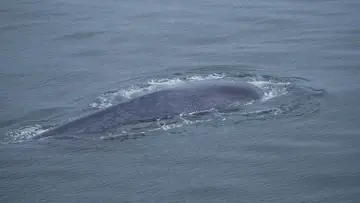
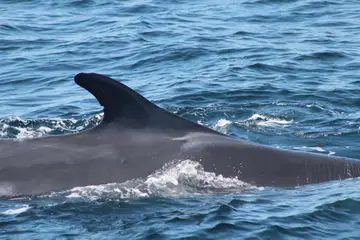
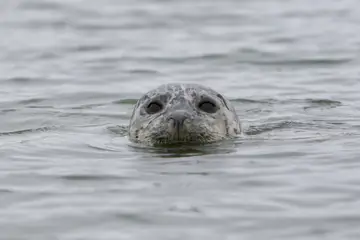
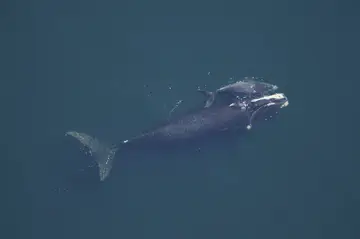
Seals and other stranded marine mammals
DMR. “It is against the law to handle a marine mammal without proper authorization, and their sharp teeth can be very dangerous.” Maine Department of Marine Resources
Photo: U.S. Fish and Wildlife Service - Midwest Region · Public domain · Wikimedia Commons
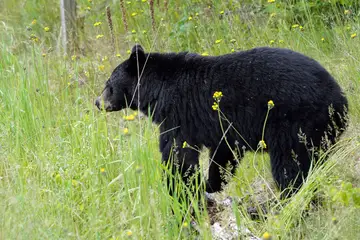
Human-bear conflicts (mainly damage to bird feeders and garbage, spring and early summer). “Most conflicts with bears can be prevented by removing common food attractants around homes.” Maine Department of Inland Fisheries and Wildlife
Smokies: males average about 6 ft long, 3 ft at the shoulder and 250 lb in summer; females usually just over 100 lb. Missouri: 46 to 78 inches long, 86 to 600 lb.
How to recognize it
Straight facial profile, rounded erect ears, very short tail
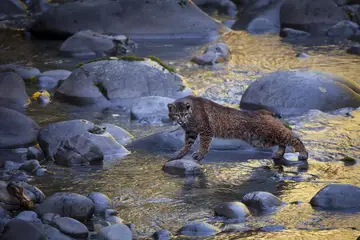
Total length 18 to 50 inches, tail 3 to 8 inches, weight 8 to 49 pounds (Missouri). About twice the size of a house cat.
How to recognize it
Short 'bobbed' tail, 4 to 8 inches, with a black tip and white underneath (Arizona). New Mexico instead describes black bars on top, white underneath and a white tip.
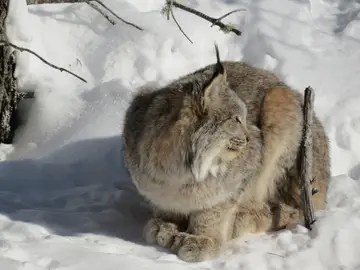
Pointed ears with tufts at the tips, often with cheek tufts
Backs of the ears are black with a light central spot
About 3.5 to 4 feet long including the tail and roughly 2 feet tall at the shoulder; weight varies by region: Arizona 20 to 30 lb, Florida average about 28 lb, Georgia 25 to 45 lb
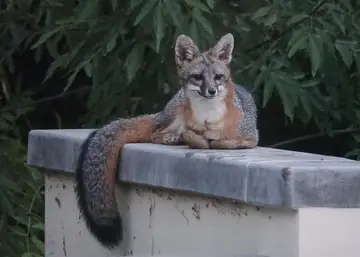
How to recognize it
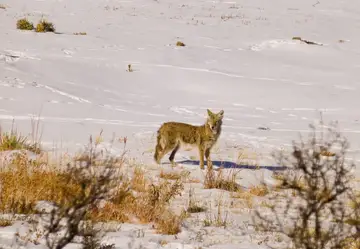
Large pointed ears, long narrow nose, bushy black-tipped tail
Like a slender medium-sized dog, much smaller than a wolf
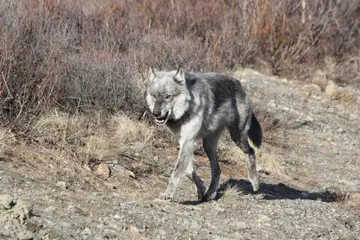
Adults about 40 to 175 pounds depending on sex and region; on average about five to six feet long (Isle Royale), up to 6 feet including the tail (Washington), and 26 to 34 inches at the shoulder. Twice the size of a coyote.
How to recognize it
Longer legs, larger feet, wider head and snout, shorter ears, narrow body and straight tail compared with most coyotes and dogs.
Tracks about 5 inches long by 4 inches wide, with claws showing.
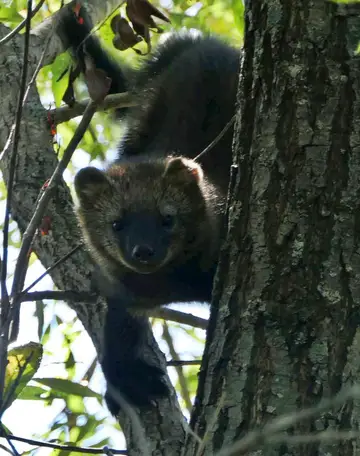
Adults about 30 inches including a 6- to 10-inch tail, 9 to 15 pounds, older adults up to 20 pounds (Pennsylvania). Massachusetts: 25-31 inches, averaging 12 pounds in early spring to 20 in fall. Minnesota: 24 to 40 inches, 18 to 35 pounds.
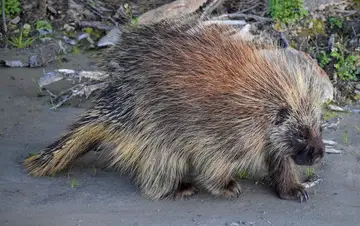
How to recognize it
Coat of quills; up to 30,000
Only North American mammal with coat hairs modified as quills
A lynx has longer ear tufts and large, fur-covered feet (3.5 to 4.5 inches wide). A bobcat's feet are small and hairless (up to 2.5 inches). A lynx's tail has a black tip and no white underneath; a bobcat's tail is white underneath. Do not use the tail tip alone, because agencies describe the bobcat's tip differently (New Mexico white, Arizona black).
NY DEC: gray wolves are much larger (females typically 50-100 lb, males 70-145 lb, 5-6 ft nose to tail, 27-33 in at the shoulder); eastern coyotes rarely exceed 50 lb and generally stand under 2 ft at the shoulder. Wolves have small rounded ears and a short blocky snout; coyotes have larger, more pointed ears (can look rounded in winter coat) and a long, narrow, pointed snout. Coyote tracks are typically 3 x 2 in, wolf tracks about 5 x 4 in. NY DEC says most wolf reports in New York were coyotes, dogs or wolf-dog hybrids.
Photos show typical adults; individuals vary. Never get close to compare.
When mammals are active in Maine
Records of mammals in Maine peak in May to September. They show when people record mammals, not how many there are (about month bars).
JanFebMarAprMayJunJulAugSepOctNovDec
1,994 records of mammals in Maine by month (GBIF, CC0 and CC BY records).
Call 911 or Poison Help at 1-800-222-1222 right away. Poison Help connects you to your local poison center, any time of day.
Official advice from Maine Department of Marine Resources and Maine Department of Inland Fisheries and Wildlife:
Leave stranded seals and other marine mammals alone; it is illegal to handle them and their teeth can be dangerous. Maine Department of Marine Resources
Bats (mammal species page). Maine Department of Inland Fisheries and Wildlife. undated page; checked November 3, 2026.Quoted passages (1)
“Bats are occasionally found in homes and camps and should be submitted to the Public Health Lab for rabies testing if they come in contact with a person.”