Maine Department of Inland Fisheries and Wildlife: CHONDRICHTHYES (sharks, rays, and skates; N = 10)
This page lists 10 sharks, rays and other marine animals: all from Maine Department of Inland Fisheries and Wildlife's Maine 2025 State Wildlife Action Plan, Table 1-3 SGCN: CHONDRICHTHYES.
Which sharks, rays and other marine animals can hurt you
Official sources single out these sharks, rays and other marine animals in Maine, in their own words:
Maine has had one fatal shark bite, in 2020, the first in the state (Florida Museum ISAF). DMR monitors white sharks along the coast and gives safety advice. “These numbers include one fatality each in California, Hawaii and Maine, a first for the state.” Florida Museum of Natural History, University of Florida
All 10 sharks, rays and other marine animals
From A to Z. Do not handle them.
No confirmed photo of Barndoor Skate
Barndoor Skate
Dipturus laevis
Not stated
Venom
No official source we use states whether this animal is venomous. That does not mean it is harmless: do not handle it.
Conservation
SGCN (2025 SWAP); priority ranks 2005/2015/2025 as in quoted row
What the sources say
Habitat: Marine (Maine Department of Inland Fisheries and Wildlife)
No confirmed photo of Basking Shark
Basking Shark
Cetorhinus maximus
Not stated
Venom
No official source we use states whether this animal is venomous. That does not mean it is harmless: do not handle it.
Conservation
SGCN (2025 SWAP); priority ranks 2005/2015/2025 as in quoted row
What the sources say
Habitat: Marine (Maine Department of Inland Fisheries and Wildlife)
No confirmed photo of Common Thresher Shark
Common Thresher Shark
Alopias vulpinus
Not stated
Venom
No official source we use states whether this animal is venomous. That does not mean it is harmless: do not handle it.
Conservation
SGCN (2025 SWAP); priority ranks 2005/2015/2025 as in quoted row
What the sources say
Habitat: Marine (Maine Department of Inland Fisheries and Wildlife)
No confirmed photo of Porbeagle
Porbeagle
Lamna nasus
Not stated
Venom
No official source we use states whether this animal is venomous. That does not mean it is harmless: do not handle it.
Conservation
SGCN (2025 SWAP); priority ranks 2005/2015/2025 as in quoted row
What the sources say
Habitat: Marine (Maine Department of Inland Fisheries and Wildlife)
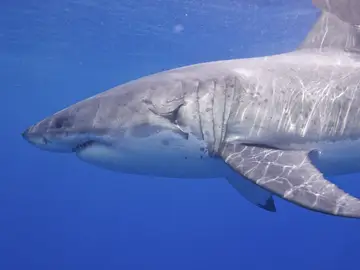
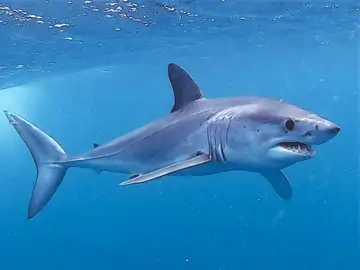
The white shark has broad, triangular, serrated teeth; mako teeth are slender and smooth-edged.
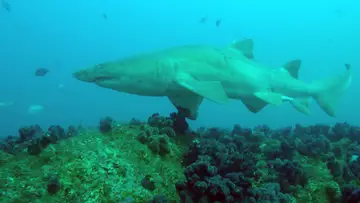
Photos show typical adults; individuals vary. Never get close to compare.
When sharks, rays and other marine animals are active in Maine
Records of sharks, rays and other marine animals in Maine peak in May and October. They show when people record sharks, rays and other marine animals, not how many there are (about month bars).
JanFebMarAprMayJunJulAugSepOctNovDec
2,694 records of sharks, rays and other marine animals in Maine by month (GBIF, CC0 and CC BY records).
Call 911 or Poison Help at 1-800-222-1222 right away. Poison Help connects you to your local poison center, any time of day.
Official advice from Maine Department of Marine Resources:
Shark safety (DMR): stay close to shore, swim in groups, avoid seals, schooling fish and murky water, and avoid swimming at dawn or dusk. Maine Department of Marine Resources
What official sources say
Are there sharks in Maine?
Yes. DMR has monitored white sharks along the Maine coast since 2020 and says they are most often seen in July, August and September. The 2025 SWAP lists six shark species as SGCN. Maine Department of Marine Resources
“White sharks have been historically documented in New England, and are most often observed during the months of July, August and September”
“CHONDRICHTHYES (sharks, rays, and skates; N = 10)”
Yearly Worldwide Shark Attack Summary (2020). Florida Museum of Natural History, University of Florida (International Shark Attack File). archived copy, captured March 1, 2021; checked November 3, 2026.Quoted passages (1)
“These numbers include one fatality each in California, Hawaii and Maine, a first for the state.”
White Shark Research. Maine Department of Marine Resources. archived copy, captured July 14, 2024; checked November 3, 2026.Quoted passages (2)
“White sharks have been detected as early as May and as late as November”
“White sharks have been historically documented in New England, and are most often observed during the months of July, August and September”