Not every species: no complete official list of Maine insects exists, so this page covers the ones state and Extension sources name. How lists are built.
Which insects can hurt you
Official sources single out these insects in Maine, in their own words:
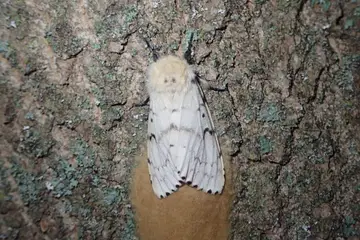
Browntail Moth (caterpillar hairs)
Maine CDC. “The microscopic hairs found on browntail moth caterpillars, shed skins, and cocoons can cause skin reactions and breathing problems.” Maine DHHS
Mosquitoes
Maine CDC. “Mosquitoes in Maine can carry viruses that can cause several illnesses. These include: Eastern Equine Encephalitis virus (EEE) Jamestown Canyon virus (JCV) West Nile virus (WNV)” Maine DHHS
Hornets, wasps and yellowjackets (family Vespidae)
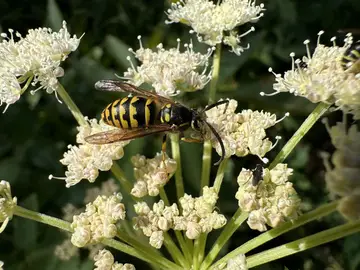
Stinging. “Most vespid wasps are social insects and most are capable of repeatedly stinging if they feel threatened or feel their nest is in danger.” University of Maine Cooperative Extension
Hairs can cause a very itchy rash in some people (UMaine Extension). “…handle with care as the hairs on these can cause a very itchy rash for some people” University of Maine Cooperative Extension
All 12 insects
From A to Z. Do not handle them.
No confirmed photo of American / Alaska Yellowjacket
American / Alaska Yellowjacket
Vespula alascensis
Not stated
Venom
No official source we use states whether this animal is venomous. That does not mean it is harmless: do not handle it.
No confirmed photo of Asian Longhorned Beetle
Asian Longhorned Beetle
Anoplophora glabripennis
Not stated
Venom
No official source we use states whether this animal is venomous. That does not mean it is harmless: do not handle it.
No official source we use states whether this animal is venomous. That does not mean it is harmless: do not handle it.
Size
Missouri: workers 1/2 to 3/4 inch, queens 3/4 inch. University of Maryland: workers 5/8 to 3/4 inch, queens just over an inch. Penn State gives 13 to 20 mm for the queen and her offspring.
How to recognize it
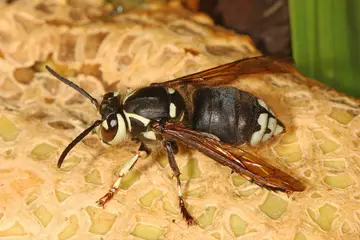
Not yellow, unlike typical yellowjackets; larger, black and ivory
Large, rounded, gray paper nest hanging in trees or shrubs, sometimes on buildings
Nest entrance is the lowest opening of the cone- or egg-shaped nest
Ticks and mosquitoes: use EPA-approved repellents (Maine CDC). Maine DHHS
Bites, stings or suspected poisoning: call 911 or Poison Help at 1-800-222-1222 (Northern New England Poison Center serves Maine). Northern New England Poison Center
About this list
Venom labels come only from official sources and link to them; "Not stated" never means harmless. How labels work.
Health Advisory 2026PHADV008: Browntail moth. Maine Center for Disease Control and Prevention (Maine DHHS). Maine Health Alert Network advisory, May 2026; checked November 3, 2026.Quoted passages (2)
“The microscopic hairs found on browntail moth caterpillars, shed skins, and cocoons can cause skin reactions and breathing problems.”
“This year, browntail moth caterpillars emerged from their winter webs later than in previous years and will be active from May to early July.”
“Significant allergic reactions can develop for some people.”
Vector-borne diseases. Maine Center for Disease Control and Prevention (Maine DHHS). undated page; checked November 3, 2026.Quoted passages (3)
“Mosquitoes in Maine can carry viruses that can cause several illnesses. These include: Eastern Equine Encephalitis virus (EEE) Jamestown Canyon virus (JCV) West Nile virus (WNV)”
“Using an EPA-approved repellent when spending time outdoors can reduce the risk of bites.”
“The results are published in weekly Arboviral Surveillance Reports from July to September each year.”