Invasive and nonnative animals in Maine
Last checked November 3, 2026 against official sources.
On this page
- Invasive Threats to Maine's Forests and Trees
- Pond Slider (species page)
- Reptile, Amphibian, and Invertebrate Conservation & Management (Research and Management Report)
- Green Crabs (DMR species information)
- Asian Shore Crab (DMR species information)
- Lymantria Dispar (Home and Garden IPM fact sheet)
- How to report
- Sources
8 nonnative animals are named on 6 official lists for Maine: “Invasive Threats to Maine's Forests and Trees” (Maine Department of Agriculture, Conservation and Forestry, Maine Forest Service), “Pond Slider (species page)” (Maine Department of Inland Fisheries and Wildlife), “Reptile, Amphibian, and Invertebrate Conservation & Management (Research and Management Report)” (Maine Department of Inland Fisheries and Wildlife), “Green Crabs (DMR species information)” (Maine Department of Marine Resources), “Asian Shore Crab (DMR species information)” (Maine Department of Marine Resources) and “Lymantria Dispar (Home and Garden IPM fact sheet)” (University of Maine Cooperative Extension).
To report a sighting, see how to report.
Being on a list of nonnative species does not always mean an animal is harmful or established: each list below is described in its source's terms. A sighting of a listed animal is still worth reporting to the agency.
Invasive Threats to Maine's Forests and Trees
Maine Department of Agriculture, Conservation and Forestry, Maine Forest Service, undated page. 3 animals.
-
Browntail Moth Euproctis chrysorrhoea
Southern and coastal Maine Maine Department of Agriculture, Conservation and Forestry, Maine Forest Service
-
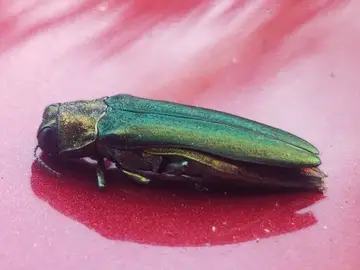
Photo: Brandon McCracken · CC BY 4.0 · iNaturalist Emerald Ash Borer
Maine (established) Maine Department of Agriculture, Conservation and Forestry, Maine Forest Service
-
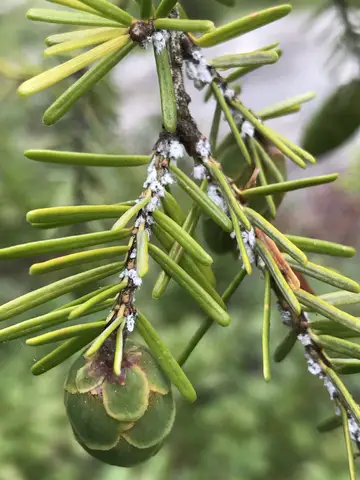
Photo: Alan Weakley · CC0 1.0 · iNaturalist Hemlock Woolly Adelgid
Southern and coastal Maine, Kittery to Mount Desert Island Maine Department of Agriculture, Conservation and Forestry, Maine Forest Service
Pond Slider (species page)
Maine Department of Inland Fisheries and Wildlife, undated page. 1 animal.
-
Pond Slider (red-eared slider) Trachemys scripta
Southern and central regions Maine Department of Inland Fisheries and Wildlife
Reptile, Amphibian, and Invertebrate Conservation & Management (Research and Management Report)
Maine Department of Inland Fisheries and Wildlife, see document date. 1 animal.
-
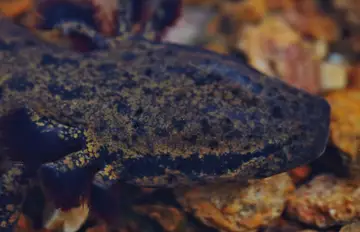
Photo: Peter Paplanus from St. Louis, Missouri · CC BY 2.0 · Wikimedia Commons Mudpuppy Necturus maculosus

Green Crabs (DMR species information)
Maine Department of Marine Resources, undated page. 1 animal.
-
European green crab Carcinus maenas
Maine coast (DMR: population in some areas has increased dramatically) Maine Department of Marine Resources
Asian Shore Crab (DMR species information)
Maine Department of Marine Resources, undated page. 1 animal.
-
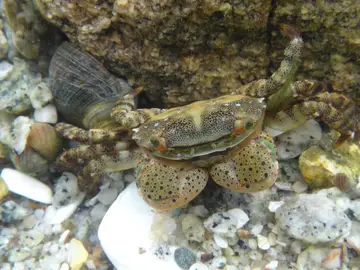
Photo: Alie / C.A. Kratzer · CC BY-SA 4.0 · iNaturalist · resized Asian shore crab Hemigrapsus sanguineus
Rocky intertidal coast, north to Schoodic Point Maine Department of Marine Resources
Lymantria Dispar (Home and Garden IPM fact sheet)
University of Maine Cooperative Extension, undated page. 1 animal.
-
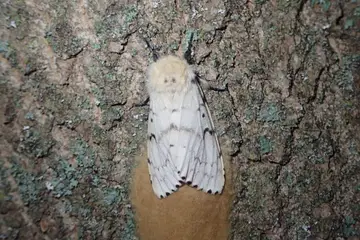
Photo: Emmett Collins-Sussman · CC BY 4.0 · iNaturalist Spongy Moth Lymantria dispar
How to report a sighting in Maine
Stranded, entangled or injured whales, dolphins, porpoises, seals or sea turtles: Maine Marine Animal Reporting Hotline 1-800-532-9551 (DMR). White shark sightings: DMR identification form. Reptile and amphibian sightings, especially listed species: Maine Amphibian & Reptile Atlas Project (IFW). Sick or injured bears: local Game Warden or Regional Wildlife Biologist. Browntail moth and forest-pest questions: dial 211. Maine Department of Marine Resources
Do not try to catch or handle the animal. A photo taken from a safe distance, the place and the date help the agency.
Sources
- Invasive Threats to Maine's Forests and Trees. Maine Department of Agriculture, Conservation and Forestry, Maine Forest Service. undated page; checked November 3, 2026.
Quoted passages (3)
“Browntail moth is known to be established in Southern and Coastal Maine and Cape Cod Massachusetts.”
“Hosts: Ash Status in Maine: Established”
“Hemlock woolly adelgid is known to be established in many areas in southern and coastal Maine from Kittery to Mount Desert Island”
- Pond Slider (species page). Maine Department of Inland Fisheries and Wildlife. undated page; checked November 3, 2026.
Quoted passages (1)
“Most common pet turtle; unwanted captives often released into wild”
- Green Crabs (DMR species information). Maine Department of Marine Resources. undated page; checked November 3, 2026.
Quoted passages (1)
“Scientists suggest that green crabs (Carcinus maenas), originally from Europe, reached U.S. shores in the mid-1800s after riding across the Atlantic in the ballast water on ships”
- Asian Shore Crab (DMR species information). Maine Department of Marine Resources. undated page; checked November 3, 2026.
Quoted passages (1)
“It's since made its way as far north as Schoodic Point, Maine, and as far south as North Carolina.”
- Reptile, Amphibian, and Invertebrate Conservation & Management (Research and Management Report). Maine Department of Inland Fisheries and Wildlife. see document date; checked November 3, 2026.
Quoted passages (1)
“…two introduced (mudpuppy salamander and red-eared slider turtle)”
- Lymantria Dispar (Home and Garden IPM fact sheet). University of Maine Cooperative Extension. undated page; checked November 3, 2026.
Quoted passages (1)
“Spongy Moth (Lymantria dispar), introduced accidentally in 1868/1869 into Massachusetts from Europe”
- Protected Species In The Gulf Of Maine (DMR species information). Maine Department of Marine Resources. undated page; checked November 3, 2026.
Quoted passages (1)
“Marine Animal Reporting Hotline 1-800-532-9551 To report a live, dead, stranded, or entangled whale, dolphin, porpoise, seal, or sea turtle.”