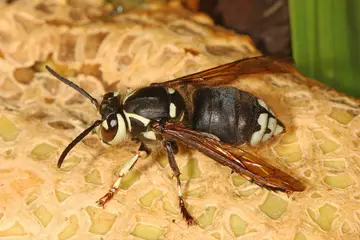
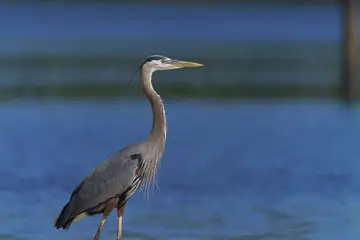
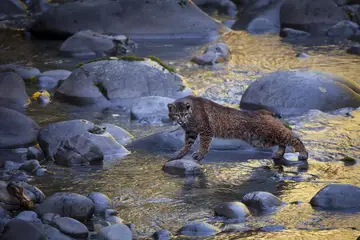
No venomous snake is known to live in Maine today. The timber rattlesnake, labelled venomous by official sources, is listed as extirpated. This guide covers 8 animal groups from Maine Department of Inland Fisheries and Wildlife (MDIFW) lists and other official sources, with photos, venomous status and when each group is active.
Identification help has limits: a photo cannot confirm that an animal is safe. Watch from a distance and never handle a wild animal.
These are the animals official sources describe as venomous or as a risk to people in Maine, across 5 groups. The reason is given in the source's own terms.
UMaine Cooperative Extension Tick Lab: “American dog ticks are the primary vectors of Rocky Mountain spotted fever in the eastern United States. As of yet, there have been no confirmed Maine-acquired cases of Rocky Mountain spotted fever.”
UMaine Cooperative Extension Tick Lab: “Lone star ticks can be vectors of several serious tick-borne diseases including Rocky Mountain spotted fever, tularemia, tick paralysis, STARI (southern tick-associated rash illness), and …”
Maine CDC: “Mosquitoes in Maine can carry viruses that can cause several illnesses. These include: Eastern Equine Encephalitis virus (EEE) Jamestown Canyon virus (JCV) West Nile virus (WNV)”
Hairs can cause a very itchy rash in some people (UMaine Extension): “…handle with care as the hairs on these can cause a very itchy rash for some people”
About 4 in 100 bats tested in Maine are rabies positive: “Bats are occasionally found in homes and camps and should be submitted to the Public Health Lab for rabies testing if they come in contact with a person.”
Human-bear conflicts (mainly damage to bird feeders and garbage, spring and early summer): “Most conflicts with bears can be prevented by removing common food attractants around homes.”
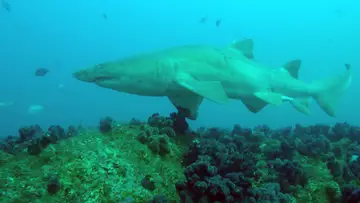
Maine has had one fatal shark bite, in 2020, the first in the state (Florida Museum ISAF). DMR monitors white sharks along the coast and gives safety advice: “These numbers include one fatality each in California, Hawaii and Maine, a first for the state.”
Official sources say the southern black widow and the brown recluse are not native to Maine or not found there. They are not counted among the dangerous animals above; each entry quotes the source.
Darker cells are the months with more open-licence observation records of each group in Maine (GBIF). They show when people see and record these animals, not how many there are. The current month, this month, is highlighted.
Report: Stranded, entangled or injured whales, dolphins, porpoises, seals or sea turtles: Maine Marine Animal Reporting Hotline 1-800-532-9551 (DMR). White shark sightings: DMR identification form. Reptile and amphibian sightings, especially listed species: Maine Amphibian & Reptile Atlas Project (IFW). Sick or injured bears: local Game Warden or Regional Wildlife Biologist. Browntail moth and forest-pest questions: dial 211. Maine Department of Marine Resources
Official safety advice
Shark safety (DMR): stay close to shore, swim in groups, avoid seals, schooling fish and murky water, and avoid swimming at dawn or dusk. Maine Department of Marine Resources
Leave stranded seals and other marine mammals alone; it is illegal to handle them and their teeth can be dangerous. Maine Department of Marine Resources
Ticks and mosquitoes: use EPA-approved repellents (Maine CDC). Maine DHHS
Bites, stings or suspected poisoning: call 911 or Poison Help at 1-800-222-1222 (Northern New England Poison Center serves Maine). Northern New England Poison Center
Questions people ask about Maine wildlife
Are there venomous snakes in Maine?
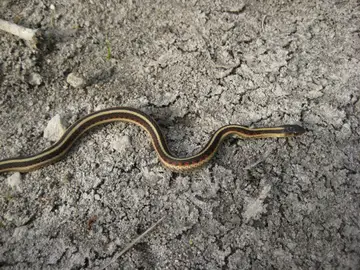
No. IFW says all Maine snakes are non-venomous. The only venomous species, the timber rattlesnake, is extirpated: there has been no credible evidence of it in Maine since the mid 1800s. Maine Department of Inland Fisheries and Wildlife
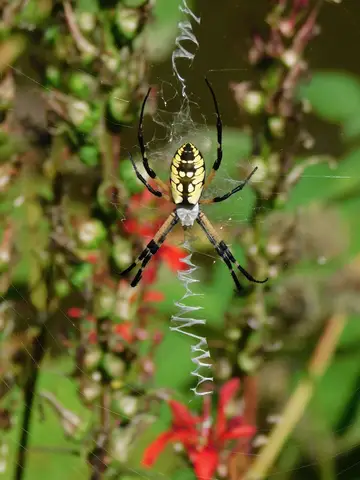
Rarely. UMaine Extension says the southern black widow is non-native and sometimes arrives in produce or cargo, and that the northern black widow may be an infrequent inhabitant as far north as central Maine. Maine DACF says no venomous spiders of medical concern are native. University of Maine Cooperative Extension
Maine DACF says no venomous spiders of medical concern are native, but some can be brought in. UMaine says the northern black widow may occur infrequently as far north as central Maine. Maine Department of Agriculture, Conservation and Forestry
Are there sharks in Maine?
Yes. DMR has monitored white sharks along the Maine coast since 2020 and says they are most often seen in July, August and September. The 2025 SWAP lists six shark species as SGCN. Maine Department of Marine Resources
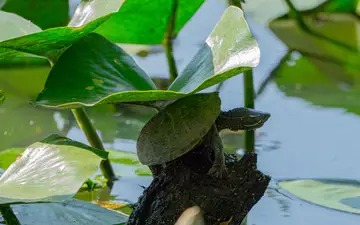
“Among Maine’s inland (nonmarine) reptiles are seven turtle species and nine snake species. Maine’s 10th snake species, the timber rattlesnake, is extirpated”
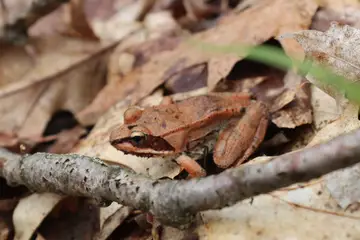
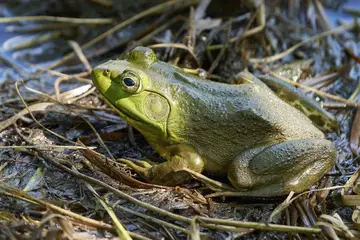
“Maine is home to 18 species of amphibians, including nine frog and toad species, eight native salamander species, and one exotic salamander, the mudpuppy.”
“Among Maine’s inland (nonmarine) reptiles are seven turtle species”
“Maine’s 10th snake species, the timber rattlesnake, is extirpated, with no credible evidence of the species available since the mid 1800s.”
“Among Maine’s inland (nonmarine) reptiles are seven turtle species and nine snake species.”
“During the winter months, Maine’s reptiles burrow underground (most snakes) or beneath the water (most turtles) to avoid extreme cold temperatures”
Official List of Maine Birds. Maine Bird Records Committee. see page; checked November 3, 2026.Quoted passages (1)
“The Maine Bird Records Committee considers the following 475 species to be recorded with convincing evidence within the state of Maine.”
“In Maine, deer ticks can carry germs that cause several illnesses.”
“The woodchuck tick (Ixodes cookei) can transmit Powassan virus.”
“About 14 different tick species live in Maine, but not all of these ticks bite people.”
“Any time the temperature is above freezing, ticks could be out.”
American Dog Tick. University of Maine Cooperative Extension Tick Lab. undated page; checked November 3, 2026.Quoted passages (1)
“American dog ticks are the primary vectors of Rocky Mountain spotted fever in the eastern United States. As of yet, there have been no confirmed Maine-acquired cases of Rocky Mountain spotted fever.”
Lone Star Tick. University of Maine Cooperative Extension Tick Lab. undated page; checked November 3, 2026.Quoted passages (1)
“Lone star ticks can be vectors of several serious tick-borne diseases including Rocky Mountain spotted fever, tularemia, tick paralysis, STARI (southern tick-associated rash illness), and ehrlichiosis which affects both humans and dogs.”
Health Advisory 2026PHADV008: Browntail moth. Maine Center for Disease Control and Prevention (Maine DHHS). Maine Health Alert Network advisory, May 2026; checked November 3, 2026.Quoted passages (3)
“The microscopic hairs found on browntail moth caterpillars, shed skins, and cocoons can cause skin reactions and breathing problems.”
“Hairs remain toxic for 1-3 years in the environment but lose their toxicity over time.”
“This year, browntail moth caterpillars emerged from their winter webs later than in previous years and will be active from May to early July.”
Vector-borne diseases. Maine Center for Disease Control and Prevention (Maine DHHS). undated page; checked November 3, 2026.Quoted passages (3)
“Mosquitoes in Maine can carry viruses that can cause several illnesses. These include: Eastern Equine Encephalitis virus (EEE) Jamestown Canyon virus (JCV) West Nile virus (WNV)”
“Using an EPA-approved repellent when spending time outdoors can reduce the risk of bites.”
“The results are published in weekly Arboviral Surveillance Reports from July to September each year.”
“…handle with care as the hairs on these can cause a very itchy rash for some people”
Rabies. Maine Center for Disease Control and Prevention (Maine DHHS). undated page; checked November 3, 2026.Quoted passages (1)
“In Maine, the most commonly infected animals are skunks, raccoons, bats, and foxes.”
Bats (mammal species page). Maine Department of Inland Fisheries and Wildlife. undated page; checked November 3, 2026.Quoted passages (1)
“Bats are occasionally found in homes and camps and should be submitted to the Public Health Lab for rabies testing if they come in contact with a person.”
Seals (DMR species information). Maine Department of Marine Resources. undated page; checked November 3, 2026.Quoted passages (2)
“It is against the law to handle a marine mammal without proper authorization, and their sharp teeth can be very dangerous.”
“The National Marine Fisheries Service recommend that any stranded animal be left alone.”
Bear (mammal species page). Maine Department of Inland Fisheries and Wildlife. undated page; checked November 3, 2026.Quoted passages (3)
“Most conflicts with bears can be prevented by removing common food attractants around homes.”
“To prevent conflicts with black bears each year when bears are active (April 1-November 1):”
“…when bears are active (April 1-November 1)”
Moose (mammal species page). Maine Department of Inland Fisheries and Wildlife. undated page; checked November 3, 2026.Quoted passages (1)
“Minimize agricultural conflicts with moose and the number and severity of moose-vehicle collisions”
Yearly Worldwide Shark Attack Summary (2020). Florida Museum of Natural History, University of Florida (International Shark Attack File). archived copy, captured March 1, 2021; checked November 3, 2026.Quoted passages (1)
“These numbers include one fatality each in California, Hawaii and Maine, a first for the state.”
“Non-native, but sometimes hitches a ride into Maine via packages, cargo, etc.–most often via shipments of produce from out-of-state”
“Non-native, and thus extremely rare in Maine–an encounter is only possible if a specimen is brought in from out-of-state”
“This spider may be an infrequent inhabitant as far north as central Maine and southern portions of Canada.”
Invasive Threats to Maine's Forests and Trees. Maine Department of Agriculture, Conservation and Forestry, Maine Forest Service. undated page; checked November 3, 2026.Quoted passages (3)
“Browntail moth is known to be established in Southern and Coastal Maine and Cape Cod Massachusetts.”
“Hosts: Ash Status in Maine: Established”
“Hemlock woolly adelgid is known to be established in many areas in southern and coastal Maine from Kittery to Mount Desert Island”
Pond Slider (species page). Maine Department of Inland Fisheries and Wildlife. undated page; checked November 3, 2026.Quoted passages (1)
“Most common pet turtle; unwanted captives often released into wild”
“Scientists suggest that green crabs (Carcinus maenas), originally from Europe, reached U.S. shores in the mid-1800s after riding across the Atlantic in the ballast water on ships”
NAS Species List: Reptiles, Maine. U.S. Geological Survey, Nonindigenous Aquatic Species Database. database queried November 3, 2026; checked November 3, 2026.
Got Pests? Spiders. Maine Department of Agriculture, Conservation and Forestry (Board of Pesticides Control). undated page; checked November 3, 2026.Quoted passages (1)
“There are no venomous spiders of medical concern that are native to Maine.”
White Shark Research. Maine Department of Marine Resources. archived copy, captured July 14, 2024; checked November 3, 2026.Quoted passages (2)
“White sharks have been historically documented in New England, and are most often observed during the months of July, August and September”
“White sharks have been detected as early as May and as late as November”
Mammals: Species Information. Maine Department of Inland Fisheries and Wildlife. undated page; checked November 3, 2026.Quoted passages (2)
“These include the sea mink, caribou, eastern cougar, and wolf.”
“Our state has one of the biggest moose and black bear populations in the ‘Lower 48’.”