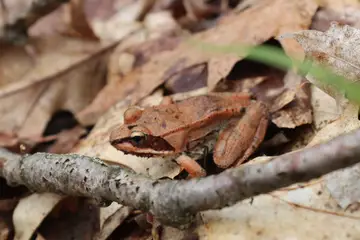
Maine Department of Inland Fisheries and Wildlife: Maine is home to 18 species of amphibians, including nine frog and toad species, eight native salamander species, and one exotic salamander, the mudpuppy.
No official source we use states whether this animal is venomous. That does not mean it is harmless: do not handle it.
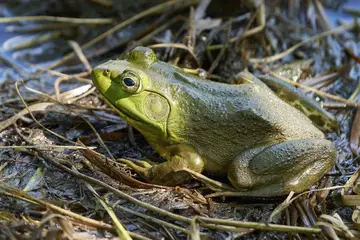
Size
Usually 6 to 8 inches long (NCWRC); can reach 8 inches or more and weigh over 2 pounds (CDFW). Missouri gives 3.5 to 6 inches snout to vent, occasionally to 8.75.
How to recognize it
No ridge (dorsolateral fold) down each side of the back
Large round eardrum: about twice the eye in males, about eye-sized in females
Fully webbed hind feet, longest toe extends past the webbing
No official source we use states whether this animal is venomous. That does not mean it is harmless: do not handle it.
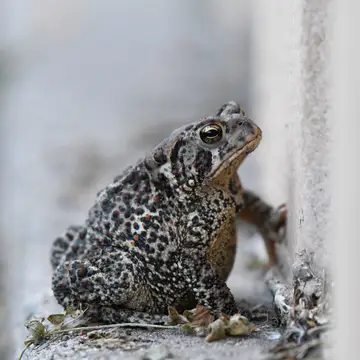
Size
2 to 3.5 inches long (NCWRC: up to 4 inches); females are larger than males.
How to recognize it
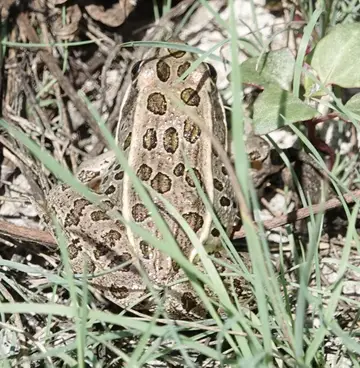
Dark spots on the back hold only a few large warts; the similar Fowler's toad has three or more. Agencies give different counts for the American toad (TWRA: one or two; Ohio DNR: one, two or three; Georgia DNR: usually no more than one), so wart count alone does not settle it; check the head crests too (see lookalikes).
A large, kidney- or bean-shaped parotoid gland behind each eye that usually does not touch the bony ridge (cranial crest) above the eye, or touches it only by a short spur.
Habitat: Forested areas, open fields, urban or suburban yards, wetlands, lakes, rivers and streams, and even high-elevation mountains (Maine Department of Inland Fisheries and Wildlife)
Habitat: Breeds in late spring in a wide variety of semi-permanent wetlands including marshes, deeper swamps, weedy pond coves, and beaver flowages (Maine Department of Inland Fisheries and Wildlife)
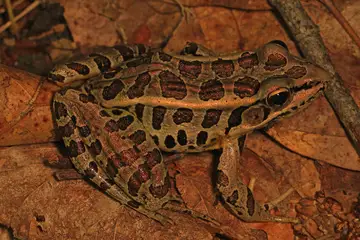
Habitat: Wet fields and meadows; the shores of lakes, ponds, and streams; wet woods; and sphagnum bogs (Maine Department of Inland Fisheries and Wildlife)
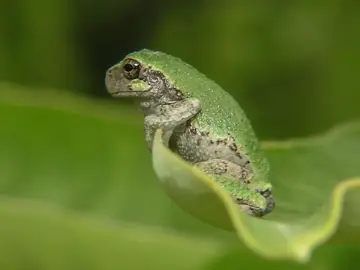
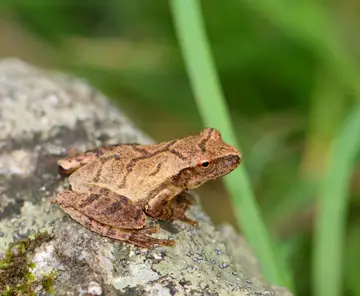
Maine IF&W lists the spring peeper's distinguishing characteristics: Maine's smallest frog (about 0.8 to 1.5 inches), grayish- or orangish-brown above with a distinct dark X on the back, and smooth skin; it notes it is commonly confused with the gray treefrog.
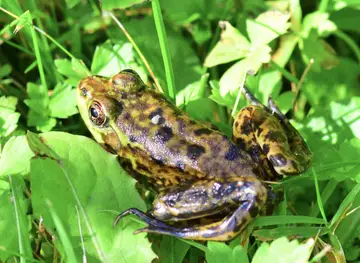
Wood frog or Green frog (young; including bronze color form)?
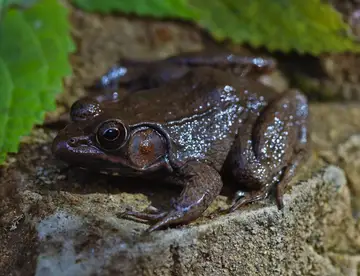
Green frog (young; including bronze color form) Not stated
MDC: young green frogs can be similar in color but lack the dark brown mask through each eye.
Photos show typical adults; individuals vary. Never get close to compare.
When frogs and toads are active in Maine
Records of frogs and toads in Maine peak in March to April and August. They show when people record frogs and toads, not how many there are (about month bars).
JanFebMarAprMayJunJulAugSepOctNovDec
2,452 records of frogs and toads in Maine by month (GBIF, CC0 and CC BY records).
How to report
Stranded, entangled or injured whales, dolphins, porpoises, seals or sea turtles: Maine Marine Animal Reporting Hotline 1-800-532-9551 (DMR). White shark sightings: DMR identification form. Reptile and amphibian sightings, especially listed species: Maine Amphibian & Reptile Atlas Project (IFW). Sick or injured bears: local Game Warden or Regional Wildlife Biologist. Browntail moth and forest-pest questions: dial 211. Maine Department of Marine Resources
About this list
The species list comes from Reptiles & Amphibians: Species Information (Maine IFW), Frogs (Maine Department of Inland Fisheries and Wildlife, undated pages (footer copyright 2026); retrieved 2026-11-03). 9 more entries come from other official sources named on each card.
Venom labels come only from official sources and link to them; "Not stated" never means harmless. How labels work.
“Maine is home to 18 species of amphibians, including nine frog and toad species, eight native salamander species, and one exotic salamander, the mudpuppy.”