Spring Peeper
Pseudacris crucifer · also called Northern Spring Peeper and Peeper · Last checked November 3, 2026.
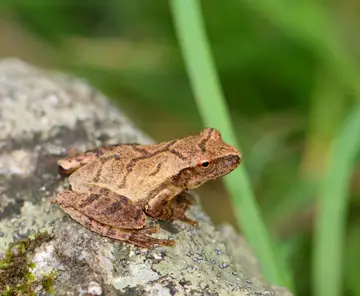
The spring peeper is a tiny frog, about 3/4 to 1 1/4 inches long, usually tan, brown or gray with a dark X on its back, known for its high "peep" in early spring. No official source checked says whether it is venomous or poisonous. CDC warns that amphibians can carry Salmonella. It lives across the eastern US, and agencies confirm it in the states listed here. Missouri Department of Conservation
On this page
Is the spring peeper dangerous?
No official source we use states whether this animal is venomous. That does not mean it is harmless: do not handle it.
How to identify a spring peeper
A photo or description can narrow it down, but cannot confirm what an animal is or that it is safe. Look from a distance and do not handle wild animals.
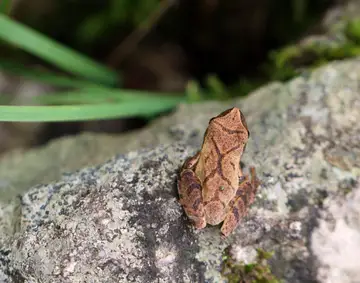
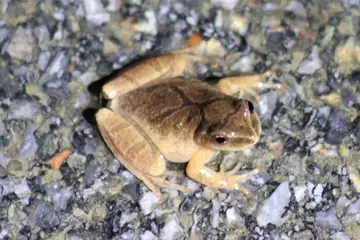
Size: Adults 3/4 to 1 1/4 inches snout to vent, occasionally to 1 1/2 inches; males are smaller than females. Missouri Department of Conservation
Colors: Pink, tan, light brown or gray, with a plain cream belly; virginia: shades of gray, brown or olive to almost black. Pattern: X-shaped mark on the back, sometimes faint or imperfect; dark line across the head between the eyes and dark bars on the legs.
Key features
- Clear, high-pitched peep about once per second; a chorus can sound like small jingle bells Missouri Department of Conservation
- Adhesive pads on the tips of fingers and toes Missouri Department of Conservation
- Some individuals have little to no markings Virginia Department of Wildlife Resources
Animals mistaken for the spring peeper
Spring Peeper or Mountain Chorus Frog?
Spring Peeper
Mountain Chorus Frog Pseudacris brachyphona
Ohio: two dark, curved stripes on the back like reversed parentheses, which on some frogs form a crude X or H (so it is easily confused with the spring peeper); it usually has a dark triangle between the eyes and a white line on the upper lip. Ohio Department of Natural Resources, Division of Wildlife
Spring Peeper or Western Chorus Frog?
Spring Peeper
Western Chorus Frog Pseudacris triseriata
Ohio: the call sounds like a finger rubbed over a comb's teeth, not a birdlike whistle. Ohio Department of Natural Resources, Division of Wildlife
Spring Peeper or Gray Treefrog?
Spring Peeper
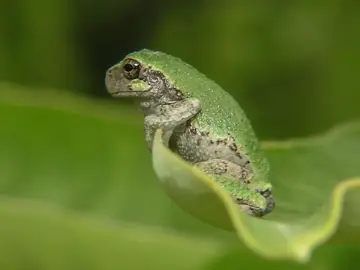
Maine IF&W lists the spring peeper's distinguishing characteristics: Maine's smallest frog (about 0.8 to 1.5 inches), grayish- or orangish-brown above with a distinct dark X on the back, and smooth skin; it notes it is commonly confused with the gray treefrog. Maine Department of Inland Fisheries and Wildlife
Where the spring peeper lives
- Native or listed
- Nonnative or not established
- No official record in our data
- 1–9
- 10–99
- 100–999
- 1,000+
On our state guides
- Alabama frogs and toads
- Arkansas frogs and toads
- Connecticut frogs and toads
- Delaware frogs and toads
- Florida frogs and toads
- Georgia frogs and toads
- Illinois frogs and toads
- Indiana frogs and toads
- Iowa frogs and toads
- Kansas frogs and toads
- Kentucky frogs and toads
- Louisiana frogs and toads
- Maine frogs and toads
- Maryland frogs and toads
- Massachusetts frogs and toads
- Michigan frogs and toads
- Minnesota frogs and toads
- Mississippi frogs and toads
- Missouri frogs and toads
- New York frogs and toads
- North Carolina frogs and toads
- Ohio frogs and toads
- Oklahoma frogs and toads
- Pennsylvania frogs and toads
- Rhode Island frogs and toads
- South Carolina frogs and toads
- Tennessee frogs and toads
- Texas frogs and toads
- Vermont frogs and toads
- Virginia frogs and toads
- West Virginia frogs and toads
- Wisconsin frogs and toads
State boundaries: U.S. Census Bureau, cartographic boundary file cb_2024_us_state_20m.
When it is active
Season varies by region. Missouri: active late February through November. South Carolina and Georgia: breeds in winter and early spring. Virginia: breeds February to June, and often calls again in fall.
US open-licence records peak in March to May.
Habitat and habits
Habitat: Woodland near ponds, streams or swamps with thick undergrowth; more abundant under denser forest. Breeds in fishless woodland ponds, temporary pools and ditches. Missouri Department of Conservation
Behavior: Usually hidden by day and active at dusk, or by day in heavy rain. Overwinters in soil, with natural antifreeze in its blood.
Diet: Small insects and spiders found on leaf litter and surface debris.
Young: Missouri: breeding mostly late February to mid-May. The female can lay around 900 eggs singly in shallow water, hatching in 3 to 14 days depending on temperature; tadpoles metamorphose about 3 months later and frogs mature at age two.
Legal status and reporting
Federal: Not listed under the Endangered Species Act. US Fish and Wildlife Service, ECOS
Report: Maine asks for photo-documented observations for the Maine Amphibian & Reptile Atlas Project (MARAP). No other reporting need was found. Maine Department of Inland Fisheries and Wildlife
Questions about the spring peeper
Maine peeper frogs
Maine IFW says the spring peeper is Maine's smallest frog and is common and secure statewide.
Virginia peeper frogs
Virginia DWR says the spring peeper occurs statewide and appears to be secure in Virginia.
Vermont peeper frogs
Vermont Fish & Wildlife calls it one of Vermont's smallest frogs and very common in the state.
Pennsylvania peeper frogs
Pennsylvania lists the spring peeper among its native species, with status Abundant.
Peepers frogs connecticut
A Connecticut DEEP presentation lists the spring peeper as an early spring frog identified by its small size and the X on its back, and calls it "the smallest frog we have."
Sources
- Spring Peeper. Missouri Department of Conservation. undated page; checked November 3, 2026.
Quoted passages (7)
“Adult length: ¾ to 1¼ inches, snout to vent; occasionally to 1½ inches. Males are smaller than females.”
“The peeping call is repeated about once per second. A chorus of spring peepers can sound like hundreds of small jingle bells.”
“The tips of fingers and toes have adhesive pads.”
“This woodland species lives near ponds, streams, or swamps with thick undergrowth. … Spring peepers are more abundant where there is denser forest cover. … Breeding occurs in fishless woodland ponds, temporary pools, water-filled ditches, or semipermanent, fishless swamps”
“Spring peepers forage on leaf litter and other surface debris for a variety of small insects and spiders.”
“The spring peeper usually remains hidden during the day and becomes active at dusk … it may, however, become active during the day if heavy rains persist. … Spring peepers overwinter in the soil; a natural antifreeze in their blood keeps them from freezing.”
“The female can lay around 900 eggs; these are fertilized by the male as they are laid. … breeding is mostly in late February to mid-May in small woodland pools. … Eggs hatch in 3–4 days or up to 10–14 days, depending on water temperature. … Tadpoles metamorphose about 3 months later … They become sexually mature at age two.”
- Spring Peeper. Virginia Department of Wildlife Resources. updated January 22, 2024; checked November 3, 2026.
Quoted passages (1)
“…some individuals may have little to no markings”
- Reptiles and Amphibians (Healthy Pets, Healthy People). Centers for Disease Control and Prevention. archived copy, captured October 10, 2026; checked November 3, 2026.
- ECOS species report: Pseudacris crucifer (ESA listing status). U.S. Fish and Wildlife Service, ECOS. live ECOS database query, retrieved 2026-11-03; checked November 3, 2026.
- Spring Peeper. Maine Department of Inland Fisheries and Wildlife. undated page; checked November 3, 2026.
Quoted passages (2)
“…we encourage members of the public to share their photo-documented observations as part of the Maine Amphibian & Reptile Atlas Project (MARAP)”
“Smallest frog in Maine, approximately 0.8 to 1.5 inches in length Grayish- or orangish-brown above with distinct dark ‘X’ on back Underside yellowish or grayish white Smooth skin Commonly confused with gray treefrog”
- Amphibians of Ohio Field Guide (Publication 5348). Ohio Department of Natural Resources, Division of Wildlife. PUBLICATION 5348; checked November 3, 2026.
Quoted passages (2)
“…the Mountain Chorus Frog has two dark, curved stripes on the back which look like reversed parentheses. On some individuals these lines form a crude ‘X’ or ‘H’ causing it to be easily confused with the Spring Peeper. It also usually bears a dark triangle between the eyes and a white line on the upper lip.”
“The Chorus Frog’s call resembles the sound made by rubbing one’s finger over the teeth of a hard plastic comb instead of the bird-like whistle of the Peeper.”
- Spring Peeper. Vermont Fish & Wildlife Department. undated page; checked November 3, 2026.
- Pennsylvania Native Reptile and Amphibian Species (PA Species and Endangered Species Act listing status). Pennsylvania Fish and Boat Commission. undated page; checked November 3, 2026.
- Frogs presentation (Kellogg Environmental Center). Connecticut Department of Energy and Environmental Protection. undated page; checked November 3, 2026.
- GBIF.org occurrence records, human observations licensed CC0 1.0 or CC BY 4.0 only, accessed November 3, 2026. The datasets behind these counts are listed on our Sources page.
- State boundaries: U.S. Census Bureau, cartographic boundary file cb_2024_us_state_20m.