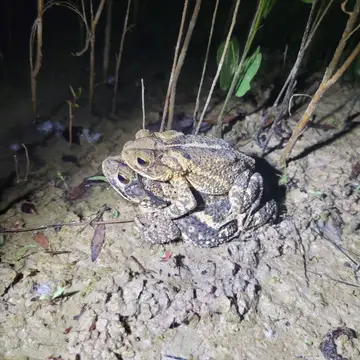
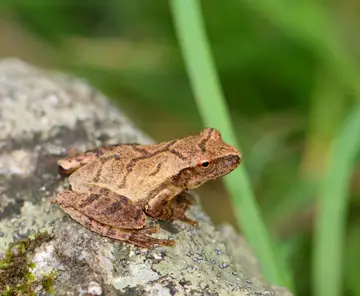
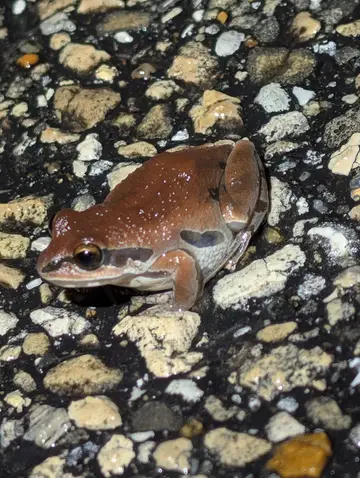
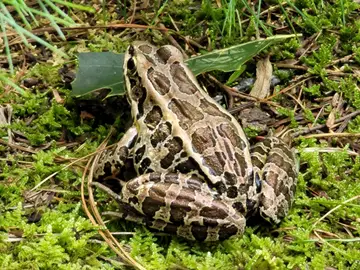
States Wildlife

Mississippi Frogs and Toads: Pictures & ID Guide

Last checked November 3, 2026 against official sources.

On this page
  1. All 33 frogs and toads
  2. Lookalikes
  3. When they are active
  4. How to report
  5. About this list
  6. Sources

MDWFP: Frogs 31 33

This page lists 33 species: all from MDWFP's Mississippi Amphibians and Reptiles, Revised 2012 — Order Anura – Frogs and Toads. 1 is nonnative. MDWFP gives a total of 31; the 33 here are the frogs and toads official sources name one by one.

All 33 frogs and toads

From A to Z.

American Bullfrog
Photo: Paul Danese · CC BY-SA 4.0 · Wikimedia Commons · resized

American Bullfrog

Rana catesbeiana

Not stated

Venom
No official source we use states whether this animal is venomous. That does not mean it is harmless: do not handle it.
Size
Usually 6 to 8 inches long (NCWRC); can reach 8 inches or more and weigh over 2 pounds (CDFW). Missouri gives 3.5 to 6 inches snout to vent, occasionally to 8.75.
How to recognize it
  • No ridge (dorsolateral fold) down each side of the back
  • Large round eardrum: about twice the eye in males, about eye-sized in females
  • Fully webbed hind feet, longest toe extends past the webbing
49 records by month.

Full American Bullfrog guide

Barking Treefrog
Photo: Becky Dill · CC0 1.0 · iNaturalist

Barking Treefrog

Hyla gratiosa

Not stated

Venom
No official source we use states whether this animal is venomous. That does not mean it is harmless: do not handle it.
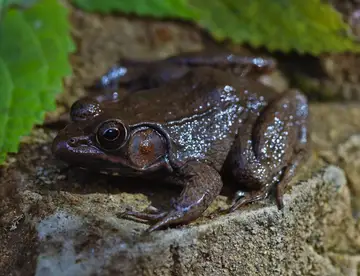
Bronze Frog
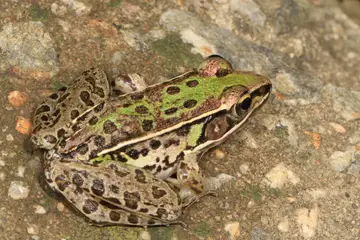
Photo: Peter Paplanus from St. Louis, Missouri · CC BY 2.0 · Wikimedia Commons

Bronze Frog

Rana clamitans clamitans

Not stated

Venom
No official source we use states whether this animal is venomous. That does not mean it is harmless: do not handle it.
49 records by month.
No confirmed photo of Cajun Chorus Frog

Cajun Chorus Frog

Pseudacris fouquettei

Not stated

Venom
No official source we use states whether this animal is venomous. That does not mean it is harmless: do not handle it.
No confirmed photo of Cope’s Gray treefrog

Cope’s Gray treefrog

Hyla chrysoscelis

Not stated

Venom
No official source we use states whether this animal is venomous. That does not mean it is harmless: do not handle it.
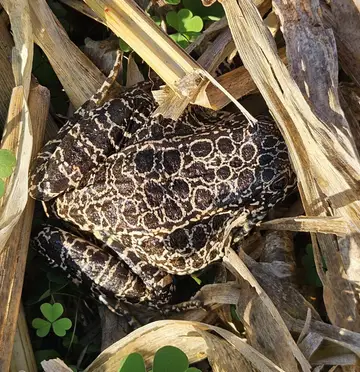
Crawfish Frog
Photo: Alex · CC0 1.0 · iNaturalist

Crawfish Frog

Rana areolata

Not stated

Venom
No official source we use states whether this animal is venomous. That does not mean it is harmless: do not handle it.
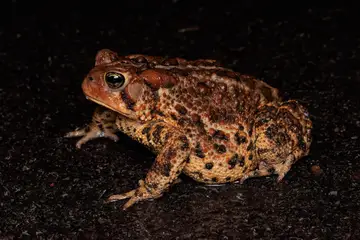
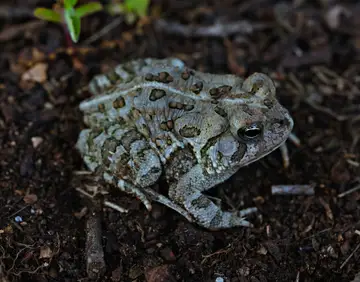
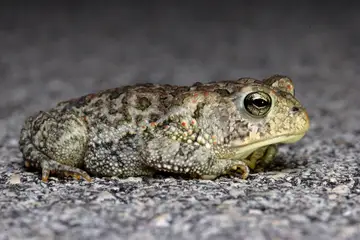
Dwarf American Toad
Photo: User:Rstanton13 · CC BY-SA 4.0 · Wikimedia Commons · resized

Dwarf American Toad

Bufo (Anaxyrus) americanus charlesmithi

Not stated

Venom
No official source we use states whether this animal is venomous. That does not mean it is harmless: do not handle it.
Size
2 to 3.5 inches long (NCWRC: up to 4 inches); females are larger than males.
How to recognize it
  • Dark spots on the back hold only a few large warts; the similar Fowler's toad has three or more. Agencies give different counts for the American toad (TWRA: one or two; Ohio DNR: one, two or three; Georgia DNR: usually no more than one), so wart count alone does not settle it; check the head crests too (see lookalikes).
  • A large, kidney- or bean-shaped parotoid gland behind each eye that usually does not touch the bony ridge (cranial crest) above the eye, or touches it only by a short spur.
  • Enlarged warts on the lower leg.

Full Dwarf American Toad guide

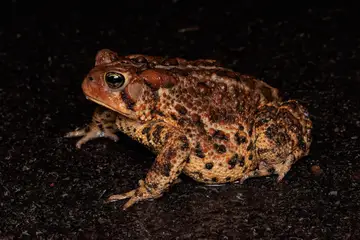
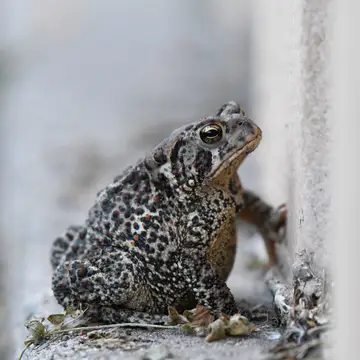
Eastern American Toad
Photo: User:Rstanton13 · CC BY-SA 4.0 · Wikimedia Commons · resized

Eastern American Toad

Bufo (Anaxyrus) americanus americanus

Not stated

Venom
No official source we use states whether this animal is venomous. That does not mean it is harmless: do not handle it.
Size
2 to 3.5 inches long (NCWRC: up to 4 inches); females are larger than males.
How to recognize it
  • Dark spots on the back hold only a few large warts; the similar Fowler's toad has three or more. Agencies give different counts for the American toad (TWRA: one or two; Ohio DNR: one, two or three; Georgia DNR: usually no more than one), so wart count alone does not settle it; check the head crests too (see lookalikes).
  • A large, kidney- or bean-shaped parotoid gland behind each eye that usually does not touch the bony ridge (cranial crest) above the eye, or touches it only by a short spur.
  • Enlarged warts on the lower leg.

Full Eastern American Toad guide

No confirmed photo of Eastern Narrow-mouthed Toad

Eastern Narrow-mouthed Toad

Gastrophryne carolinensis

Not stated

Venom
No official source we use states whether this animal is venomous. That does not mean it is harmless: do not handle it.
42 records by month.
No confirmed photo of Eastern Spadefoot

Eastern Spadefoot

Scaphiopus holbrooki

Not stated

Venom
No official source we use states whether this animal is venomous. That does not mean it is harmless: do not handle it.
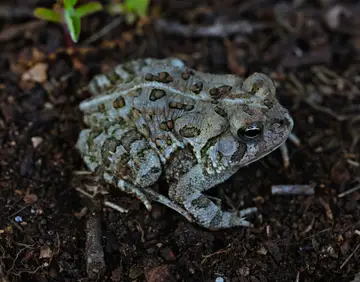
Fowler’s Toad
Photo: Peter Paplanus from St. Louis, Missouri · CC BY 4.0 · Wikimedia Commons

Fowler’s Toad

Bufo (Anaxyrus) fowleri

Not stated

Venom
No official source we use states whether this animal is venomous. That does not mean it is harmless: do not handle it.
Size
2 to 3 inches long (Alabama: 2 to 4 inches).
How to recognize it
  • Three or more warts in each of the large dark spots on the back (the American toad has fewer)
  • The ridge behind each eye (cranial crest) touches the parotoid gland, with no gap
  • A pale stripe usually runs down the middle of the back
36 records by month.

Full Fowler’s Toad guide

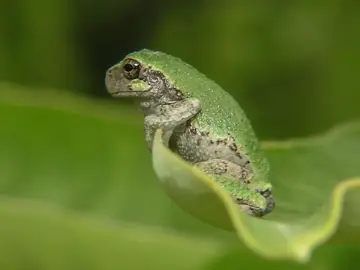
Gray Treefrog
Photo: Erik Schiff · CC0 1.0 · iNaturalist

Gray Treefrog

Hyla versicolor

Not stated

Venom
No official source we use states whether this animal is venomous. That does not mean it is harmless: do not handle it.
Size
Small: body usually 1¼ to 2½ inches long (snout to vent); Tennessee gives 1.25 to 2 inches.
How to recognize it
  • Large white or gray spot below each eye
  • Warty (granular) skin and sticky pads on fingers and toes
  • Bright orange or golden yellow on the underside of each hind leg, shown as a flash color

Full Gray Treefrog guide

Green Frog
Photo: Peter Paplanus from St. Louis, Missouri · CC BY 2.0 · Wikimedia Commons

Green Frog

Rana clamitans melanota

Not stated

Venom
No official source we use states whether this animal is venomous. That does not mean it is harmless: do not handle it.
49 records by month.
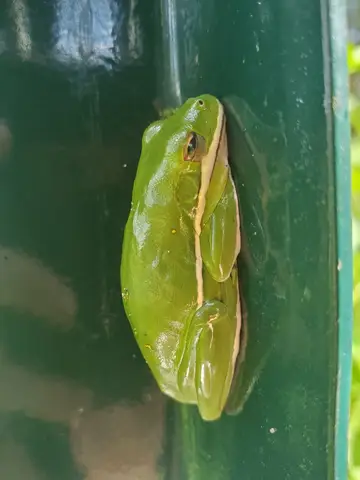
Green Treefrog
Photo: lightbed · CC0 1.0 · iNaturalist

Green Treefrog

Hyla cinerea

Not stated

Venom
No official source we use states whether this animal is venomous. That does not mean it is harmless: do not handle it.
Size
Adults reach about 2.5 inches: USGS gives 1.25 to 2.5 inches snout to vent. Virginia DWR says up to 2 inches.
How to recognize it
  • Smooth skin
  • Prominent toe pads
  • Loud nasal call, like cowbells from a distance
82 records by month.

Full Green Treefrog guide

Greenhouse Frog
Photo: Rachel Crane · CC BY 4.0 · iNaturalist

Greenhouse Frog

Eleutherodactylus planirostris

Not stated Nonnative

Venom
No official source we use states whether this animal is venomous. That does not mean it is harmless: do not handle it.
Gulf Coast Toad
Photo: Audrey Witherington · CC BY 4.0 · iNaturalist

Gulf Coast Toad

Bufo (Ollotis) nebulifer

Not stated

Venom
No official source we use states whether this animal is venomous. That does not mean it is harmless: do not handle it.
No confirmed photo of Mississippi Gopher Frog

Mississippi Gopher Frog

Rana sevosa

Not stated

Venom
No official source we use states whether this animal is venomous. That does not mean it is harmless: do not handle it.
Conservation
MDWFP Threatened & Endangered table: Dusky Gopher Frog (RANA SEVOSA): Global Rank G1; State Rank S1; Federal Status LE; State Status LE
No confirmed photo of Mountain Chorus Frog

Mountain Chorus Frog

Pseudacris brachyphona

Not stated

Venom
No official source we use states whether this animal is venomous. That does not mean it is harmless: do not handle it.
No confirmed photo of Northern Cricket Frog

Northern Cricket Frog

Acris crepitans crepitans

Not stated

Venom
No official source we use states whether this animal is venomous. That does not mean it is harmless: do not handle it.
Northern Spring Peeper
Photo: Christine Young · CC BY 4.0 · iNaturalist

Northern Spring Peeper

Pseudacris crucifer crucifer

Not stated

Venom
No official source we use states whether this animal is venomous. That does not mean it is harmless: do not handle it.
Size
Adults 3/4 to 1 1/4 inches snout to vent, occasionally to 1 1/2 inches; males are smaller than females.
How to recognize it
  • Clear, high-pitched peep about once per second; a chorus can sound like small jingle bells
  • Adhesive pads on the tips of fingers and toes
  • Some individuals have little to no markings
32 records by month.

Full Northern Spring Peeper guide

No confirmed photo of Oak Toad

Oak Toad

Bufo (Anaxyrus) quercicus

Not stated

Venom
No official source we use states whether this animal is venomous. That does not mean it is harmless: do not handle it.
Ornate Chorus Frog
Photo: Scott Allen Davis · CC BY 4.0 · iNaturalist

Ornate Chorus Frog

Pseudacris ornata

Not stated

Venom
No official source we use states whether this animal is venomous. That does not mean it is harmless: do not handle it.
Pickerel Frog
Photo: Ken Clark · CC BY 4.0 · iNaturalist

Pickerel Frog

Rana palustris

Not stated

Venom
No official source we use states whether this animal is venomous. That does not mean it is harmless: do not handle it.
Size
About 1.75 to 3 inches long; large females reach about 3.5 inches. Males are smaller than females.
How to recognize it
  • Two rows of square or rectangular dark spots down the back between two light ridges (dorsolateral folds); spots sometimes merge into bars
  • Bright yellow or orange on the hidden inner surfaces of the hind legs and groin
  • No white spot on the eardrum (tympanum), unlike the southern leopard frog

Full Pickerel Frog guide

No confirmed photo of Pig Frog

Pig Frog

Rana grylio

Not stated

Venom
No official source we use states whether this animal is venomous. That does not mean it is harmless: do not handle it.
No confirmed photo of Pine Woods Treefrog

Pine Woods Treefrog

Hyla femoralis

Not stated

Venom
No official source we use states whether this animal is venomous. That does not mean it is harmless: do not handle it.
No confirmed photo of River Frog

River Frog

Rana heckscheri

Not stated

Venom
No official source we use states whether this animal is venomous. That does not mean it is harmless: do not handle it.
No confirmed photo of Southeastern Chorus Frog

Southeastern Chorus Frog

Pseudacris feriarum

Not stated

Venom
No official source we use states whether this animal is venomous. That does not mean it is harmless: do not handle it.
No confirmed photo of Southern Chorus Frog

Southern Chorus Frog

Pseudacris nigrita

Not stated

Venom
No official source we use states whether this animal is venomous. That does not mean it is harmless: do not handle it.
No confirmed photo of Southern Cricket Frog

Southern Cricket Frog

Acris gryllus gryllus

Not stated

Venom
No official source we use states whether this animal is venomous. That does not mean it is harmless: do not handle it.
Southern Leopard Frog
Photo: Judy Gallagher · CC BY-SA 4.0 · iNaturalist · resized

Southern Leopard Frog

Rana sphenocephala utricularia

Not stated

Venom
No official source we use states whether this animal is venomous. That does not mean it is harmless: do not handle it.
Southern Toad
Photo: Rstanton13 · CC BY-SA 4.0 · Wikimedia Commons · resized

Southern Toad

Bufo (Anaxyrus) terrestris

Not stated

Venom
No official source we use states whether this animal is venomous. That does not mean it is harmless: do not handle it.
Size
Usually 1.6 to 2.9 inches (SREL), with official ranges up to 3.5 inches (Virginia DWR) or 4 inches (Alabama); island populations can reach 4.4 inches. FWC: maximum of about 3 to 4 inches. Females are larger than males.
How to recognize it
  • High ridges (cranial crests) on the head that end in raised knobs in front of the glands behind the eyes, giving a "horned" look. NCWRC: this is the easiest way to tell it from American and Fowler's toads.
  • Large, elongated (Alabama: kidney-shaped) parotoid glands behind the eyes; UF/IFAS describes them as small and oval compared with the cane toad's large triangular glands.
  • A faint light stripe may run down the middle of the back.
80 records by month.

Full Southern Toad guide

No confirmed photo of Squirrel Treefrog

Squirrel Treefrog

Hyla squirella

Not stated

Venom
No official source we use states whether this animal is venomous. That does not mean it is harmless: do not handle it.
No confirmed photo of Western Bird-voiced Treefrog

Western Bird-voiced Treefrog

Hyla avivoca avivoca

Not stated

Venom
No official source we use states whether this animal is venomous. That does not mean it is harmless: do not handle it.

Frogs and Toads people confuse

American toad or Fowler's toad?

American toad
Photo: U.S. Fish and Wildlife Service - Midwest Region · Public domain · Wikimedia Commons

American toad Not stated

Fowler's toad
Photo: Peter Paplanus from St. Louis, Missouri · CC BY 4.0 · Wikimedia Commons

Fowler's toad Not stated

The difference official sources agree on is at the head: in the American toad the ridge (cranial crest) behind each eye is separate from the parotoid gland or joined to it only by a short spur; in Fowler's toad the two touch. Fowler's toad also has three or more warts in each of the larger dark spots, while the American toad has fewer (TWRA: one or two; Ohio DNR: one, two or three; Georgia DNR: usually no more than one). Fowler's toad has a whitish belly, often with a single dark spot on the chest; the American toad's belly is peppered with dark spots. The two can hybridize, so some toads cannot be told apart.

Fowler's toad or American toad?

Fowler's toad
Photo: Peter Paplanus from St. Louis, Missouri · CC BY 4.0 · Wikimedia Commons

Fowler's toad Not stated

American toad
Photo: U.S. Fish and Wildlife Service - Midwest Region · Public domain · Wikimedia Commons

American toad Not stated

The difference official sources agree on is at the head: in the American toad the ridge (cranial crest) behind each eye is separate from the parotoid gland or joined to it only by a short spur; in Fowler's toad the two touch. Fowler's toad also has three or more warts in each of the larger dark spots, while the American toad has fewer (TWRA: one or two; Ohio DNR: one, two or three; Georgia DNR: usually no more than one). Fowler's toad has a whitish belly, often with a single dark spot on the chest; the American toad's belly is peppered with dark spots. The two can hybridize, and hybrids have intermediate features.

Fowler's toad or Southern toad?

Fowler's toad
Photo: Peter Paplanus from St. Louis, Missouri · CC BY 4.0 · Wikimedia Commons

Fowler's toad Not stated

Southern toad
Photo: Rstanton13 · CC BY-SA 4.0 · Wikimedia Commons · resized

Southern toad Not stated

The southern toad has larger cranial ridges (crests) on the head. The two may hybridize where their ranges meet.

Southern toad or American toad?

Southern toad
Photo: Rstanton13 · CC BY-SA 4.0 · Wikimedia Commons · resized

Southern toad Not stated

American toad
Photo: U.S. Fish and Wildlife Service - Midwest Region · Public domain · Wikimedia Commons

American toad Not stated

The southern toad is most easily told by the large knobs on its pronounced head crests; its trill is shorter and higher-pitched than the American toad's. They may hybridize where ranges overlap.

Green Treefrog or Gray Treefrog and Cope's Gray Treefrog?

Green Treefrog
Photo: lightbed · CC0 1.0 · iNaturalist

Green Treefrog Not stated

Gray Treefrog and Cope's Gray Treefrog
Photo: Erik Schiff · CC0 1.0 · iNaturalist

Gray Treefrog and Cope's Gray Treefrog Not stated

Missouri Department of Conservation calls both gray treefrogs gray, unlike the green treefrog, but its gray treefrog account says their color may be green to light greenish gray, gray, brown or dark brown, so color alone does not settle it. MDC: gray treefrogs have warty (granular) skin; the green treefrog's back is smooth and a light stripe runs from its upper lip down the side of the body.

Gray treefrog or Green treefrog?

Gray treefrog
Photo: Erik Schiff · CC0 1.0 · iNaturalist

Gray treefrog Not stated

Green treefrog
Photo: lightbed · CC0 1.0 · iNaturalist

Green treefrog Not stated

The green treefrog is truly green with a light stripe from the upper lip down the side of the body.

Photos show typical adults; individuals vary. Never get close to compare.

When frogs and toads are active in Mississippi

Records of frogs and toads in Mississippi peak in March to July and September. They show when people record frogs and toads, not how many there are (about month bars).

738 records of frogs and toads in Mississippi by month (GBIF, CC0 and CC BY records).

How to report

Bear problems or sightings, and nuisance-animal guidance: MDWFP Wildlife Bureau (601) 432-2199. Nuisance animal technical guidance is also available from USDA Wildlife Services (MS) (662) 325-3014. Coastal invasive species: MDMR Invasive Species Coordinator (228) 523-4113. Sawfish sightings: 1-844-4SAWFISH. MDWFP
About this list

The species list comes from Mississippi Amphibians and Reptiles (Mississippi Herpetology Checklist), Revised 2012 — Order Anura – Frogs and Toads (Mississippi Museum of Natural Science (MDWFP)).

Venom labels come only from official sources and link to them; "Not stated" never means harmless. How labels work.

"Nonnative" and "Invasive" follow the wording of the source list. See invasive species in Mississippi.

Want a paper copy? Print the Mississippi frogs and toads ID chart.

Sources

  1. About Us. Mississippi Department of Wildlife, Fisheries, and Parks (MDWFP). undated page; checked November 3, 2026.
  2. Mississippi Amphibians and Reptiles (Mississippi Herpetology Checklist), Revised 2012. Mississippi Museum of Natural Science (MDWFP). archived copy, captured April 5, 2024; checked November 3, 2026.
    Quoted passages (1)
    “Frogs 31 33”
  3. Black Bear Program. Mississippi Department of Wildlife, Fisheries, and Parks (MDWFP). undated page; checked November 3, 2026.
    Quoted passages (1)
    “If you are experiencing problems involving black bears or want to report a recent bear sighting, please contact MDWFP at (601) 432-2199.”
  4. GBIF.org occurrence records, human observations licensed CC0 1.0 or CC BY 4.0 only, accessed November 3, 2026. The datasets behind these counts are listed on our Sources page.