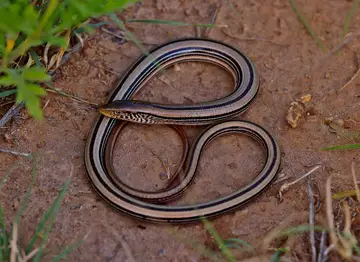
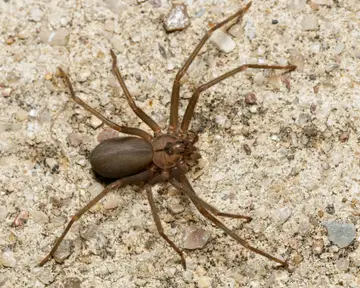
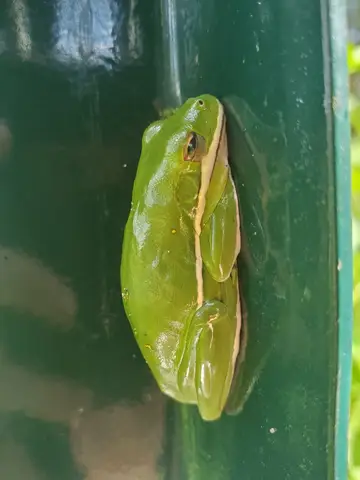
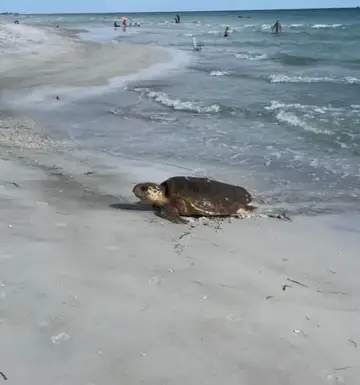
Mississippi has 6 venomous snakes named by official sources: Southern Copperhead, Eastern Cottonmouth and Western Cottonmouth (two forms of one species), Eastern Diamond-backed Rattlesnake, Canebrake Rattlesnake, Carolina Pygmy Rattlesnake, Dusky Pygmy Rattlesnake and Western Pygmy Rattlesnake (three forms of one species) and Harlequin Coralsnake, as labelled by Mississippi State University Extension Service and MDWFP. This guide covers 10 animal groups from Mississippi Department of Wildlife, Fisheries, and Parks (MDWFP), including the Mississippi Museum of Natural Science (MMNS) lists and other official sources, with photos, venomous status and when each group is active.
Identification help has limits: a photo cannot confirm that an animal is safe. Watch from a distance and never handle a wild animal.
These are the animals official sources describe as venomous or as a risk to people in Mississippi, across 6 groups. The reason is given in the source's own terms.
Venomous: “Mississippi does have six types of venomous snakes: copperhead, coral snake, pygmy rattlesnake, eastern diamondback rattlesnake, canebrake or timber rattlesnake, and cottonmouth or water moccasin.”
Venomous: “The cottonmouth is our primary snakebite species in Mississippi and extremely serious medical implications have been documented following bites of this snake.”
Venomous: “The cottonmouth is our primary snakebite species in Mississippi and extremely serious medical implications have been documented following bites of this snake.”
Venomous: “Mississippi does have six types of venomous snakes: copperhead, coral snake, pygmy rattlesnake, eastern diamondback rattlesnake, canebrake or timber rattlesnake, and cottonmouth or water moccasin.”
Venomous: “Mississippi does have six types of venomous snakes: copperhead, coral snake, pygmy rattlesnake, eastern diamondback rattlesnake, canebrake or timber rattlesnake, and cottonmouth or water moccasin.”
Venomous: “Although there seems to be considerable variability in individual response to bites, brown recluse bites can be quite serious, resulting in extensive localized tissue damage.”
Venomous: “Fatalities from widow spider bites are extremely rare, especially with good medical attention, but the venom of widow spiders is neurotoxic and can result in intense pain and cramping of muscles …”
Venomous: “The bite is of no lasting consequence, but the venom they inject through their sting is quite potent, especially in relation to their size.”
Venomous: “The bite is of no lasting consequence, but the venom they inject through their sting is quite potent, especially in relation to their size.”
Stings: “People who have been stung by an Eastern velvet ant say it has the most painful sting of any insect in the Southeast—more painful than a red wasp.”
Stinging caterpillar: “Other stinging caterpillars in the state include buck moths, Io moths, saddleback caterpillars, stinging rose slug, crowned slugs, hag moths and a few others.”
Stinging caterpillar: “Other stinging caterpillars in the state include buck moths, Io moths, saddleback caterpillars, stinging rose slug, crowned slugs, hag moths and a few others.”
Poison Control lists them as of potential danger: “Other species in this area which are known to be of potential danger include: … Bees, Wasps, and Hornets”
Bears that are fed and lose fear of humans can become dangerous (attacks): “Bears that no longer have a fear of humans can become extremely dangerous.”
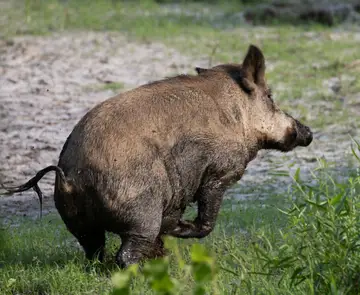
Health risks and property damage (as MDWFP states it): “The destructive habits and health risks caused by wild hogs have been a growing concern since their introduction.”
Venomous: “This popular aquarium pet with a bold appearance and venomous ‘mane-like’ spines first escaped into Florida’s Atlantic waters in 1992 as a result of Hurricane Andrew.”
Barb is sharp and serrated: “The barb, or spine, located partway down the tail, is sharp and (like a kitchen knife) has serrated side projections which are dangerous. … The skin covering the base of the barb has toxic cells that …”
Electric jolt, not strong enough to kill: “One interesting ray is the torpedo ray, which produces its own electricity. Although the electric current is not strong enough to kill a person, it is severe enough to give a strong jolt.”
20 nonnative animals are named on Mississippi's official lists (MDWFP). The USGS Nonindigenous Aquatic Species database records 4 nonnative animals in our groups with an established population in Mississippi.
Darker cells are the months with more open-licence observation records of each group in Mississippi (GBIF). They show when people see and record these animals, not how many there are. The current month, this month, is highlighted.
Report: Bear problems or sightings, and nuisance-animal guidance: MDWFP Wildlife Bureau (601) 432-2199. Nuisance animal technical guidance is also available from USDA Wildlife Services (MS) (662) 325-3014. Coastal invasive species: MDMR Invasive Species Coordinator (228) 523-4113. Sawfish sightings: 1-844-4SAWFISH. MDWFP
Yes. MDWFP estimated 32,000-38,000 alligators and about 408,000 acres of alligator habitat; Jackson County has the most habitat. The estimate comes from an undated page that refers to 2000 surveys. MDWFP · More
How many venomous snakes are in Mississippi?
Copperhead, cottonmouth, pygmy rattlesnake, eastern diamondback rattlesnake, canebrake (timber) rattlesnake and coral snake. Mississippi Poison Control counts the same snakes as nine species and subspecies ("There are nine species of venomous snakes in Mississippi"), splitting pygmy rattlesnakes and cottonmouths. MDWFP
How many kinds of snakes are in Mississippi?
MDWFP says 55; the MMNS 2012 checklist counts 41 species (56 species and subspecies). MDWFP
Are there rattlesnakes in Mississippi?
Yes. Eastern diamondback, canebrake and pygmy rattlesnakes. MDWFP
Are there coral snakes in Mississippi?
Yes. Found in sandy pinewoods in the southeastern counties; secretive and generally uncommon. MDWFP
Are there water moccasins (cottonmouths) in Mississippi?
Yes. Found in virtually all aquatic habitats statewide, including brackish coastal marshes and the barrier islands; MDWFP calls it the primary snakebite species. MDWFP
Are there bears in Mississippi?
Yes. Two black bear subspecies: American black bear in the northern third, Louisiana black bear in the southern two-thirds; both state-endangered. MDWFP
Are there mountain lions (panthers) in Mississippi?
The 1989 checklist says the mountain lion "once ranged throughout most of state"; the MDWFP T&E table gives the Florida panther a State Rank of SX. No official source here reports a current population. MDWFP
Yes. Red lionfish is in the MDMR state saltwater records (record dated 02/14/17). They have venomous spines and the state calls them invasive. Mississippi Department of Marine Resources
Is the portuguese man-of-war found in Mississippi?
“Mississippi does have six types of venomous snakes: copperhead, coral snake, pygmy rattlesnake, eastern diamondback rattlesnake, canebrake or timber rattlesnake, and cottonmouth or water moccasin.”
“In early spring, snakes are attracted to warm spots, such as metal, rocks, or other heat-conducting items. In warm months, they seek out cool, damp, sheltered areas.”
“The cottonmouth is our primary snakebite species in Mississippi and extremely serious medical implications have been documented following bites of this snake.”
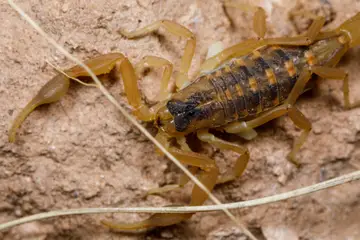
“Actually, there are two species, southern devil scorpions and striped bark scorpions.”
“As with bee or wasp stings, there may be individuals who are hypersensitive to the venom.”
“Scorpions in Mississippi? They are not that common, but they are here. Actually, there are two species, southern devil scorpions and striped bark scorpions.”
“A total of 70 species is included in this checklist.”
“Myocastor coypus (nutria).-Found in aquatic habitats throughout state; also on Horn Island.”
“Rattus norvegicus (Norway rat).-Common in and near human habitations in state and on Horn Island.”
“Rattus rattus (roof rat).-Widespread throughout state, including Horn Island; sometimes found in and around human habitations in rural settings.”
“Mus musculus (house mouse).-Distributed throughout state (including Horn Island), usually in close association with humans, but feral populations also are known.”
“Canis latrans (coyote).-Recorded from every county of state since first reported (Paradiso, 1966).”
“Dasypus novemcinctus (nine-banded armadillo).-Reported from everywhere except extreme northeastern corner of state.”
“Although there seems to be considerable variability in individual response to bites, brown recluse bites can be quite serious, resulting in extensive localized tissue damage.”
“Fatalities from widow spider bites are extremely rare, especially with good medical attention, but the venom of widow spiders is neurotoxic and can result in intense pain and cramping of muscles, especially in the abdomen and upper legs.”
“Symptoms of brown widow bites tend to be milder and more localized than those of black widow bites.”
“Both species can and will sting, and, although the sting is painful, it is very rarely deadly. Many folks who have been stung report only short-lived local pain with localized swelling, much like that caused by a wasp sting. Some have reported systemic effects, such as headaches, neck aches, and other symptoms.”
“Both species can and will sting, and, although the sting is painful, it is very rarely deadly.”
“These wasps are more aggressive than other species and may fly several feet to sting someone who happens to be near the nest site.”
“Wasp stings hurt, and some people are highly sensitive to stings.”
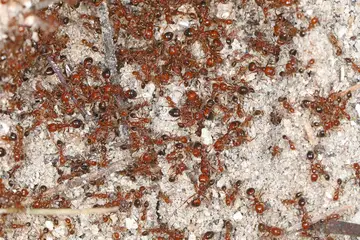
“Imported fire ants (Solenopsis spp.) are nonnative ants that invaded the state in the early part of the 20th century.”
“You don’t often find black widows indoors, but they are common in outdoor areas around the home.”
“Most spiders produce venom and can bite, but only three Mississippi species, the black widow, the brown widow, and the brown recluse, are seriously venomous to humans.”
“They now occur throughout the state and are one of the most economically important insect pests in the South.”
“Seek immediate medical attention if you get bitten by a widow spider.”
“Scorpions are active at night, when they leave their refuges to search for insects and spiders to eat.”
“In the cooler months, mated female paper wasps invade poorly sealed attics and buildings in search of a warm place to spend the winter.”
The Fire Ant Sting. Mississippi State University Extension Service. undated page; checked November 3, 2026.Quoted passages (1)
“The bite is of no lasting consequence, but the venom they inject through their sting is quite potent, especially in relation to their size.”
“The stings come from hollow spines with venom glands at their base that are hidden beneath that coat of harmless longer hairs.”
“They may look cute and furry, but puss caterpillars have one of the most painful stings of any insect in the state.”
“Other stinging caterpillars in the state include buck moths, Io moths, saddleback caterpillars, stinging rose slug, crowned slugs, hag moths and a few others.”
“People who have been stung by an Eastern velvet ant say it has the most painful sting of any insect in the Southeast—more painful than a red wasp.”
Venomous Animals of Mississippi. Mississippi Regional Poison Control Center (University of Mississippi Medical Center); hosted by the Mississippi State Department of Health. archived copy, captured February 18, 2025; checked November 3, 2026.Quoted passages (3)
“Other species in this area which are known to be of potential danger include: … Bees, Wasps, and Hornets”
“Punctures by the spine of a catfish fin deposit a venom”
“Other species in this area which are known to be of potential danger include: … Portuguese Man-of-War”
Living with Bears. Mississippi Department of Wildlife, Fisheries, and Parks (MDWFP). undated page; checked November 3, 2026.Quoted passages (1)
“Bears that no longer have a fear of humans can become extremely dangerous.”
Wild Hog Program. Mississippi Department of Wildlife, Fisheries, and Parks (MDWFP). undated page; checked November 3, 2026.Quoted passages (3)
“The destructive habits and health risks caused by wild hogs have been a growing concern since their introduction.”
“Wild hogs are a non-native invasive species that have been spreading at an alarming rate throughout the North America.”
“There is no daily or seasonal bag limit for wild hogs in Mississippi.”
Bats and rabies fact sheet. Mississippi Museum of Natural Science (MDWFP). 2019; checked November 3, 2026.Quoted passages (1)
“Less than 0.5% of bats carry rabies, but in the U.S. approximately 1 person dies per year of rabies contracted from a bat”
Jellyfish and Siphonophores. National Park Service, Gulf Islands National Seashore. updated December 9, 2019; checked November 3, 2026.Quoted passages (1)
“Vinegar can cause unfired stinging cells, called nematocysts, to fire, injecting more venom”
“This popular aquarium pet with a bold appearance and venomous ‘mane-like’ spines first escaped into Florida’s Atlantic waters in 1992 as a result of Hurricane Andrew.”
“The barb, or spine, located partway down the tail, is sharp and (like a kitchen knife) has serrated side projections which are dangerous. … The skin covering the base of the barb has toxic cells that can cause pain and infection.”
“One interesting ray is the torpedo ray, which produces its own electricity. Although the electric current is not strong enough to kill a person, it is severe enough to give a strong jolt.”
“Another type of ray is the stingray, which is easily found in the Mississippi Sound.”
Black Bear Program. Mississippi Department of Wildlife, Fisheries, and Parks (MDWFP). undated page; checked November 3, 2026.Quoted passages (2)
“If you are experiencing problems involving black bears or want to report a recent bear sighting, please contact MDWFP at (601) 432-2199.”
“Mississippi is home to two subspecies of black bears.”
“We recently estimated that there are 32,000-38,000 alligators and about 408,000 acres of alligator habitat in Mississippi.”
Venomous Snakes of Mississippi. Mississippi Museum of Natural Science (MDWFP). undated page; checked November 3, 2026.Quoted passages (6)
“Only 6 species in Mississippi are venomous”
“55 snake species in Mississippi”
“Three of our six venomous snakes are rattlesnakes.”
“If you see a snake carefully step away from it. Never attempt to capture or kill snakes.”
“Recently killed snakes can bite reflexively.”
“Substances such as pesticides, kerosene, diesel oil, sulfur and mothballs, as well as commercially available ‘repellents’ are ineffective and extremely dangerous to spread around your home.”
“The brown recluse is found statewide in Mississippi and is typically thought of as an ‘indoor’ spider, but populations do exist in outdoor situations.”
“A female produces one to five sacs over her life, with the majority of the egg cases produced during May, June, July, and August.”
“Female widow spiders usually die by the end of summer or early fall.”
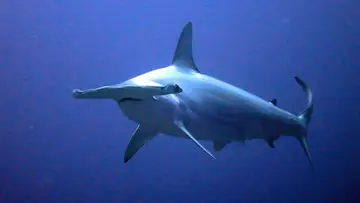
Identification Guide to Sharks of Mississippi (Hoffmayer, Franks, Shelley, Higgs and Hendon). The University of Southern Mississippi, School of Ocean Science and Engineering, Center for Fisheries Research and Development (developed with support from the Mississippi Department of Marine Resources and USFWS Sport Fish Restoration). undated page; checked November 3, 2026.Quoted passages (1)
“Through our research, we have found that our local waters are an important nursery area for many coastal shark species.”
“Babies are born in September and at 14 inches long can kill and swallow adult mice.”
Fire Ant Facts. Mississippi State University Extension Service. undated page; checked November 3, 2026.Quoted passages (1)
“During cold, wet weather fire ants tend to maintain their colonies high above ground—to keep brood out of water logged soil and to take advantage of solar heating.”