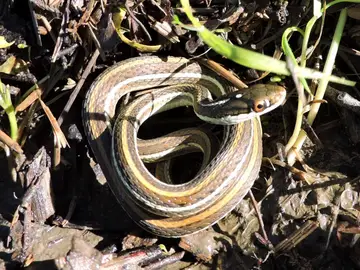
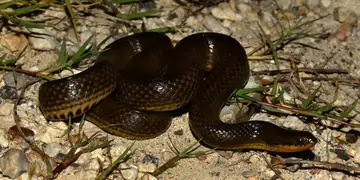
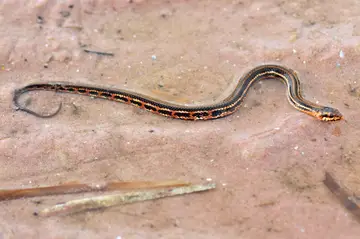
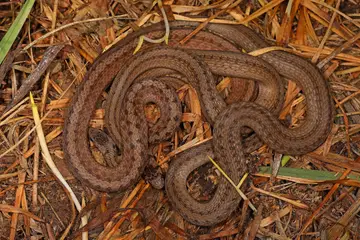
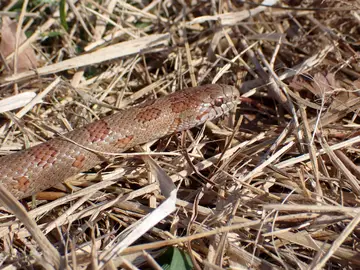
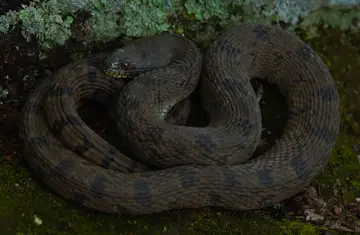
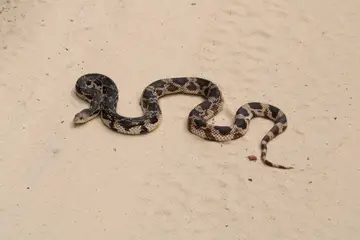
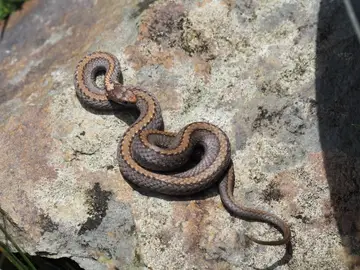
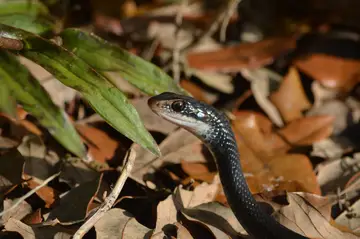
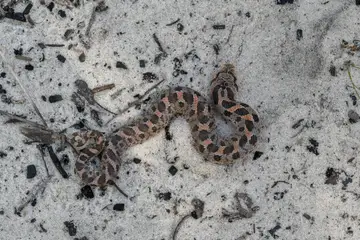
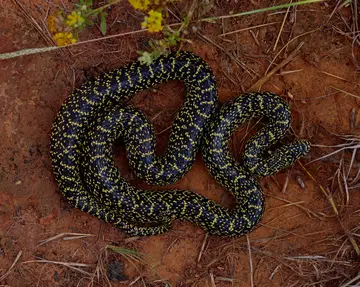
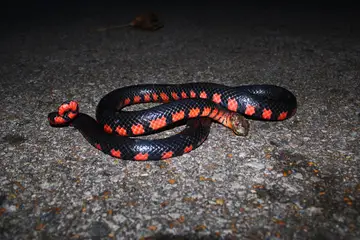
This page lists 56 snakes: all from MDWFP's Mississippi Amphibians and Reptiles, Revised 2012 — Suborder Serpentes.
6 species are venomous by official accounts: Southern Copperhead, Eastern Cottonmouth and Western Cottonmouth (two forms of one species), Eastern Diamond-backed Rattlesnake, Canebrake Rattlesnake, Carolina Pygmy Rattlesnake, Dusky Pygmy Rattlesnake and Western Pygmy Rattlesnake (three forms of one species) and Harlequin Coralsnake. MDWFP gives a total of 41; the 56 here are the snakes official sources name one by one.
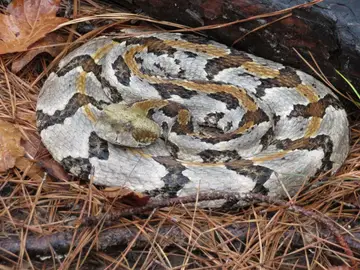
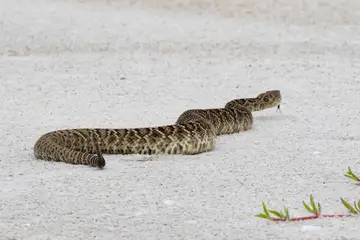
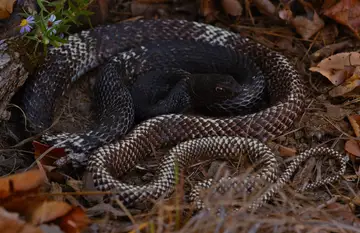
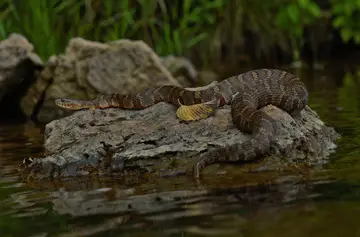
Most adults 36 to 60 inches (3 to 5 feet); record 74.5 inches.
How to recognize it
Black tail ending in a rattle
Heat-sensing pit between nostril and eye
Large, thick head distinct from the neck; cat-like vertical pupil
Where in Mississippi
Canebrake rattlesnakes inhabit forest and river bottoms throughout the state, save the immediate Gulf Coast. MDWFP
What the sources say
Venom: “Mississippi does have six types of venomous snakes: copperhead, coral snake, pygmy rattlesnake, eastern diamondback rattlesnake, canebrake or timber rattlesnake, and cottonmouth or water moccasin.” (Mississippi State University Extension Service)
Habitat: Canebrake rattlesnakes inhabit forest and river bottoms throughout the state, save the immediate Gulf Coast. (MDWFP)
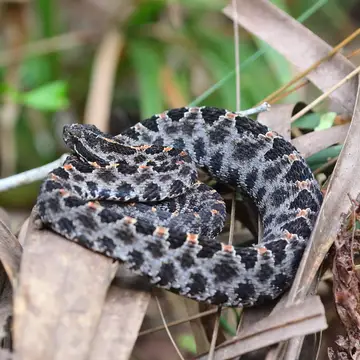
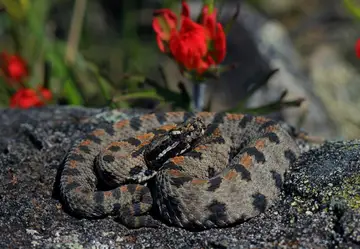
Pygmy rattlesnakes range over most of Mississippi although records are lacking from the Delta … MDWFP
What the sources say
Venom: “Although this species produces a highly toxic venom, the small size of the snake reduces the risk of a fatal bite.” (MDWFP)
Range: Pygmy rattlesnakes range over most of Mississippi although records are lacking from the Delta. Distribution is spotty with the species being most common on the Gulf Coast and again in northeastern Mississippi.
Habitat: They prefer flatwoods, both pine and hardwood forests, and the environs of swamps. (MDWFP)
They are often abundant in suitable habitats throughout Mississippi. MDWFP
What the sources say
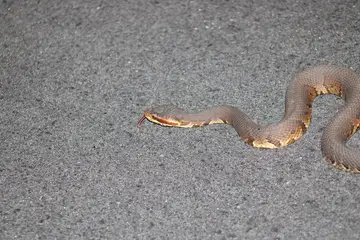
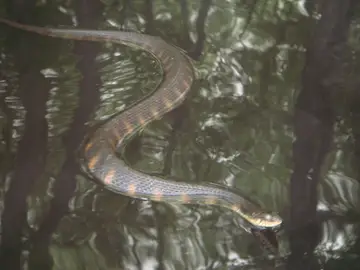
Venom: “The cottonmouth is our primary snakebite species in Mississippi and extremely serious medical implications have been documented following bites of this snake.” (MDWFP)
Habitat: The cottonmouth frequents creeks, swamps, bayous, and virtually all aquatic habitats in the state, including brackish coastal marshes and the barrier islands. (MDWFP)
Most adults 33 to 72 inches (about 3 to 6 feet); record 99 inches.
How to recognize it
Light-bordered dark stripe running diagonally through each eye
Tail ends in a rattle, often held above the ground
Cat-like vertical pupil and a deep heat-sensing pit between nostril and eye
Where in Mississippi
Habitat destruction, human persecution, and road mortalities have eliminated diamondbacks from most of the historic range in Mississippi. MDWFP
What the sources say
Venom: “Mississippi does have six types of venomous snakes: copperhead, coral snake, pygmy rattlesnake, eastern diamondback rattlesnake, canebrake or timber rattlesnake, and cottonmouth or water moccasin.” (Mississippi State University Extension Service)
Habitat: Eastern diamondbacks were once common in the longleaf pine forests of southern Mississippi. (MDWFP)
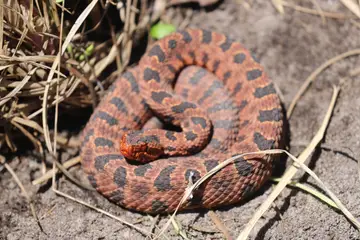
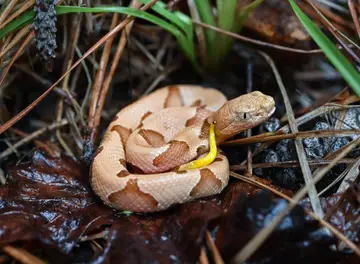
Easily one of our most common snakes, copperheads are found everywhere except on the immediate Gulf Coast and the barrier islands. MDWFP
What the sources say
Venom: “Mississippi does have six types of venomous snakes: copperhead, coral snake, pygmy rattlesnake, eastern diamondback rattlesnake, canebrake or timber rattlesnake, and cottonmouth or water moccasin.” (Mississippi State University Extension Service)
Habitat: Favored habitat is hardwood forest but pine country, old fields, and bottomlands are frequented. (MDWFP)
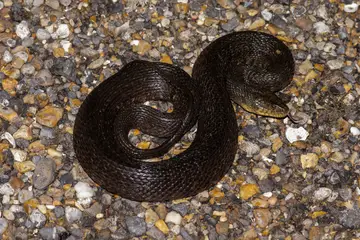
Typically 30 to 48 inches (about 3 to 4 feet); recorded up to 75 inches.
How to recognize it
Heat-sensing pit between nostril and eye; no rattle
Head much wider than the neck, with a dark bar from the eye to the jaw; vertical (cat-eye) pupils
Gapes to show the white lining of its mouth when threatened
Where in Mississippi
They are often abundant in suitable habitats throughout Mississippi. MDWFP
JFMAMJJASOND
88 records by month.What the sources say
Venom: “The cottonmouth is our primary snakebite species in Mississippi and extremely serious medical implications have been documented following bites of this snake.” (MDWFP)
Habitat: The cottonmouth frequents creeks, swamps, bayous, and virtually all aquatic habitats in the state, including brackish coastal marshes and the barrier islands. (MDWFP)
Pygmy rattlesnakes range over most of Mississippi although records are lacking from the Delta … MDWFP
What the sources say
Venom: “Although this species produces a highly toxic venom, the small size of the snake reduces the risk of a fatal bite.” (MDWFP)
Range: Pygmy rattlesnakes range over most of Mississippi although records are lacking from the Delta. Distribution is spotty with the species being most common on the Gulf Coast and again in northeastern Mississippi.
Habitat: They prefer flatwoods, both pine and hardwood forests, and the environs of swamps. (MDWFP)
The other 47 snakes
From A to Z. Some harmless snakes mimic venomous ones: leave every snake alone.
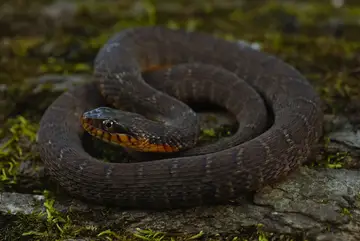
Venom: “It can be easily confused with several other species of large, dark-colored, thick-bodied, wide-headed but utterly harmless watersnakes (genus Nerodia).” (MDWFP)
Venom: “55 snake species in Mississippi … Only 6 species in Mississippi are venomous … Venomous Snakes Copperhead Cottonmouth Pygmy Rattlesnake Eastern Diamondback Rattlesnake Canebrake Rattlesnake Coral Snake” (MDWFP)
Photo: Everglades NPS from Homestead, Florida, United States · Public domain · Wikimedia Commons
Venom: “It can be easily confused with several other species of large, dark-colored, thick-bodied, wide-headed but utterly harmless watersnakes (genus Nerodia).” (MDWFP)
Venom: “55 snake species in Mississippi … Only 6 species in Mississippi are venomous … Venomous Snakes Copperhead Cottonmouth Pygmy Rattlesnake Eastern Diamondback Rattlesnake Canebrake Rattlesnake Coral Snake” (MDWFP)
Venom: “55 snake species in Mississippi … Only 6 species in Mississippi are venomous … Venomous Snakes Copperhead Cottonmouth Pygmy Rattlesnake Eastern Diamondback Rattlesnake Canebrake Rattlesnake Coral Snake” (MDWFP)
Venom: “55 snake species in Mississippi … Only 6 species in Mississippi are venomous … Venomous Snakes Copperhead Cottonmouth Pygmy Rattlesnake Eastern Diamondback Rattlesnake Canebrake Rattlesnake Coral Snake” (MDWFP)
Venom: “55 snake species in Mississippi … Only 6 species in Mississippi are venomous … Venomous Snakes Copperhead Cottonmouth Pygmy Rattlesnake Eastern Diamondback Rattlesnake Canebrake Rattlesnake Coral Snake” (MDWFP)
Venom: “55 snake species in Mississippi … Only 6 species in Mississippi are venomous … Venomous Snakes Copperhead Cottonmouth Pygmy Rattlesnake Eastern Diamondback Rattlesnake Canebrake Rattlesnake Coral Snake” (MDWFP)
Venom: “The venomous copperhead (top photo) is often confused with the nonvenomous hognose snake (below).” (Mississippi State University Extension Service)
Venom: “Unfortunately, this is also the name given to the several small gray or brown harmless snakes found in yards and gardens throughout the South (genera Virginia, Storeria, and Rhadinaea).” (MDWFP)
Venom: “Unfortunately, this is also the name given to the several small gray or brown harmless snakes found in yards and gardens throughout the South (genera Virginia, Storeria, and Rhadinaea).” (MDWFP)
Venom: “55 snake species in Mississippi … Only 6 species in Mississippi are venomous … Venomous Snakes Copperhead Cottonmouth Pygmy Rattlesnake Eastern Diamondback Rattlesnake Canebrake Rattlesnake Coral Snake” (MDWFP)
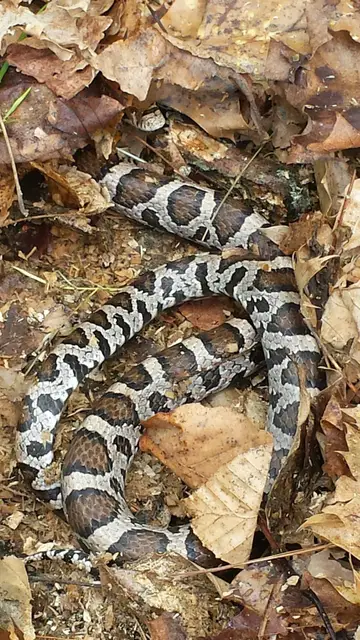
Venom: “The venomous pygmy rattlesnake (top photo) is often confused with the nonvenomous gray rat snake (below).” (Mississippi State University Extension Service)
Venom: “55 snake species in Mississippi … Only 6 species in Mississippi are venomous … Venomous Snakes Copperhead Cottonmouth Pygmy Rattlesnake Eastern Diamondback Rattlesnake Canebrake Rattlesnake Coral Snake” (MDWFP)
Venom: “55 snake species in Mississippi … Only 6 species in Mississippi are venomous … Venomous Snakes Copperhead Cottonmouth Pygmy Rattlesnake Eastern Diamondback Rattlesnake Canebrake Rattlesnake Coral Snake” (MDWFP)
Venom: “It can be easily confused with several other species of large, dark-colored, thick-bodied, wide-headed but utterly harmless watersnakes (genus Nerodia).” (MDWFP)
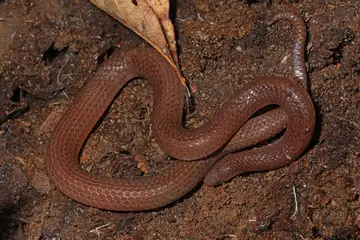
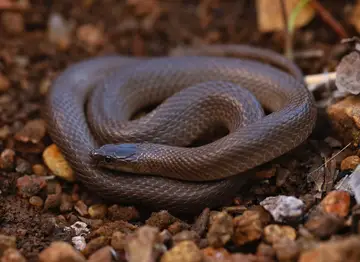
Most adults 9 to 13 inches; occasionally up to about 20 inches.
How to recognize it
Dark top of head; a dark spot under each eye and on each side of the neck
Keeled (ridged) scales in 17 rows; round pupil
Tennessee: a small dark downward streak on the side of the head
What the sources say
Venom: “Unfortunately, this is also the name given to the several small gray or brown harmless snakes found in yards and gardens throughout the South (genera Virginia, Storeria, and Rhadinaea).” (MDWFP)
Venom: “It can be easily confused with several other species of large, dark-colored, thick-bodied, wide-headed but utterly harmless watersnakes (genus Nerodia).” (MDWFP)
Venom: “It is often confused with species of nonvenomous water snakes, such as the Mississippi Green Water Snake.” (Mississippi State University Extension Service)
Venom: “55 snake species in Mississippi … Only 6 species in Mississippi are venomous … Venomous Snakes Copperhead Cottonmouth Pygmy Rattlesnake Eastern Diamondback Rattlesnake Canebrake Rattlesnake Coral Snake” (MDWFP)
Venom: “It can be easily confused with several other species of large, dark-colored, thick-bodied, wide-headed but utterly harmless watersnakes (genus Nerodia).” (MDWFP)
Venom: “55 snake species in Mississippi … Only 6 species in Mississippi are venomous … Venomous Snakes Copperhead Cottonmouth Pygmy Rattlesnake Eastern Diamondback Rattlesnake Canebrake Rattlesnake Coral Snake” (MDWFP)
Venom: “Unfortunately, this is also the name given to the several small gray or brown harmless snakes found in yards and gardens throughout the South (genera Virginia, Storeria, and Rhadinaea).” (MDWFP)
Venom: “55 snake species in Mississippi … Only 6 species in Mississippi are venomous … Venomous Snakes Copperhead Cottonmouth Pygmy Rattlesnake Eastern Diamondback Rattlesnake Canebrake Rattlesnake Coral Snake” (MDWFP)
Venom: “55 snake species in Mississippi … Only 6 species in Mississippi are venomous … Venomous Snakes Copperhead Cottonmouth Pygmy Rattlesnake Eastern Diamondback Rattlesnake Canebrake Rattlesnake Coral Snake” (MDWFP)
Venom: “Unfortunately, this is also the name given to the several small gray or brown harmless snakes found in yards and gardens throughout the South (genera Virginia, Storeria, and Rhadinaea).” (MDWFP)
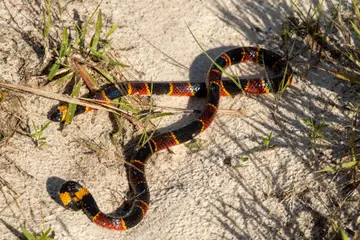
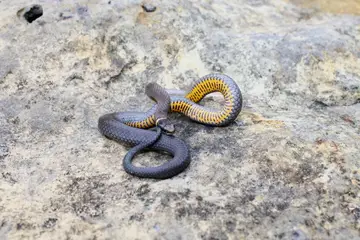
Most adults about 14-20 inches (36-51 cm); record 29.1 inches (Florida Museum). Louisiana gives 12 to 24 inches; NC State Extension says up to 27 inches.
How to recognize it
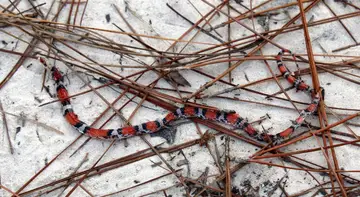
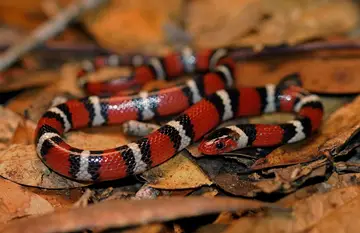
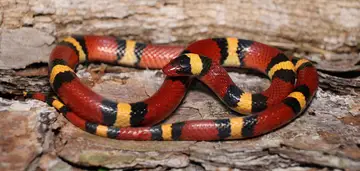
Red and yellow rings are separated by black rings, so red and yellow do not touch.
Small head with a red snout.
Rings continue across the belly (Louisiana).
What the sources say
Venom: “The venomous coral snake (top photo) is often confused with the nonvenomous scarlet king snake (below).” (Mississippi State University Extension Service)
Venom: “55 snake species in Mississippi … Only 6 species in Mississippi are venomous … Venomous Snakes Copperhead Cottonmouth Pygmy Rattlesnake Eastern Diamondback Rattlesnake Canebrake Rattlesnake Coral Snake” (MDWFP)
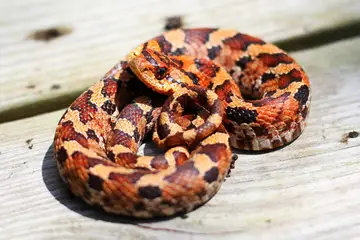
Venom: “The venomous copperhead (top photo) is often confused with the nonvenomous hognose snake (below).” (Mississippi State University Extension Service)
Venom: “55 snake species in Mississippi … Only 6 species in Mississippi are venomous … Venomous Snakes Copperhead Cottonmouth Pygmy Rattlesnake Eastern Diamondback Rattlesnake Canebrake Rattlesnake Coral Snake” (MDWFP)
Venom: “Unfortunately, this is also the name given to the several small gray or brown harmless snakes found in yards and gardens throughout the South (genera Virginia, Storeria, and Rhadinaea).” (MDWFP)
Venom: “It can be easily confused with several other species of large, dark-colored, thick-bodied, wide-headed but utterly harmless watersnakes (genus Nerodia).” (MDWFP)
Snakes people confuse
Scarlet kingsnake or Eastern coral snake (Harlequin coralsnake)?
Coral snake: red and black rings separated by narrower yellow rings, so red touches yellow, and a black snout. Scarlet kingsnake: red touches only black, and the snout is red. UF/IFAS says the red-touches-yellow rule should only be applied to coral snakes in North America, and the NCWRC says it should never be used in tropical America. The Florida Museum says the rhymes hold true most of the time in Florida, but unusual color variations sometimes break the rules, so if you are not 100% sure, leave the snake alone.
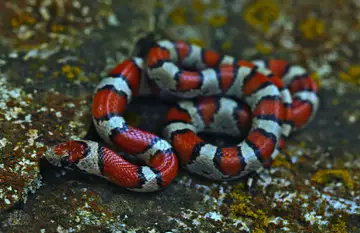
Scarlet kingsnake or Milk snakes (eastern and red milksnake)?
Tennessee: the eastern milksnake is gray or tan with brownish or reddish-brown, black-bordered blotches; the red milksnake has red blotches on a white or yellow body. Their bellies are a black-and-white checkerboard, while the scarlet kingsnake's ringed pattern continues onto the belly and red touches black but not yellow.
Eastern Diamondback Rattlesnake or Timber Rattlesnake?
Timber rattlesnake has black chevron-like crossbands, a reddish stripe down the middle of the back and a black tail; Florida Museum says it is the only other rattlesnake likely to be confused with the diamondback in Florida.
Photos show typical adults; individuals vary. Never get close to compare.
When snakes are active in Mississippi
Records of snakes in Mississippi peak in March to June and September. They show when people record snakes, not how many there are (about month bars).
JanFebMarAprMayJunJulAugSepOctNovDec
591 records of snakes in Mississippi by month (GBIF, CC0 and CC BY records).
Bear problems or sightings, and nuisance-animal guidance: MDWFP Wildlife Bureau (601) 432-2199. Nuisance animal technical guidance is also available from USDA Wildlife Services (MS) (662) 325-3014. Coastal invasive species: MDMR Invasive Species Coordinator (228) 523-4113. Sawfish sightings: 1-844-4SAWFISH. MDWFP
What official sources say
Are there rattlesnakes in Mississippi?
Yes. Eastern diamondback, canebrake and pygmy rattlesnakes. MDWFP
“Three of our six venomous snakes are rattlesnakes.”
Are there coral snakes in Mississippi?
Yes. Found in sandy pinewoods in the southeastern counties; secretive and generally uncommon. MDWFP
“Coral snakes inhabit sandy pinewoods in the southeastern counties of Mississippi.”
Are there water moccasins (cottonmouths) in Mississippi?
Yes. Found in virtually all aquatic habitats statewide, including brackish coastal marshes and the barrier islands; MDWFP calls it the primary snakebite species. MDWFP
“The cottonmouth is our primary snakebite species in Mississippi and extremely serious medical implications have been documented following bites of this snake.”
“More Nonvenomous Snakes Seen in Mississippi … Worm Snake”
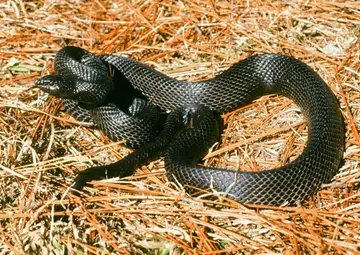
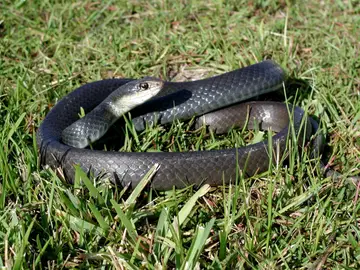
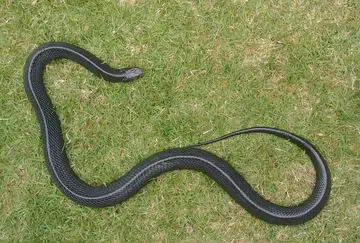
“More Nonvenomous Snakes Seen in Mississippi … Black Racer”
“More Nonvenomous Snakes Seen in Mississippi … Ringneck Snake”
“More Nonvenomous Snakes Seen in Mississippi … Eastern Indigo Snake”
“The venomous copperhead (top photo) is often confused with the nonvenomous hognose snake (below).”
“More Nonvenomous Snakes Seen in Mississippi … Speckled King Snake”
“The venomous coral snake (top photo) is often confused with the nonvenomous scarlet king snake (below).”
“More Nonvenomous Snakes Seen in Mississippi … Milk Snake”
“More Nonvenomous Snakes Seen in Mississippi … Eastern Coachwhip Snake”
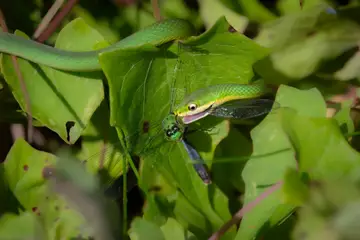
“More Nonvenomous Snakes Seen in Mississippi … Rough Green Snake”
“The venomous pygmy rattlesnake (top photo) is often confused with the nonvenomous gray rat snake (below).”
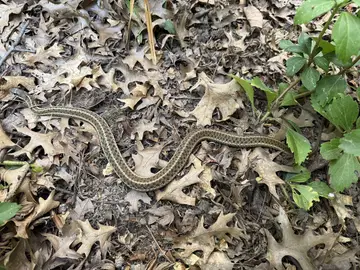
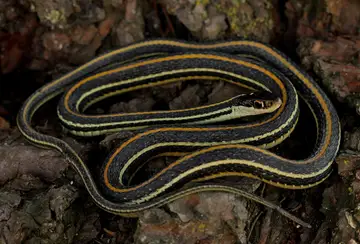
“More Nonvenomous Snakes Seen in Mississippi … Garter Snake”
“Mississippi does have six types of venomous snakes: copperhead, coral snake, pygmy rattlesnake, eastern diamondback rattlesnake, canebrake or timber rattlesnake, and cottonmouth or water moccasin.”
“Unless you are skilled at snake identification, treat all snakes as if they are venomous and avoid contact with the snake’s head.”
“In early spring, snakes are attracted to warm spots, such as metal, rocks, or other heat-conducting items. In warm months, they seek out cool, damp, sheltered areas.”
Venomous Snakes of Mississippi. Mississippi Museum of Natural Science (MDWFP). undated page; checked November 3, 2026.Quoted passages (5)
“55 snake species in Mississippi … Only 6 species in Mississippi are venomous … Venomous Snakes Copperhead Cottonmouth Pygmy Rattlesnake Eastern Diamondback Rattlesnake Canebrake Rattlesnake Coral Snake”
“If you see a snake carefully step away from it. Never attempt to capture or kill snakes.”
“Recently killed snakes can bite reflexively.”
“Substances such as pesticides, kerosene, diesel oil, sulfur and mothballs, as well as commercially available ‘repellents’ are ineffective and extremely dangerous to spread around your home.”
“Three of our six venomous snakes are rattlesnakes.”
“It can be easily confused with several other species of large, dark-colored, thick-bodied, wide-headed but utterly harmless watersnakes (genus Nerodia).”
“The cottonmouth is our primary snakebite species in Mississippi and extremely serious medical implications have been documented following bites of this snake.”
“Unfortunately, this is also the name given to the several small gray or brown harmless snakes found in yards and gardens throughout the South (genera Virginia, Storeria, and Rhadinaea).”
“Although this species produces a highly toxic venom, the small size of the snake reduces the risk of a fatal bite.”