This page lists 11 insects.
3 are venomous by official accounts. 2 are nonnative.
Not every species: no complete official list of Mississippi insects exists, so this page covers the ones state and Extension sources name. How lists are built.
Which insects can hurt you
Official sources single out these insects in Mississippi, in their own words:
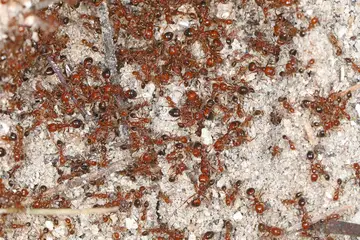
Venomous sting. “Each year there are cases of human fatalities resulting from fire ant stings, either due to anaphylaxis or to massive numbers of stings occurring on people who are incapacitated.” Mississippi State University Extension Service
Stings. “These wasps are more aggressive than other species and may fly several feet to sting someone who happens to be near the nest site.” Mississippi State University Extension Service
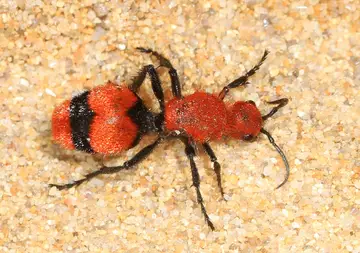
Stings. “People who have been stung by an Eastern velvet ant say it has the most painful sting of any insect in the Southeast—more painful than a red wasp.” Mississippi State University Extension Service
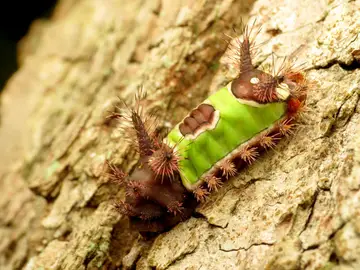
Stinging caterpillar. “Other stinging caterpillars in the state include buck moths, Io moths, saddleback caterpillars, stinging rose slug, crowned slugs, hag moths and a few others.” Mississippi State University Extension Service
Io Moth Caterpillar
Stinging caterpillar. “Other stinging caterpillars in the state include buck moths, Io moths, saddleback caterpillars, stinging rose slug, crowned slugs, hag moths and a few others.” Mississippi State University Extension Service
Venom: “The bite is of no lasting consequence, but the venom they inject through their sting is quite potent, especially in relation to their size.” (Mississippi State University Extension Service)
About 1 inch long per most extension sources; full-grown larvae reared by UF/IFAS reached about 1.4 inches (1.6 inches including the tail). MDC says about 1.5 inches.
How to recognize it
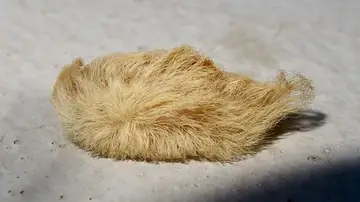
Teardrop shape with hairs tapering to a tail; looks like a tiny mouse or a cat
Resembles a tiny mouse; younger larvae have a thick tuft of hair like a tail. Older larvae can look unkempt, with sparser hair that hides the stinging spines less well (VCE).
Venom: “The stings come from hollow spines with venom glands at their base that are hidden beneath that coat of harmless longer hairs.” (Mississippi State University Extension Service)
“Each year there are cases of human fatalities resulting from fire ant stings, either due to anaphylaxis or to massive numbers of stings occurring on people who are incapacitated.” Mississippi State University Extension Service
Venom: “The bite is of no lasting consequence, but the venom they inject through their sting is quite potent, especially in relation to their size.” (Mississippi State University Extension Service)
No confirmed photo of Buck Moth Caterpillar
Buck Moth Caterpillar
Not stated
Venom
No official source we use states whether this animal is venomous. That does not mean it is harmless: do not handle it.
Venom: “Hickory horned devil caterpillars are a good example of a caterpillar that looks fierce but is harmless.” (Mississippi State University Extension Service)
No confirmed photo of Io Moth Caterpillar
Io Moth Caterpillar
Not stated
Venom
No official source we use states whether this animal is venomous. That does not mean it is harmless: do not handle it.
Danger to people
“Other stinging caterpillars in the state include buck moths, Io moths, saddleback caterpillars, stinging rose slug, crowned slugs, hag moths and a few others.” Mississippi State University Extension Service
No confirmed photo of Red Wasp
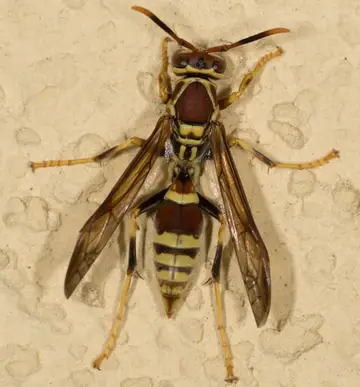
Red Wasp
Polistes metricus
Not stated
Venom
No official source we use states whether this animal is venomous. That does not mean it is harmless: do not handle it.
No official source we use states whether this animal is venomous. That does not mean it is harmless: do not handle it.
Danger to people
“Other stinging caterpillars in the state include buck moths, Io moths, saddleback caterpillars, stinging rose slug, crowned slugs, hag moths and a few others.” Mississippi State University Extension Service
When insects are active in Mississippi
Records of insects in Mississippi peak in May to September. They show when people record insects, not how many there are (about month bars).
JanFebMarAprMayJunJulAugSepOctNovDec
13,338 records of insects in Mississippi by month (GBIF, CC0 and CC BY records).
Call 911 or Poison Help at 1-800-222-1222 right away. Poison Help connects you to your local poison center, any time of day.
How to report
Bear problems or sightings, and nuisance-animal guidance: MDWFP Wildlife Bureau (601) 432-2199. Nuisance animal technical guidance is also available from USDA Wildlife Services (MS) (662) 325-3014. Coastal invasive species: MDMR Invasive Species Coordinator (228) 523-4113. Sawfish sightings: 1-844-4SAWFISH. MDWFP
About Us. Mississippi Department of Wildlife, Fisheries, and Parks (MDWFP). undated page; checked November 3, 2026.
Fire Ant Facts. Mississippi State University Extension Service. undated page; checked November 3, 2026.Quoted passages (2)
“These two species are similar in biology and behavior.”
“During cold, wet weather fire ants tend to maintain their colonies high above ground—to keep brood out of water logged soil and to take advantage of solar heating.”
The Fire Ant Sting. Mississippi State University Extension Service. undated page; checked November 3, 2026.Quoted passages (2)
“The bite is of no lasting consequence, but the venom they inject through their sting is quite potent, especially in relation to their size.”
“Each year there are cases of human fatalities resulting from fire ant stings, either due to anaphylaxis or to massive numbers of stings occurring on people who are incapacitated.”
“The stings come from hollow spines with venom glands at their base that are hidden beneath that coat of harmless longer hairs.”
“They may look cute and furry, but puss caterpillars have one of the most painful stings of any insect in the state.”
“Other stinging caterpillars in the state include buck moths, Io moths, saddleback caterpillars, stinging rose slug, crowned slugs, hag moths and a few others.”
“Hickory horned devil caterpillars are a good example of a caterpillar that looks fierce but is harmless.”
“People who have been stung by an Eastern velvet ant say it has the most painful sting of any insect in the Southeast—more painful than a red wasp.”
Venomous Animals of Mississippi. Mississippi Regional Poison Control Center (University of Mississippi Medical Center); hosted by the Mississippi State Department of Health. archived copy, captured February 18, 2025; checked November 3, 2026.Quoted passages (1)
“Other species in this area which are known to be of potential danger include: … Bees, Wasps, and Hornets”
Black Bear Program. Mississippi Department of Wildlife, Fisheries, and Parks (MDWFP). undated page; checked November 3, 2026.Quoted passages (1)
“If you are experiencing problems involving black bears or want to report a recent bear sighting, please contact MDWFP at (601) 432-2199.”