States Wildlife

Scorpions in Mississippi: Species, Stings & Lookalikes

Last checked November 3, 2026 against official sources.

On this page
  1. Which scorpions can hurt you
  2. All 2 scorpions
  3. Lookalikes
  4. If you are bitten or stung
  5. How to report
  6. Common questions
  7. About this list
  8. Sources

Mississippi State University Extension Service: Actually, there are two species, southern devil scorpions and striped bark scorpions.

This page lists 2 scorpions. 1 is venomous by official accounts, and 1 mildly venomous.

Not every species: no complete official list of Mississippi scorpions exists, so this page covers the ones state and Extension sources name. How lists are built.

Which scorpions can hurt you

Official sources single out these scorpions in Mississippi, in their own words:

All 2 scorpions

Venomous species first, then A to Z. Do not handle them.

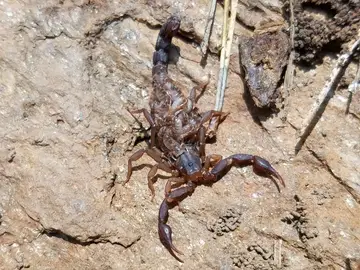
Southern Devil Scorpion (Southern Unstriped Scorpion)
Photo: Leila Dasher · CC BY 4.0 · iNaturalist

Southern Devil Scorpion (Southern Unstriped Scorpion)

Vaejovis carolinianus

Venomous per Mississippi State University Extension Service

Danger to people
“Both species can and will sting, and, although the sting is painful, it is very rarely deadly …” Mississippi State University Extension Service
Where in Mississippi
Although they occur in other areas of the state, southern devil scorpions, also known as southern unstriped scorpions, are most often found in the Northeast corner of … Mississippi State University Extension Service
What the sources say

Venom: “As with bee or wasp stings, there may be individuals who are hypersensitive to the venom.” (Mississippi State University Extension Service)

Range: Although they occur in other areas of the state, southern devil scorpions, also known as southern unstriped scorpions, are most often found in the Northeast corner of the state, roughly from Columbus to Corinth, and a row or two of counties to the west.

Habitat: Unlike western species, the southern devil scorpion favors moist, humid environments. (Mississippi State University Extension Service)

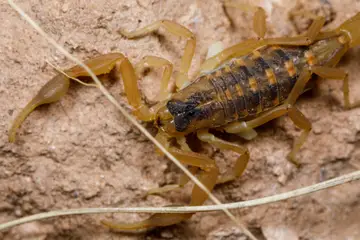
Striped Bark Scorpion
Photo: Meghan Cassidy · CC BY-SA 4.0 · iNaturalist · resized

Striped Bark Scorpion

Centruroides vittatus

Mildly venomous per Missouri Department of Conservation

Danger to people
“Both species can and will sting, and, although the sting is painful, it is very rarely deadly.” Mississippi State University Extension Service
Size
Usually about 2.5 inches. Sources range from 1 to 1.5 inches on average (Missouri Department of Conservation) to up to 3.5 inches (Oklahoma State).
How to recognize it
  • Slender pincers and a long, slender tail. The tail is longer on males than females.
  • Tail ends in a stinger, usually carried up and over the body.
  • Glows under ultraviolet light.
Where in Mississippi
Striped bark scorpions can appear anywhere in the state, and many of these sightings may be due to accidental transport. Mississippi State University Extension Service
What the sources say

Venom: “The sting of this species is quite painful, but the venom is a comparatively mild neurotoxin.” (Missouri Department of Conservation)

Full Striped Bark Scorpion guide

Scorpions people confuse

Striped Bark Scorpion or Southern devil scorpion (southern unstriped scorpion)?

Striped Bark Scorpion
Photo: Meghan Cassidy · CC BY-SA 4.0 · iNaturalist · resized

Striped Bark Scorpion Venomous

Southern devil scorpion (southern unstriped scorpion)
Photo: Leila Dasher · CC BY 4.0 · iNaturalist

Southern devil scorpion (southern unstriped scorpion) Venomous

More uniformly brown and about 1 inch long when grown, with no stripes.

Photos show typical adults; individuals vary. Never get close to compare.

If you are bitten or stung

Call 911 or Poison Help at 1-800-222-1222 right away. Poison Help connects you to your local poison center, any time of day.

How to report

Bear problems or sightings, and nuisance-animal guidance: MDWFP Wildlife Bureau (601) 432-2199. Nuisance animal technical guidance is also available from USDA Wildlife Services (MS) (662) 325-3014. Coastal invasive species: MDMR Invasive Species Coordinator (228) 523-4113. Sawfish sightings: 1-844-4SAWFISH. MDWFP

Common questions

About this list

The species list comes from Southern Devil Scorpion (Bug's Eye View, MSU Extension) / Control Household Insect Pests P2443 — scorpion section (Mississippi State University Extension Service, 2018 newsletter; P2443 POD-05-26). 2 more entries come from other official sources named on each card.

Venom labels come only from official sources and link to them; "Not stated" never means harmless. How labels work.

Sources

  1. About Us. Mississippi Department of Wildlife, Fisheries, and Parks (MDWFP). undated page; checked November 3, 2026.
  2. Southern Devil Scorpion, Bug's Eye View Vol. 4, No. 30. Mississippi State University Extension Service. 2018; checked November 3, 2026.
    Quoted passages (2)
    “Actually, there are two species, southern devil scorpions and striped bark scorpions.”
    “As with bee or wasp stings, there may be individuals who are hypersensitive to the venom.”
  3. Control Household Insect Pests (Publication 2443). Mississippi State University Extension Service. Publication 2443; checked November 3, 2026.
    Quoted passages (3)
    “Both species can and will sting, and, although the sting is painful, it is very rarely deadly. Many folks who have been stung report only short-lived local pain with localized swelling, much like that caused by a wasp sting. Some have reported systemic effects, such as headaches, neck aches, and other symptoms.”
    “Both species can and will sting, and, although the sting is painful, it is very rarely deadly.”
    “Scorpions are active at night, when they leave their refuges to search for insects and spiders to eat.”
  4. Striped Bark Scorpion (Field Guide). Missouri Department of Conservation. undated page; checked November 3, 2026.
    Quoted passages (1)
    “The sting of this species is quite painful, but the venom is a comparatively mild neurotoxin.”
  5. Black Bear Program. Mississippi Department of Wildlife, Fisheries, and Parks (MDWFP). undated page; checked November 3, 2026.
    Quoted passages (1)
    “If you are experiencing problems involving black bears or want to report a recent bear sighting, please contact MDWFP at (601) 432-2199.”