DNREC: Delaware is home to 28 species of amphibians, of which 13 (46%) meet the criteria for SGCN.
This page lists 16 species: 6 from DNREC's Amphibians and Reptiles SGCN table; DEWAP SGCN removals table; USFWS Bombay Hook NWR Amphibians and Reptiles and 10 named in other official sources.
DNREC gives a total of 28; the 16 here are the frogs and toads official sources name one by one.
All 16 frogs and toads
From A to Z.
No confirmed photo of Atlantic Coast Leopard Frog
Atlantic Coast Leopard Frog
Lithobates kauffeldi
Not stated
Venom
No official source we use states whether this animal is venomous. That does not mean it is harmless: do not handle it.
No official source we use states whether this animal is venomous. That does not mean it is harmless: do not handle it.
Size
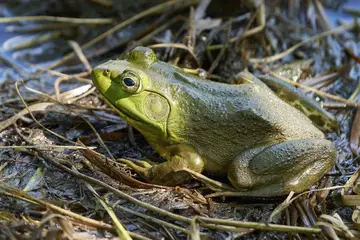
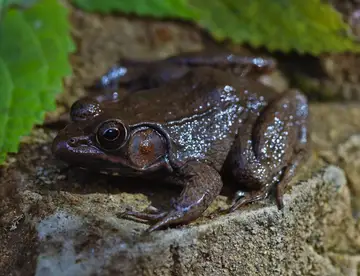
Usually 6 to 8 inches long (NCWRC); can reach 8 inches or more and weigh over 2 pounds (CDFW). Missouri gives 3.5 to 6 inches snout to vent, occasionally to 8.75.
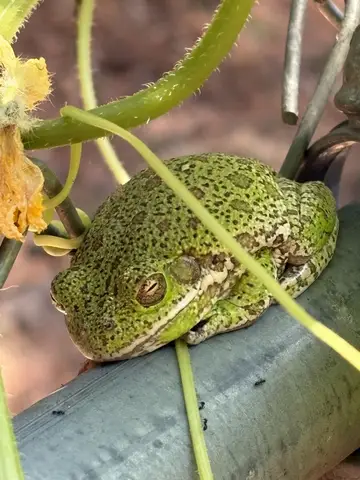
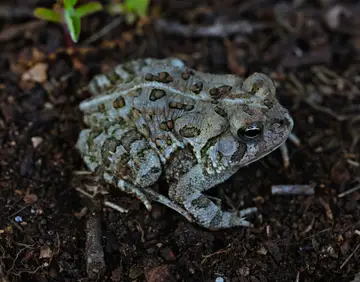
How to recognize it
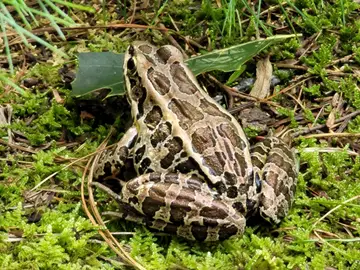
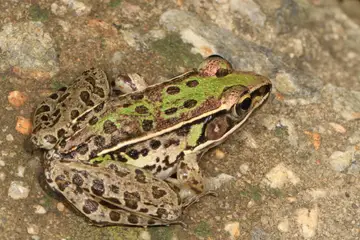
No ridge (dorsolateral fold) down each side of the back
Large round eardrum: about twice the eye in males, about eye-sized in females
Fully webbed hind feet, longest toe extends past the webbing
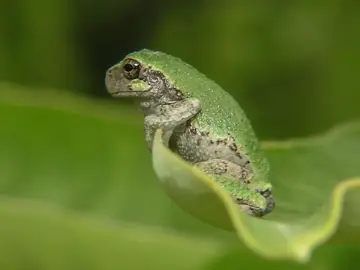
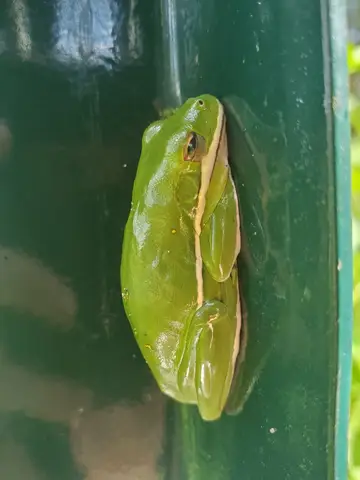
Missouri Department of Conservation calls both gray treefrogs gray, unlike the green treefrog, but its gray treefrog account says their color may be green to light greenish gray, gray, brown or dark brown, so color alone does not settle it. MDC: gray treefrogs have warty (granular) skin; the green treefrog's back is smooth and a light stripe runs from its upper lip down the side of the body.
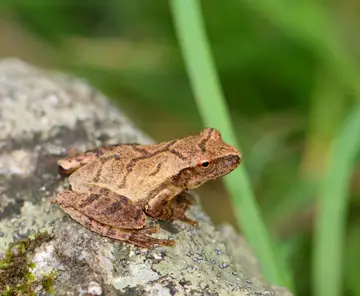
Maine IF&W lists the spring peeper's distinguishing characteristics: Maine's smallest frog (about 0.8 to 1.5 inches), grayish- or orangish-brown above with a distinct dark X on the back, and smooth skin; it notes it is commonly confused with the gray treefrog.
Bullfrogs lack the dorsolateral ridges that green frogs have.
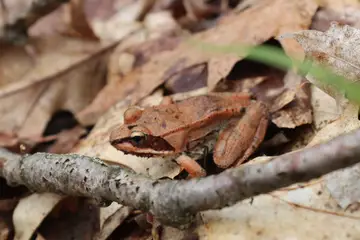
Photos show typical adults; individuals vary. Never get close to compare.
When frogs and toads are active in Delaware
Records of frogs and toads in Delaware peak in June to August. They show when people record frogs and toads, not how many there are (about month bars).
JanFebMarAprMayJunJulAugSepOctNovDec
4,013 records of frogs and toads in Delaware by month (GBIF, CC0 and CC BY records).
How to report
Invasive aquatic species: report to the DNREC Division of Fish and Wildlife by phone, email or the online Invasive Fish Tracker. Invasive terrestrial species: Wildlife Section, 302-739-9912. Sick or dead wildlife (five or more at one place): 302-735-3600 ext. 2. Wildlife damage biologist: 302-735-8683. DNREC
Delaware's Endangered Species. Delaware Department of Natural Resources and Environmental Control (DNREC). datePublished 2020-05-15, dateModified 2025-04-28; checked November 3, 2026.
“Delaware is home to 28 species of amphibians, of which 13 (46%) meet the criteria for SGCN.”
Update and Revision of Delaware's SGCN List. Delaware Department of Natural Resources and Environmental Control (DNREC). datePublished 2025-07-16, dateModified 2025-12-16; checked November 3, 2026.
Invasive Aquatic Species. Delaware Department of Natural Resources and Environmental Control (DNREC). published 2020-02-11, modified 2025-02-03; checked November 3, 2026.Quoted passages (1)
“It is also important to keep an eye out for invasive terrestrial species. They should be reported to the Wildlife Section, at 302-739-9912.”