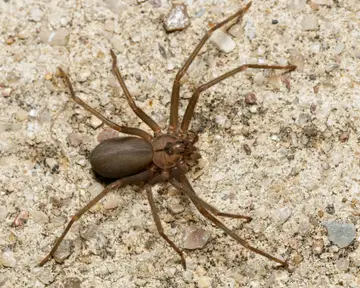
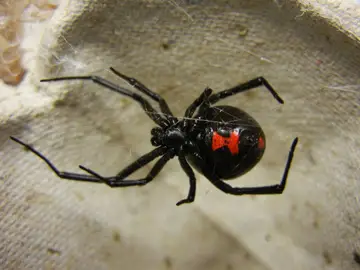
This page lists 2 spiders: all from The Poison Control Center at Children's Hospital of Philadelphia's Spider Bites.
2 are venomous by official accounts.
Not every species: no complete official list of Delaware spiders exists, so this page covers the ones state and Extension sources name. How lists are built.
Which spiders can hurt you
Official sources single out these spiders in Delaware, in their own words:
Venom: “…only two in the United States are considered venomous to humans, and even these spiders rarely bother humans unless they are provoked. They are the Black Widow and the Brown Recluse.” (The Poison Control Center at Children's Hospital of Philadelphia)
Venom: “…only two in the United States are considered venomous to humans, and even these spiders rarely bother humans unless they are provoked. They are the Black Widow and the Brown Recluse.” (The Poison Control Center at Children's Hospital of Philadelphia)
When spiders are active in Delaware
Records of spiders in Delaware peak in June to September. They show when people record spiders, not how many there are (about month bars).
JanFebMarAprMayJunJulAugSepOctNovDec
2,117 records of spiders in Delaware by month (GBIF, CC0 and CC BY records).
If you are bitten or stung
Call 911 or Poison Help at 1-800-222-1222 right away. Poison Help connects you to your local poison center, any time of day.
Official advice from The Poison Control Center at Children's Hospital of Philadelphia:
Invasive aquatic species: report to the DNREC Division of Fish and Wildlife by phone, email or the online Invasive Fish Tracker. Invasive terrestrial species: Wildlife Section, 302-739-9912. Sick or dead wildlife (five or more at one place): 302-735-3600 ext. 2. Wildlife damage biologist: 302-735-8683. DNREC
What official sources say
Are there brown recluse spiders in Delaware?
No official source places the brown recluse in Delaware. A UD Cooperative Extension entomologist (2011) names the black widow as the only poisonous spider found in Delaware, and the regional poison center says none are thought to live in Pennsylvania or farther north. The Poison Control Center at Children's Hospital of Philadelphia
“…no Brown Recluse spiders are thought to live in Pennsylvania or more northern states.”
Venom labels come only from official sources and link to them; "Not stated" never means harmless. How labels work.
Sources
Delaware's Endangered Species. Delaware Department of Natural Resources and Environmental Control (DNREC). datePublished 2020-05-15, dateModified 2025-04-28; checked November 3, 2026.
Spider Bites. The Poison Control Center at Children's Hospital of Philadelphia (serves Delaware). no date on page; checked November 3, 2026.Quoted passages (5)
“…only two in the United States are considered venomous to humans, and even these spiders rarely bother humans unless they are provoked. They are the Black Widow and the Brown Recluse.”
“The venom contains a toxin that affects the nervous system.”
“The venom contains chemicals that cause severe tissue damage.”
“If you think you or your child has been bitten by a venomous spider, immediately contact the Poison Control Center at 1-800-222-1222 or your doctor.”
“…no Brown Recluse spiders are thought to live in Pennsylvania or more northern states.”
Invasive Aquatic Species. Delaware Department of Natural Resources and Environmental Control (DNREC). published 2020-02-11, modified 2025-02-03; checked November 3, 2026.Quoted passages (1)
“It is also important to keep an eye out for invasive terrestrial species. They should be reported to the Wildlife Section, at 302-739-9912.”
Delaware spiders more friend than foe, UD experts say (UDaily). University of Delaware (UDaily news office), quoting Brian Kunkel, entomologist with University of Delaware Cooperative Extension. Oct. 26, 2011; checked November 3, 2026.Quoted passages (1)
“Only one poisonous spider is found in Delaware, the black widow.”