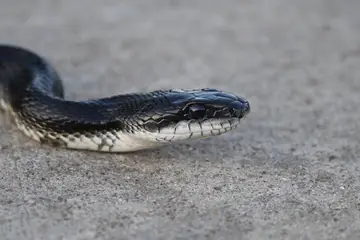
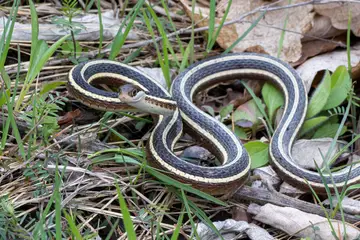
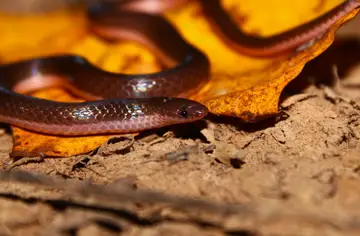
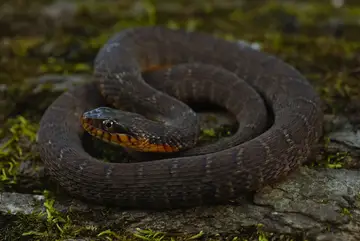
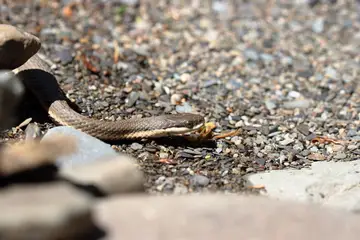
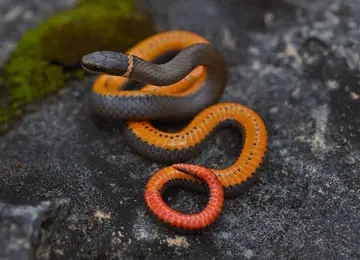
DNREC: Despite its small size, the First State has 19 different species.
This page lists 19 snakes: 7 from DNREC's Snakes to Watch Out For + Amphibians and Reptiles SGCN table; no single official checklist names all species and 12 named in other official sources.
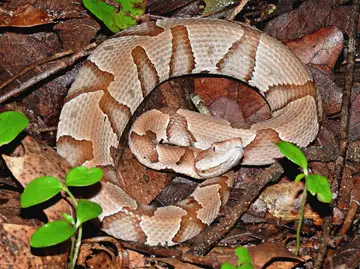
1 is venomous by official accounts: Eastern Copperhead.
“Bites from copperheads are uncommon, and although the venom can cause severe tissue damage to the bite area, death from a copperhead bite is extremely rare.” DNREC
Size
Adults usually about 2 to 3 feet (24-36 in); record about 53 inches.
How to recognize it
Vertical (cat-like) pupils and a heat-sensing pit between eye and nostril
Heavy-bodied; keeled scales
Head shape alone is not a reliable way to identify copperheads
Where in Delaware
Only in southern Sussex County and near Wilmington (DNREC); the Philadelphia Poison Control Center says all of DE DNREC
What the sources say
Venom: “Delaware only has one species of snake that is venomous – the eastern copperhead.” (DNREC)
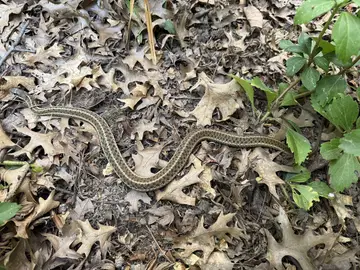
Eastern: most adults 18 to 26 inches (record 41 inches). Western: 16 to 42 inches in Louisiana; Oklahoma's orange-striped ribbonsnakes average 20 to 30 inches and can reach nearly 40.
How to recognize it
Very slender body; long tail, about one-third of total length.
Side stripes sit on the 3rd and 4th scale rows above the belly.
Upper lip scales white and unmarked; a distinct white spot in front of each eye; keeled (ridged) scales.
Where in Delaware
Observed mostly along the coast (2018-2023 atlas) DNREC
What the sources say
Venom: “Delaware only has one species of snake that is venomous – the eastern copperhead.” (DNREC)
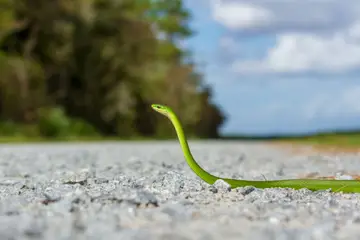
Most adults are 14 to 33 inches long (Florida Museum), with a record of 46 inches. Maryland, Missouri, Tennessee and Arkansas give 22 to 32 inches. The tail is long and thin, about a third or more of the total length.
How to recognize it
Keeled (ridged) scales in 17 rows, which feel rough; the smooth green snake has smooth scales.
Extremely long, thin tail and round pupils.
Large eyes.
What the sources say
Venom: “Delaware only has one species of snake that is venomous – the eastern copperhead.” (DNREC)
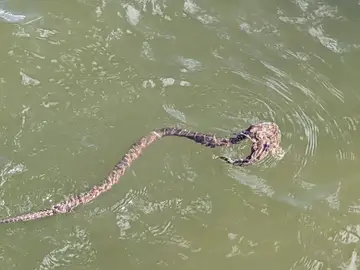
Habitat: Dense vegetation along shallow freshwater (Bombay Hook NWR) (US Fish and Wildlife Service)
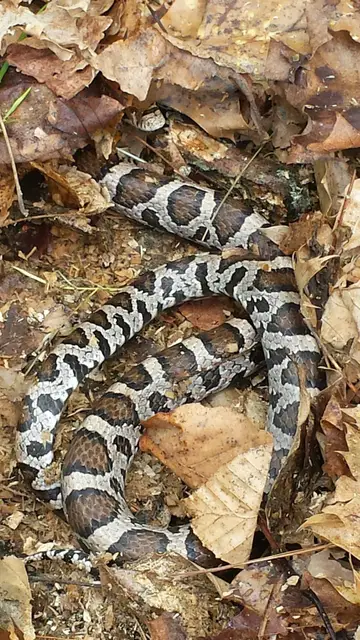
Georgia DNR lists the gray rat snake and the yellow phase of the eastern rat snake among nonvenomous snakes often confused with copperheads. Virginia DWR says baby eastern ratsnakes (black snakes) and northern black racers are the most commonly misidentified baby snakes, and that juvenile copperheads look much like adults but with a bright yellow tail. New Jersey DFW: copperheads have a unique hourglass pattern, wide on the sides and narrow across the back, and young copperheads have a greenish-yellow-tipped tail. Hatchling and yearling black rat snakes have irregularly shaped blotches, and the pattern runs through the tip of a pointed tail.
Black rat snake or North American racer (black racer)?
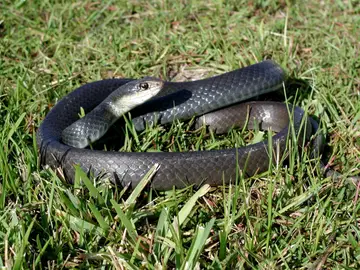
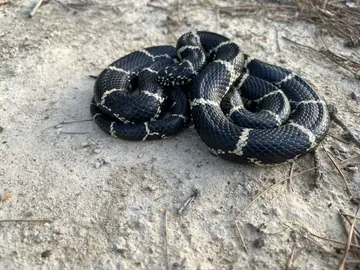
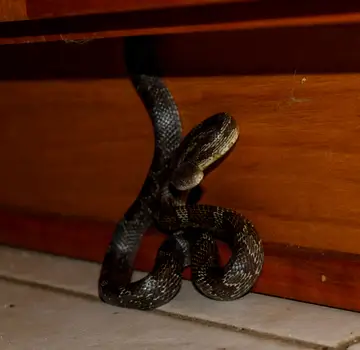
Ohio DNR: the adult black racer has no dorsal pattern at all, while most black (gray) ratsnakes show at least a trace of pattern. Indiana DNR adds that some adults lose the pattern and look solid black, so this does not separate every snake. NCWRC: racers are smaller and faster-moving.
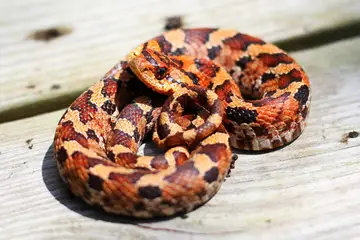
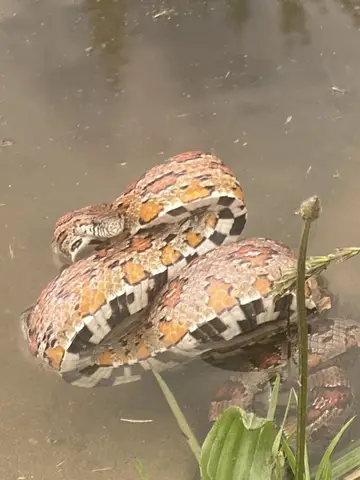
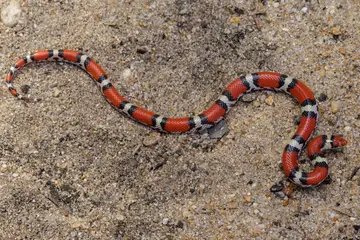
Georgia DNR says corn snakes are longer and slender, have an elongated head and square blotches with black outlines down the back, and tend to show more red, orange and yellow. (Georgia DNR also says corn snakes have smooth, shiny scales; the Florida Museum, UGA SREL and LDWF describe corn snake scales as weakly or slightly keeled, so scale texture is not offered here as a way to tell them apart.)
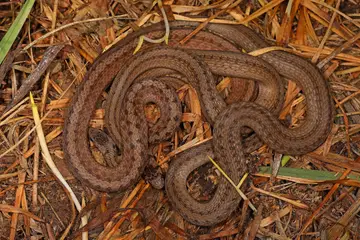
Copperheads have bold hourglass-shaped bands, and young copperheads under about 12 inches have bright yellow tail tips. Brown snakes have small spots, not hourglass bands.
Brown Snake (Dekay's Brownsnake) or Red-bellied Snake?
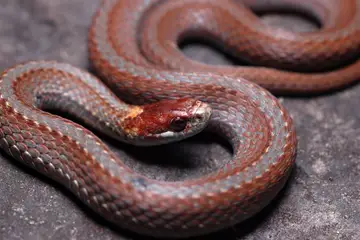
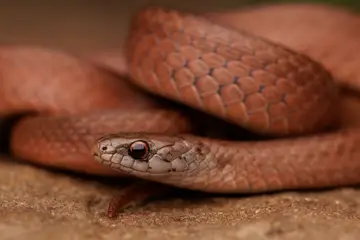
The red-bellied snake has a red underside; the brown snake's belly is cream, yellow or pink.
Photos show typical adults; individuals vary. Never get close to compare.
When snakes are active in Delaware
Records of snakes in Delaware peak in April to June. They show when people record snakes, not how many there are (about month bars).
JanFebMarAprMayJunJulAugSepOctNovDec
535 records of snakes in Delaware by month (GBIF, CC0 and CC BY records).
Reptiles become less active around Halloween and stay that way until about March; snakes shelter underground below the frost line. DNREC
If you are bitten or stung
Call 911 or Poison Help at 1-800-222-1222 right away. Poison Help connects you to your local poison center, any time of day.
Official advice from DNREC:
Anyone who thinks a copperhead bit them should get medical attention right away (call 911 or Poison Help at 1-800-222-1222). DNREC
If bitten by any snake, try to get a photo of it so the species can be identified. DNREC
If you encounter a snake, a spray from a garden hose can safely encourage it to move on. DNREC
How to report
Invasive aquatic species: report to the DNREC Division of Fish and Wildlife by phone, email or the online Invasive Fish Tracker. Invasive terrestrial species: Wildlife Section, 302-739-9912. Sick or dead wildlife (five or more at one place): 302-735-3600 ext. 2. Wildlife damage biologist: 302-735-8683. DNREC
What official sources say
Are there venomous snakes in Delaware?
Yes. DNREC: Delaware has only one venomous snake, the eastern copperhead, found only in southern Sussex County and near Wilmington. Reports elsewhere, when checked with photos, usually turn out to be young rat snakes, watersnakes or hog-nosed snakes. DNREC
“Delaware only has one species of snake that is venomous – the eastern copperhead.”
Are there rattlesnakes in Delaware?
No. DNREC names the copperhead as Delaware's only venomous snake, so no rattlesnake is recognized there. The Philadelphia Poison Control Center gives timber rattlesnake range as central and northern PA and the NJ Pine Barrens. DNREC
“Delaware only has one species of snake that is venomous – the eastern copperhead.”
Delaware's Endangered Species. Delaware Department of Natural Resources and Environmental Control (DNREC). datePublished 2020-05-15, dateModified 2025-04-28; checked November 3, 2026.
Snakes to Watch Out For (Outdoor Delaware). Delaware Department of Natural Resources and Environmental Control (DNREC). published 2021-07-09, modified 2026-05-07; checked November 3, 2026.Quoted passages (9)
“Despite its small size, the First State has 19 different species.”
“They are harmless, although they will rear back in a strike position and may vibrate their tails if they feel threatened.”
“Delaware only has one species of snake that is venomous – the eastern copperhead.”
“This species is harmless and typically flees when encountered but will aggressively bite if handled.”
“The species is harmless and flees into water or a nearby hole when encountered but will bite aggressively when captured.”
“Bites from copperheads are uncommon, and although the venom can cause severe tissue damage to the bite area, death from a copperhead bite is extremely rare.”
“Regardless, anyone who suspects they were bitten by a copperhead should seek medical attention immediately.”
“If you are bitten by any snake, try to get a photo of the snake so the species can be identified and proper treatment can be administered.”
“If you encounter a snake, you can use spray from a garden hose to safely encourage it to move on.”
Update and Revision of Delaware's SGCN List. Delaware Department of Natural Resources and Environmental Control (DNREC). datePublished 2025-07-16, dateModified 2025-12-16; checked November 3, 2026.
“For reptiles, there’s generally a decline in activity around Halloween. That period of decreased activity lasts until about March”
Invasive Aquatic Species. Delaware Department of Natural Resources and Environmental Control (DNREC). published 2020-02-11, modified 2025-02-03; checked November 3, 2026.Quoted passages (1)
“It is also important to keep an eye out for invasive terrestrial species. They should be reported to the Wildlife Section, at 302-739-9912.”