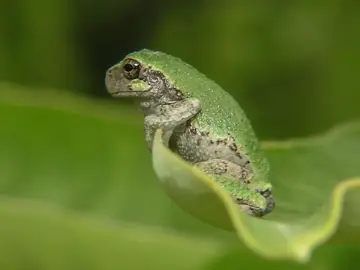
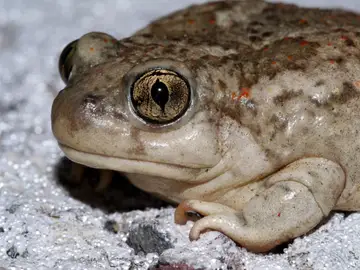
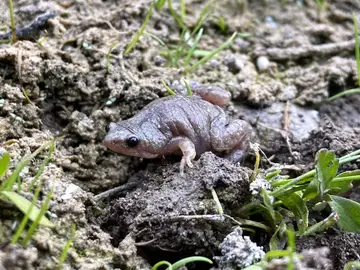
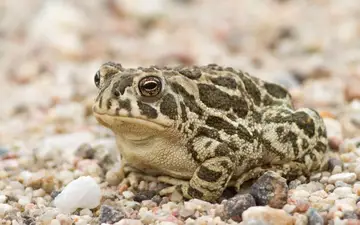
Sam Noble Oklahoma Museum of Natural History (SNOMNH) Herpetology, hosted by the Oklahoma Biological Survey, University of Oklahoma: Oklahoma is home to many diverse habitats supporting 54 species of amphibians and 82 species of reptiles.
This page lists 31 species: all from Sam Noble Oklahoma Museum of Natural History (SNOMNH) Herpetology, hosted by the Oklahoma Biological Survey, University of Oklahoma's Checklist of Oklahoma Amphibians and Reptiles — Frogs and Toads.
Sam Noble Oklahoma Museum of Natural History (SNOMNH) Herpetology, hosted by the Oklahoma Biological Survey, University of Oklahoma gives a total of 54; the 31 here are the frogs and toads official sources name one by one.
All 31 frogs and toads
From A to Z.
Photo: U.S. Fish and Wildlife Service - Midwest Region · Public domain · Wikimedia Commons
No official source we use states whether this animal is venomous. That does not mean it is harmless: do not handle it.
Size
2 to 3.5 inches long (NCWRC: up to 4 inches); females are larger than males.
How to recognize it
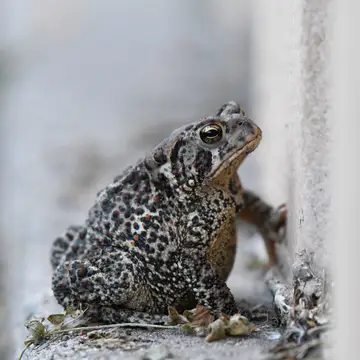
Dark spots on the back hold only a few large warts; the similar Fowler's toad has three or more. Agencies give different counts for the American toad (TWRA: one or two; Ohio DNR: one, two or three; Georgia DNR: usually no more than one), so wart count alone does not settle it; check the head crests too (see lookalikes).
A large, kidney- or bean-shaped parotoid gland behind each eye that usually does not touch the bony ridge (cranial crest) above the eye, or touches it only by a short spur.
No official source we use states whether this animal is venomous. That does not mean it is harmless: do not handle it.
What the sources say
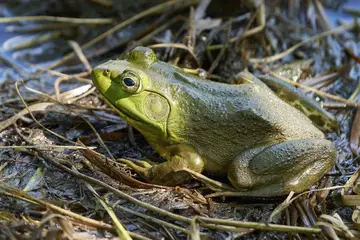
Habitat: Bullfrogs occur throughout the eastern half of the United States, with the exception of southern Florida. (Oklahoma Department of Wildlife Conservation)
No confirmed photo of Cajun chorus frog
Cajun chorus frog
Pseudacris fouquettei
Not stated
Venom
No official source we use states whether this animal is venomous. That does not mean it is harmless: do not handle it.
No official source we use states whether this animal is venomous. That does not mean it is harmless: do not handle it.
Where in Oklahoma
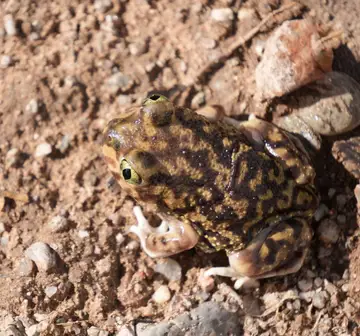
The Couch’s spadefoot occurs from southwest Oklahoma and central Texas into Mexico and Arizona to the extreme southeastern-most counties in California. Oklahoma Department of Wildlife Conservation
What the sources say
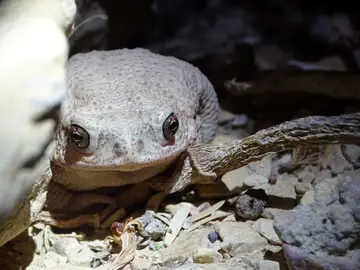
Habitat: The Couch’s spadefoot is an amphibian of arid habitats. (Oklahoma Department of Wildlife Conservation)
No confirmed photo of Crawfish frog
Crawfish frog
Lithobates areolata
Not stated
Venom
No official source we use states whether this animal is venomous. That does not mean it is harmless: do not handle it.
ODWC field guide status: Species of Greatest Conservation Need
What the sources say
Habitat: In Oklahoma, crawfish frogs occur throughout most of the eastern half of the state, although the distribution may be localized. (Oklahoma Department of Wildlife Conservation)
No confirmed photo of Cricket frog
Cricket frog
Acris crepitans
Not stated
Venom
No official source we use states whether this animal is venomous. That does not mean it is harmless: do not handle it.
Habitat: Blanchard’s cricket frogs are among the most abundant frogs in Oklahoma. (Oklahoma Department of Wildlife Conservation)
No confirmed photo of Eastern narrowmouth toad
Eastern narrowmouth toad
Gastrophryne carolinensis
Not stated
Venom
No official source we use states whether this animal is venomous. That does not mean it is harmless: do not handle it.
Where in Oklahoma
In the U.S., eastern narrow-mouthed toads occur from eastern Texas and Oklahoma throughout most of the southeast part of the country. Oklahoma Department of Wildlife Conservation
What the sources say
Habitat: In the U.S., eastern narrow-mouthed toads occur from eastern Texas and Oklahoma throughout most of the southeast part of the country. (Oklahoma Department of Wildlife Conservation)
No official source we use states whether this animal is venomous. That does not mean it is harmless: do not handle it.
What the sources say
Habitat: Western narrow-mouthed toads occur throughout much of Texas, Oklahoma, and Kansas and barely into southern Nebraska and parts of Illinois. (Oklahoma Department of Wildlife Conservation)
No official source we use states whether this animal is venomous. That does not mean it is harmless: do not handle it.
What the sources say
Habitat: In North America, the Great Plains toad occurs throughout the Central Plains, including parts of New Mexico and Arizona, and extending into California; their range extends south into Mexico and north into Canada. (Oklahoma Department of Wildlife Conservation)
No official source we use states whether this animal is venomous. That does not mean it is harmless: do not handle it.
Where in Oklahoma
The Chihuahuan green toad has a relatively restricted distribution occurring only in the southwestern counties and in Cimarron County in Oklahoma. Oklahoma Department of Wildlife Conservation
What the sources say
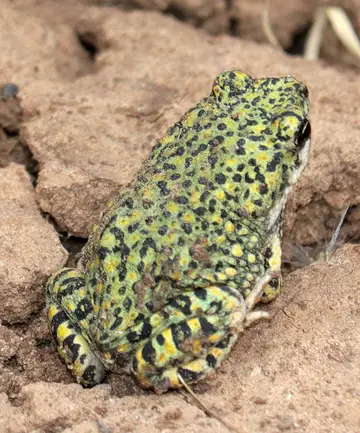
Habitat: The Chihuahuan green toad has a relatively restricted distribution occurring only in the southwestern counties and in Cimarron County in Oklahoma. (Oklahoma Department of Wildlife Conservation)
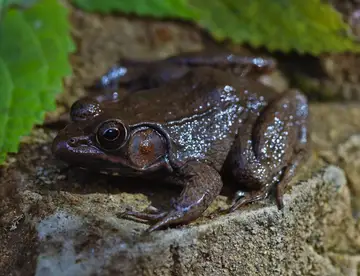
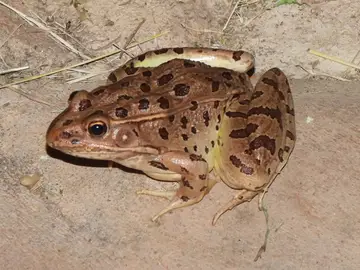
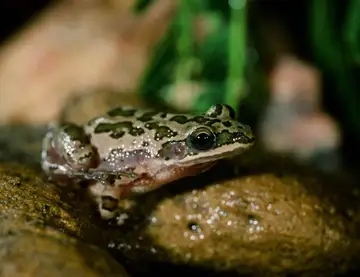
Habitat: Pickerel frogs are found along small streams or springs in forested areas, including streams in caves in some regions. (Oklahoma Department of Wildlife Conservation)
No official source we use states whether this animal is venomous. That does not mean it is harmless: do not handle it.
Where in Oklahoma
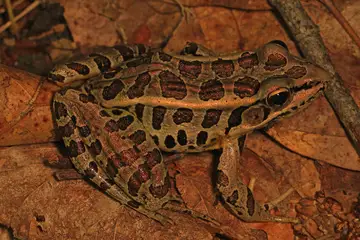
Plains leopard frogs occur throughout the western one-third of Oklahoma and in adjacent parts of Texas, New Mexico, and Colorado, and north into the Central Plains … Oklahoma Department of Wildlife Conservation
What the sources say
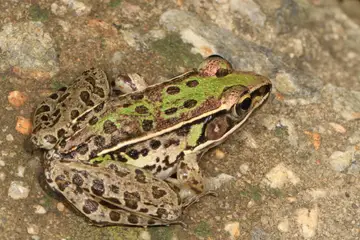
Range: Plains leopard frogs occur throughout the western one-third of Oklahoma and in adjacent parts of Texas, New Mexico, and Colorado, and north into the Central Plains states.
Habitat: Plains leopard frogs occur throughout the western one-third of Oklahoma and in adjacent parts of Texas, New Mexico, and Colorado, and north into the Central Plains states. (Oklahoma Department of Wildlife Conservation)
No confirmed photo of Plains spadefoot toad
Plains spadefoot toad
Spea bombifrons
Not stated
Venom
No official source we use states whether this animal is venomous. That does not mean it is harmless: do not handle it.
Habitat: In Oklahoma, this species occurs throughout the state, except in the northeast and southeast counties. (Oklahoma Department of Wildlife Conservation)
Habitat: Red-spotted toads occur throughout the southwestern United States, from parts of southern California to the Central Plains. (Oklahoma Department of Wildlife Conservation)
Habitat: In Oklahoma, Coastal Plains leopard frogs occur throughout most of the eastern two-thirds of the state. (Oklahoma Department of Wildlife Conservation)
No official source we use states whether this animal is venomous. That does not mean it is harmless: do not handle it.
No confirmed photo of Strecker’s chorus frog
Strecker’s chorus frog
Pseudacris streckeri
Not stated
Venom
No official source we use states whether this animal is venomous. That does not mean it is harmless: do not handle it.
Where in Oklahoma
Strecker’s chorus frogs occur throughout most of Oklahoma and eastern Texas, with some adjoining populations in a few counties in Kansas, Arkansas, and Louisiana. Oklahoma Department of Wildlife Conservation
What the sources say
Habitat: Strecker’s chorus frogs occur throughout most of Oklahoma and eastern Texas, with some adjoining populations in a few counties in Kansas, Arkansas, and Louisiana. (Oklahoma Department of Wildlife Conservation)
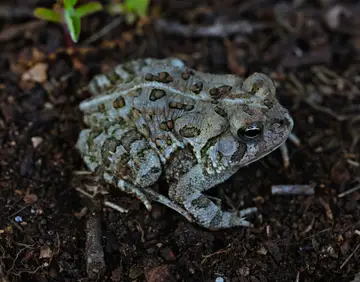
The difference official sources agree on is at the head: in the American toad the ridge (cranial crest) behind each eye is separate from the parotoid gland or joined to it only by a short spur; in Fowler's toad the two touch. Fowler's toad also has three or more warts in each of the larger dark spots, while the American toad has fewer (TWRA: one or two; Ohio DNR: one, two or three; Georgia DNR: usually no more than one). Fowler's toad has a whitish belly, often with a single dark spot on the chest; the American toad's belly is peppered with dark spots. The two can hybridize, so some toads cannot be told apart.
The difference official sources agree on is at the head: in the American toad the ridge (cranial crest) behind each eye is separate from the parotoid gland or joined to it only by a short spur; in Fowler's toad the two touch. Fowler's toad also has three or more warts in each of the larger dark spots, while the American toad has fewer (TWRA: one or two; Ohio DNR: one, two or three; Georgia DNR: usually no more than one). Fowler's toad has a whitish belly, often with a single dark spot on the chest; the American toad's belly is peppered with dark spots. The two can hybridize, and hybrids have intermediate features.
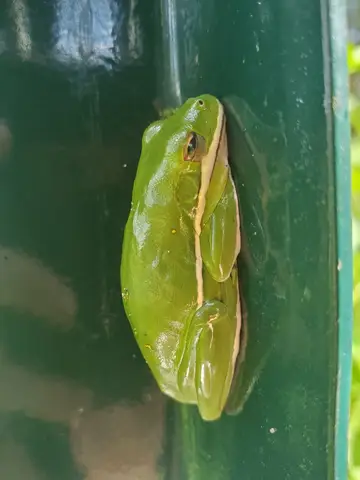
Green Treefrog or Gray Treefrog and Cope's Gray Treefrog?
Missouri Department of Conservation calls both gray treefrogs gray, unlike the green treefrog, but its gray treefrog account says their color may be green to light greenish gray, gray, brown or dark brown, so color alone does not settle it. MDC: gray treefrogs have warty (granular) skin; the green treefrog's back is smooth and a light stripe runs from its upper lip down the side of the body.
Maine IF&W lists the spring peeper's distinguishing characteristics: Maine's smallest frog (about 0.8 to 1.5 inches), grayish- or orangish-brown above with a distinct dark X on the back, and smooth skin; it notes it is commonly confused with the gray treefrog.
Photos show typical adults; individuals vary. Never get close to compare.
When frogs and toads are active in Oklahoma
Records of frogs and toads in Oklahoma peak in April to May, July and September. They show when people record frogs and toads, not how many there are (about month bars).
JanFebMarAprMayJunJulAugSepOctNovDec
669 records of frogs and toads in Oklahoma by month (GBIF, CC0 and CC BY records).
How to report
Report wildlife sightings (including mountain lions and bears) to ODWC online at wildlifedepartment.com/wildlife/report-wildlife; report suspected invasive aquatic species to ODWC at (918) 200-4815 or online. Oklahoma Department of Wildlife Conservation
About Us. Oklahoma Department of Wildlife Conservation. undated page; checked November 3, 2026.
Checklist of Oklahoma Amphibians and Reptiles. Sam Noble Oklahoma Museum of Natural History (SNOMNH) Herpetology, hosted by the Oklahoma Biological Survey, University of Oklahoma. PDF created 2014-09-09, modified 2016-06-06; checked November 3, 2026.Quoted passages (1)
“Oklahoma is home to many diverse habitats supporting 54 species of amphibians and 82 species of reptiles.”