This page lists 8 insects and 2 ticks.
5 are venomous by official accounts.
Not every species: no complete official list of Oklahoma insects exists, so this page covers the ones state and Extension sources name. How lists are built.
Which insects can hurt you
Official sources single out these insects in Oklahoma, in their own words:
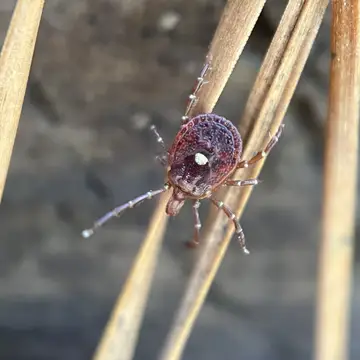
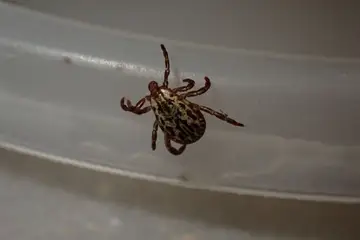
Disease. “The ticks associated with tularemia in Oklahoma include the dog tick (Dermacentor variabilis) and the lone star tick (Amblyomma americanum).” Oklahoma State Department of Health
Disease. “In Oklahoma, the tick most closely associated with RMSF is the American dog tick (Dermacentor variabilis).” Oklahoma State Department of Health
All 8 insects and 2 ticks
Venomous species first, then A to Z. Do not handle them.
Missouri: workers 1/2 to 3/4 inch, queens 3/4 inch. University of Maryland: workers 5/8 to 3/4 inch, queens just over an inch. Penn State gives 13 to 20 mm for the queen and her offspring.
How to recognize it
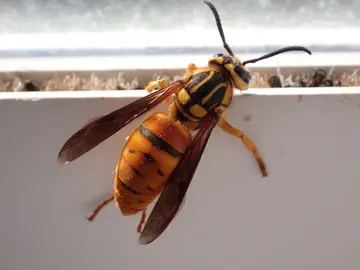
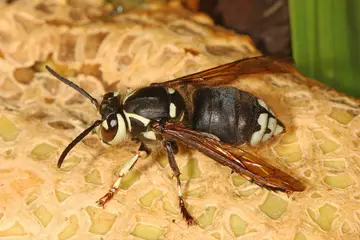
Not yellow, unlike typical yellowjackets; larger, black and ivory
Large, rounded, gray paper nest hanging in trees or shrubs, sometimes on buildings
Nest entrance is the lowest opening of the cone- or egg-shaped nest
What the sources say
Venom: “In contrast, the stinging wasps inject a venom with powerful pain-causing agents into their victims. Individual responses to a sting may vary from a brief swelling of the immediate area of the sting to a more severe, and potentially fatal, allergic response involving the entire body.” (Oklahoma Cooperative Extension Service, Oklahoma State University)
Habitat: A few species, such as the baldfaced hornet, build their nests in trees and shrubs or on buildings (Figure 3). (Oklahoma Cooperative Extension Service, Oklahoma State University)
Venom: “In contrast, the stinging wasps inject a venom with powerful pain-causing agents into their victims. Individual responses to a sting may vary from a brief swelling of the immediate area of the sting to a more severe, and potentially fatal, allergic response involving the entire body.” (Oklahoma Cooperative Extension Service, Oklahoma State University)
No confirmed photo of Paper wasps (e.g., Polistes exclamans)
Venom: “In contrast, the stinging wasps inject a venom with powerful pain-causing agents into their victims. Individual responses to a sting may vary from a brief swelling of the immediate area of the sting to a more severe, and potentially fatal, allergic response involving the entire body.” (Oklahoma Cooperative Extension Service, Oklahoma State University)
Habitat: They build paper nests of a single comb (Figure 1) attached to trees, shrubs, and a variety of structures, such as building eaves. (Oklahoma Cooperative Extension Service, Oklahoma State University)
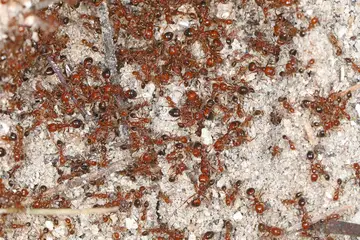
Venom: “After firmly grasping the skin with its jaws, the fire ant arches its back as it inserts its rear-end stinger into the flesh, injecting venom from the poison sac.” (Oklahoma State University, Department of Entomology and Plant Pathology)
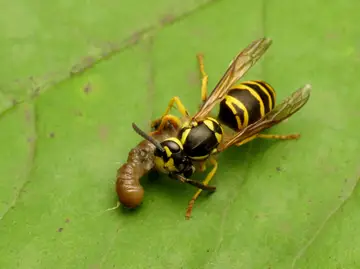
Venom: “In contrast, the stinging wasps inject a venom with powerful pain-causing agents into their victims. Individual responses to a sting may vary from a brief swelling of the immediate area of the sting to a more severe, and potentially fatal, allergic response involving the entire body.” (Oklahoma Cooperative Extension Service, Oklahoma State University)
Habitat: Most yellowjackets build nests in underground (Figure 4) or enclosed sites such as wall voids, attics, and inside hollow logs. (Oklahoma Cooperative Extension Service, Oklahoma State University)
No confirmed photo of American Bumble Bee
American Bumble Bee
Bombus pensylvanicus
Not stated
Venom
No official source we use states whether this animal is venomous. That does not mean it is harmless: do not handle it.
No official source we use states whether this animal is venomous. That does not mean it is harmless: do not handle it.
Danger to people
“The ticks associated with tularemia in Oklahoma include the dog tick (Dermacentor variabilis) and the lone star tick (Amblyomma americanum).” Oklahoma State Department of Health
No official source we use states whether this animal is venomous. That does not mean it is harmless: do not handle it.
JFMAMJJASOND
15,826 records by month.What the sources say
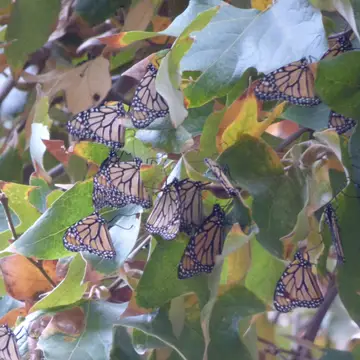
Habitat: Milkweed plants are especially important for caterpillars, but adult butterflies feed on nectar from flowering plants like goldenrod, asters and gayfeather. (Oklahoma Department of Wildlife Conservation)
When insects are active in Oklahoma
Records of insects in Oklahoma peak in June to September. They show when people record insects, not how many there are (about month bars).
JanFebMarAprMayJunJulAugSepOctNovDec
68,668 records of insects in Oklahoma by month (GBIF, CC0 and CC BY records).
Call 911 or Poison Help at 1-800-222-1222 right away. Poison Help connects you to your local poison center, any time of day.
How to report
Report wildlife sightings (including mountain lions and bears) to ODWC online at wildlifedepartment.com/wildlife/report-wildlife; report suspected invasive aquatic species to ODWC at (918) 200-4815 or online. Oklahoma Department of Wildlife Conservation
“On Mar 24, 2009, the Animal and Plant Health Inspection Service (APHIS) in cooperation with the State Plant Regulatory Official of Oklahoma, made final an order increasing the numbers of counties in Oklahoma under state and federal quarantine for imported fire ants, Solenopsis invicta.”
About this list
Venom labels come only from official sources and link to them; "Not stated" never means harmless. How labels work.
Sources
About Us. Oklahoma Department of Wildlife Conservation. undated page; checked November 3, 2026.
“In contrast, the stinging wasps inject a venom with powerful pain-causing agents into their victims. Individual responses to a sting may vary from a brief swelling of the immediate area of the sting to a more severe, and potentially fatal, allergic response involving the entire body.”
“Due to their large colony size and defensive nature, yellowjackets are more aggressive than paper wasps.”
“For this reason, one will almost certainly be stung if a lawn mower or trimmer is used near a yellowjacket nest.”
“The colony grows rapidly through the summer, and the maximum colony size is usually reached in late summer or early fall.”
Red Imported Fire Ants. Oklahoma State University, Department of Entomology and Plant Pathology. undated page; checked November 3, 2026.Quoted passages (3)
“After firmly grasping the skin with its jaws, the fire ant arches its back as it inserts its rear-end stinger into the flesh, injecting venom from the poison sac.”
“The RIFA now infests more than 325 million acres in the southern United States, where it has become a considerable agricultural pest and a significant health hazard.”
“On Mar 24, 2009, the Animal and Plant Health Inspection Service (APHIS) in cooperation with the State Plant Regulatory Official of Oklahoma, made final an order increasing the numbers of counties in Oklahoma under state and federal quarantine for imported fire ants, Solenopsis invicta.”
Monarch (ODWC Field Guide). Oklahoma Department of Wildlife Conservation. undated page; checked November 3, 2026.
Tularemia. Oklahoma State Department of Health. page meta Last-Modified "06-07-2026 02:04:04"; checked November 3, 2026.Quoted passages (1)
“The ticks associated with tularemia in Oklahoma include the dog tick (Dermacentor variabilis) and the lone star tick (Amblyomma americanum).”
Rocky Mountain Spotted Fever (RMSF). Oklahoma State Department of Health. page meta Last-Modified "27-08-2026 08:37:05"; checked November 3, 2026.Quoted passages (1)
“In Oklahoma, the tick most closely associated with RMSF is the American dog tick (Dermacentor variabilis).”
Aquatic Nuisance Species. Oklahoma Department of Wildlife Conservation. undated page; checked November 3, 2026.Quoted passages (1)
“If you think you have discovered any invasive species contact us at (918) 200-4815 or report online.”