Oklahoma Cooperative Extension Service, Oklahoma State University: No official complete list of Oklahoma spiders exists. In Oklahoma, only two spiders, the brown recluse and black widow, are considered dangerous to people.
This page lists 6 spiders: 3 from Oklahoma Cooperative Extension Service, Oklahoma State University's OSU Extension fact sheet EPP-7301 "Spiders: Brown Recluse, Black Widow, and Other Common Spiders" plus ODWC Field Guide accounts. Not a complete list. and 3 named in other official sources.
2 are venomous by official accounts.
Not every species: no complete official list of Oklahoma spiders exists, so this page covers the ones state and Extension sources name. How lists are built.
Which spiders can hurt you
Official sources single out these spiders in Oklahoma, in their own words:
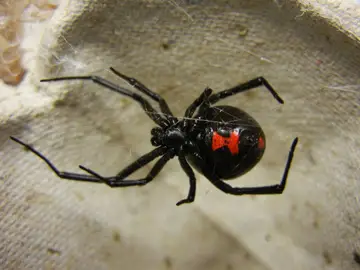
Venomous. “Black widow bites are rarely life-threatening but can be dangerous for small children or people with chronic health problems.” Oklahoma Department of Wildlife Conservation
All 6 spiders
Venomous species first, then A to Z. Do not handle them.
Venom: “Black widows are the only spiders in the United States with a neurotoxic poison, which means it affects nerves or nervous tissue.” (Oklahoma Department of Wildlife Conservation)
Habitat: Black widow spiders are commonly found around homes, garages, barns, and other man-made structures. (Oklahoma Department of Wildlife Conservation)
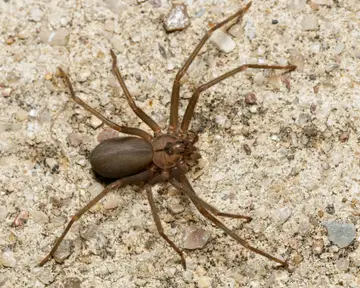
Body about 7 to 12 mm (about 3/8 inch); females average about 9 mm and males about 8 mm. UC IPM says a recluse body is not more than 3/8 inch long.
How to recognize it
Six equal-sized eyes in three pairs. UC IPM calls this the most definitive feature, since most spiders have eight eyes.
The violin mark alone is not a reliable way to identify it
UC IPM's five-point check: six eyes in pairs, evenly colored finely haired abdomen, no spines on the legs, evenly colored legs, body no more than 3/8 inch
Venom: “Their bite can be mild to serious in humans, and their hemolytic venom is toxic.” (Oklahoma Department of Wildlife Conservation)
Habitat: Brown recluses are able to withstand extreme temperatures and have become well adapted to living indoors with humans. (Oklahoma Department of Wildlife Conservation)
No confirmed photo of Garden spiders (orb weavers, genus Argiope)
Garden spiders (orb weavers, genus Argiope)
Argiope
Not stated
Venom
No official source we use states whether this animal is venomous. That does not mean it is harmless: do not handle it.
What the sources say
Habitat: These spiders are often called garden spiders but they may be found in fields, on fences, around the home, and in other locations. (Oklahoma Cooperative Extension Service, Oklahoma State University)
No official source we use states whether this animal is venomous. That does not mean it is harmless: do not handle it.
JFMAMJJASOND
487 records by month.What the sources say
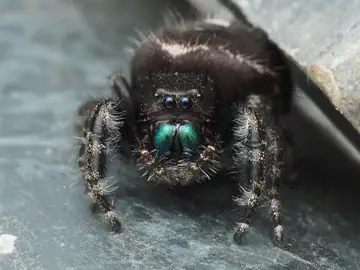
Habitat: It can be found around the exterior of homes, in gardens, and sometimes within homes. (Oklahoma Cooperative Extension Service, Oklahoma State University)
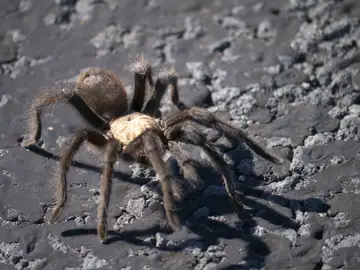
Habitat: The Oklahoma brown tarantula finds shelter near small rocks and logs that they can burrow underneath. (Oklahoma Department of Wildlife Conservation)
No confirmed photo of Wolf spiders (genus Lycosa and other Lycosidae)
Wolf spiders (genus Lycosa and other Lycosidae)
Lycosa
Not stated
Venom
No official source we use states whether this animal is venomous. That does not mean it is harmless: do not handle it.
What the sources say
Habitat: They sometimes enter homes through cracks and crevices around doors and windows. (Oklahoma Cooperative Extension Service, Oklahoma State University)
When spiders are active in Oklahoma
Records of spiders in Oklahoma peak in April to July and September. They show when people record spiders, not how many there are (about month bars).
JanFebMarAprMayJunJulAugSepOctNovDec
3,602 records of spiders in Oklahoma by month (GBIF, CC0 and CC BY records).
If you are bitten or stung
Call 911 or Poison Help at 1-800-222-1222 right away. Poison Help connects you to your local poison center, any time of day.
Official advice from Oklahoma Cooperative Extension Service, Oklahoma State University:
Report wildlife sightings (including mountain lions and bears) to ODWC online at wildlifedepartment.com/wildlife/report-wildlife; report suspected invasive aquatic species to ODWC at (918) 200-4815 or online. Oklahoma Department of Wildlife Conservation
What official sources say
Are there tarantulas in Oklahoma?
Yes. ODWC: the Oklahoma brown tarantula (Aphonopelma hentzi) is seen throughout Oklahoma, more commonly in the southwest; its venom is not known to be life-threatening to people. Oklahoma Department of Wildlife Conservation
“Although tarantulas can be seen throughout Oklahoma, the southwestern part of the state seems to be more common for the”
“No official complete list of Oklahoma spiders exists. In Oklahoma, only two spiders, the brown recluse and black widow, are considered dangerous to people.”
“In case of severe reaction, or if the bite is from a brown recluse or black widow, consult a physician immediately.”
Brown Recluse (ODWC Field Guide). Oklahoma Department of Wildlife Conservation. undated page; checked November 3, 2026.Quoted passages (1)
“Their bite can be mild to serious in humans, and their hemolytic venom is toxic.”
Black Widow (ODWC Field Guide). Oklahoma Department of Wildlife Conservation. undated page; checked November 3, 2026.Quoted passages (2)
“Black widows are the only spiders in the United States with a neurotoxic poison, which means it affects nerves or nervous tissue.”
“Black widow bites are rarely life-threatening but can be dangerous for small children or people with chronic health problems.”
Brown Tarantula (ODWC Field Guide). Oklahoma Department of Wildlife Conservation. undated page; checked November 3, 2026.Quoted passages (1)
“Although tarantulas can be seen throughout Oklahoma, the southwestern part of the state seems to be more common for the”
Aquatic Nuisance Species. Oklahoma Department of Wildlife Conservation. undated page; checked November 3, 2026.Quoted passages (1)
“If you think you have discovered any invasive species contact us at (918) 200-4815 or report online.”