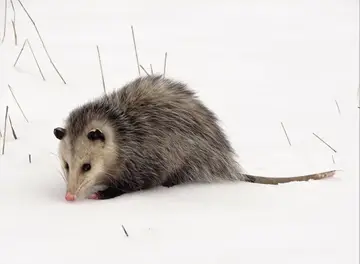
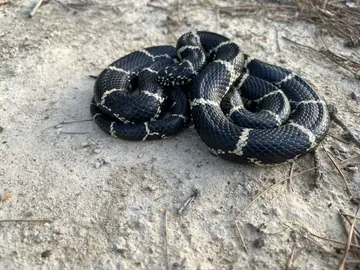
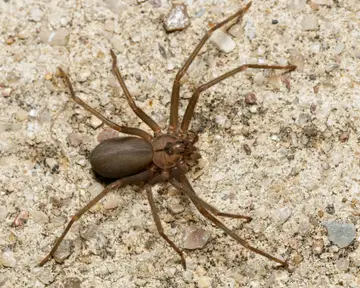
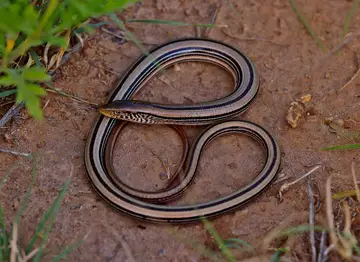
Oklahoma has 8 venomous snakes named by official sources: Copperhead, Cottonmouth, Western diamondback rattlesnake, Timber rattlesnake, Prairie rattlesnake, Massasauga, Pygmy rattlesnake and Broad-banded Copperhead, as labelled by Oklahoma Department of Wildlife Conservation and Sam Noble Oklahoma Museum of Natural History (SNOMNH) Herpetology, hosted by the Oklahoma Biological Survey, University of Oklahoma. This guide covers 9 animal groups from Oklahoma Department of Wildlife Conservation (ODWC) lists and other official sources, with photos, venomous status and when each group is active.
Identification help has limits: a photo cannot confirm that an animal is safe. Watch from a distance and never handle a wild animal.
These are the animals official sources describe as venomous or as a risk to people in Oklahoma, across 8 groups. The reason is given in the source's own terms.
Not venomous, but can inflict a painful bite that breaks the skin if handled (ODWC): “As a cautionary note, although not venomous, collared lizards can inflict a painful bite that usually breaks the skin of not handled carefully.”
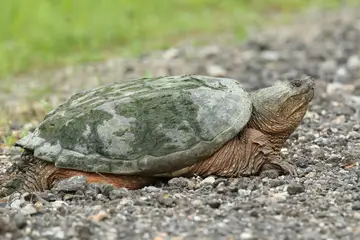
Bite (as described by ODWC): “When disturbed, snapping turtles usually attempt to escape, but if cornered will attempt to bite by explosively extending the head with mouth open.”
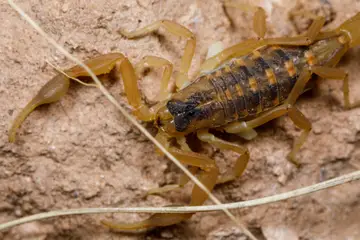
Venomous: “The most common species found in Oklahoma is about two inches long. … The venom can produce considerable pain around the area of the sting, but swelling is generally limited. … The sting of the …”
Venomous: “After firmly grasping the skin with its jaws, the fire ant arches its back as it inserts its rear-end stinger into the flesh, injecting venom from the poison sac.”
Disease: “The ticks associated with tularemia in Oklahoma include the dog tick (Dermacentor variabilis) and the lone star tick (Amblyomma americanum).”
Large and quick: “American Indians and early European settlers learned that bison are very difficult to domesticate, and their large bodies and quickness made them dangerous to be near.”
Disease transmissible to people (brucellosis, leptospirosis): “Feral swine can be infected with brucellosis and leptospirosis, which can be passed to people.”
Human-bear conflicts: “To minimize the chances of attracting bears, always make sure that garbage is kept in sealed containers and that pet food is not left outside. Never feed wild bears.”
10 nonnative animals are named on Oklahoma's official lists (Oklahoma Department of Wildlife Conservation). The USGS Nonindigenous Aquatic Species database records 1 nonnative animal in our groups with an established population in Oklahoma.
Darker cells are the months with more open-licence observation records of each group in Oklahoma (GBIF). They show when people see and record these animals, not how many there are. The current month, this month, is highlighted.
In western Oklahoma ODWC staff find snakes year-round; September-October is the most hazardous time there as snakes head back to dens and young are born. Oklahoma Department of Wildlife Conservation
Report: Report wildlife sightings (including mountain lions and bears) to ODWC online at wildlifedepartment.com/wildlife/report-wildlife; report suspected invasive aquatic species to ODWC at (918) 200-4815 or online. Oklahoma Department of Wildlife Conservation
Yes, but rare. ODWC: alligators are difficult to find in Oklahoma but occur in remote, marshy areas of the southeastern corner. ODWC lists the American alligator as a Species of Greatest Conservation Need. Oklahoma Department of Wildlife Conservation · More
How many venomous snakes are in Oklahoma?
ODWC (2025): 49 snake species, of which the eight rattlesnakes, copperheads and cottonmouth (pit vipers) are venomous. ODWC's copperhead account says 46 native species with 7 venomous, and the SNOMNH checklist lists 47 species with 7 marked venomous. ODWC (2025) also says the broad-banded copperhead is one of two copperhead species thought to occur in Oklahoma; ODWC does not say which species make up the difference between the counts. Oklahoma Department of Wildlife Conservation
Yes. ODWC: the Oklahoma brown tarantula (Aphonopelma hentzi) is seen throughout Oklahoma, more commonly in the southwest; its venom is not known to be life-threatening to people. Oklahoma Department of Wildlife Conservation
Are there scorpions in Oklahoma?
Yes. OSU: five scorpion species have been found in Oklahoma (OSU EPP-7303: an estimated three to five), and only one is found throughout the state; the most common species is the striped bark scorpion. Oklahoma State University Extension, School IPM program
Rarely. ODWC: Oklahoma has far fewer mountain lions than rumors suggest; most confirmed reports are thought to be transient animals, but two females with kittens were confirmed in 2024. ODWC lists 97 confirmations since 2002. Oklahoma Department of Wildlife Conservation
Yes. ODWC: feral swine have been detected in 70 of 77 counties, most prevalent in southern Oklahoma; they can carry brucellosis and leptospirosis, which can pass to people. Oklahoma Department of Wildlife Conservation
About Us. Oklahoma Department of Wildlife Conservation. undated page; checked November 3, 2026.
Copperhead (ODWC Field Guide). Oklahoma Department of Wildlife Conservation. undated page; checked November 3, 2026.Quoted passages (2)
“And the copperhead is one of those venomous species.”
“Copperheads are mostly nocturnal during summer but are usually active during daylight in spring and fall. The mating season lasts from February to May and late August to October.”
“It is critical to keep in mind that timber rattlesnakes are highly venomous and should not be handled or disturbed.”
Checklist of Oklahoma Amphibians and Reptiles. Sam Noble Oklahoma Museum of Natural History (SNOMNH) Herpetology, hosted by the Oklahoma Biological Survey, University of Oklahoma. PDF created 2014-09-09, modified 2016-06-06; checked November 3, 2026.Quoted passages (3)
“! Prairie rattlesnake (Crotalus viridis) N … N - venomous”
“! Massasauga (Sistrurus catenatus) N … N - venomous”
“Oklahoma is home to many diverse habitats supporting 54 species of amphibians and 82 species of reptiles.”
“Oklahoma’s snake diversity includes 49 species, the large majority of which are considered nonvenomous. Beyond this bulk of ratsnakes, watersnakes, and less familiar species, the remaining eight species of rattlesnakes, copperheads, and cottonmouth are in the pit viper family and are considered venomous. … The broad-banded copperhead is one of two copperhead species thought to occur in Oklahoma.”
“Oklahoma’s snake diversity includes 49 species, the large majority of which are considered nonvenomous. Beyond this bulk of ratsnakes, watersnakes, and less familiar species, the remaining eight species of rattlesnakes, copperheads, and cottonmouth are in the pit viper family and are considered venomous.”
“Oklahoma’s snake diversity includes 49 species, the large majority of which are considered nonvenomous.”
“If you’re concerned about a bite or are bitten by a venomous snake, seek medical attention.”
“If a copperhead or other snake is encountered, Allen recommends backing several feet away and enjoying the view.”
“‘To me, that September through October timeframe is the most hazardous time in our area. Snakes are getting ready to go back to the den. And they’ve also just had a bunch of little snakes.”
“While there are about 50 species of scorpions in the United States, only five have been found in Oklahoma and only one is found throughout the state.”
“When disturbed, snapping turtles usually attempt to escape, but if cornered will attempt to bite by explosively extending the head with mouth open.”
EPP-7303 Scorpions. Oklahoma Cooperative Extension Service, Oklahoma State University. printed "Revisied 1012"; checked November 3, 2026.Quoted passages (1)
“The most common species found in Oklahoma is about two inches long. … The venom can produce considerable pain around the area of the sting, but swelling is generally limited. … The sting of the species of scorpion we have in Oklahoma is not considered to be lethal and rarely causes few problems.”
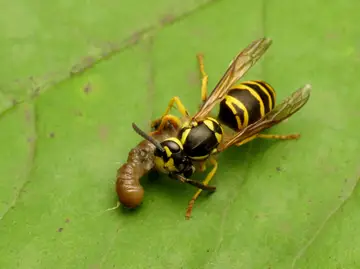
“In contrast, the stinging wasps inject a venom with powerful pain-causing agents into their victims. Individual responses to a sting may vary from a brief swelling of the immediate area of the sting to a more severe, and potentially fatal, allergic response involving the entire body.”
“The colony grows rapidly through the summer, and the maximum colony size is usually reached in late summer or early fall.”
Red Imported Fire Ants. Oklahoma State University, Department of Entomology and Plant Pathology. undated page; checked November 3, 2026.Quoted passages (2)
“After firmly grasping the skin with its jaws, the fire ant arches its back as it inserts its rear-end stinger into the flesh, injecting venom from the poison sac.”
“On Mar 24, 2009, the Animal and Plant Health Inspection Service (APHIS) in cooperation with the State Plant Regulatory Official of Oklahoma, made final an order increasing the numbers of counties in Oklahoma under state and federal quarantine for imported fire ants, Solenopsis invicta.”
“The American bumble bee can sting several times in row if needed, as it retains its stinger.”
Tularemia. Oklahoma State Department of Health. page meta Last-Modified "06-07-2026 02:04:04"; checked November 3, 2026.Quoted passages (1)
“The ticks associated with tularemia in Oklahoma include the dog tick (Dermacentor variabilis) and the lone star tick (Amblyomma americanum).”
Rocky Mountain Spotted Fever (RMSF). Oklahoma State Department of Health. page meta Last-Modified "27-08-2026 08:37:05"; checked November 3, 2026.Quoted passages (1)
“In Oklahoma, the tick most closely associated with RMSF is the American dog tick (Dermacentor variabilis).”
American Bison (ODWC Field Guide). Oklahoma Department of Wildlife Conservation. undated page; checked November 3, 2026.Quoted passages (1)
“American Indians and early European settlers learned that bison are very difficult to domesticate, and their large bodies and quickness made them dangerous to be near.”
Red Fox (ODWC Field Guide). Oklahoma Department of Wildlife Conservation. undated page; checked November 3, 2026.Quoted passages (1)
“These foxes are among the most common spreaders of rabies and carry other diseases such as canine parvovirus and canine distemper.”
Feral Hogs. Oklahoma Department of Wildlife Conservation. undated page; checked November 3, 2026.Quoted passages (2)
“Feral swine can be infected with brucellosis and leptospirosis, which can be passed to people.”
“Feral swine have been detected in 70 of the state's 77 counties, but they are most prevalent across the southern parts of Oklahoma.”
Bear Basics. Oklahoma Department of Wildlife Conservation. undated page; checked November 3, 2026.Quoted passages (3)
“To minimize the chances of attracting bears, always make sure that garbage is kept in sealed containers and that pet food is not left outside. Never feed wild bears.”
“Sightings are possible anywhere in the eastern half of the state and the western tip of the Panhandle.”
“May is typically when bear reports begin coming in. … August is typically a high month for reports as soft mast sources diminish and grasses and other vegetation dry out or become unpalatable.”
Bighead Carp (ODWC Field Guide). Oklahoma Department of Wildlife Conservation. undated page; checked November 3, 2026.Quoted passages (1)
“**INVASIVE!** Small bighead carp and silver carp resemble gizzard shad.”
Black Carp (ODWC Field Guide). Oklahoma Department of Wildlife Conservation. undated page; checked November 3, 2026.Quoted passages (1)
“**INVASIVE!** Black carp (Mylopharyngodon piceus) were imported to the United States in the 1970s and 1980s as a biological control agent for snail pests in aquaculture ponds.”
Silver Carp (ODWC Field Guide). Oklahoma Department of Wildlife Conservation. undated page; checked November 3, 2026.Quoted passages (1)
“***INVASIVE!*** The importation and possession of invasive carp are illegal in Oklahoma without the written consent of the ODWC Director.”
Grass Carp (ODWC Field Guide). Oklahoma Department of Wildlife Conservation. undated page; checked November 3, 2026.Quoted passages (1)
“Grass carp were imported from eastern Asia in 1963 to control submersed aquatic vegetation in aquaculture ponds.”
White Perch (ODWC Field Guide). Oklahoma Department of Wildlife Conservation. undated page; checked November 3, 2026.Quoted passages (1)
“White perch is native to the estuaries and freshwater systems of the Atlantic coast from Nova Scotia to South Carolina.”
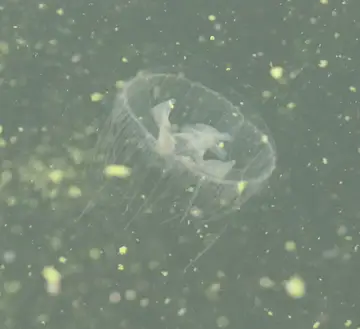
“** INVASIVE! ** Freshwater jellyfish (Craspedacusta sowerbii) are native to the Yangtze River valley in China.”
Harris Mud Crab (ODWC Field Guide). Oklahoma Department of Wildlife Conservation. undated page; checked November 3, 2026.Quoted passages (1)
“***INVASIVE!*** Status and Impacts Soon after it was discovered in the state, researchers from Southeastern Oklahoma State University (SEOSU) began surveying for the crabs.”
Aquatic Nuisance Species. Oklahoma Department of Wildlife Conservation. undated page; checked November 3, 2026.Quoted passages (1)
“If you think you have discovered any invasive species contact us at (918) 200-4815 or report online.”
American Alligator (field guide). Oklahoma Department of Wildlife Conservation. undated page; checked November 3, 2026.Quoted passages (1)
“American alligators are difficult to find in Oklahoma. But they can be found in remote and marshy areas in the southeastern corner of the state.”
Oklahoma Poison Center Urges Caution During Snake Season. University of Oklahoma Health Sciences, College of Pharmacy (Oklahoma Center for Poison and Drug Information). Published: Thursday, April 30, 2026; checked November 3, 2026.Quoted passages (4)
“Oklahoma is home to several venomous snakes, including: Copperheads Rattlesnakes (Western Massasauga, Prairie, Timber, Western diamond-backed, Western pygmy) Cottonmouths (also known as water moccasins)”
“In 2025 alone, the Oklahoma Poison Center assisted in the management of 311 snake bite cases statewide. … 143 were copperhead bites 41 were rattlesnake bites 10 involved cottonmouths”
“Call the Oklahoma Poison Center immediately at 1-800-222-1222.”
“Snake bites are more common than many people realize, especially during the spring and summer months,”
“In Oklahoma, only two spiders, the brown recluse and black widow, are considered dangerous to people.”
“In case of severe reaction, or if the bite is from a brown recluse or black widow, consult a physician immediately.”
Brown Tarantula (ODWC Field Guide). Oklahoma Department of Wildlife Conservation. undated page; checked November 3, 2026.Quoted passages (2)
“Although tarantulas can be seen throughout Oklahoma, the southwestern part of the state seems to be more common for the”
“They can occasionally be spotted on a roadway and close to houses when the males migrate in search of mates. This usually starts occurring in September.”
Mountain Lion (ODWC Field Guide). Oklahoma Department of Wildlife Conservation. undated page; checked November 3, 2026.Quoted passages (1)
“Oklahoma has far fewer mountain lions than rumors would lead you to believe. Though most confirmed reports are thought to be of transient individuals, the Wildlife Department confirmed two separate mountain lions observed with kittens in different regions of the state in 2024.”
Wildlife Encounters. Oklahoma Department of Wildlife Conservation. undated page; checked November 3, 2026.Quoted passages (1)
“…wildlife biologists with the Oklahoma Department of Wildlife Conservation encourage you to leave wildlife alone and to keep your distance.”
Spring Brings Snake Bite Calls to the Poison Center. University of Oklahoma Health Sciences (Oklahoma Center for Poison and Drug Information). Published: Wednesday, April 13, 2022; checked November 3, 2026.Quoted passages (1)
“DO NOT handle or play with snakes. Even dead snakes can bite reflexively. … Watch where you step and place your hands when outdoors.”
Prairie Lizard (ODWC Field Guide). Oklahoma Department of Wildlife Conservation. undated page; checked November 3, 2026.Quoted passages (1)
“However, most actively occur during March-October.”