Are there alligators in Oklahoma?
Last checked November 3, 2026 against official sources.
Yes, but rare.
ODWC: alligators are difficult to find in Oklahoma but occur in remote, marshy areas of the southeastern corner. ODWC lists the American alligator as a Species of Greatest Conservation Need.
Oklahoma Department of Wildlife Conservation: “American alligators are difficult to find in Oklahoma. But they can be found in remote and marshy areas in the southeastern corner of the state.” Source
Where the American alligator lives in the US
- Native or listed
- Nonnative or not established
- No official record in our data
- 1–9
- 10–99
- 100–999
- 1,000+
What else it could be
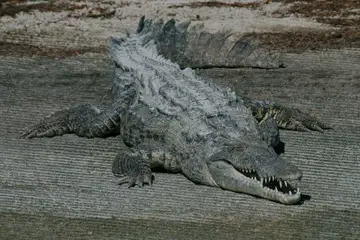
Photo: Dennis Vollmar · CC BY 4.0 · iNaturalist American crocodile
Crocodile: lighter grayish-green skin, narrow tapered triangular snout, fourth lower tooth visible with the mouth closed, and mostly coastal brackish or salt water in south Florida. Alligator: darker, broad rounded snout, mostly fresh water.
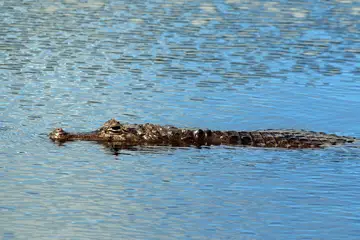
Photo: Charles J. Sharp · CC BY-SA 4.0 · Wikimedia Commons · resized Spectacled caiman
USGS: the common (spectacled) caiman's snout is not as broad and round as the American alligator's, and unlike the alligator it has a unique bony ridge in front of and between the eyes.

If you see one in Oklahoma
Keep your distance and do not try to catch or handle it. Report wildlife sightings (including mountain lions and bears) to ODWC online at wildlifedepartment.com/wildlife/report-wildlife; report suspected invasive aquatic species to ODWC at (918) 200-4815 or online. Oklahoma Department of Wildlife Conservation
Sources
- American Alligator (field guide). Oklahoma Department of Wildlife Conservation. undated page; checked November 3, 2026.
Quoted passages (1)
“American alligators are difficult to find in Oklahoma. But they can be found in remote and marshy areas in the southeastern corner of the state.”
- Aquatic Nuisance Species. Oklahoma Department of Wildlife Conservation. undated page; checked November 3, 2026.
Quoted passages (1)
“If you think you have discovered any invasive species contact us at (918) 200-4815 or report online.”