Invasive and nonnative animals in Oklahoma
Last checked November 3, 2026 against official sources.
On this page
- Bighead Carp (ODWC Field Guide)
- Black Carp (ODWC Field Guide)
- Silver Carp (ODWC Field Guide)
- Grass Carp (ODWC Field Guide)
- White Perch (ODWC Field Guide)
- Freshwater Jellyfish (ODWC Field Guide)
- Harris Mud Crab (ODWC Field Guide)
- Zebra Mussel (Dreissena polymorpha) (ODWC Field Guide)
- Feral Hogs
- Updated and Revised Checklist of the Mammals of Oklahoma, 2019 (Caire, Loucks, Haynie, Coyner & Braun; Proc. Okla. Acad. Sci. 99:1-6)
- USGS established records
- How to report
- Sources
10 nonnative animals are named on 10 official lists for Oklahoma: “Bighead Carp (ODWC Field Guide)” (Oklahoma Department of Wildlife Conservation), “Black Carp (ODWC Field Guide)” (Oklahoma Department of Wildlife Conservation), “Silver Carp (ODWC Field Guide)” (Oklahoma Department of Wildlife Conservation), “Grass Carp (ODWC Field Guide)” (Oklahoma Department of Wildlife Conservation), “White Perch (ODWC Field Guide)” (Oklahoma Department of Wildlife Conservation), “Freshwater Jellyfish (ODWC Field Guide)” (Oklahoma Department of Wildlife Conservation), “Harris Mud Crab (ODWC Field Guide)” (Oklahoma Department of Wildlife Conservation), “Zebra Mussel (Dreissena polymorpha) (ODWC Field Guide)” (Oklahoma Department of Wildlife Conservation), “Feral Hogs” (Oklahoma Department of Wildlife Conservation) and “Updated and Revised Checklist of the Mammals of Oklahoma, 2019 (Caire, Loucks, Haynie, Coyner & Braun; Proc. Okla. Acad. Sci. 99:1-6)” (Proceedings of the Oklahoma Academy of Science; authors at University of Central Oklahoma and Sam Noble Oklahoma Museum of Natural History).
The USGS Nonindigenous Aquatic Species database records an established population in Oklahoma for 1 nonnative animal in the groups this guide covers.
To report a sighting, see how to report.
Being on a list of nonnative species does not always mean an animal is harmful or established: each list below is described in its source's terms. A sighting of a listed animal is still worth reporting to the agency.
Bighead Carp (ODWC Field Guide)
Oklahoma Department of Wildlife Conservation, undated page. 1 animal.
-
Bighead Carp
The presence of bighead carp in Lake Hudson has been verified by ODWC biologists. Bighead carp have been reported from the Neosho River above Grand Lake and the Grand River below Grand Lake. Oklahoma Department of Wildlife Conservation
Black Carp (ODWC Field Guide)
Oklahoma Department of Wildlife Conservation, undated page. 1 animal.
-
Black Carp Mylopharyngodon piceus
ODWC confirmed the first report of a black carp within a private pond in McCurtian County in 2026. Oklahoma Department of Wildlife Conservation
Silver Carp (ODWC Field Guide)
Oklahoma Department of Wildlife Conservation, undated page. 1 animal.
-
Silver Carp
Silver carp have been found in both the Arkansas and Red Rivers in Oklahoma. Oklahoma Department of Wildlife Conservation
Grass Carp (ODWC Field Guide)
Oklahoma Department of Wildlife Conservation, undated page. 1 animal.
-
Grass Carp
Today grass carp can be found in most reservoirs in Oklahoma and reproduction of grass carp has been verified in Lake Texoma by ODWC biolog Oklahoma Department of Wildlife Conservation
White Perch (ODWC Field Guide)
Oklahoma Department of Wildlife Conservation, undated page. 1 animal.
-
White Perch Morone americana
White perch were first found in Oklahoma Department of Wildlife Conservation (ODWC) routine sampling in 2000. Oklahoma Department of Wildlife Conservation
Freshwater Jellyfish (ODWC Field Guide)
Oklahoma Department of Wildlife Conservation, undated page. 1 animal.
-
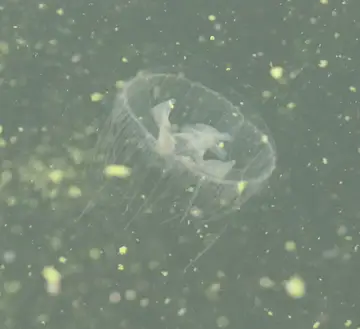
Photo: Zihao Wang · CC BY 4.0 · iNaturalist Freshwater Jellyfish Craspedacusta sowerbii
Freshwater jellyfish were first reported in Oklahoma in 1930 … Oklahoma Department of Wildlife Conservation
Harris Mud Crab (ODWC Field Guide)
Oklahoma Department of Wildlife Conservation, undated page. 1 animal.
-
Harris Mud Crab
After several unsuccessful trapping and surveying attempts, it is thought that the Harris mud crab population in Oklahoma is limited. Oklahoma Department of Wildlife Conservation
Zebra Mussel (Dreissena polymorpha) (ODWC Field Guide)
Oklahoma Department of Wildlife Conservation, undated page. 1 animal.
-
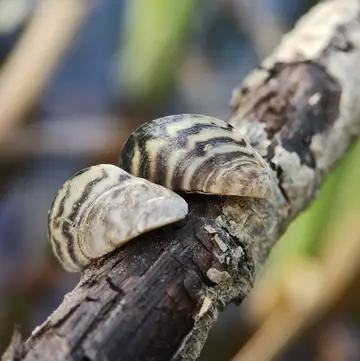
Photo: Harukano · CC0 1.0 · iNaturalist Zebra Mussel Dreissena polymorpha
ODWC’s Aquatic Nuisance Species (ANS) program has confirmed invasive zebra mussels in many water bodies throughout Oklahoma. Oklahoma Department of Wildlife Conservation
Feral Hogs
Oklahoma Department of Wildlife Conservation, undated page. 1 animal.
-
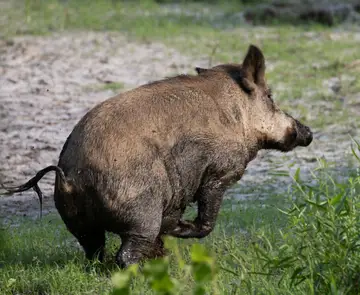
Photo: Cullen Hanks · CC BY 4.0 · iNaturalist Feral hog (feral swine) Sus scrofa
Feral swine have been detected in 70 of the state's 77 counties, but they are most prevalent across the southern parts of Oklahoma. Oklahoma Department of Wildlife Conservation
Updated and Revised Checklist of the Mammals of Oklahoma, 2019 (Caire, Loucks, Haynie, Coyner & Braun; Proc. Okla. Acad. Sci. 99:1-6)
Proceedings of the Oklahoma Academy of Science; authors at University of Central Oklahoma and Sam Noble Oklahoma Museum of Natural History (Department of Mammalogy), 2019. 1 animal.
-
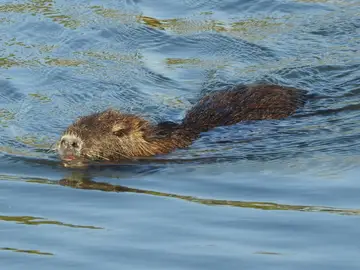
Photo: Sam Kieschnick · CC BY 4.0 · iNaturalist Nutria Myocastor coypus
Established in Oklahoma, per USGS records
The U.S. Geological Survey's Nonindigenous Aquatic Species (NAS) database tracks nonnative aquatic animals. These have at least one record with the status "established" in Oklahoma, which USGS defines as a population showing evidence of reproduction and overwinter survival.
| Animal | Group | First record | Latest record | Counties |
|---|---|---|---|---|
| Greenhouse Frog Eleutherodactylus planirostris | Frogs and Toads | 2002 | 2002 | 1 |
Source: U.S. Geological Survey. [2026]. Nonindigenous Aquatic Species Database. Gainesville, Florida. Accessed [11/3/2026]. "Native Transplant" animals are native elsewhere in the US but not in Oklahoma.
How to report a sighting in Oklahoma
Report wildlife sightings (including mountain lions and bears) to ODWC online at wildlifedepartment.com/wildlife/report-wildlife; report suspected invasive aquatic species to ODWC at (918) 200-4815 or online. Oklahoma Department of Wildlife Conservation
Do not try to catch or handle the animal. A photo taken from a safe distance, the place and the date help the agency.
Sources
- Bighead Carp (ODWC Field Guide). Oklahoma Department of Wildlife Conservation. undated page; checked November 3, 2026.
Quoted passages (1)
“**INVASIVE!** Small bighead carp and silver carp resemble gizzard shad.”
- Black Carp (ODWC Field Guide). Oklahoma Department of Wildlife Conservation. undated page; checked November 3, 2026.
Quoted passages (1)
“**INVASIVE!** Black carp (Mylopharyngodon piceus) were imported to the United States in the 1970s and 1980s as a biological control agent for snail pests in aquaculture ponds.”
- Silver Carp (ODWC Field Guide). Oklahoma Department of Wildlife Conservation. undated page; checked November 3, 2026.
Quoted passages (1)
“***INVASIVE!*** The importation and possession of invasive carp are illegal in Oklahoma without the written consent of the ODWC Director.”
- Grass Carp (ODWC Field Guide). Oklahoma Department of Wildlife Conservation. undated page; checked November 3, 2026.
Quoted passages (1)
“Grass carp were imported from eastern Asia in 1963 to control submersed aquatic vegetation in aquaculture ponds.”
- White Perch (ODWC Field Guide). Oklahoma Department of Wildlife Conservation. undated page; checked November 3, 2026.
Quoted passages (1)
“White perch is native to the estuaries and freshwater systems of the Atlantic coast from Nova Scotia to South Carolina.”
- Freshwater Jellyfish (ODWC Field Guide). Oklahoma Department of Wildlife Conservation. undated page; checked November 3, 2026.
Quoted passages (1)
“** INVASIVE! ** Freshwater jellyfish (Craspedacusta sowerbii) are native to the Yangtze River valley in China.”
- Harris Mud Crab (ODWC Field Guide). Oklahoma Department of Wildlife Conservation. undated page; checked November 3, 2026.
Quoted passages (1)
“***INVASIVE!*** Status and Impacts Soon after it was discovered in the state, researchers from Southeastern Oklahoma State University (SEOSU) began surveying for the crabs.”
- Zebra Mussel (Dreissena polymorpha) (ODWC Field Guide). Oklahoma Department of Wildlife Conservation. undated page; checked November 3, 2026.
Quoted passages (1)
“Zebra Mussel (Dreissena polymorpha)”
- Feral Hogs. Oklahoma Department of Wildlife Conservation. undated page; checked November 3, 2026.
Quoted passages (1)
“Feral swine have become a concern across Oklahoma because of their expanding numbers and the damage they inflict to the landscape.”
- Updated and Revised Checklist of the Mammals of Oklahoma, 2019 (Caire, Loucks, Haynie, Coyner & Braun; Proc. Okla. Acad. Sci. 99:1-6). Proceedings of the Oklahoma Academy of Science; authors at University of Central Oklahoma and Sam Noble Oklahoma Museum of Natural History (Department of Mammalogy). 2019; checked November 3, 2026.
Quoted passages (1)
“IMyocastor coypus Nutria”
- Aquatic Nuisance Species. Oklahoma Department of Wildlife Conservation. undated page; checked November 3, 2026.
Quoted passages (1)
“If you think you have discovered any invasive species contact us at (918) 200-4815 or report online.”
- U.S. Geological Survey. [2026]. Nonindigenous Aquatic Species Database. Gainesville, Florida. Accessed [11/3/2026].