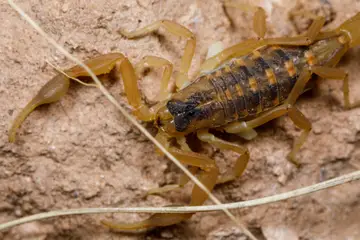
Oklahoma State University Extension, School IPM program: While there are about 50 species of scorpions in the United States, only five have been found in Oklahoma and only one is found throughout the state.
This page lists 1 scorpion.
1 is venomous by official accounts. Oklahoma State University Extension, School IPM program gives a total of 5; the 1 here are the scorpions official sources name one by one.
Not every species: no complete official list of Oklahoma scorpions exists, so this page covers the ones state and Extension sources name. How lists are built.
Which scorpions can hurt you
Official sources single out these scorpions in Oklahoma, in their own words:
Painful sting. “This scorpion can inflict very a painful sting, but it is not considered as potent as some of its relatives. It probably has a minor medical significance for healthy humans.” Oklahoma State University Extension, School IPM program
The one scorpion on the list
Venomous species first, then A to Z. Do not handle them.
“This scorpion can inflict very a painful sting, but it is not considered as potent as some of its relatives. It probably has a minor medical significance for healthy humans.” Oklahoma State University Extension, School IPM program
Size
Usually about 2.5 inches. Sources range from 1 to 1.5 inches on average (Missouri Department of Conservation) to up to 3.5 inches (Oklahoma State).
How to recognize it
Slender pincers and a long, slender tail. The tail is longer on males than females.
Tail ends in a stinger, usually carried up and over the body.
Venom: “The most common species found in Oklahoma is about two inches long. … The venom can produce considerable pain around the area of the sting, but swelling is generally limited. … The sting of the species of scorpion we have in Oklahoma is not considered to be lethal and rarely causes few problems.” (Oklahoma Cooperative Extension Service, Oklahoma State University)
Habitat: Scorpions generally hide during the day and are active at night. They tend to live under boards, stones, or other objects; or beneath loose bark on trees and logs. (Oklahoma State University Extension)
Records of scorpions in Oklahoma peak in April to May, July and September. They show when people record scorpions, not how many there are (about month bars).
JanFebMarAprMayJunJulAugSepOctNovDec
75 records of scorpions in Oklahoma by month (GBIF, CC0 and CC BY records).
If you are bitten or stung
Call 911 or Poison Help at 1-800-222-1222 right away. Poison Help connects you to your local poison center, any time of day.
How to report
Report wildlife sightings (including mountain lions and bears) to ODWC online at wildlifedepartment.com/wildlife/report-wildlife; report suspected invasive aquatic species to ODWC at (918) 200-4815 or online. Oklahoma Department of Wildlife Conservation
What official sources say
Are there scorpions in Oklahoma?
Yes. OSU: five scorpion species have been found in Oklahoma (OSU EPP-7303: an estimated three to five), and only one is found throughout the state; the most common species is the striped bark scorpion. Oklahoma State University Extension, School IPM program
“While there are about 50 species of scorpions in the United States, only five have been found in Oklahoma and only one is found throughout the state.”
“While there are about 50 species of scorpions in the United States, only five have been found in Oklahoma and only one is found throughout the state.”
“This scorpion can inflict very a painful sting, but it is not considered as potent as some of its relatives. It probably has a minor medical significance for healthy humans.”
Scorpions (Digital Diagnostics). Oklahoma State University Extension. archived copy, captured November 11, 2025; checked November 3, 2026.
EPP-7303 Scorpions. Oklahoma Cooperative Extension Service, Oklahoma State University. printed "Revisied 1012"; checked November 3, 2026.Quoted passages (1)
“The most common species found in Oklahoma is about two inches long. … The venom can produce considerable pain around the area of the sting, but swelling is generally limited. … The sting of the species of scorpion we have in Oklahoma is not considered to be lethal and rarely causes few problems.”
Aquatic Nuisance Species. Oklahoma Department of Wildlife Conservation. undated page; checked November 3, 2026.Quoted passages (1)
“If you think you have discovered any invasive species contact us at (918) 200-4815 or report online.”